

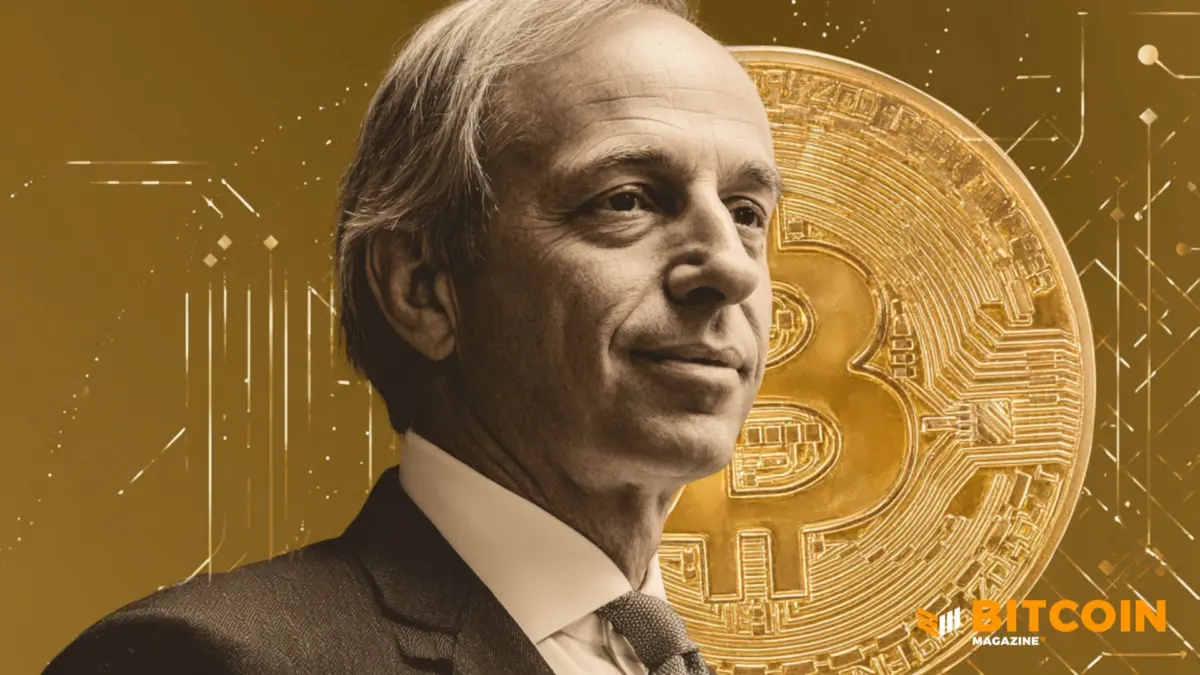
Executive Overview
To preserve wealth against this systemic devaluation, Dalio advises investors to fundamentally restructure their portfolios. Specifically, he advocates for a pronounced underweighting of debt assets—such as government bonds—and a strategic overweighting of non-government-produced money, namely gold and a measured allocation to Bitcoin.
While Dalio remains a conservative macro investor who prioritizes gold as a premier historical store of value, his inclusion of Bitcoin represents a significant paradigm shift. This investigative report analyzes Dalio’s macroeconomic thesis, traces his intellectual evolution regarding digital assets, examines the underlying metrics driving the sovereign debt crisis, and evaluates the future outlook of alternative assets in an era of fiscal instability.
Detailed Chronology: Ray Dalio’s Evolution on Bitcoin
Ray Dalio’s perspective on Bitcoin has undergone a decade-long evolution, shifting from deep skepticism to a calculated, highly qualified endorsement. Understanding this trajectory offers critical insight into how institutional asset managers view the maturation of cryptocurrency.
[2017 - 2019: Skepticism] ➔ [2020: Pragmatic Curiosity] ➔ [2021: Portfolio Inclusion] ➔ [2024: Strategic Hedge]
   * Called BTC a "bubble"      * Acknowledged volatility      * Confirmed holding BTC       * Recommends BTC alongside gold
   * Cited lack of utility      * Noted store-of-value potential * Estimated at ~1% allocation * Warns of debt debasement
The Era of Skepticism (2017–2019)
During the initial retail-driven crypto bull markets, Dalio was an outspoken skeptic. He routinely dismissed Bitcoin as a highly speculative bubble, arguing that it failed to meet the classic criteria of a currency: acting as an effective medium of exchange and a stable store of value. He frequently warned that if Bitcoin ever became large enough to threaten sovereign currencies, governments would "kill it" through heavy-handed regulatory bans.
The Shift to Pragmatic Curiosity (2020)
As the COVID-19 pandemic prompted central banks worldwide to inject trillions of dollars of liquidity into the global financial system, Dalio’s stance began to soften. In late 2020, he publicly admitted that he might be "missing something" about Bitcoin. He noted that while the digital asset remained highly volatile—limiting its utility as everyday money—it had established itself as a viable "alternative gold-like asset" for a younger generation of investors.
Portfolio Inclusion and Allocation Disclosures (2021–2023)
By mid-2021, Dalio confirmed that he had personally added Bitcoin to his investment portfolio, though he emphasized that his allocation was modest. In subsequent interviews throughout 2022 and 2023, he clarified that Bitcoin constituted roughly 1% of his net worth. During this period, Dalio repeatedly stressed that while he admired the programmatic, mathematical scarcity of Bitcoin—specifically its hard cap of 21 million coins—he still favored physical gold due to its thousands of years of historical track record as a reserve asset.
The Debt-Crisis Thesis (2024)
In his latest treatise, published on LinkedIn under the title "How Countries Go Broke: The Dynamic Behind What Is Happening Now," Dalio integrated Bitcoin directly into his broader sovereign debt crisis thesis. No longer viewed merely as a speculative technology, Bitcoin is now framed by Dalio as a vital, non-government-controlled hedge against the debasement of fiat currencies, alongside gold.
Supporting Context & Metrics: The Mechanics of Fiat Debasement
To comprehend why a legendary bond investor is advising against holding debt and favoring digital assets, one must look at the underlying macroeconomic data.
       +--------------------------------------------+
       |   U.S. National Debt Surpasses $40T        |
       +--------------------------------------------+
                             |
                             v
       +--------------------------------------------+
       |   Central Banks Print Money to Buy Debt     |
       +--------------------------------------------+
                             |
                             v
       +--------------------------------------------+
       |   Fiat Currency Supply Expands Rapidly     |
       +--------------------------------------------+
                             |
                             v
       +--------------------------------------------+
       |   Purchasing Power of Cash Debased         |
       +--------------------------------------------+
                             |
       +---------------------+----------------------+
       |                                            |
       v                                            v
+------------------------+              +------------------------+
|   Gold Appreciates     |              |   Bitcoin Appreciates  |
|  (Physical Scarcity)   |              |  (Algorithmic Scarcity)|
+------------------------+              +------------------------+
The $40 Trillion Debt Milestone
The United States national debt has reached an unprecedented milestone, officially crossing the $40 trillion mark. This rapid accumulation of obligations has fundamentally altered the risk-free rate of return concept. When debt-to-GDP ratios exceed 100% (the U.S. ratio currently hovers around 120%), servicing the interest on that debt becomes one of the largest line items in the federal budget, rivaling or exceeding defense spending.
The Debt-Service Spiral
The core of Dalio’s thesis is the "debt-service spiral." When a government’s debt load grows faster than its tax revenues:
- The treasury must issue more bonds to pay off existing creditors and fund ongoing deficits.
- If the market cannot absorb this massive supply of new debt, bond yields rise (meaning borrowing costs increase).
- To prevent interest rates from spiking and crashing the economy, the central bank (the Federal Reserve in the U.S., the Bank of England in the U.K., or the European Central Bank in the EU) is forced to step in and buy the debt.
- The central bank purchases these bonds by printing new money, thereby expanding the M2 money supply and debasing the purchasing power of the circulating currency.
Global Parallel Deficits
This fiscal vulnerability is not unique to the United States. Dalio notes that the world’s major reserve-currency issuers—specifically the UK, the Eurozone, and Japan—are locked in the same fiscal trap:
| Economy | Debt-to-GDP Ratio (Approx.) | Primary Fiscal Challenge | Central Bank Policy Risk |
|---|---|---|---|
| United States | ~120% | Entitlement programs, defense, interest payments | Monetization of treasury auctions |
| Japan | ~260% | Aging demographic, stagnant growth | Yield Curve Control (YCC) monetization |
| United Kingdom | ~100% | Productivity slowdown, public spending pressure | Inflationary debt monetization |
| Eurozone | ~90% (Average) | Fragmented fiscal policies, energy costs | Structural bailouts of weaker member states |
In all these regions, holding long-term government debt (bonds) guarantees a negative real return once inflation and currency debasement are factored in. This dynamic makes hard assets, which cannot be artificially inflated by central banks, highly attractive.
Official Statements: Breaking Down Dalio’s Directives
In his latest essay, Dalio delivers precise investment directives designed to navigate what he views as a paradigm shift in the global economy.
On Portfolio Diversification and Asset Allocation
Dalio writes:
"As general advice, I suggest diversifying well in asset classes and countries that have strong income statements and balance sheets and are not having great internal political and external geopolitical conflicts, underweighting debt assets like bonds, and overweighting gold and a bit of Bitcoin."
This statement highlights a critical shift in modern portfolio theory. For decades, the standard "60/40" portfolio (60% equities, 40% bonds) was considered the gold standard of risk-managed investing. Dalio is explicitly declaring that bonds are no longer safe-haven assets. Instead, he suggests replacing a portion of traditional fixed-income allocations with non-debt-correlated hard assets: gold for stability, and Bitcoin for asymmetric upside.
On the Shared Fate of Major Currencies
Dalio emphasizes that there is no safe fiat harbor among the world’s major economies:
"The U.K., U.S., Europe, and Japan all have similar debt and deficit problems and therefore assets like bitcoin — which are not issued by governments — could end up benefiting."
By identifying the systemic nature of global fiat debasement, Dalio highlights why traditional currency hedging (such as trading U.S. dollars for Euros or Japanese Yen) is insufficient. Because all major central banks are facing the same structural pressure to inflate their money supplies, true diversification requires moving outside of the fiat monetary system altogether.
Future Outlook: Risks, Challenges, and the Sovereign Endgame
As the global economy transitions into an era of persistent fiscal deficits, the battle between physical gold and digital Bitcoin as premier reserve assets will intensify.
The Case for "Digital Gold"
Bitcoin proponents (often referred to as "Bitcoiners") have long championed the asset as a modern hedge against monetary expansion. Unlike gold, which is heavy, expensive to secure, and difficult to transact across borders, Bitcoin offers:
- Absolute Scarcity: A hard-coded supply limit of 21 million coins.
- Flawless Portability: Millions of dollars can be transferred globally in minutes via a digital key.
- Verifiability: The public ledger prevents counterfeiting or supply manipulation.
Historically, Bitcoin has shown a strong correlation with expansions in global liquidity. When central banks expand their balance sheets, Bitcoin has historically outperformed nearly every other asset class, acting as a high-beta play on fiat debasement.
                          SOVEREIGN DEBT CRISIS
                                    |
                  +-----------------+-----------------+
                  |                                   |
                  v                                   v
          THE GOLD PATHWAY                   THE BITCOIN PATHWAY
   * 5,000-year history of safety      * 15-year history of high growth
   * Central bank favored reserve      * Algorithmic, absolute scarcity
   * Low volatility, low risk          * High volatility, high risk
   * Physical security required        * Quantum computing vulnerability
Critical Risks to the Bitcoin Thesis
Despite his recommendation, Dalio maintains a highly cautious stance, outlining several existential risks that prevent him from recommending a larger than 1% allocation to Bitcoin:
- The Quantum Computing Threat:
Dalio warns that future breakthroughs in quantum computing could pose a threat to cryptographic security. If quantum computers reach a level of sophistication where they can crack public-key cryptography, the foundational security of the Bitcoin blockchain could be compromised, rendering it vulnerable to theft or manipulation. - Regulatory and Sovereign Backlash:
As sovereign nations face fiscal crises, their control over capital flight becomes paramount. If Bitcoin begins to facilitate large-scale capital flight, governments may implement strict capital controls, ban fiat-to-crypto on-ramps, or heavily tax transactions, severely limiting its liquidity. - Extreme Volatility:
Unlike gold, which exhibits low volatility and is held by central banks worldwide as a stabilizing reserve asset, Bitcoin remains highly volatile. This volatility makes it unsuitable as a primary cash-equivalent for conservative institutions, limiting its current role to a speculative, long-term wealth store.
Conclusion: The Sovereign Endgame
Ray Dalio’s latest macroeconomic warning serves as a significant signal for institutional finance. When the founder of the world’s largest hedge fund advises underweighting sovereign bonds in favor of gold and Bitcoin, it marks a critical moment in global monetary history.
As the U.S. national debt surges past $40 trillion and other major economies face similar fiscal challenges, the debasement of paper currency is transitionining from a theoretical risk to an active macroeconomic reality. While gold remains the undisputed anchor of safety in Dalio’s view, Bitcoin has earned a permanent place on the global balance sheet—not as a speculative bet, but as a crucial insurance policy against the systemic decline of the fiat monetary system.