
Executive Overview
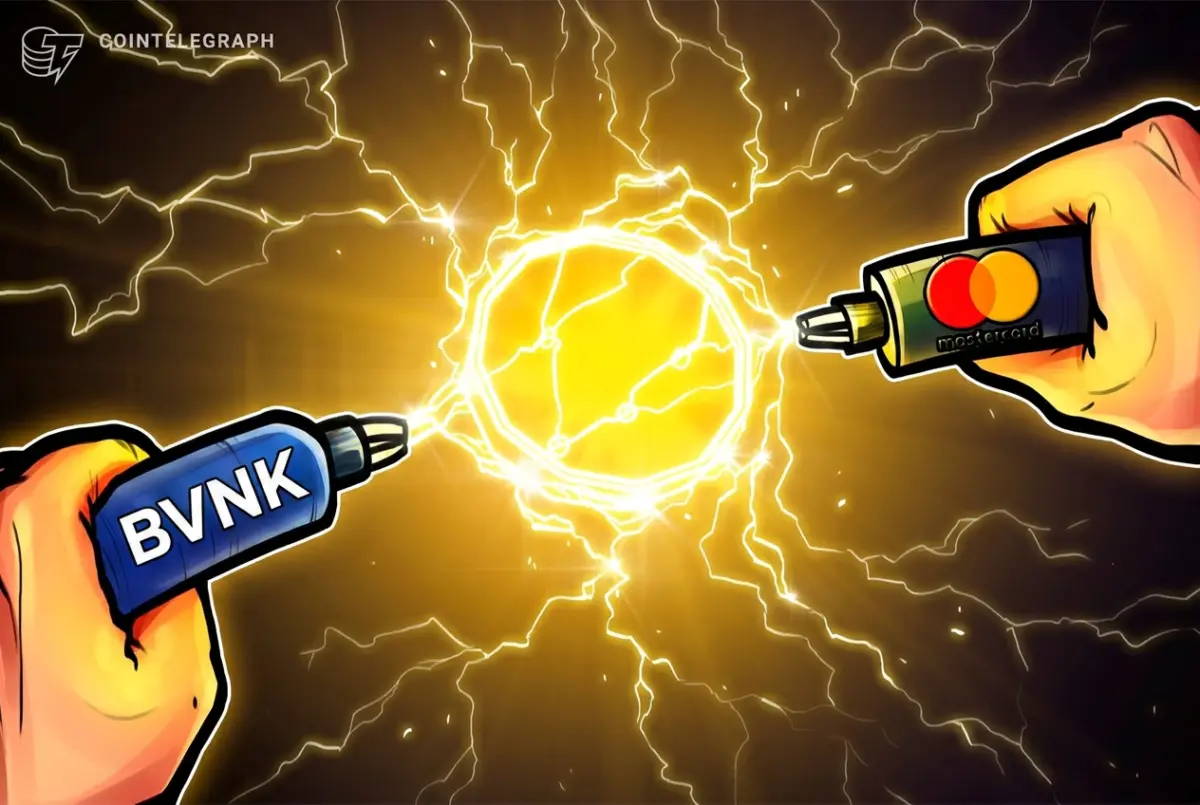
Announced on Monday following regulatory clearance, the acquisition fuses Mastercard’s sprawling, trusted global network with BVNK’s state-of-the-art onchain payment rails. The strategic intent is clear: to build a seamless bridge between traditional fiat currencies and digital assets, effectively positioning Mastercard as a dominant backbone for institutional stablecoin adoption.
For the financial sector, the implications are profound. Traditional financial institutions (FIs), fintech pioneers, and large-scale global enterprises can now leverage this combined architecture to dramatically scale their digital currency capabilities. These capabilities span the entire financial lifecycle, encompassing cross-border business-to-business (B2B) payments, rapid disbursements and payouts, real-time liquidity settlement, and advanced corporate treasury flows.
Industry analysts view the move as a validation of stablecoins as legitimate, enduring financial instruments rather than speculative trading vehicles. By integrating BVNK’s enterprise-grade technology, Mastercard is offering its vast ecosystem of banks and merchants a compliant, high-speed, and secure pathway to harness the efficiencies of blockchain technology without completely overhauling their legacy systems.
Detailed Chronology: From Abandoned Mega-Deals to Corporate Integration
The journey toward this monumental acquisition was neither straightforward nor instantaneous. It unfolded against a backdrop of rapid regulatory evolution and high-stakes corporate maneuvering within the digital asset sector.
The Prelude: The Coinbase-BVNK Interlude (Late 2025)
To fully understand the weight of Mastercard’s acquisition, one must examine the market dynamics of late 2025. Prior to finalizing terms with Mastercard, BVNK had been the target of another crypto industry heavyweight: cryptocurrency exchange Coinbase.
In November 2025, reports surfaced that Coinbase and BVNK were actively engaged in advanced acquisition talks for a staggering $2 billion transaction. The proposed deal had successfully traversed the rigorous due diligence stage, signaling that BVNK’s proprietary technology and regulatory footprint were viewed as tier-one assets by the upper echelons of the crypto economy. However, as market conditions shifted and strategic priorities aligned elsewhere, the Coinbase-BVNK deal was ultimately abandoned. The termination left BVNK as an independent, highly sought-after prize in the crosshairs of both native crypto giants and legacy financial institutions.
The March 2026 Agreement
Sensing a unique strategic window to outpace competitors and secure best-in-class stablecoin infrastructure, Mastercard stepped into the vacuum. In March 2026, Mastercard officially announced a definitive agreement to acquire BVNK in a transaction valued at up to $1.8 billion.
The valuation structure was carefully crafted to align long-term incentives, comprising a significant upfront cash and stock component supplemented by $300 million in contingent payments tied to performance milestones. This agreement immediately signaled a shift in Mastercard’s corporate strategy: rather than building proprietary blockchain infrastructure entirely from scratch—a costly and time-consuming endeavor—Mastercard chose to acquire a proven market leader with existing enterprise integrations and regulatory licensing.
The August 2026 Closing
Following months of regulatory reviews, compliance clearances, and technological integration planning, Mastercard announced the formal closing of the deal on Monday.
In concurrent statements released to the public, both corporate entities sought to reassure existing clients of absolute continuity. BVNK confirmed that it had officially become a wholly owned subsidiary of Mastercard, emphasizing that its current client base would experience zero operational disruption. Customers would continue interacting with the exact same teams, leveraging the same underlying products, and utilizing pre-existing application programming interface (API) integrations with no immediate action required on their part.
Supporting Context & Metrics: The Stablecoin Momentum
Mastercard’s multi-billion-dollar bet on BVNK is anchored in hard economic data and a structural shift in how businesses and consumers utilize digital money. Stablecoins—cryptocurrencies whose values are pegged to fiat currencies, most notably the United States dollar—have evolved far beyond tools for crypto-traders seeking refuge from market volatility. They have become foundational instruments for global commerce.
The Rise of Stablecoins in Everyday Finance
Recent empirical data highlights the accelerating velocity of stablecoins in the global economy. According to proprietary research published by BVNK, stablecoins are increasingly encroaching on traditional banking territory, capturing significant market share in employee paychecks, cross-border vendor disbursements, and everyday consumer spending.
Key metrics driving this trend include:
- Speed and Cost Efficiencies: Traditional wire transfers and legacy correspondent banking networks often take multiple business days to settle cross-border transactions, incurring steep foreign exchange fees and intermediary costs. Stablecoin settlements, by contrast, occur on a 24/7/365 basis, settling in seconds at a fraction of a cent per transaction.
- Global Liquidity Access: For businesses operating in emerging markets or regions experiencing high currency inflation, stablecoins provide a secure, dollar-denominated medium of exchange that bypasses local banking bottlenecks.
- Institutional Demand: Corporate treasuries are increasingly viewing tokenized assets and stablecoins as viable instruments for optimizing working capital, managing intraday liquidity, and executing instantaneous cross-border settlements.
Technological Synergy: Bridging Fiat and Onchain Rails
The primary engineering challenge solved by BVNK—and now supercharged by Mastercard—is the friction-filled intersection between traditional banking ledgers (fiat) and decentralized blockchain networks (onchain).
BVNK’s core infrastructure acts as an intelligent middleware layer. It allows legacy financial systems to "speak" blockchain, abstracting away the complex cryptographic requirements traditionally associated with crypto wallets, gas fees, and private key management. By plugging BVNK into Mastercard’s global ecosystem, the combined entity creates a bidirectional pipeline. Fiat money can be instantly tokenized into stablecoins for fast, cross-border transit, and conversely, stablecoins can be instantly redeemed into local fiat currencies at the point of payout.
Official Statements and Industry Impact
The corporate announcements accompanying the close of the transaction shed light on the precise use cases Mastercard plans to unlock through this acquisition.
Mastercard’s Vision for Institutional Adoption
In its official statement, Mastercard emphasized that the integration is designed to democratize access to blockchain rails for regulated entities.
"The acquisition combines Mastercard’s trusted global network with BVNK’s advanced onchain infrastructure, creating a powerful bridge between digital currencies and fiat currencies," the company stated.
Mastercard elaborated that the synergy will empower banks, fintech disruptors, and massive multinational enterprises to scale their stablecoin initiatives across four primary pillars:
- Cross-Border Business Payments: Streamlining international trade by eliminating settlement delays and reducing intermediary costs.
- Instant Payouts: Enabling gig economy platforms, insurance providers, and global enterprises to disburse funds instantly to workers or claimants worldwide.
- Real-Time Settlement: Replacing antiquated, batch-processing settlement systems with instantaneous, atomic settlement models.
- Treasury Management: Providing corporate treasurers with advanced tools to manage multi-currency liquidity pools on a continuous, round-the-clock basis.
BVNK’s Perspective: Continuity and Scale
From BVNK’s vantage point, joining forces with one of the most recognized financial technology brands in history provides unmatched global distribution.
In its independent release, BVNK highlighted how the partnership expands its operational horizons while preserving its core product philosophy. BVNK noted that the tie-up equips traditional commercial banks with the turnkey infrastructure required to offer robust stablecoin payment services. Specifically, banks can now seamlessly connect customer deposit accounts to digital wallets, bridging traditional checking accounts with onchain ecosystems.
Furthermore, payment service providers (PSPs) utilizing the combined network will be empowered to offer merchants around-the-clock settlement capabilities. This means merchants can accept stablecoin payments from international buyers and receive settled funds instantly, regardless of weekends, holidays, or traditional banking hours.
Concurrently, BVNK’s technical architecture will benefit immensely from Mastercard’s unparalleled regulatory licensing footprint and global reach, allowing the firm to rapidly expand its card-issuing capabilities and international fund transfer services into new regulatory jurisdictions.
Future Outlook: What the Mastercard-BVNK Deal Means for the Future of Money
The successful completion of the Mastercard-BVNK transaction is much more than a successful corporate exit for a prominent fintech startup; it is a bellwether for the future of the global financial architecture.
1. Mainstream Normalization of Stablecoins
When a titan of traditional finance like Mastercard deploys $1.8 billion to acquire native stablecoin infrastructure, it signals to the broader financial services industry that digital assets are no longer a fringe asset class to be managed with suspicion. Instead, they are recognized as the inevitable upgrade to legacy payment rails. This deal will likely embolden other conservative financial institutions—including tier-one global banks and insurance conglomerates—to accelerate their own digital asset roadmaps, fearing they will be left behind in the race for operational efficiency.
2. Heightened Competition in Payment Infrastructure
The acquisition intensifies the competitive landscape within the global payments ecosystem. Traditional card networks, alternative payment processors, and crypto-native fintechs are now locked in a high-stakes race to own the infrastructure that bridges fiat and blockchain economies. Competitors are expected to respond with strategic partnerships, acquisitions, or proprietary developments aimed at matching the speed, compliance, and multi-currency flexibility now offered by the Mastercard-BVNK combination.
3. Regulatory Clarity and Compliance as a Competitive Moat
BVNK’s success in navigating rigorous compliance standards—first during the abandoned Coinbase acquisition talks and subsequently through the successful Mastercard due diligence and closing—demonstrates that regulatory readiness is the ultimate competitive advantage in the modern fintech landscape. As central banks and global regulators continue to formulate comprehensive regulatory frameworks for stablecoins (such as Europe’s MiCA regulations and emerging frameworks in the United States), infrastructure providers that operate with institutional-grade compliance will capture the lion’s share of enterprise adoption.
4. The Horizon: A Unified Financial System
Ultimately, the Mastercard-BVNK merger points toward a future where the artificial boundary between "traditional finance" (TradFi) and "decentralized finance" (DeFi) dissolves entirely. Consumers and businesses will not need to know whether their funds are moving across a SWIFT wire or an onchain blockchain ledger; they will simply experience money that moves instantly, transparently, and globally at negligible cost.
As Mastercard begins the complex task of fully integrating BVNK’s technology into its global product suite over the coming months, the financial world will be watching closely. One thing is certain: the plumbing of global commerce has been permanently altered, and the era of institutional stablecoin adoption has officially arrived.