


Executive Overview
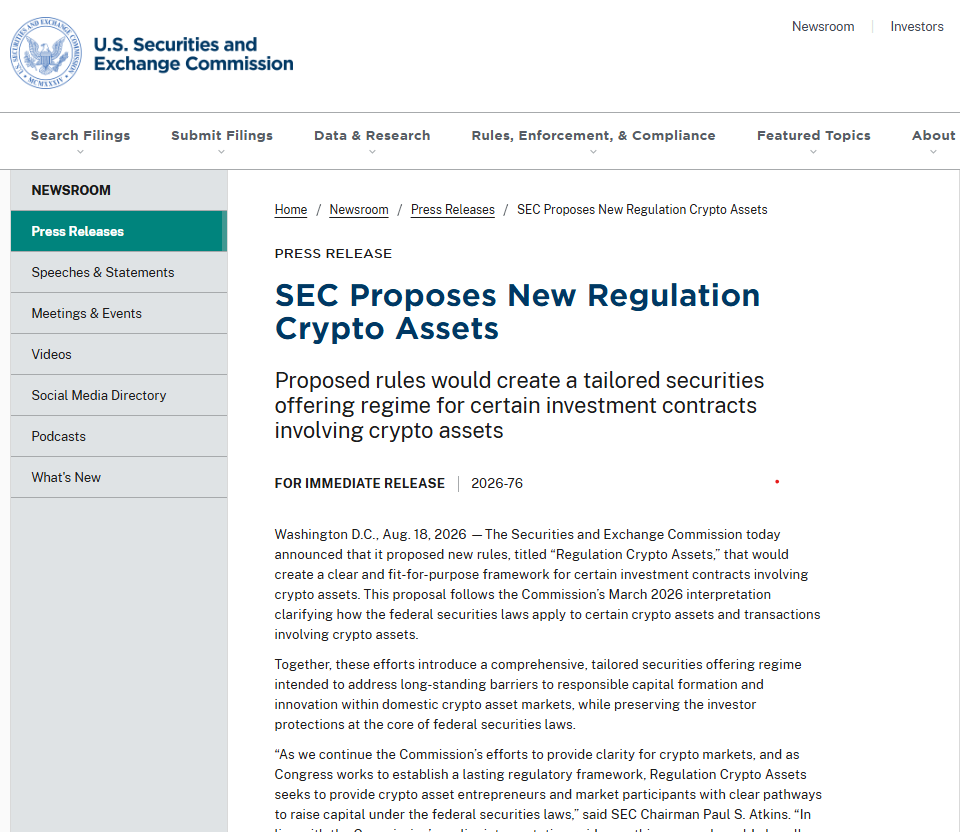
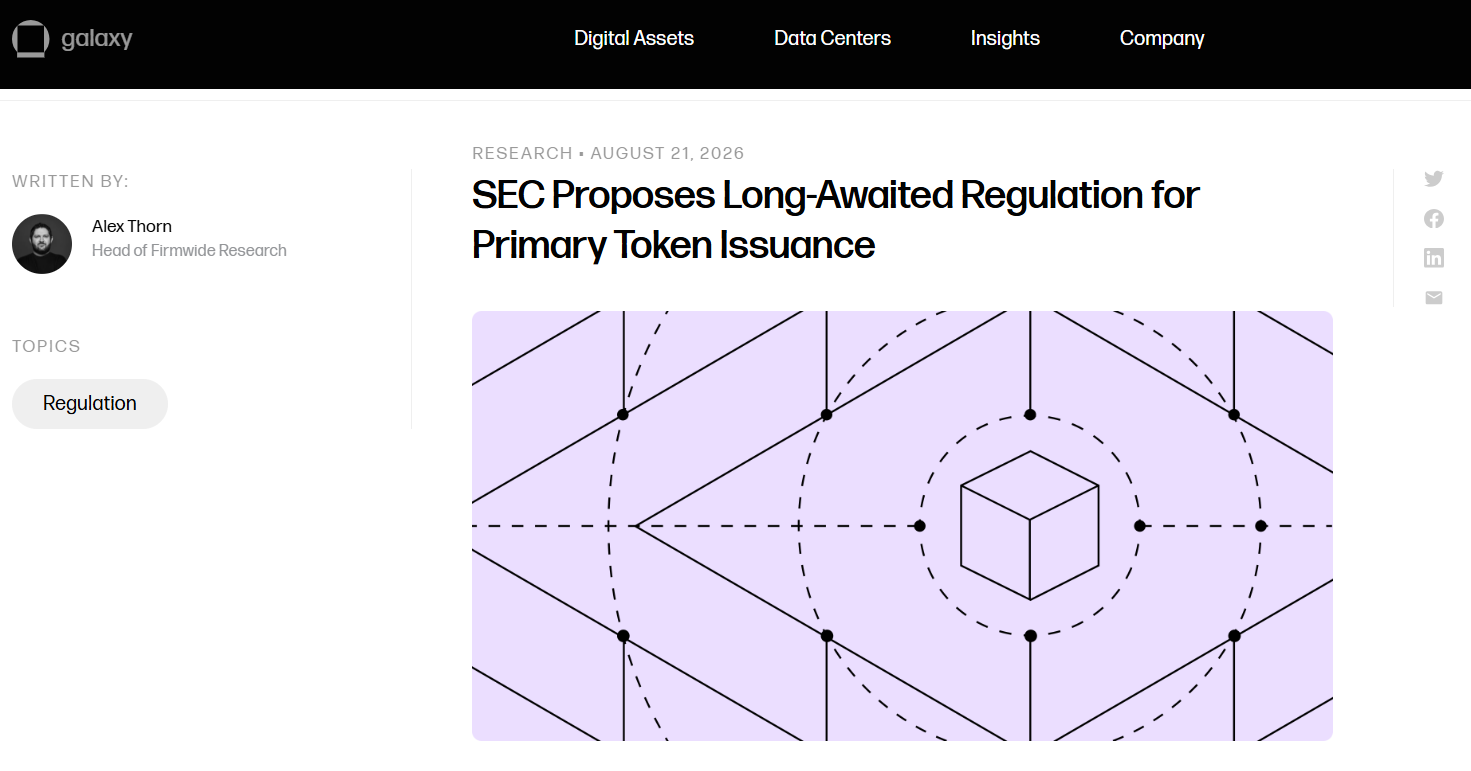
That paradigm may finally be shifting. Unveiled on August 18, the United States Securities and Exchange Commission’s (SEC) proposed Regulation Crypto Assets introduces a long-awaited structured framework designed to make public token sales viable within domestic borders. At the core of the proposal are two distinct exemptions for investment contracts involving crypto assets: a modest, one-time startup exemption for offerings up to $5 million over a four-year window, and a much broader capital-raising mechanism allowing qualifying issuers to secure up to $75 million during any rolling 12-month period.
This regulatory evolution opens the door to a staged, multi-phased funding model. Startups can potentially execute "serial raises," returning to investors year after year as their networks mature and valuations appreciate. Yet, while the proposal provides an explicit regulatory roadmap—earning cautious praise from legal experts and industry advocates who call it "not one day too soon"—it is far from a silver bullet.
Industry veterans, financial regulation scholars, and legal counsel emphasize that the rules will not trigger a resurgence of the freewheeling, speculative mania seen during the 2017 Initial Coin Offering (ICO) boom. Strict ongoing disclosure requirements, caps on retail investor exposure, lingering secondary market liabilities, and deep-seated industry trauma from past project failures ensure a much more measured reality. Rather than a chaotic capital tsunami, the SEC’s proposal points toward a disciplined, highly regulated trickle of compliant primary issuances.
Detailed Chronology and Regulatory Framework
The journey toward customized crypto-asset regulations has been marked by years of enforcement-heavy oversight, often criticized by industry stakeholders as "regulation by enforcement." The SEC’s August 18 unveiling of the Regulation Crypto Assets proposal marks a strategic pivot from reactive litigation to proactive structural guidance.
The Two-Tiered Exemption Structure
The SEC’s framework establishes two primary pathways for raising capital via digital assets, offering legal clarity that was previously absent from primary token issuance:
- The Startup Exemption ($5 Million Cap): Aimed at early-stage ventures, this one-time exemption permits startups to raise up to $5 million over a four-year period. It is designed to accommodate initial bootstrapping phases without imposing the heavy operational and reporting burdens typically associated with mature public offerings.
- The Scaled Exemption ($75 Million Rolling Cap): Modeled in part after the framework of Regulation A, this larger fundraising exemption permits qualifying issuers to raise up to $75 million within any 12-month period. Crucially, this tier introduces rigorous ongoing disclosure, annual, and semi-annual reporting obligations.
The Mechanics of "Serial Raises"
A defining question surrounding the $75 million cap is whether projects can execute continuous, multi-year funding rounds—effectively raising $75 million, spending a year building out infrastructure, and returning to the market for another $75 million injection.
According to legal experts, the structural design of the 12-month limitation does indeed permit these multi-phased capital campaigns. Drew Hinkes, a partner at Winston & Strawn, notes that the rolling limit allows for "serial raises" of $75 million every 12 months, provided that the offerings are genuinely distinct and structured as separate legal events.
However, these subsequent rounds are far from automatic. Lilya Tessler, partner and leader of Sidley’s Global FinTech and Blockchain group, emphasizes that while issuers are legally permitted to rely on the exemption more than once, each subsequent raise requires filing a fresh offering statement, passing an SEC staff review, and transparently documenting prior funding metrics.

"Nothing prevents an issuer from relying on the exemption more than once," Tessler explains, "each raise isn’t automatic. Issuers must disclose what was raised under the exemption in the prior 12 months so the cap can be verified."
This staged approach fundamentally changes the traditional token economics model. For instance, a project requiring $225 million in total funding can now strategically segment its capital requirements. By raising funds in $75 million increments, the project can hit development milestones, expand its network utility, and theoretically approach subsequent funding rounds at higher, more mature valuations.
Supporting Context & Metrics: Why 2017 Will Not Repeat
Despite the introduction of a predictable fundraising mechanism, financial regulation experts are unified in predicting that the proposal will not resurrect the unbridled speculation and "FOMO" of the 2017 ICO era.
Market Sentiment and Historical Burnout
The wounds inflicted during the 2017–2019 ICO cycle remain fresh for both retail and institutional participants. Historical data indicates that up to 90% of projects funded via ICOs during that era ultimately failed, leaving investors holding illiquid, valueless tokens backed by little more than ambitious whitepapers and poor tokenomics.
Lee Reiners, a lecturing fellow at Duke University and a prominent financial regulation expert, points out that modern fundraising markets are fundamentally constrained by structural realities:
"My initial view is that the $75 million exemption could make public token offerings more feasible, but it is unlikely to produce a return to the ICO boom."
Reiners attributes this to market maturation, noting that fundraising dynamics are now shaped by investor appetite, sophisticated token economics, robust liquidity and custody standards, and the enduring reputational damage left by the previous era’s regulatory crackdowns and project collapses.
Projected Market Uptake
Rather than unleashing a massive surge of speculative capital, institutional analytics project a measured adoption rate. The SEC’s own economic estimates suggest that:
- Approximately 130 offerings will utilize the two new primary exemptions each year.
- Around 475 issuers will potentially leverage the broader investment contract safe harbor.
This data depicts an ecosystem experiencing steady, structured integration rather than a speculative rush.
Retail Investor Protections and Allocation Scarcity
The structure of the proposed rules also protects retail participants from overextending themselves in high-hype funding rounds. Unlike the unregulated environment of the past, where non-accredited retail investors could allocate unrestricted capital into early-stage tokens, the SEC’s framework enforces strict investment limits. Tessler notes that non-accredited participants will remain capped at buying "10% of the greater of their income or net worth," regardless of which round or tier they choose to enter.
Furthermore, while capping round sizes at $75 million might naturally generate initial scarcity—potentially driving competitive bidding for early allocations—such mechanics are standard practice in traditional capital markets. Traditional equity issuers, such as SpaceX during private fundraising rounds or major corporations executing initial public offerings, routinely restrict round sizes to manage valuation and supply dynamics. Scarcity in exempt securities offerings predates the crypto industry and remains a standard corporate finance tool.
Official Statements and Legal Perspectives
While the SEC’s proposal offers much-needed regulatory clarity, it introduces complex legal nuances that have prompted cautious analysis from top-tier legal practitioners.
The Secondary Market Minefield
One of the most contentious areas within the SEC’s proposal involves the legal status of tokens once they transition to secondary trading venues. The framework dictates that an investment contract associated with a crypto asset can continue to transfer to subsequent purchasers in secondary market transactions until the crypto asset completely separates from the issuer’s managerial efforts, representations, or promises.
This creates a high-stakes legal grey area. If marketing narratives or ongoing statements from a core development team suggest that secondary market purchasers can reasonably expect profits derived from the essential managerial efforts of the issuer, the underlying token risks being legally reclassified as a security.
Drew Hinkes highlights the operational dangers this poses for digital asset exchanges:
"If a transaction of a non-security covered crypto asset causes the transfer of the investment contract from crypto asset seller to crypto asset buyer, there is a risk that the sale of the crypto asset would be viewed as a securities transaction."
This liability could force centralized and decentralized exchanges to implement rigorous filtering mechanisms to prevent secondary market contagion from jeopardizing their operational compliance.
Regulatory Arbitrage vs. Investor Protection
Beyond secondary market mechanics, academic and regulatory critics worry about potential loopholes. Lee Reiners warns that the exemption framework could inadvertently encourage strategic exploitation:
"A public offering exemption could become a vehicle for regulatory arbitrage. A token issuer may satisfy the formal conditions for an exempt sale while continuing to marketing an asset whose value depends heavily on the issuer’s managerial efforts."
Should issuers successfully navigate the formal requirements of the exemption while maintaining the economic substance of an unregistered security, retail participants could once again find themselves exposed to familiar systemic risks: opaque disclosures, concentrated insider token holdings, and aggressive promotional campaigns.
Conversely, prominent crypto attorneys have praised the SEC for finally establishing a clear, navigable pathway. Jake Chervinsky, a leading voice in digital asset legal advocacy, welcomed the long-overdue initiative on social media with the concise endorsement: "Not one day too soon."
For an industry that has spent years deciphering ambiguous enforcement actions, having a codified rulebook—even one with strict reporting and compliance demands—represents a monumental step forward for institutional legitimacy in the United States.
Future Outlook
The SEC’s proposed Regulation Crypto Assets represents a watershed moment for the intersection of American securities law and blockchain technology. By establishing specific, scalable exemptions for tokenized offerings, the regulatory body is attempting to bridge a chasm that has separated US innovation from global capital markets for nearly a decade.
Looking ahead, the successful implementation of this framework will depend on a delicate balancing act:
- Issuer Compliance: Startups must adapt to rigorous corporate governance standards, including comprehensive initial filings, ongoing semi-annual reporting, and transparent tracking of rolling 12-month fundraising caps.
- Secondary Market Clarity: Regulators and legal experts must collaborate to resolve ambiguities surrounding the separation of investment contracts from underlying crypto assets, ensuring that exchanges and secondary buyers are not unfairly penalized by the marketing actions of primary issuers.
- Investor Education: Market participants—particularly retail investors—must approach this new generation of token sales with the maturity forged by past market cycles, utilizing enforced disclosures to evaluate projects based on utility and tokenomics rather than speculative hype.
Ultimately, Regulation Crypto Assets will not recreate the wild, unregulated days of the 2017 ICO boom. Instead, it offers something far more valuable for the long-term health of the digital asset economy: a predictable, legally sound foundation upon which sustainable Web3 enterprises can build, scale, and thrive within the United States.