
Executive Overview
While the maneuver ensures the legislation remains viable heading into the autumn legislative calendar, the bill narrowly missed its window for a definitive vote prior to the Senate’s annual summer recess. Consequently, the Clarity Act faces an uphill, high-stakes battle to secure congressional approval during a compressed three-week window in September—the final operational period before lawmakers scatter to campaign for the upcoming November midterm elections.
Navigating this intricate legislative landscape requires hurdling the formidable 60-vote threshold in the Senate, necessitating substantial bipartisan backing. To clear this hurdle, Senate negotiators must quickly reconcile a slate of lingering policy disputes, including illicit-finance safeguards, regulatory parameters for stablecoin rewards, and strict government-ethics provisions. As crypto political action committees (PACs) monitor the situation closely, the upcoming September procedural votes threaten to transform into a high-profile political litmus test with profound implications for the future of digital asset regulation in the United States.
Detailed Chronology: From Late-Night Filings to September’s Steep Climb
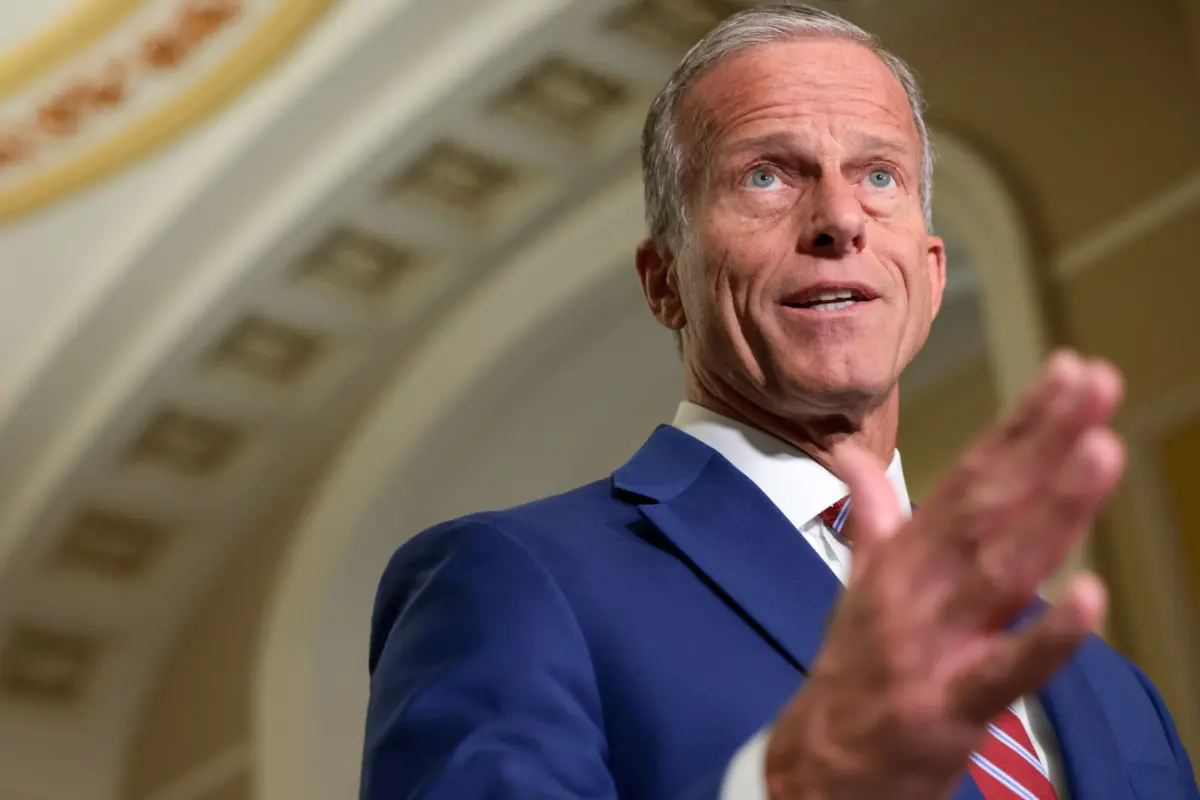
The timeline leading to the Senate’s procedural intervention was characterized by intense legislative friction and competing priorities. For weeks, Senate Majority Leader John Thune had cautioned that the chamber’s packed agenda—dominated by critical federal funding measures, contentious international sanctions regarding Russia, and a backlog of executive and judicial nominations—would likely preclude a final floor vote on the Clarity Act before the August recess.
Despite these warnings, industry advocates and legislative staffers pushed for movement to prevent the bill from stalling entirely. The breakthrough arrived in the early hours of Saturday morning following a grueling overnight session. Acting on Majority Leader Thune’s directive, the Senate clerk formally read the procedural filing to invoke cloture on the motion to proceed to House Resolution 3633.
The clerk’s reading formally initiated the multi-stage process designed to shepherd disputed legislation past the Senate’s procedural filibuster rules:
"We, the undersigned senators … hereby move to bring to a close debate on the motion to proceed to calendar number 423, [House Resolution] 3633, an act to provide for a system of regulation of the offer and sale of digital commodities by the Securities and Exchange Commission and the Commodity Futures Trading Commission, and so forth and for other purposes."
By triggering this process ahead of the recess, Thune effectively planted a legislative anchor. Without this foundational procedural step, the bill would have been widely characterized as dead for the remainder of the congressional term. Instead, the maneuver sets the stage for the Senate to hold its first pivotal procedural vote almost immediately upon its return in September, potentially clearing the initial hurdle as early as the second day of the autumn session.
Legislative Roadblocks and Key Policy Friction Points
Despite the procedural momentum, the Clarity Act faces significant substantive hurdles. To successfully navigate the Senate, the legislation must secure at least 10 Democratic votes to meet the mandatory 60-vote threshold. Reaching this consensus has proven difficult, largely due to deep-seated disagreements over targeted consumer protections, jurisdictional boundaries between the SEC and the CFTC, and stringent anti-corruption measures.
The Ethics Clause Impasse
At the center of the Democratic resistance is a controversial provision within the bill that imposes strict bans preventing senior government officials—including sitting presidents and vice presidents—from endorsing or participating in commercial cryptocurrency projects. The provision, perceived by critics as a direct response to recent high-profile crypto ventures associated with prominent political figures, has become a non-negotiable sticking point for several key Democratic senators who helped draft earlier iterations of the bill.
A revised compromise regarding this section, drafted by a bipartisan pairing of senators, has languished at the White House for over a week awaiting formal review. Industry insiders note that any viable path forward likely requires tacit sign-off or explicit support from the executive branch to prevent a fractured party-line vote.
Regulatory Turf and Financial Safeguards
Beyond government ethics, negotiators must finalize text addressing:
- Illicit Finance Protections: Strengthening anti-money laundering (AML) and know-your-customer (KYC) frameworks tailored specifically to decentralized finance (DeFi) protocols and unhosted wallets.
- Stablecoin Yields: Resolving lingering jurisdictional debates over whether interest-bearing stablecoin rewards constitute securities offerings subject to SEC oversight or banking products regulated by the Federal Reserve and state authorities.
- Dual-Agency Oversight: Fine-tuning the statutory definitions that dictate when a digital asset transitions from a security to a commodity, thereby shifting regulatory authority cleanly between the SEC and the CFTC.
Official Statements and Industry Perspective
Reactions from Capitol Hill and the broader financial technology sector reflect a mixture of guarded optimism and strategic anxiety.
Speaking on condition of anonymity, senior Senate aides familiar with the ongoing bipartisan negotiations emphasized that the technical framework of the bill remains largely sound. "From a strict calendar perspective, senators only require a handful of days across the three weeks they’ll be in session next month to get through the voting process," one congressional staffer noted. "The math works, provided the political will matches the administrative timeline."
Cryptocurrency industry advocates have echoed this sentiment, framing Thune’s late-night procedural push as an encouraging sign of leadership commitment. For months, digital asset trade associations and political action committees—most notably major entities like Fairshake—have poured unprecedented capital into lobbying efforts aimed at establishing a definitive federal regulatory perimeter.
However, lobbyists acknowledge the acute political risks of a failed vote. If bipartisan negotiations collapse during the August interim, the procedural vote scheduled for September risks devolving into a purely partisan exercise. Under such a scenario, resistant lawmakers would be forced to place their opposition on the public record, instantly converting the Clarity Act into a primary campaign battleground ahead of the November midterms.
Future Outlook: The Stakes for the Next Congress
As the Senate enters its recess, the trajectory of the Digital Assets Market Clarity Act hangs in a precarious balance. The next few weeks will determine whether bipartisan negotiators can bridge the divide over executive ethics and market oversight.
Two distinct scenarios define the road ahead:
- The Consensus Path: If intensive backroom negotiations yield a pre-vote agreement during the August break, a critical mass of Senate Democrats could drop their opposition, enabling the bill to clear the 60-vote threshold and move toward a historic final floor vote in September.
- The Partisan Stalemate: If negotiations fail, the initial procedural votes in September will likely serve as political theater. A failed cloture vote would effectively kill the legislation for the current congressional session.
A defeat this year carries long-term consequences. The arrival of a new Congress next January—potentially featuring shifting legislative majorities and altered committee leadership—would force the digital asset industry to completely reset its legislative strategy, pushing comprehensive market structure reform deep into the future. For now, all eyes remain fixed on Washington as the countdown to September begins.