

Executive Overview
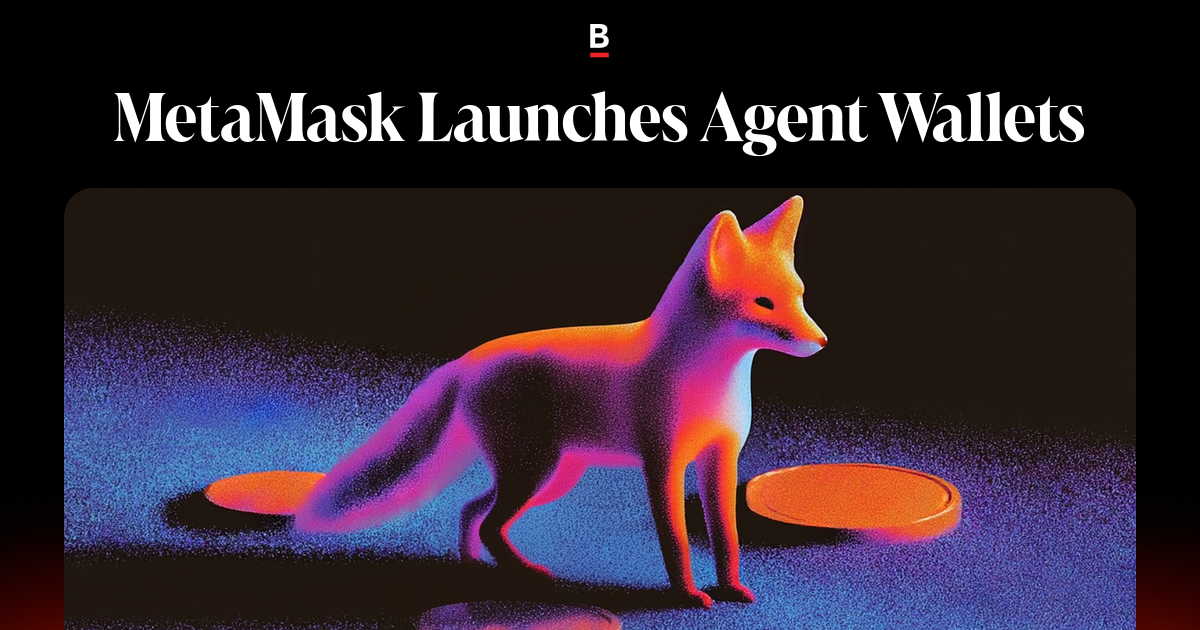
The intersection of artificial intelligence and decentralized finance (DeFi) crossed a major threshold on Thursday with MetaMask’s official announcement of the Agent Wallet. Designed to serve as a self-custodial digital vault specifically built for autonomous AI agents, the new infrastructure allows machine-learning algorithms to execute onchain transactions, trade assets, and interact with smart contracts independently.
For years, the promise of autonomous agents—software entities capable of reasoning, planning, and executing multi-step digital workflows—has captured the imagination of technologists. However, a major bottleneck has consistently hindered their deployment in production environments: the lack of secure, programmable financial rails. Traditional crypto wallets require human intervention for seed phrases, private key management, and transaction signing. This manual friction fundamentally conflicts with the ethos of automation.
MetaMask’s Agent Wallet resolves this tension by introducing a secure framework where AI agents can hold assets and execute strategies directly onchain, all while remaining strictly bounded by user-defined guardrails. Currently rolling out in an early-access phase, with a wider public release slated for later this summer, this development signals a monumental shift in how humans and algorithms will interact with global liquidity pools. Rather than treating AI merely as an analytical oracle or a chat-based assistant, the crypto ecosystem is now empowering machines to act as autonomous economic participants.
Detailed Chronology: The Road to Autonomous Wallets
The conceptualization of MetaMask’s Agent Wallet did not happen in a vacuum. It represents the culmination of several concurrent technological evolutions across the blockchain and artificial intelligence sectors.
Early 2024–2025: The Rise of Autonomous Experimentation
As foundational large language models (LLMs) achieved advanced reasoning capabilities, developers began experimenting with giving them API access to crypto wallets. Early proofs-of-concept demonstrated that AI could successfully parse natural language prompts, query decentralized exchanges (DEXs), and execute trades.
However, these early implementations were fraught with security vulnerabilities. Giving an LLM raw private key access or unrestricted API tokens to standard wallets frequently led to catastrophic security risks, including prompt injection attacks, runaway execution loops, and unexpected financial losses due to model hallucinations. The community realized that standard human-centric wallet architectures—designed around manual approvals and browser extensions—were entirely unsuited for machine-speed, machine-logic operations.
Late 2025: The Demand for Programmable Security
As agentic frameworks matured, the conversation shifted from whether AI agents should trade to how they could be safely sandboxed. Developers demanded account abstraction (ERC-4337) features, session keys, and granular spending limits. Users wanted to delegate specific financial tasks—such as automated dollar-cost averaging, yield farming optimization, or portfolio rebalancing—to software agents without surrendering total control of their treasury.
August 2026: MetaMask Enters the Arena
MetaMask, long recognized as the preeminent retail gateway to the EVM (Ethereum Virtual Machine) ecosystem, stepped forward to formalize this architecture. By launching early access to Agent Wallet on Thursday, the platform bridged the gap between raw AI agency and institutional-grade self-custodial security. The system provides the foundational infrastructure required for developers to deploy specialized trading agents that operate locally or via cloud infrastructure, interacting with blockchain protocols under strict programmatic supervision.
Supporting Context & Metrics: Why Agent Wallets Matter Now
To understand the strategic significance of MetaMask’s launch, one must examine the macro convergence of decentralized infrastructure and autonomous software agents.
The Mechanics of Self-Custodial AI Governance
At its core, the Agent Wallet utilizes a combination of advanced smart contract accounts and cryptographic permissioning. When a user initializes an Agent Wallet, they do not simply hand over their master private keys. Instead, they establish a localized or cloud-hosted agent instance and bind it to specific, mathematically enforced constraints:
- Token Allowlist: Restricting the agent to trade only specific, vetted tokens (e.g., ETH, USDC) to prevent interaction with malicious or rugged smart contracts.
- Capital Exposure Limits: Setting hard caps on daily, weekly, or per-transaction spending volumes. If an agent encounters a market anomaly or a hallucination loop, it cannot drain more than the allocated capital threshold.
- Temporal Boundaries: Issuing time-bound session keys that automatically expire after a set duration, requiring human re-authorization for ongoing operations.
Market Implications for DeFi Liquidity
The integration of autonomous agents into DeFi is expected to fundamentally alter market microstructures. Human traders are constrained by reaction times, emotional decision-making, and the physical need for sleep. AI agents, conversely, can monitor liquidity pools, calculate arbitrage opportunities, and execute complex flash-loan or routing strategies across multiple decentralized exchanges in milliseconds.
By providing a secure self-custodial wrapper for these algorithms, MetaMask is effectively seeding a new class of algorithmic market participants. This could lead to:
- Tighter Spreads: High-frequency autonomous arbitrage agents continuously correcting pricing inefficiencies across fragmented layer-2 networks.
- Dynamic Yield Optimization: Portfolio management agents actively shifting capital between lending markets, liquidity pools, and restaking protocols based on real-time APY fluctuations.
- Complex Multi-Step DeFi Workflows: Users delegating entire financial strategies—such as "borrow against my collateral, buy liquid staking tokens, and stake them in the highest-yielding protocol"—to a single trusted agent.
Official Statements and Industry Perspective
While MetaMask’s early-access rollout has generated significant buzz across social media and developer forums, industry leaders are already weighing in on the broader implications of machine-driven self-custody.

The official MetaMask announcement emphasized the balance between autonomous capability and user protection:
"MetaMask launched Agent Wallet, giving AI agents self-custodial access to onchain trading within user-defined limits and security controls."
Developers and security analysts within the broader Ethereum ecosystem have pointed out that while Agent Wallets solve the authorization problem, they also shift the focus toward smart contract safety and prompt engineering resilience. Ensuring that an AI agent cannot be manipulated via malicious input data—a vector known as indirect prompt injection—remains one of the premier engineering challenges for teams building consumer-facing agent applications.
As the platform moves from its current early-access phase toward a broader public launch later this summer, third-party developers are expected to release specialized modules, plugins, and pre-configured agent templates tailored for specific financial tasks.
Future Outlook: The Horizon of Autonomous Finance
The introduction of MetaMask’s Agent Wallet marks a turning point where decentralized finance transitions from a human-operated paradigm to a hybrid human-agent economy.
Looking forward, several key milestones will define the success and evolution of this technology:
- Standardization of Agent Protocols: As multiple wallet providers and account abstraction frameworks enter the market, the industry will likely converge on open standards for agent permissioning, identity, and cross-chain communication.
- Autonomous DAOs and Corporate Treasuries: Beyond individual retail traders, decentralized autonomous organizations (DAOs) and web3 enterprises may begin deploying specialized governance and treasury-management agents to handle routine operational expenses and liquidity provisioning.
- Regulatory and Compliance Horizons: As software agents execute trades autonomously across global jurisdictions, questions surrounding liability, tax reporting, and compliance will inevitably take center stage. Self-custodial frameworks with transparent, onchain audit trails will prove vital in establishing accountability.
For now, MetaMask has opened the door to the next generation of web3 usability. By giving AI agents the keys—while keeping humans firmly on the steering wheel—the ecosystem is taking its first confident steps into the era of autonomous finance.