
Executive Overview
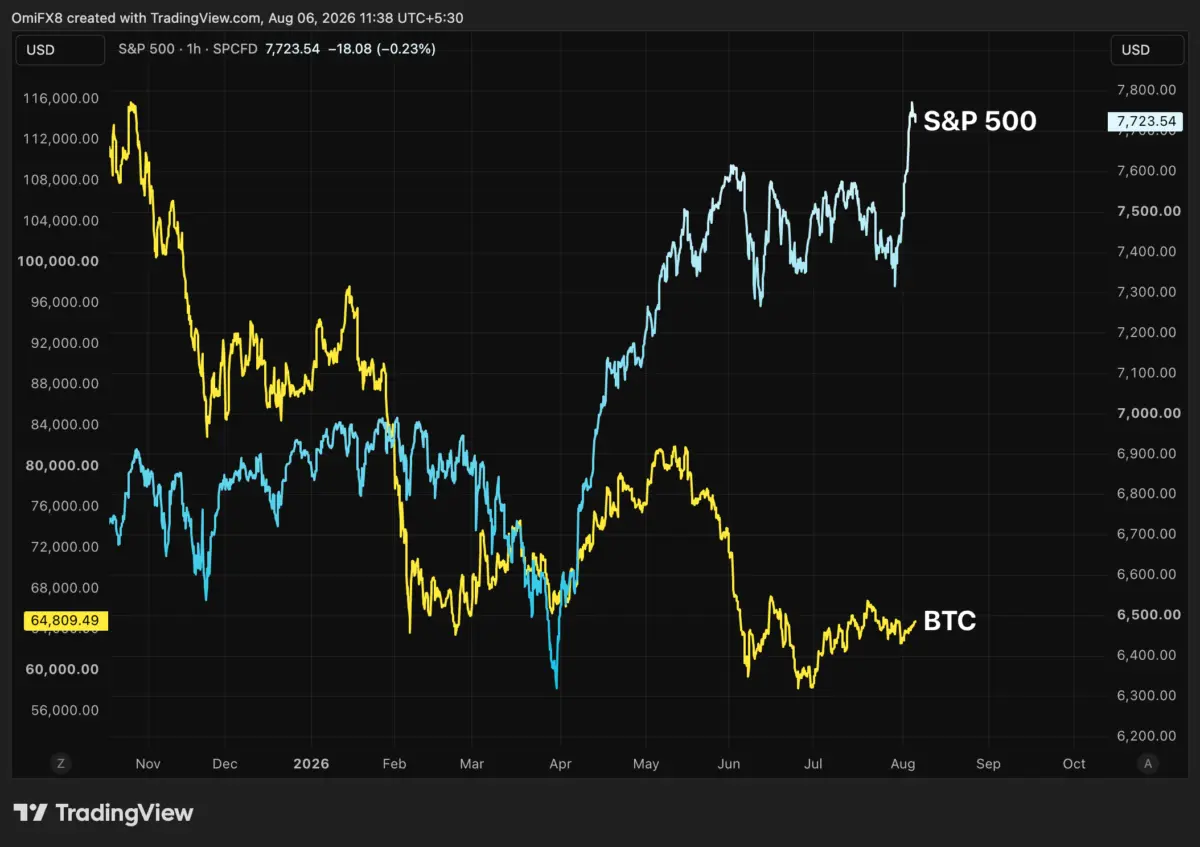
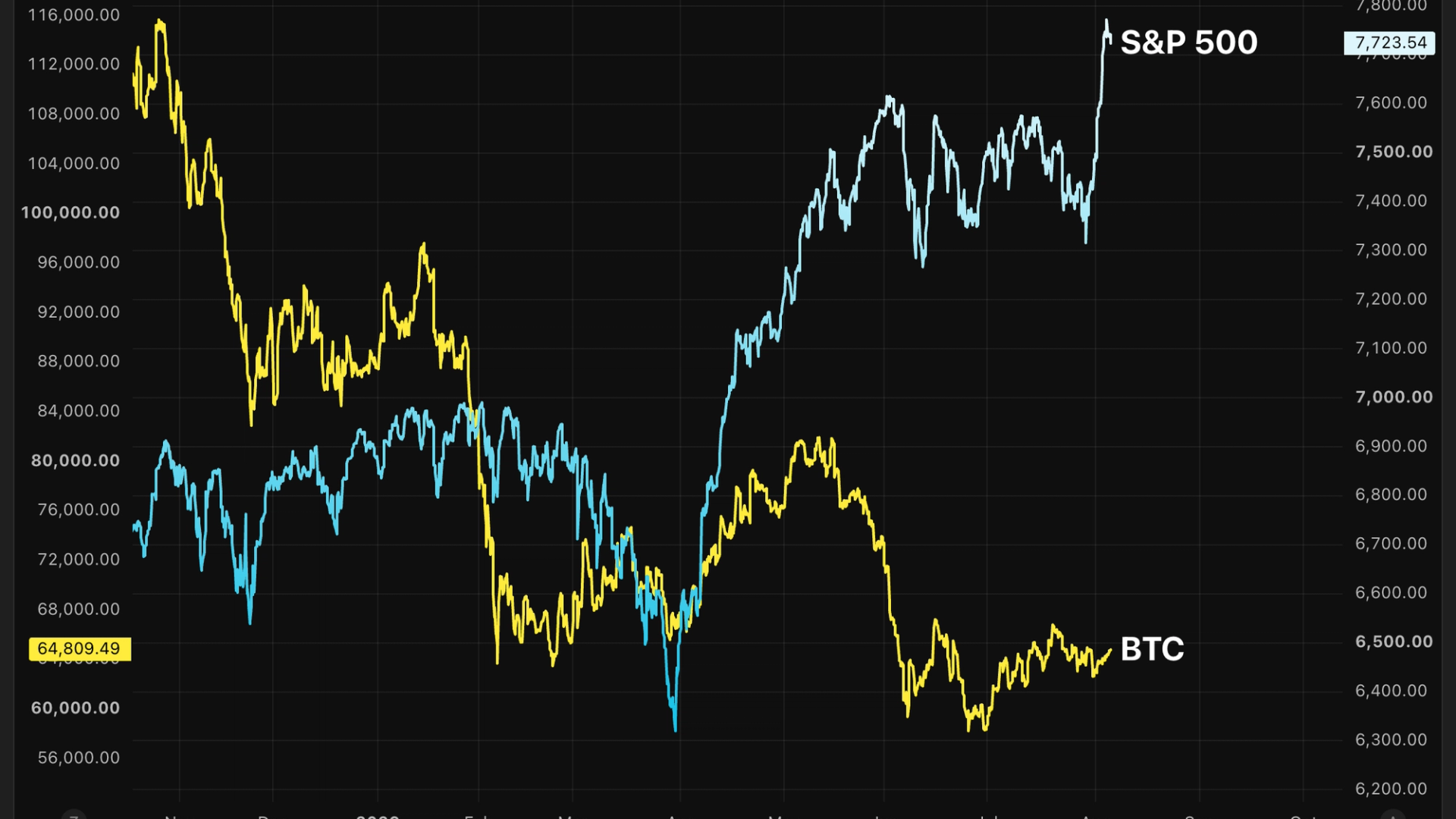
To put that monthly gain into perspective, the S&P 500 has effectively conjured the entire market capitalization of the global cryptocurrency ecosystem—roughly $2 trillion—out of thin air in less than 30 days.
Yet, despite this blistering display of traditional risk-on appetite, Bitcoin—the undisputed bellwether of digital assets—is sitting the party out. Historically tethered to equity market performance since the post-COVID liquidity boom of 2020, Bitcoin has barely flickered. Trading in a stubborn, tightly wound range around $64,600, the world’s premier cryptocurrency has notched a meager 2% gain for the month, utterly divorced from the euphoria gripping traditional finance (TradFi).
While casual observers might write this off as standard crypto volatility, market microstructure, macroeconomic mechanics, and unique sector-specific pressures reveal a far more complex picture. This comprehensive analysis explores why Wall Street’s massive wealth expansion has bypassed digital assets, examining structural sector shifts, macroeconomic crosscurrents, institutional positioning, and a psychological shift in the four-year halving cycle that has traders waiting on the sidelines.
Detailed Chronology & Market Mechanics: The Anatomy of a Divergence
The Wall Street Machine: An AI-Driven Juggernaut
The current equity boom is not a broad-based macroeconomic lift that naturally filters down into high-beta assets like cryptocurrencies. Instead, it is a targeted, narrative-driven rally. The S&P 500’s explosive ascent to 7,723 points is fundamentally powered by structural breakthroughs and capital concentration in artificial intelligence, semiconductor manufacturing, and mega-cap tech.
Because Bitcoin possesses virtually no direct exposure to these distinct cash-flowing sectors, the capital pouring into tech equities is failing to bleed over into digital asset order books.
Adam Haeems, Head of Asset Management at Tesseract Group—a firm overseeing more than $500 million in client assets—highlighted this structural disconnect:
"Partly because the equity rally is being driven by areas to which bitcoin has little direct exposure, particularly AI and semiconductor stocks."
Macro-Relief vs. Direct Transmission
To be sure, broader macroeconomic crosscurrents should theoretically benefit all risk assets simultaneously. For instance, recent developments in geopolitical stability—specifically the relative easing of tensions in the Middle East following the Iran war and a subsequent drop in oil prices—have brought relief to global supply chains. The reopening of the Strait of Hormuz has sparked hopes for normalized energy flows, a universally bullish signal for risk-on portfolios.
However, the transmission mechanism of macroeconomic relief differs vastly between equities and cryptocurrencies.
"Lower oil prices resulting from a reopening of the Strait of Hormuz could benefit both markets, but through different channels," Haeems explained. "Equities receive a relatively immediate benefit through lower business costs and expanding margins. For bitcoin, the effect runs through inflation expectations and then Federal Reserve policy. That takes longer, and the outlook for September remains uncertain."
Paul Howard, Senior Director at market-making firm Wincent, echoed this sentiment, emphasizing that institutional capital allocation remains heavily siloed.
"The stock rally is biased towards AI and mega-caps which doesn’t necessarily translate into crypto flows," Howard stated. "The crypto market rally driven previously by ETF demand the last 2y has been subdued as it now seeks its own catalyst independent of US equities. This likely will come in Q4 when the market expects regulatory clarity and continued stablecoin growth."
Supporting Context & Metrics: Crypto’s Self-Inflicted Headwinds and Macro Pressures
While traditional equities ride high on structural tech tailwinds, the digital asset ecosystem has found itself battling a gauntlet of internal friction, high-profile security incidents, and macroeconomic headwinds that have systematically capped upside potential.
Internal Scandals and Structural Bleeding
Crypto market sentiment has been rattled by a series of high-profile events over recent weeks. Most notably, the $120 million Coldcard hardware wallet exploit sent shockwaves through the Bitcoin community, reawakening anxieties surrounding self-custody security and impacting retail confidence.
Concurrently, institutional and corporate holder dynamics have turned defensive. Reports indicating that Strategy has liquidated portions of its Bitcoin holdings for three consecutive months have introduced lingering supply overhangs into the market. While Haeems noted that neither event has triggered a systemic credit contagion or a forced liquidation cycle, their psychological cumulative weight has weighed heavily on spot demand.
The Bond Yield Trap and Stablecoin Outflows
Perhaps the most pernicious macroeconomic headwind facing crypto is the persistent strength of global bond yields. With real U.S. Treasury returns sitting at their highest levels since 2008, institutional capital is being actively incentivized to sit safely outside the crypto perimeter, collecting risk-free yield.
This high-yield environment has triggered a measurable capital drain via stablecoins—the lifeblood of crypto liquidity. Data tracking dollar-pegged stablecoin supplies reveals a stark contraction:
- USDT (Tether): Plunged from a peak of approximately $190 billion in April to $183 billion, reaching its lowest supply baseline since 2025.
- USDC (Circle): Contracted steadily from $79.5 billion down to $72 billion.
"With real Treasury returns at their highest since 2008, capital is being paid to remain outside crypto," Haeems noted, pointing out that capital is actively rotating out of digital asset rails in favor of sovereign debt yields.
Official Statements & Institutional Perspectives: The Psychology of the Halving Cycle
Beneath the surface of technical charts and macro data lies a fascinating psychological pivot among market participants—one rooted in the traditional four-year Bitcoin halving cycle.
The Self-Fulfilling Prophecy of October
According to Markus Thielen, Founder of 10x Research, the current lack of bullish urgency is less an indictment of Bitcoin’s fundamentals and more a result of a collective psychological shift among traders.
Last October, the vast majority of retail and institutional market participants aggressively dismissed the validity of the four-year halving cycle. Fast forward to the current market cycle, and the script has completely flipped. Traders have suddenly, collectively bought into the historical blueprint, which points toward an early-October market bottom. Consequently, market participants are sitting firmly on the sidelines, refusing to deploy capital until the calendar hits their anticipated inflection point.
"Bitcoin traders have shown little urgency to position for a move higher, even as US stocks rally," Thielen told CoinDesk. "A key reason: bitcoiners have suddenly, collectively bought into the four-year cycle thesis, which points to a bottom in early October, so they’re waiting on the sidelines. This is a notable reversal from last October, when most of these same traders dismissed the four-year cycle outright."
Thielen argues that this consensus positioning is fundamentally flawed because it ignores a glaring positive indicator: Bitcoin’s remarkable resilience in the face of a hawkish Federal Reserve. Despite warnings from officials like Fed Governor Cook regarding potential rate hikes to combat stubborn inflation, Bitcoin has refused to break downward. To Thielen, this price stability is a screaming bullish signal that the market has already absorbed the worst of the macro shock.
"Traders are underestimating the upside risk from a less hawkish Fed, and overlooking the possibility that the four-year cycle has already bottomed," he emphasized.
ETF Flows: Directional Demand or Arbitrage?
Institutional vehicles, specifically U.S.-listed spot Bitcoin exchange-traded funds (ETFs), have also presented a mixed and erratic picture. Data from SoSoValue reveals that these funds recently registered an outflow of $61.53 million, abruptly halting a modest three-week inflow streak. Although subsequent sessions recorded $626 million in weekly inflows—the highest single-week accumulation since early May—market analysts stress that consistency is critical.
"Several consecutive days of inflows will be needed to confirm a sustained recovery in institutional demand," noted Vikram Subburaj, CEO of India-based, FIU-registered exchange Giottus.com.
Subburaj points out that Bitcoin is currently locked in a compressed technical corridor, finding formidable support near the $63,000–$63,400 zone, while meeting heavy overhead resistance between $64,500 and $66,000.
Adding complexity to the ETF narrative, prominent market maker Wintermute suggests that institutional inflows may not be entirely directional or bullish in nature. Instead, a significant portion of ETF activity may simply be basis-trade arbitrage.
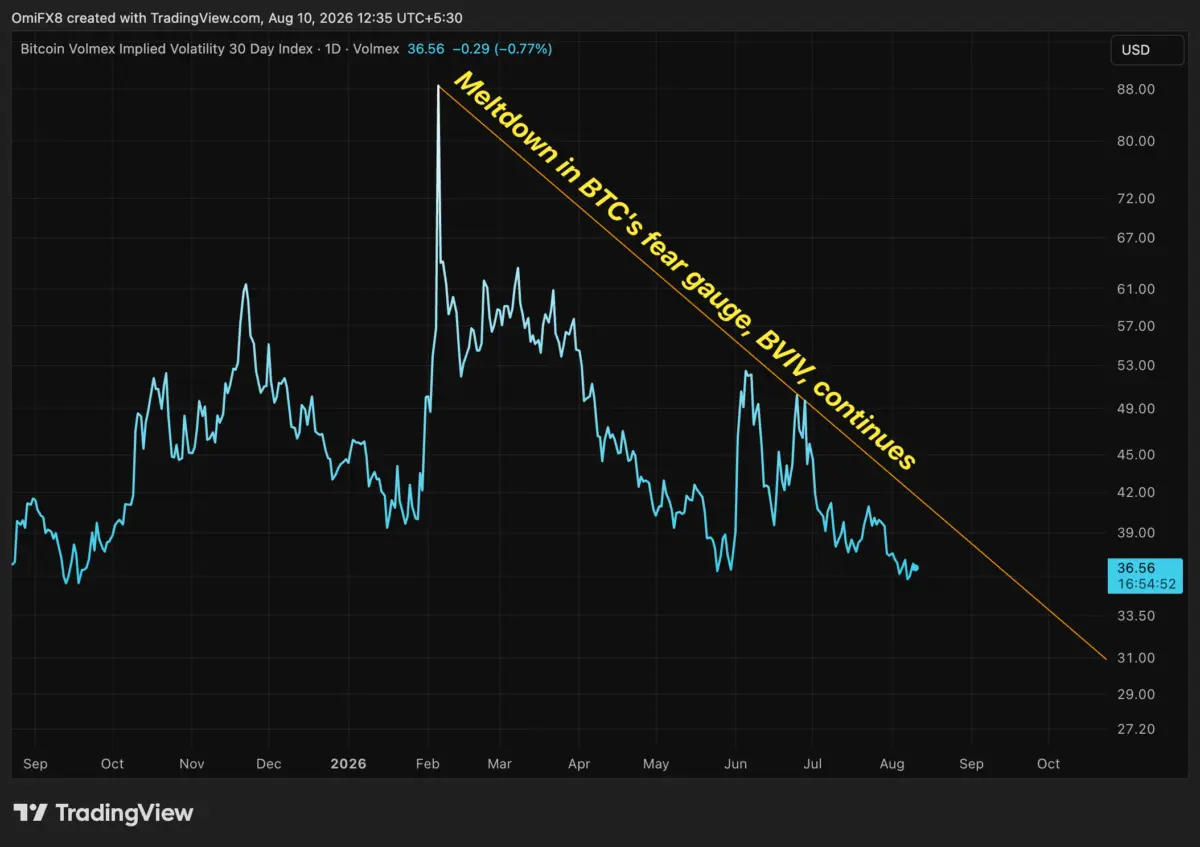
"That ETF bid getting absorbed without moving price says the marginal buyer in spot isn’t outright long," Wintermute stated in a market note. "Risk appetite went single-name instead, with ZEC up 10.9% on the week on DCG’s Fortitude expanding its Zcash mining footprint and HYPE adding 5% on a dead beta day. For breadth to expand, we likely need to see BTC vol off this floor first."
Future Outlook: When Will the Great Divergence Close?
As the financial markets navigate the remainder of the third quarter of 2026, the million-dollar question for digital asset investors is simple: When and how will Bitcoin decouple from its current stagnation and catch up to the record-breaking wealth creation witnessed in traditional equities?
Market structure experts point to a convergence of catalysts heading into the final stretch of the year:
- Regulatory Clarity: As Paul Howard of Wincent noted, clarity surrounding pending legislation like the Clarity Act, expected to crystallize in Q4, could clear the regulatory fog that has kept institutional risk committees sidelined.
- Monetary Policy Shifts: If the Federal Reserve shifts its tone away from hawkish rate-hike rhetoric as inflation metrics stabilize, the delayed transmission mechanism for Bitcoin will finally activate, transforming macro-relief into direct capital inflows.
- Stablecoin Liquidity Rebound: A reversal in the contraction of USDT and USDC supplies will serve as the premier on-chain indicator that retail and institutional liquidity is returning to crypto rails rather than chasing record-high Treasury yields.
- Breaking the Halving Cycle Trap: Once the self-fulfilling prophecy of the October bottom passes—regardless of whether prices dip or hold firm—sideline capital is expected to re-enter the market with renewed urgency, potentially sparking a violent catch-up rally.
Until these structural and psychological thresholds are cleared, Bitcoin will likely remain anchored to its current range. Wall Street may have claimed its historic $2 trillion victory lap this month, but the foundational architecture of the crypto market suggests that Bitcoin’s silence may be nothing more than the calm before an overdue storm.