
Executive Overview
However, the relentless digitization of human society, supercharged by the advent of blockchain technology and decentralized finance (DeFi), has instigated a paradigm shift. Crypto has birthed a radical third category: Attention Assets.
Today, these manifest primarily as User-Generated Assets (UGAs) like non-fungible tokens (NFTs), creator coins, and memecoins. Rather than resting on discounted cash flow (DCF) models or physical scarcity, Attention Assets act as decentralized Schelling points. Their prices fluctuate to reflect the chaotic ebbs, flows, and tidal waves of cultural attention.
Yet, while memecoins have proven extraordinarily effective at capturing the speculative zeitgeist of internet-native trends that start from zero, they fall short as institutional-grade financial instruments. They are poorly suited for tracking high-profile, pre-existing cultural fixtures—such as global celebrities, major political races, or prominent tech protocols—where shorting is difficult and starting prices do not sit near zero.
To bridge this structural gap, financial engineers are proposing a novel architectural breakthrough: Attention Oracles and Attention Perpetuals (Perps). By aggregating binary prediction markets—such as those hosted on Kalshi or Polymarket—into weighted, dynamic index feeds, Attention Oracles create a manipulation-resistant source of truth. This innovation transforms raw cultural mindshare into a tradable, hedgeable, and bonafide asset class, permanently altering how markets price human attention.

Detailed Chronology: From Memetic Speculation to Structured Derivatives
The journey toward formalizing attention as a recognized asset class has evolved rapidly over the past several cycles, moving from decentralized experiments to sophisticated market architectures.
- The Pre-Crypto Era (Pre-2020): Traditional Memetic Value
For generations, financial assets were viewed strictly through fundamental lenses. While equities occasionally experienced speculative manias (such as the 1999 Dot-Com bubble or historical squeezes), the "memetic" component of a stock’s price was largely treated as noise rather than a systematic variable to be modeled. - The UGA Explosion (2020–2023): Memecoins and NFTs
The launch of permissionless token generation platforms, automated market makers (AMMs), and bonding curves drastically reduced the friction of asset creation. UGAs emerged as the internet’s default expression vehicle. Creators and speculators realized they could monetize attention directly by deploying a tokenized meme. While successful in bootstrapping zero-to-one communities, these assets struggled to capture mature cultural phenomena or provide bidirectional trading exposure (shorting). - The Social Mindshare Era (2023–2025): Early Sentiment Oracles
Recognizing the limitations of pure memecoins, early innovators like Noise began experimenting with mindshare trading platforms. Leveraging social data aggregators like Kaito, these platforms attempted to quantify the online footprint of crypto projects. However, these systems quickly ran headfirst into Goodhart’s Law: as financial incentives grew, bad actors exploited social media metrics, forcing continuous platform redesigns and anti-spam filters. Furthermore, simple social metrics failed to capture complex, cross-platform, real-world human behavior. - The Prediction-Market Breakthrough (Late 2025–Present): Attention Oracles and Perps
To solve the manipulation and depth problems of social data, financial researchers began investigating markets-based architectures. By taking binary prediction markets from regulated exchanges and transforming them into weighted aggregate indices, developers laid the groundwork for Attention Perps. Platforms like Adjacent began deploying live indices tracking political and cultural trends, proving that prediction-market-derived oracles could successfully anchor synthetic derivative products.
Supporting Context & Metrics: The Mechanics of Attention Oracles
To comprehend why prediction-market-based oracles represent a quantum leap forward, one must examine the mathematics and economic incentives underpinning their design.
The Flaws of Social Data vs. The Rigor of Prediction Markets
Social media analytics are notoriously susceptible to gaming. Automated bot armies, coordinated engagement pods, and algorithmic manipulation can artificially inflate mentions, likes, and impressions. When these manipulated metrics serve as the underlying oracle for a perpetual swap, traders face catastrophic counterparty risks from systemic data corruption.
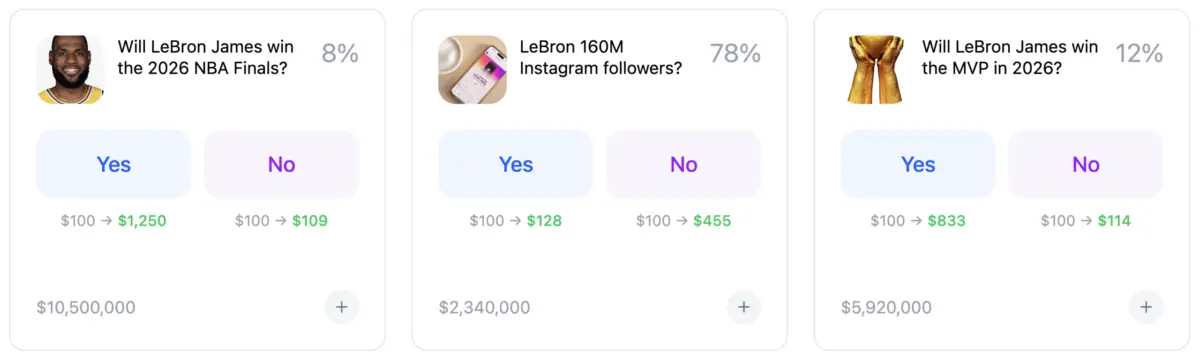
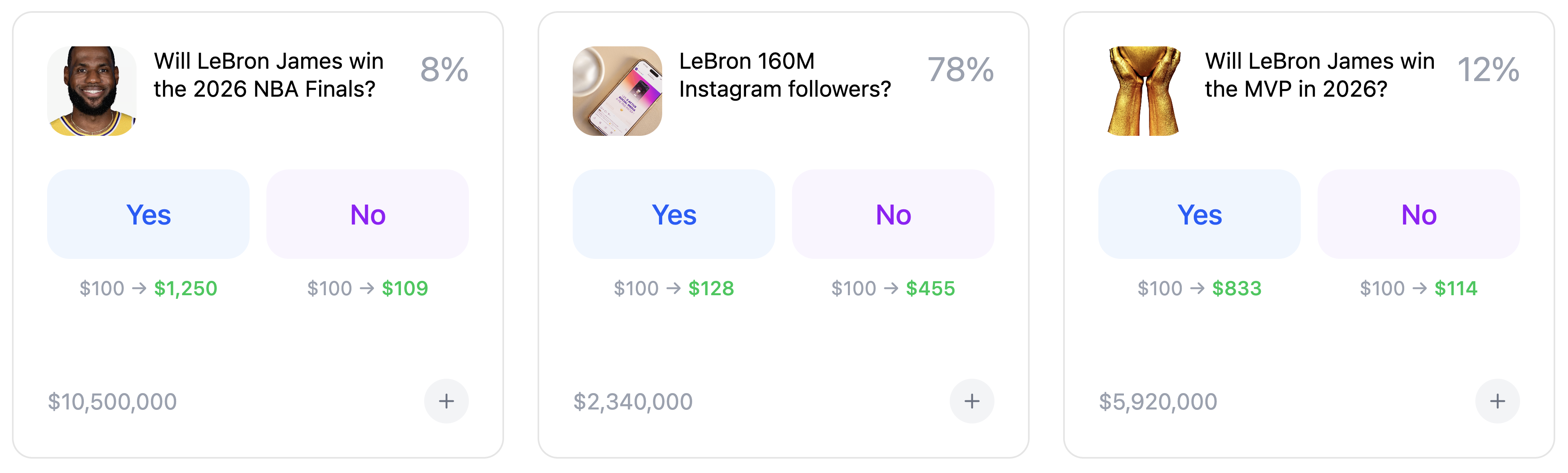
Conversely, anchoring an oracle to financial prediction markets introduces an embedded manipulation cost. Consider an Attention Oracle designed to track the cultural footprint of LeBron James. Instead of counting Twitter impressions, the oracle ingests multiple binary prediction markets, such as:
- Will LeBron James have over $X$ million followers by month-end?
- Will LeBron James win a championship in 2026?
- Will LeBron James win the MVP in 2026?
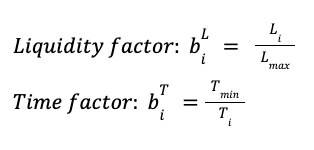
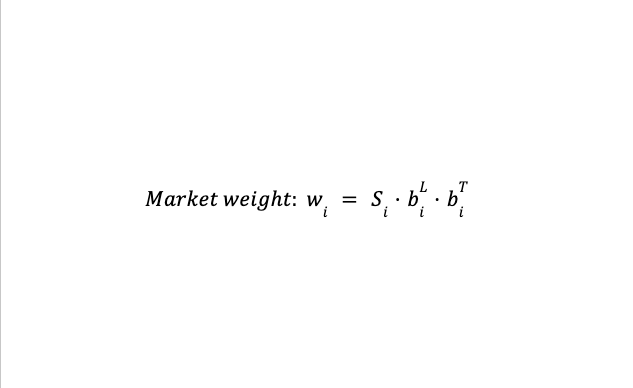
Each underlying market is assigned a dynamic weighting based on liquidity, time to resolution, and a fundamental significance score. The index calculation aggregates these inputs:
$$textAttention Index = sum left( textMarket Price_i times textWeight_i right)$$
Where the weight factor accounts for liquidity depth and temporal proximity.
Economic Defenses Against Manipulation
If an adversarial trader attempts to manipulate this Attention Index upward by forcing the price of an underlying prediction market higher, they must deploy real capital. To move the market, they are forced to buy binary contracts at prices that rational participants deem overpriced.
This creates an immediate arbitrage opportunity for opposing market participants to short the mispriced contracts, draining the attacker’s capital. Furthermore, this structure provides market makers with a vital spot market hedge. If a market maker assumes a short position on an Attention Perp, they can cleanly delta-hedge their exposure by buying the underlying prediction market contracts that comprise the index.
Industry Perspectives and Expert Insights
The evolution of Attention Assets has sparked intense debate among decentralized finance architects, macroeconomists, and quantitative traders.
Proponents of the prediction-market approach emphasize that skin-in-the-game pricing always outperforms passive sentiment tracking. As one foundational researcher noted:
"Using prediction markets as inputs for Attention Oracles creates an embedded manipulation cost. Adversarial traders cannot simply spin up a botnet; they must risk hard capital to impact the index, aligning economic reality with cultural perception."
However, traditional market observers caution that the design space is not without friction. One primary critique centers on the inputs bottleneck: constructing a reliable Attention Oracle requires deep, sustained liquidity across dozens of hyper-specific prediction markets. Consequently, this model is initially restricted to an elite tier of ultra-high-profile cultural fixtures—such as Donald Trump, Taylor Swift, or major technological protocols—where prediction volume naturally pools.
Additionally, industry analysts point out the divergence phenomenon: cultural attention can spike precisely because an expectation fails. For instance, if a public figure experiences a massive controversy or suffers a stunning defeat, prediction market probabilities for a positive outcome might plummet (driving the index down), while global attention surges as media outlets and pundits endlessly debate the failure. Resolving these non-linear relationships remains one of the next great frontiers for oracle designers.
Future Outlook: Attention as a Core Macro Asset Class
As we look toward the horizon, the implications of Attention Assets extend far beyond crypto-native speculation or celebrity tracking. We are witnessing the foundational plumbing of a brand-new macroeconomic asset class.
1. The Equities Market Convergence
Ironically, the most mature enterprise application of the Attention Economy may ultimately unfold within traditional equity markets. Every stock’s market valuation is theoretically composed of two forces:
$$textStock Price = textDiscounted Cash Flow (DCF) Value + textMemetic Value$$
Historically, the memetic component was treated as an occasional anomaly. However, the rise of retail trading communities, 24/5 liquidity platforms, and social-media-driven investing has permanently elevated memetic value across hundreds of equities. As institutional investors grapple with this reality, models derived from Attention Oracles and prediction markets will become standard toolkits for pricing stock sentiment.
2. Leading Indicators for Corporate Strategy
Beyond trading, quantified attention serves as a primary leading indicator for consumer preferences, capital allocation, and enterprise spending. Corporations allocate billions of dollars in research and development, hiring, and marketing campaigns based on where human attention is migrating. Standardized Attention Perps will allow enterprises to hedge operational risks tied to cultural shifts, effectively transforming ephemeral "hype" into measurable, risk-managed financial exposure.
3. Modular Architectures and the Road Ahead
The infrastructure required to support this transition is already materializing. Through modular frameworks like Hyperliquid’s builder-deployed perpetuals (HIP-3), developers have the flexibility to construct custom oracles that blend prediction market feeds, algorithmic news sentiment analysis via Large Language Models (LLMs), and verified search engine metrics (such as the newly accessible Google Trends APIs).
While regulatory landscapes across various jurisdictions will undoubtedly evolve to address these synthetic sentiment products, the underlying economic demand is undeniable. Attention is the scarcest resource in the digital age. By successfully codifying, pricing, and hedging human focus, the financial ecosystem is finally building a bridge between the cultural zeitgeist and hard capital markets.