rifanmuazin is a reporter for DeBitcoin covering Blockchain Technology. She/He is based in Indonesia.
6 August 2026 • 10 min read
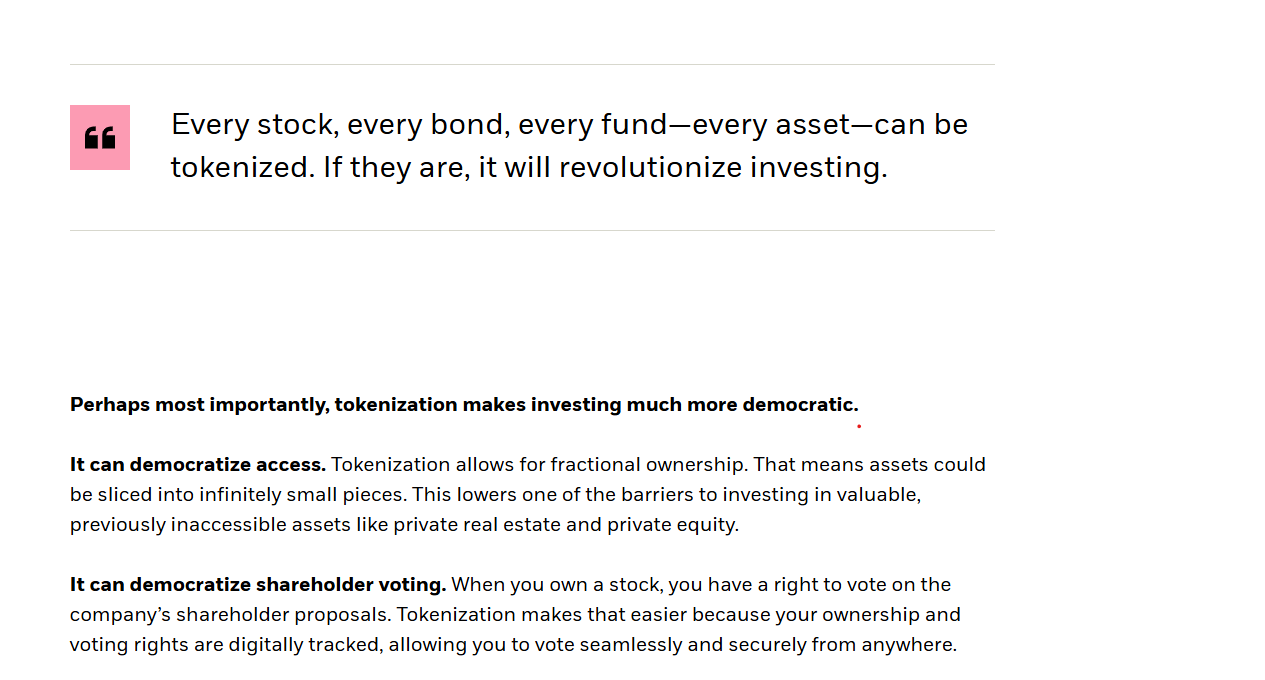
The global financial system is undergoing a quiet, yet profound, structural evolution. Driven by the promise of enhanced liquidity, lower settlement friction, and immutable transparency, traditional assets are rapidly migrating to distributed ledger technology. Institutional heavyweights have given this movement their definitive stamp of approval; notably, BlackRock Chief Executive Larry Fink famously predicted that every asset class will eventually be tokenized.
Executive Overview
However, the journey from traditional capital markets to the frontier of onchain finance has unlocked a wildly eccentric experimental playground. While Wall Street focuses its attention on tokenized U.S. Treasuries, money market funds, and private credit instruments, a decentralized army of independent creators, artists, and unconventional entrepreneurs has spent the past several years testing the absolute limits of the blockchain.
When Brazil’s B3 stock exchange made global headlines by processing a loan backed by ten tokenized cows—virtually herding livestock into a blockchain-based holding pen to secure a 100,000 Brazilian real ($19,600) credit line—it brilliantly illustrated the expansive capabilities of Real World Asset (RWA) tokenization. Yet, this milestone immediately prompts a deeper, more whimsical inquiry: If live cattle can secure millions in agricultural financing, what other bizarre objects, rights, and concepts can be brought onchain?
From a year’s worth of preserved flatulence and human skin canvas to radioactive heavy metals and physically incinerated modern art, this investigative feature explores ten of the strangest, most unconventional, and most provocative assets to ever be tokenized on a public ledger.
Detailed Chronology: A Timeline of Eccentric Tokenization
1. A Year’s Worth of Farts (2020–2021)
When mainstream society spent the early days of the COVID-19 pandemic baking sourdough bread and maintaining language streaks on Duolingo, New York City-based filmmaker Alex Ramírez-Mallis pursued a decidedly different lockdown hobby. He meticulously recorded his own flatulence over the course of a year, categorized the audio files by frequency, length, and resonance, and minted each distinct gaseous expulsion as an individual non-fungible token (NFT).
Capitalizing on the white-hot NFT frenzy of 2021, Ramírez-Mallis marketed the audio clips under the premise that every conceivable asset possesses a definitive market price. Despite the unorthodox nature of the collection, the novelty factor proved irresistible to digital collectors. He successfully sold individual audio files for 0.05 ETH each—roughly $85 at the time—proving that in the wild west of decentralized finance, even digestive byproducts can find a liquid secondary market.
2. Brazilian Livestock and Bovine Collateral (2024)
Moving from digital novelties to heavy-duty agricultural financing, the B3 stock exchange in Brazil executed a landmark transaction that bridged traditional farming with blockchain infrastructure. Structured by the Brazilian investment fund Target FIDC, a southern farmer utilized ten live dairy cows as explicit collateral for a 100,000 Brazilian real loan.
Rather than physically moving the animals, the operation leveraged a blockchain-based holding pen, linking each cow to an encrypted digital identity and a unique cryptographic token. While the initial loan was modest at $19,600, it functioned as a vital proof of concept. Industry analysts project that this architecture can eventually scale to support an estimated $80 million in livestock-backed financing across Brazilian agricultural operations.
3. Matured Whiskey Barrels (Ongoing)
The intersection of luxury collectibles and blockchain engineering has long been a focal point for RWA proponents, but aged spirits represent a particularly lucrative niche. Scotch whisky and high-end bourbon naturally appreciate in value as they mature in oak casks, mirroring the investment lifecycle of fine art or rare vintage wines.
Several specialized web3 projects now allow everyday investors to purchase whole units or fractionalized ownership shares of tokenized whisky barrels safely stored in bonded warehouses. While this grants retail investors access to an asset class historically gatekept by high-net-worth collectors, it also introduces a humorous cautionary reality: unlike traditional financial securities or digital tokens, if the market suffers a catastrophic crash, investors cannot physically consume a digital JPEG of a whiskey barrel.
4. Thoroughbred Racehorses (2025)
Thoroughbred racehorse ownership has historically functioned as an exclusive playground for the ultra-wealthy, demanding deep capital reserves capable of covering hundreds of thousands of dollars in breeding, specialized training, veterinary upkeep, and racetrack overhead.
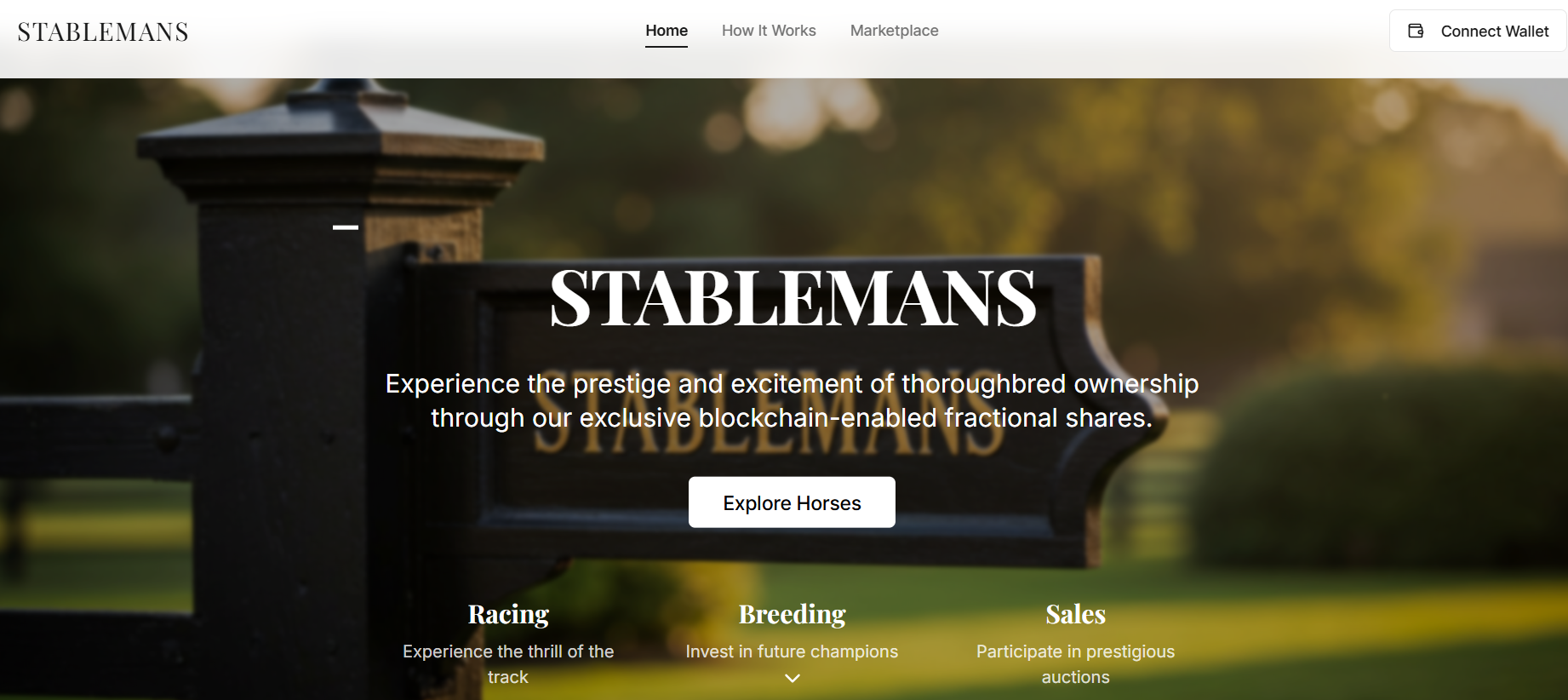
However, protocols like Stablemans have begun dismantling these elitist barriers by deploying tokenized fractional ownership on networks such as Cardano, Solana, Base, Polygon, and Arbitrum. Through these platforms, investors can purchase fractional digital shares in a real thoroughbred animal, entitling them to a proportional cut of race-day prize money, breeding rights, and future liquidation proceeds without requiring the capital necessary to buy an entire animal.
5. Uranium and Technology-Flavored Commodities (2024–2026)
While financial analysts typically associate tokenized commodities with gold, silver, or crude oil, the Tezos-backed platform metals.io expanded the RWA horizon into nuclear energy by introducing tokenized uranium.
Arthur Breitman, co-founder of Tezos, has repeatedly emphasized that distributed ledger technology excels at constructing reliable, auditable, and cost-efficient financial settlement rails for virtually any asset class. However, he notes that blockchains are particularly well-suited for "technology-flavored commodities" like uranium. Between November 2024 and July 2026, the platform facilitated roughly $21.5 million in trading volume across approximately 18,200 individual trades and 7,400 unique wallets, demonstrating quiet institutional curiosity.
6. Fishy Revenue and Contractual Cash Flows (Proposed)
Not all unconventional tokenization attempts make it past the drawing board. Brickken, a prominent tokenization platform, received a proposal from a Chilean fish-processing company aiming to issue tokenized debt instruments with yields directly tied to commercial seafood sales.
Edwin Mata, CEO of Brickken, explains that the structure was designed to let investors hold a contractual claim where the payable interest rate adjusted dynamically according to the enterprise’s verified sales metrics. Ultimately, the fish never made it onto the blockchain. The underlying commercial sales still relied on manual audits, legacy reporting, and offchain legal agreements that could not yet be natively automated—highlighting that the greatest hurdle to tokenization is often not the blockchain itself, but the messy, analog real world.
7. Music Royalties and Streaming Rights (2021–2022)
The tokenization of intellectual property achieved mainstream awareness during the 2021 NFT boom. DJ and electronic music producer 3LAU launched Royal, a blockchain music platform that enabled fans to acquire 50% of the streaming royalty rights to his single "Worst Case."
Following this precedent, legendary hip-hop artist Nas utilized the platform in 2022 to sell fractional streaming rights to his tracks "Ultra Black" and "Rare." Despite generating significant media fanfare, tokenized music royalties have yet to mature into a dominant mainstream asset class. Critics point out the harsh economic reality of modern streaming platforms: owning a microscopic fraction of a track requires millions of individual streams just to yield the equivalent of a single cup of coffee.
8. Human Skin and Biometric Advertising (2021)
Pushing the boundaries of bodily autonomy and digital marketing, Croatian professional tennis player Oleksandra Oliynykova auctioned the advertising rights to a 15-by-18-centimeter patch of skin on her right arm as an NFT in 2021.
The winning bidder paid 3 Ether—valued at approximately $5,400 at the time—for the contractual authority to choose which temporary tattoo Oliynykova would proudly display during professional tennis tournaments for a full calendar year. While athletes have spent decades selling sponsorship inventory on athletic apparel, warm-up jerseys, and equipment, Oliynykova literalized the idiom, giving an entirely new meaning to having "skin in the game."
9. The Incineration of a Banksy Masterpiece (2021)
In an aggressive philosophical commentary on the nature of scarcity and digital authenticity, a crypto-native collective known as "Burnt Banksy" purchased an authentic print by the elusive street artist titled Morons (White) for roughly $95,000 in early 2021.
The group live-streamed the physical destruction of the artwork, setting it ablaze in an industrial container, before minting the video and the destruction event as an immutable NFT. The underlying thesis argued that while the physical atoms of the painting were permanently eradicated, the authentic spirit and ownership of the piece would live on forever inside the cryptographic ledger. The resulting NFT subsequently sold for $382,000, netting the group a 300% profit from a literal "fire sale" and sparking intense global debate over the destruction of cultural artifacts.
10. Jack Dorsey’s Historic First Tweet (2021–2022)
Perhaps the quintessential artifact of the 2021 NFT mania occurred when Twitter co-founder Jack Dorsey tokenized his historic, platform-inaugurating tweet—“just setting up my twttr”—and listed it for public acquisition.
Crypto entrepreneur Sina Estavi ultimately secured the digital asset for a staggering $2.9 million. However, the transient nature of speculative hype was brutally exposed just one year later when Estavi attempted to liquidate the asset on the secondary market for $48 million. The market delivered a stark rejection; the highest recorded bid during the auction struggled to cross $6,800, illustrating the sharp volatility inherent in purely sentiment-driven digital collectables.
Supporting Context & Metrics: The Anatomy of RWA Tokenization
To understand why innovators are experimenting with everything from dairy cattle to radioactive metals, one must examine the macroeconomic tailwinds driving the tokenized RWA sector.
Global Agricultural Scale: The global agricultural sector alone generated an estimated $4 trillion in gross value-added economic output in 2023. By introducing blockchain-based collateral mechanisms like Brazil’s tokenized cows, traditional lending institutions can unlock unprecedented liquidity for unbanked or underbanked agrarian producers.
Commodity Trading Volumes: Niche commodity platforms like metals.io demonstrate that while niche markets such as uranium face initial friction, they can successfully process tens of millions of dollars in cross-border volume across thousands of unique digital wallets.
The Liquidity Fallacy: Despite the technological brilliance of distributed ledgers, financial experts caution against assuming that tokenization acts as a magical cure-all for illiquid markets.
Official Statements and Industry Expert Perspectives
Industry leaders, founders, and macroeconomic observers have offered nuanced critiques regarding the true viability of unconventional asset tokenization.
Larry Fink, Chairman and CEO of BlackRock:
"Every asset will eventually be tokenized." (Fink’s overarching vision underscores the institutional conviction that blockchain rails will eventually replace legacy clearinghouses for traditional financial instruments, creating a unified global settlement layer.)
Chris Turner, Co-Founder of Impact Investment Firm KULA:
"Putting a collectible or luxury item on a blockchain doesn’t automatically make it more liquid or valuable if the legal rights, transfer process, and market structure remain unchanged." (Turner’s observation serves as a vital reality check for retail investors who confuse technological novelty with intrinsic economic value.)
Arthur Breitman, Co-Founder of Tezos:
"Reliable, auditable, and cost-efficient financial rails for any asset…" (Breitman emphasizes that while blockchains perform admirably across standard financial products, they are uniquely well-aligned with specialized commodities that require rigorous audit trails, such as uranium.)
Edwin Mata, CEO of Brickken:
"Almost any cash flow can support a tokenized financial instrument, provided the underlying rights and data can be independently verified. Tokenization can improve access, administration, settlement and transferability, but it cannot transform a poor investment into a good one." (Mata captures the dual nature of the RWA movement: while the engineering layer streamlines administration, it cannot override poor economic fundamentals or broken real-world legal frameworks.)
Future Outlook: Where Does Onchain Asset Tokenization Go From Here?
The eccentric experiments of the past several years—ranging from tokenized farts and human skin to radioactive uranium and dairy cows—highlight both the boundless creativity and the speculative excess of the early web3 ecosystem.
As the tokenization industry matures, the market is experiencing a significant flight to quality. While novelty NFTs and bizarre physical-digital hybrids captured public imagination during past bull cycles, institutional capital is currently concentrating on high-utility assets: short-duration U.S. government debt, institutional real estate, high-grade corporate bonds, and verified agricultural collateral.
Nevertheless, the foundational experiments of the past half-decade have left an indelible mark. They have successfully proven that distributed ledger technology possesses the modular flexibility to handle virtually any asset class, provided that legal frameworks, data verification pipelines, and market structures catch up to the code. Whether future markets will embrace tokenized sheep, goats, or barrels of rare planetary minerals remains to be seen, but one thing is certain: the boundary between the physical universe and the digital ledger has been permanently erased.