

Executive Overview
At the center of this paradigm shift was the passage of the historic GENIUS Act—widely regarded as the most consequential piece of financial legislation since the post-2008 Dodd-Frank Act. Coupled with the definitive dismantling of restrictive banking bottlenecks like "Chokepoint 2.0," the official rollout of Project Crypto, and the U.S. Securities and Exchange Commission’s (SEC) ambitious roadmap to rebuild traditional capital markets on high-throughput blockchain rails, the regulatory hostility of the early 2020s was replaced by state-sanctioned modernization.
Beyond policy corridors, 2025 witnessed explosive innovations across every layer of the decentralized stack. From programmatic Automated Market Makers (propAMMs) and conditional liquidity mechanisms to the meteoric rise of Digital Asset Treasury companies (DATs), booming on- and off-chain prediction markets, and sophisticated stablecoin and synthetic dollar architectures, the industry has stepped firmly into an era of coordinated expansion and institutional legitimacy.
These monumental shifts formed the core agenda of the eighth annual Multicoin Summit, which convened industry leaders, portfolio founders, and macroeconomic strategists late last month. This report synthesizes the primary developments, strategic theses, and expert insights that defined the summit, mapping out the roadmap for internet-native capital markets as crypto enters its most dynamic chapter yet.
Detailed Chronology: How 2025 Rewrote the Rules of Finance
The transformation of the digital asset landscape did not happen overnight, but 2025 acted as an accelerated compression chamber for change. The year’s milestones can be traced through a series of foundational events that dismantled systemic roadblocks and unlocked institutional participation on an unprecedented scale.
Q1: Dismantling the Bottlenecks and Enacting the GENIUS Act
The year began with the definitive collapse of legacy regulatory resistance. For years, the crypto industry struggled under the weight of uncoordinated and hostile administrative pressure—informally dubbed "Chokepoint 2.0"—which systematically cut digital asset firms off from traditional banking services. The early months of 2025 saw a decisive legal and political reversal of these policies, clearing the commercial pathways for chartered institutions to engage with blockchain protocols.
This momentum culminated in the legislative breakthrough of the GENIUS Act. By establishing a robust, clear, and innovation-friendly federal framework for digital assets—particularly stablecoins and payment rails—the legislation provided the legal certainty that institutional investors had demanded for over a decade. Financial analysts immediately drew comparisons to Dodd-Frank in terms of its sweeping impact on market structure, compliance standards, and risk management across the American financial sector.

Q2: Institutional Inflows and Public Market Innovation
With regulatory clarity secured, capital began flowing rapidly out of traditional silos and into blockchain-native instruments. Q2 was characterized by the maturation of public-market crypto innovation. Most notably, Digital Asset Treasuries (DATs) emerged as a dominant vehicle, allowing public companies to seamlessly integrate tokenized assets into their balance sheets.
Concurrently, market microstructure underwent a radical evolution. The deployment of propAMMs and advanced conditional liquidity solutions solved persistent capital inefficiency issues in decentralized exchanges (DEXs), narrowing the liquidity gap between centralized order books and decentralized protocols.
Q3: Prediction Markets, DePIN, and Internet Labor
By mid-year, crypto’s utility expanded dramatically into real-world predictive and physical infrastructure networks. Platforms like Kalshi mainstreamed prediction markets, proving that decentralized crowd-sourced forecasting could outpace traditional polling and financial media in pricing macroeconomic, political, and cultural events in real time.
Simultaneously, Decentralized Physical Infrastructure Networks (DePIN)—epitomized by breakthroughs in spatial intelligence and physical AI projects like GEODNET—demonstrated that token incentives could bootstrap multi-billion-dollar global hardware networks faster and cheaper than traditional telecommunications giants. This period also gave rise to the concept of "Internet Labor Markets," a structural framework proving that global, crypto-incentivized freelance economies could absorb and mitigate employment anxieties associated with artificial intelligence.
Q4: The SEC’s Blockchain Pivot and the Multicoin Summit
The closing quarter of the year cemented the shift from defensive adaptation to proactive state-level adoption. The SEC unveiled Project Crypto, a visionary initiative designed to migrate portions of America’s legacy capital markets onto blockchain infrastructure to enhance settlement speeds, transparency, and liquidity.
To dissect these sweeping transformations, Multicoin Capital hosted its eighth annual Summit late last month. Bringing together the brightest minds in fintech, regulation, and protocol architecture, the summit served as a debrief on 2025’s victories and a launchpad for the structural theses that will guide the industry through the remainder of the decade.
Supporting Context & Metrics: The Anatomy of a Breakout
The structural shift of 2025 is underpinned by several critical economic and technical metrics that highlight the sector’s maturation:

- Stablecoin Settlement Volume: Stablecoins and synthetic dollars (such as those pioneered by Ethena Labs) processed trillions of dollars in transactional volume, frequently rivaling or exceeding legacy payment networks like Visa and Mastercard in cross-border utility.
- Institutional De-Risking: Following the implementation of the GENIUS Act and the sunsetting of restrictive banking policies, institutional participation—measured by custodial inflows and venture capital deployment into specialized fintechs—surged to all-time highs.
- Order-Flow Monetization: Driven by user-generated assets and advanced routing mechanisms, order-flow dynamics shifted from rent-seeking intermediaries to transparent, programmatic execution layers, reshaping internet application business models.
- Prediction Market Liquidity: Daily trading volumes on prediction platforms scaled exponentially, signaling a structural transition toward real-time, probabilistic pricing of global events.
Official Statements and Industry Insights
The 2025 Multicoin Summit featured deep-dive presentations and panel discussions from leading innovators, policymakers, and founders. Below are the key insights from the event’s headline sessions:
- Kyle Samani (Managing Partner, Multicoin Capital) – The Road Ahead For Internet Capital Markets: Samani emphasized that the digitization of capital markets is an inevitable evolutionary step. "We are moving away from legacy clearinghouses and T+1 settlement cycles toward continuous, programmable, internet-native liquidity," he noted, outlining how global capital will flow fluidly across borderless blockchain rails.
- Greg Xethalis (Partner & General Counsel, Multicoin Capital) – 2025 and the Future of U.S. Crypto Policy: Xethalis broke down the legal mechanics of the GENIUS Act and the end of Chokepoint 2.0, describing the regulatory landscape as having shifted from an adversarial posture to a collaborative framework that secures America’s competitive edge in financial technology.
- Bo Hines (CEO, USAT) – The Rise of American Crypto: Hines addressed the geopolitical imperative of domestic digital asset leadership, arguing that the integration of blockchain into national economic policy is essential for maintaining the global dominance of the U.S. dollar.
- Tarek Mansour & John Wang (Kalshi) – Prediction Markets Rule Everything Around Me & Kalshi-as-a-Platform: Mansour and Wang detailed the explosive growth of prediction markets, illustrating how event contracts have transformed from niche novelties into vital economic indicators utilized by institutional hedgers and retail traders alike.
- Vishal Kankani (Principal, Multicoin Capital) – User Generated Assets and Order Flow: The Internet’s New Business Model: Kankani presented a forward-looking thesis on how internet applications will monetize user attention and transactional flow through native digital asset frameworks, bypassing traditional advertising monopolies.
- Spencer Applebaum & Eli Qian (Multicoin Capital) – The Opportunity for Specialized Stablecoin Fintechs: Applebaum and Qian argued that fintech innovation over the past two decades merely polished user interfaces without fixing underlying plumbing. Specialized stablecoin applications, they contend, are finally modernizing the movement of money at its core.
- Nitesh Nash (CEO, DFlow) – The Evolution of Market Microstructure: Nash examined how propAMMs and advanced order-routing protocols are optimizing price discovery and eliminating toxic arbitrage across fragmented liquidity pools.
- Shayon Sengupta (Investment Partner, Multicoin Capital) – Internet Labor Markets: Challenging the dystopian narrative that AI will render human labor obsolete, Sengupta introduced a framework where crypto rails power borderless, micro-tasked labor economies, creating new paradigms for human productivity.
- Mike Horton (Founder, GEODNET) – The Physical AI Revolution: Horton highlighted the convergence of spatial data networks and physical AI, demonstrating how decentralized hardware networks are supplying the high-precision data required for autonomous systems.
- Garrett Harper (Squads) & Alex Fine (Fun.xyz) – Reinventing Banking & Making Payments Fun: Harper and Fine explored how consumer-facing payment apps and institutional multi-signature treasuries are abstracting the complexity of blockchain interactions, making crypto-native transactions as seamless as sending a text message.
- Jason Krupat (CEO, Cheddr) – Sports Betting in Real Time: Krupat showcased how low-latency blockchain infrastructure is unlocking instantaneous, micro-wager gaming and live sports betting markets.
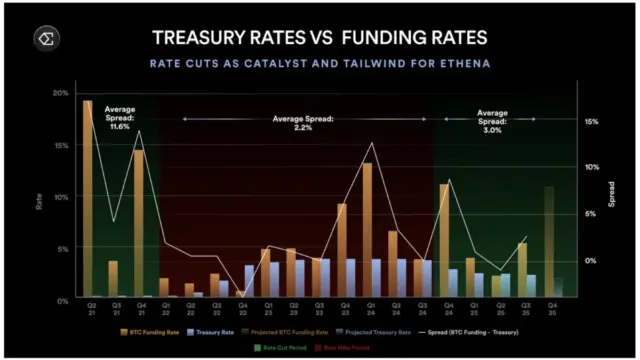
- Guy Young (CEO, Ethena Labs) – Stablecoins or Synthetic Dollars?: Young discussed the scaling mechanics of synthetic dollar architectures, explaining how delta-neutral hedging strategies are creating scalable, yield-bearing alternatives to fiat-backed stablecoins.
Future Outlook: The Road Ahead
As the dust settles on 2025, the narrative surrounding cryptocurrency has definitively shifted. The existential questions of regulatory survival and technological viability have been answered. The focus has now turned entirely to scaling, user adoption, and the institutionalization of internet-native financial infrastructure.
The breakthroughs witnessed this year—ranging from comprehensive federal legislation and SEC modernization plans to breakthroughs in AI-integrated labor markets and physical infrastructure—lay the groundwork for the next decade of economic expansion. The friction that once separated traditional finance from decentralized networks is rapidly dissolving, replaced by an integrated, high-speed, and secure global financial architecture.
For builders, investors, and stakeholders committed to this vision, the message from the 2025 Multicoin Summit is clear: the foundation has been laid, the rules of the road have been clarified, and the most exciting chapter of the crypto era is only just beginning.
Full video recordings of all keynote presentations and panel discussions from the 2025 Multicoin Summit are now publicly available on the Multicoin Capital YouTube channel for builders and investors eager to dive deeper into the theses shaping tomorrow’s economy.