rifanmuazin is a reporter for DeBitcoin covering Decentralized Finance (DeFi). She/He is based in Indonesia.
9 August 2026 • 8 min read
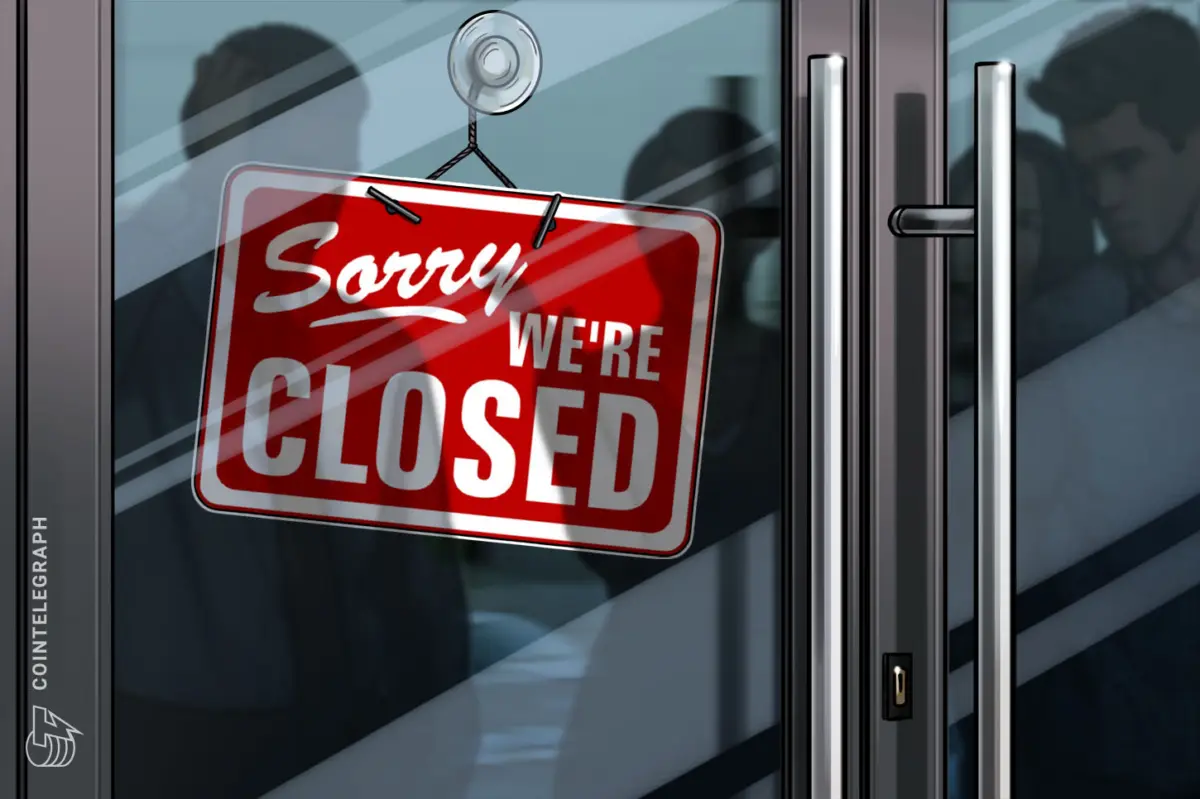
The decentralized finance (DeFi) sector is continuing to experience a brutal wave of market consolidation, highlighted by the sudden and definitive wind-down of Layer-1 blockchain and perpetual decentralized exchange (DEX) platform, Dango.
Executive Overview
In an official public announcement shared via X (formerly Twitter) on Friday, Dango’s executive team confirmed that the project will completely shutter operations. The closure will occur in a two-stage phase-out: trading on its flagship perpetual decentralized exchange will officially halt on July 29, followed by the permanent shutdown of the underlying Layer-1 network infrastructure on August 13.
Despite successfully securing a $3.6 million seed funding round in 2024—backed by prominent venture capital powerhouses such as Hack VC and Lemniscap—and launching its mainnet as recently as January, Dango ultimately failed to carve out a sustainable market share.
According to project leadership, the decision to wind down was driven by an insurmountable convergence of cash shortages, compounding legal challenges that severely stalled project momentum, key team member attrition, and a hyper-competitive macroeconomic climate within the digital asset ecosystem.
Dango’s abrupt exit underscores a broader, unforgiving trend sweeping across the cryptocurrency industry throughout the summer months. Mid-tier protocols, smaller Layer-1 networks, and regional exchanges are finding it increasingly difficult to survive in an ecosystem where liquidity, user attention, and trading volume are ruthlessly concentrating among a handful of dominant market leaders.
With giants like Hyperliquid and Binance commanding the lion’s share of global open interest and spot volume, smaller innovators are discovering that early venture capital backing and innovative technology are no longer sufficient to guarantee long-term commercial survival.
Detailed Chronology: From Promising Genesis to Sudden Demise
The life cycle of Dango serves as a textbook cautionary tale regarding the rapid pace, high stakes, and unforgiving nature of the modern Web3 startup ecosystem. Tracing the project’s trajectory from its initial capital raise to its impending dissolution reveals a cascade of operational hurdles that ultimately crushed the young protocol.
1. The 2024 Seed Funding and Mainnet Launch
Dango burst onto the decentralized application scene with considerable promise. In 2024, the project successfully closed a $3.6 million seed funding round. The round was spearheaded by institutional heavyweights Hack VC and Lemniscap, signaling strong early confidence from the venture capital community in Dango’s thesis as a specialized Layer-1 blockchain tailored for derivative trading.
Building on this financial foundation, Dango officially rolled out its mainnet in January, setting the stage for what the team hoped would be a disruptive entry into the burgeoning on-chain perpetual futures market.
2. The April Perpetual DEX Launch and the Exploit Crisis
In April, Dango achieved a major milestone by launching its dedicated perpetual decentralized exchange. However, this high-profile rollout was almost immediately derailed by a severe security incident.
Just days after going live, the perp DEX suffered a major security breach resulting in the theft of roughly $410,000 in user funds. While the crisis was temporarily mitigated when the attacker ultimately returned the stolen funds in exchange for a white-hat bug bounty, the exploit delivered a crippling blow to the protocol’s nascent reputation, user confidence, and engineering bandwidth at a critical juncture in its growth lifecycle.
3. Spiraling Challenges and the Final Announcement
Following the exploit, Dango struggled to regain its footing. Founder Larry Liu later detailed the myriad pressures that compounded behind the scenes. In addition to the financial drain caused by the security incident, the team was forced to navigate complex legal challenges that drained resources and slowed development momentum.
Simultaneously, the project suffered critical talent drain with the departure of key team members, all against the backdrop of an indifferent and highly competitive broader market. Recognizing that these headwinds were insurmountable, leadership made the definitive call to pull the plug.
In its official Friday announcement, the team stated:
“Despite our best effort, various reasons have led us to conclude there is no viable path to a lasting commercial success.”
Supporting Context & Metrics: The Goliath Effect in Perp DEXs
To fully comprehend why Dango failed to secure a foothold, one must examine the macro-level structure of the perpetual DEX sector. The market for on-chain derivatives is characterized by extreme winner-take-all dynamics, where liquidity attracts liquidity, leaving marginal players starved of volume.
Total Value Locked (TVL) Plunge
Data from decentralized finance analytics platform DefiLlama illustrates the rapid erosion of user capital on Dango. At its peak in early May—shortly after the launch of its perpetual exchange—Dango’s Total Value Locked (TVL) hovered at approximately $4.5 million. However, as user sentiment soured and operational difficulties mounted, capital rapidly fled the platform. By the time the shutdown was announced, Dango’s TVL had plummeted by over 64%, resting at roughly $1.6 million.
The Open Interest Chasm
The disparity in open interest (OI)—the total value of outstanding derivative contracts that remain unsettled—vividly highlights the insurmountable gap between industry titans and emerging challengers like Dango:
Hyperliquid: As of recent tracking data, Hyperliquid dominated the landscape, holding an astronomical $11 billion in open interest. CoinGecko’s Q2 industry report further solidified this dominance, noting that Hyperliquid cemented its position as the second-largest perpetual exchange globally by open interest on July 1, trailing only centralized giant Binance.
The Billion-Dollar Club: Only a select few platforms, such as Aster and Variational, managed to breach the $1 billion open interest threshold.
Dango: In stark contrast, Dango’s open interest languished at just under $391,000, rendering it statistically invisible on a global scale and unable to generate the fee revenue necessary to sustain ongoing operations.
This stark divide illustrates why mid-tier protocols are bleeding out. Without deep liquidity to eliminate slippage and attract professional market makers, smaller perp DEXs find themselves trapped in a death spiral of low volume and declining user engagement.
Official Statements and Industry Analysis
The demise of Dango has catalyzed wider industry discussions regarding the health of the broader crypto startup ecosystem. Project founders and financial restructuring experts have stepped forward to contextualize the closure within a broader economic framework.
Founder Insights: Larry Liu’s Post-Mortem
Dango founder Larry Liu offered candid transparency regarding the collapse, pointing out that internal operational friction was just as damaging as external market forces. Beyond the immediate cash shortages resulting from the early-stage exploit and the failure to capture sustainable fee revenue, Liu emphasized the corrosive impact of legal hurdles. Navigating regulatory gray areas and compliance burdens proved to be an exhausting distraction that diverted the core engineering team away from product iteration and community growth.
The Macro View: Consolidation and Centralization Pressures
Dango’s collapse coincides with a brutal summer of crypto shutdowns. Most notably, the 11-year-old perpetual futures pioneer BitMEX announced its own sudden closure, accompanied by high-profile legal battles and a massive 623 BTC lawsuit. Other notable victims of this consolidation wave include the DEX aggregator Odos Protocol and perpetual trading platform Satori Finance.
Weighing in on these systemic closures, restructuring adviser Roshan Dharia shared vital insights with industry analysts. According to Dharia, the mass extinction event currently unfolding among mid-sized centralized and decentralized exchanges is driven by relentless structural pressures:
“The top five platforms now control an estimated 80% of global spot volume, leaving mid-tier and regional exchanges with shrinking margins and no viable path to scale,” Dharia explained.
He further noted that as regulatory compliance costs continue to skyrocket globally, smaller players simply lack the capital reserves required to maintain legal defenses, audit expenditures, and infrastructure maintenance while remaining competitive on fee structures.
Future Outlook: Navigating the Post-Consolidation Landscape
As the digital asset industry processes the loss of protocols like Dango, BitMEX, and Odos Protocol, the broader macroeconomic landscape for Web3 builders is undergoing a fundamental paradigm shift.
1. The End of Easy Capital for Mid-Tier Protocols
The era of venture capital firms blindly funding copycat Layer-1 blockchains and derivative platforms with the hope of catching a speculative wave is effectively over. Investors are increasingly pivoting toward capital preservation, demanding proven product-market fit, rigorous security audits, and crystal-clear regulatory compliance strategies before committing funds. Consequently, early-stage founders will face significantly higher bars to entry and must demonstrate extreme capital efficiency from day one.
2. The Dominance of Ecosystem Monopolies
The ongoing consolidation wave suggests that the future of crypto trading will likely be characterized by massive, highly liquid ecosystem monopolies. Platforms like Hyperliquid and Binance have achieved network effects that create near-insurmountable moats. For new entrants to succeed moving forward, launching yet another general-purpose Layer-1 blockchain or standard perpetual DEX will no longer suffice. Builders will be forced to innovate strictly through hyper-niche use cases, proprietary technological breakthroughs (such as advanced account abstraction or novel zero-knowledge privacy implementations), or deeply integrated real-world asset (RWA) mechanics.
3. A Critical Timeline for Users and Depositors
For users currently interacting with Dango, the immediate focus shifts to asset retrieval. With trading slated to halt on July 29 and the network scheduled to completely go dark on August 13, community members have a strict, limited window to withdraw their remaining funds, close out open positions, and migrate their capital to alternative venues.
Ultimately, Dango’s shutdown serves as a sobering reminder of the unforgiving realities of decentralized finance. While the technology underlying Web3 continues to mature at a rapid pace, the commercial viability of individual projects remains inextricably tied to deep liquidity, flawless execution, robust security, and the financial resilience required to weather persistent market winters.