


Executive Overview
While bellwether assets like Bitcoin (BTC) and Ether (ETH) have notched positive gains on monthly timeframes, they face formidable resistance. The macro-economic landscape has been heavily influenced by rising crude oil prices, which have climbed toward $118 per barrel amid a prolonged regional conflict. This has stoked inflationary fears, directly impacting traditional equities like the S&P 500 and subsequently spilling over into crypto derivatives markets.
At the same time, structural and protocol-level developments continue to shape the industry’s micro-economy. The Ethereum Foundation’s ongoing, programmatic treasury sales have sparked fresh dialogue regarding sustainable protocol funding. Meanwhile, unique sentiment dynamics play out across various corners of the ecosystem—from the performance of politically-tied digital assets like the official TRUMP memecoin to surging institutional interest in alternative layer-1 and payment tokens like XRP.
This comprehensive report examines the intersection of macroeconomics, on-chain metrics, and market sentiment, providing an authoritative breakdown of the primary narratives driving the digital asset landscape in mid-2026.

Detailed Chronology of April 2026 Market Dynamics
The month of April 2026 proved to be a masterclass in market resilience juxtaposed against macro fragility. The chronology of key events underscores the delicate balance between technical breakouts and external shocks:
- Early April: Ether (ETH) opens the month with strong upward momentum, surging more than 10% to breach the $2,430 threshold. Concurrently, the Ethereum Foundation executes programmatic treasury adjustments, liquidating 5,000 ETH for DAI, followed by a 10,000 ETH over-the-counter (OTC) transaction with Tom Lee’s Bitmine.
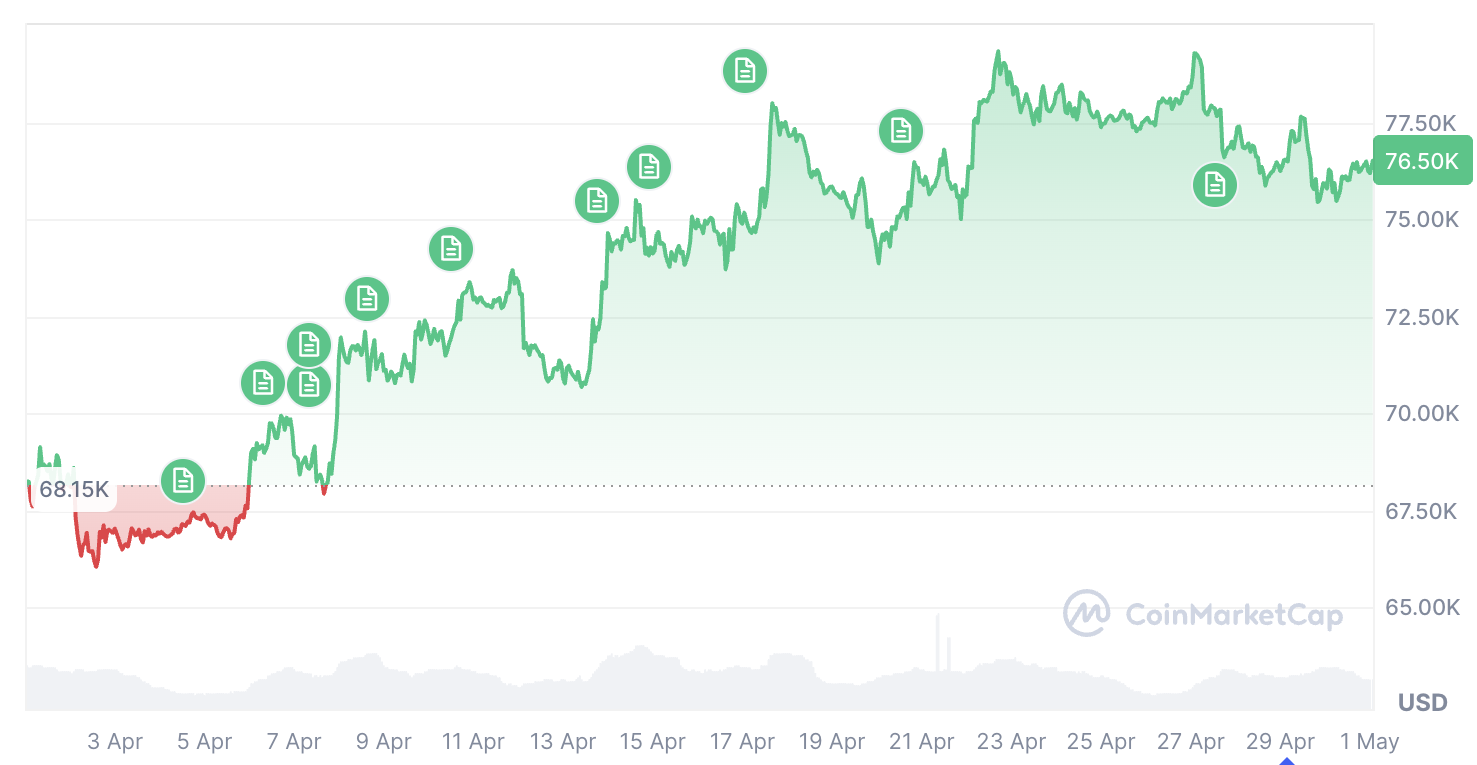
- Mid-April: As the geopolitical conflict in the Middle East marks its 60-day milestone, crude oil prices spike toward $118 a barrel. Traditional stock indices, including the S&P 500, undergo localized corrections, pulling Bitcoin back after encountering heavy resistance near the $78,000 level.
- Late April (FOMC Decision): The Federal Open Market Committee (FOMC) releases its meeting minutes, confirming that the federal funds rate will remain unchanged in the 3–½ to 3–¾ percent range. Citing global uncertainty stemming from Middle Eastern developments, Federal Reserve Chairman Jerome Powell adopts a data-dependent stance, causing temporary volatility in crypto derivatives.
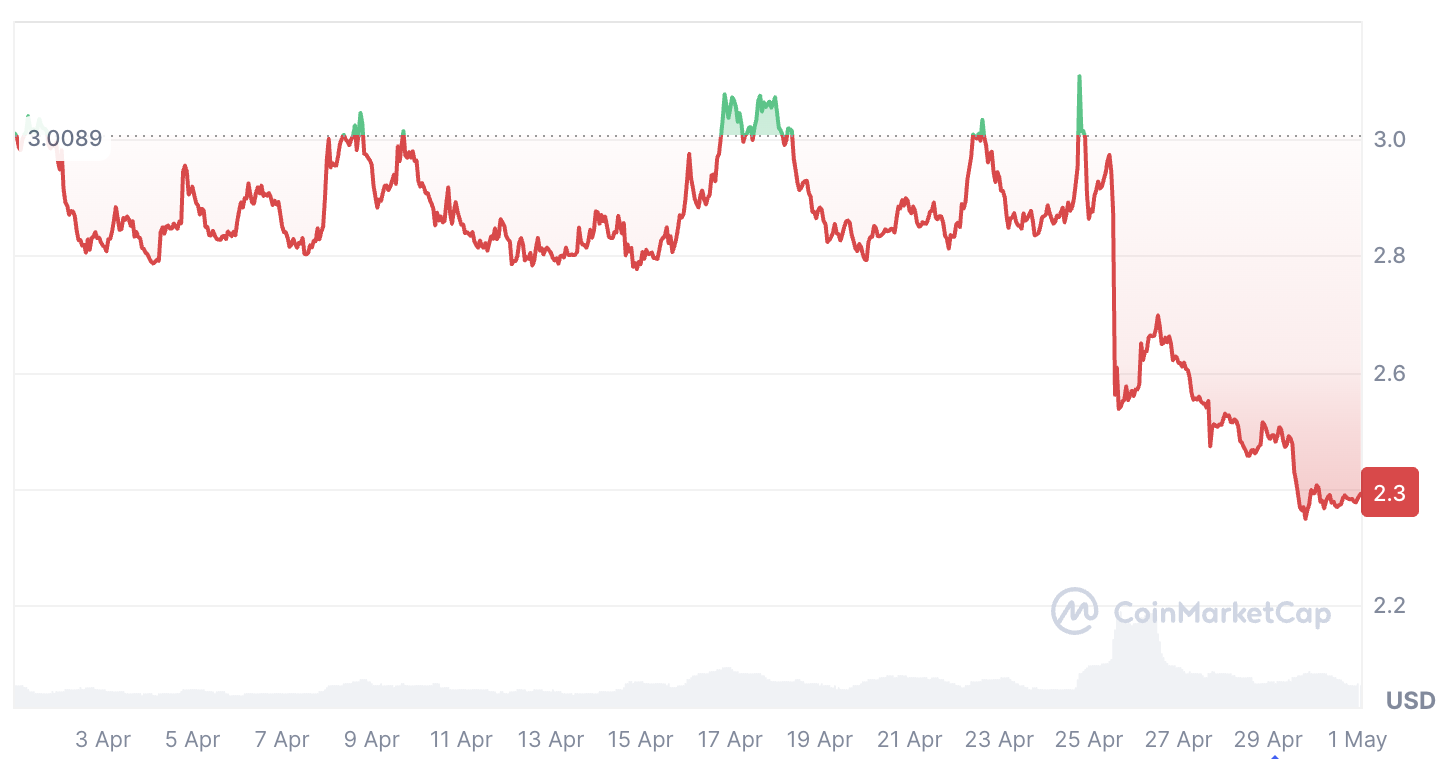
- Saturday, May 2: President Donald Trump hosts an exclusive, closed-door investor gala at his Mar-a-Lago estate for the top holders of his official TRUMP memecoin. Despite the high-profile gathering, the token’s market valuation continues a prolonged downward slide, trading near $2.30—down significantly from its early 2025 all-time highs.
Supporting Context & Metrics: On-Chain Analysis and Financial Flows
To fully comprehend the forces moving digital asset valuations, one must look beyond headline price action and analyze underlying on-chain metrics, derivatives positioning, and institutional inflows.
Ethereum Foundation’s Treasury Management
A frequent point of discussion among retail traders is why foundational entities sell their native assets during bull runs or market recoveries. The Ethereum Foundation’s recent actions provide a clear case study in disciplined financial engineering.
Having adopted a formalized Treasury Policy in June 2025, the Foundation operates independently of short-term market sentiment. Its mandate requires maintaining fiat and stablecoin reserves sufficient to cover roughly 2.5 years of projected operating expenses. Consequently, periodic liquidations—such as the early April sales totaling 15,000 ETH (roughly $34.9 million across DAI and OTC deals)—are designed to fund core protocol research, developer grants, and global ecosystem support.
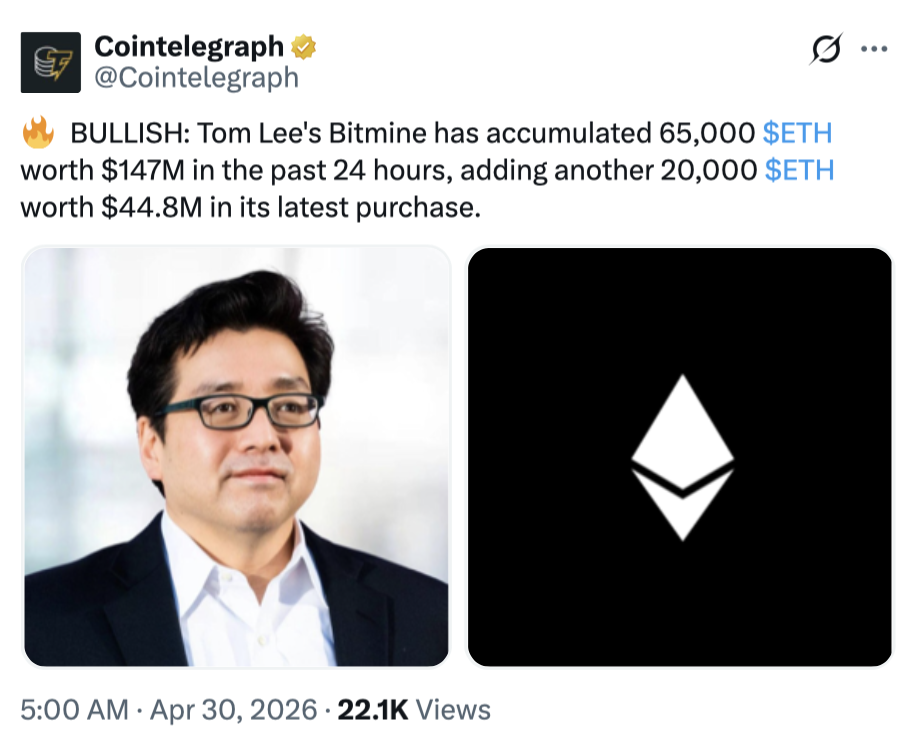
According to data compiled by Arkham Intelligence, the Foundation retains a robust liquid treasury of approximately 92,500 ETH (valued near $215 million), alongside an additional 53,000 ETH locked in staking contracts. Total 2026 liquidations stand at approximately 20,000 ETH, securing over $45 million in operational runway without destabilizing the asset’s broader market liquidity.
Bitcoin Derivatives and Macro Pressures
Bitcoin’s rejection at the $78,000 mark on Wednesday mirrored technical struggles observed in traditional risk-on assets, specifically the S&P 500 near the 7,200 resistance level. Market skepticism has been fueled by dual threats:
- Energy Inflation: Surging crude oil prices threaten global supply chains, increasing logistics costs and squeezing corporate profit margins.
- AI ROI Skepticism: Traditional equity investors have increasingly questioned the short-term profitability of massive corporate capital expenditures directed toward artificial intelligence infrastructure.
These macro pressures translated directly into crypto derivatives behavior. The Bitcoin perpetual futures funding rate turned negative mid-week following a brief neutral-to-bullish spell. In a balanced, expanding market, funding rates typically hover between 6% and 12 annualized percent to compensate long position holders. A sudden shift to negative territory indicates an influx of leveraged bearish positioning, suggesting that short-term traders anticipate further consolidation or downside risk.
XRP Spot ETFs and Institutional Accumulation
In stark contrast to the caution observed in Bitcoin derivatives, alternative assets like XRP are experiencing a structural renaissance in institutional investment products.
Data from SoSoValue highlights that XRP spot ETFs have enjoyed a stellar recovery throughout April. After suffering a net outflow of $31.16 million in March, April registered $83.9 million in net inflows. Products recorded positive flows in 11 out of 13 consecutive trading sessions, accumulating an aggregate $82.42 million. Analysts note that this represents the strongest monthly inflow performance since December 2025, signaling that institutional appetite for regulated exposure to alternative layer-1 networks remains active and expanding.
Official Statements and Industry Commentary
Market participants and macroeconomic analysts have weighed in heavily on the current state of affairs, highlighting the resilience of crypto infrastructure against a backdrop of global instability.
Addressing the Federal Reserve’s decision to hold interest rates steady while explicitly citing Middle Eastern uncertainty, crypto market commentators noted the predictable nature of the market’s reaction. Hyblock CEO Shubh Varma characterized the immediate post-FOMC price action as a textbook "sell the news" event. However, Varma emphasized the underlying strength of the market, noting that Bitcoin "quickly recovered to pre-announcement levels within hours, showing strong underlying conviction."
Regarding institutional products, social-sentiment analysts on X (formerly Twitter) pointed to the sustained accumulation in alternative asset funds. Analyst Xfinancebull remarked on the record-setting April ETF metrics for XRP:
"That does not guarantee instant price fireworks, but it absolutely tells me the bid for regulated $XRP exposure is still alive and building."
On the political and memecoin front, the stark disconnect between celebrity-driven token valuations and high-profile real-world events continues to draw scrutiny. Despite gathering 297 top token holders for an exclusive conference and VIP champagne toast at Mar-a-Lago, the official TRUMP token remains down over 96% from its early 2025 peak of $75.35, illustrating the ephemeral nature of speculative memecoin cycles compared to foundational utility assets.
Future Outlook: Navigating Q2 and Beyond
As the crypto market looks past April into the remainder of Q2 2026, several critical catalysts and risk vectors will dictate trajectory:
- Macroeconomic and Geopolitical Resolution: The primary external cap on risk assets remains the trajectory of the Middle Eastern conflict and its subsequent impact on global energy prices. Should oil stabilize below key inflationary thresholds, central banks may regain room to maneuver, easing monetary policy constraints that currently weigh on risk-on sectors.
- Regulatory and ETF Evolution: The success of XRP spot ETFs in reclaiming robust monthly inflows opens the door for broader institutional product expansion. Market participants will closely monitor whether this momentum broadens to encompass other multi-asset index funds and staking-enabled product structures.
- Protocol-Level Maturity: The institutionalization of foundation management—exemplified by the Ethereum Foundation’s transparent, policy-driven treasury liquidations—establishes a blueprint for sustainable protocol governance. As networks mature, transparent financial management reduces the speculative panic historically associated with foundation token transfers.
Ultimately, while short-term volatility and macroeconomic crosswinds continue to test trader conviction, the underlying infrastructure, institutional plumbing, and developer activity within the digital asset ecosystem continue to mature, setting the stage for the next phase of market evolution.