Executive Overview
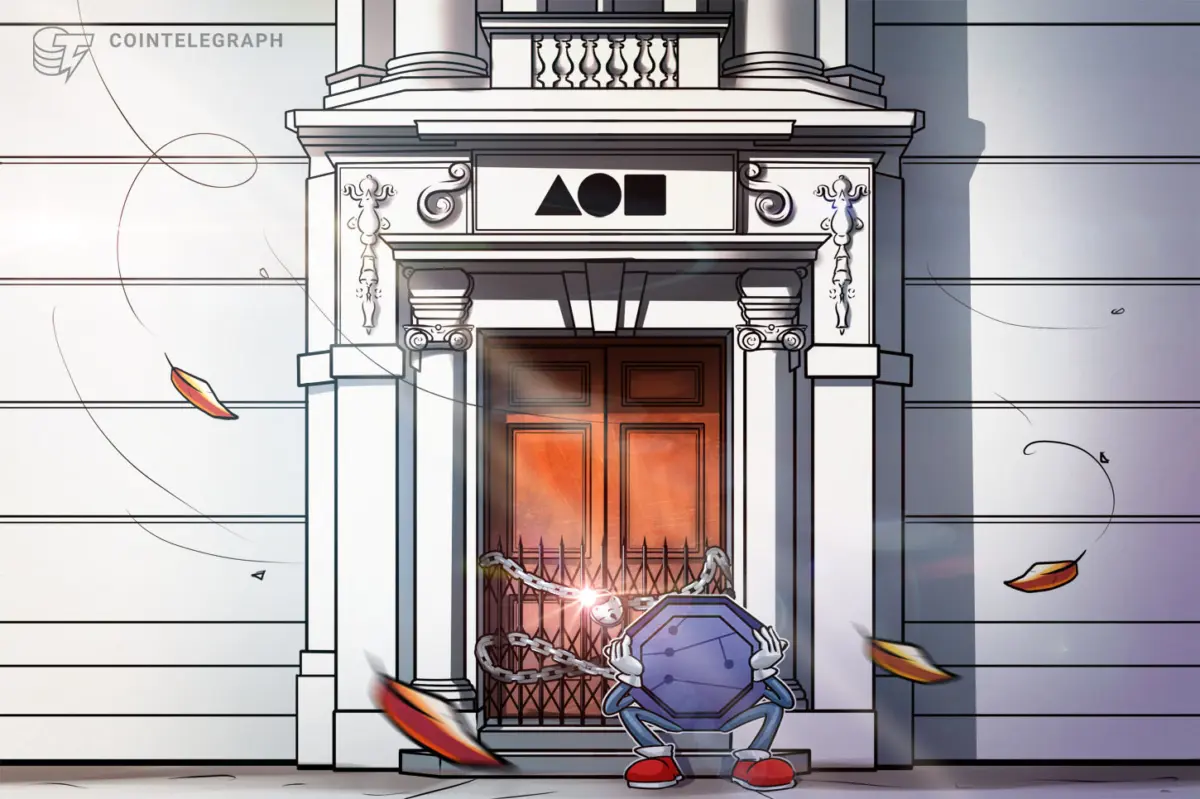
Kayvon Tehranian, the founder and CEO of Foundation, broke the news to the public via a statement on X (formerly Twitter) on Wednesday. The announcement laid bare the harsh realities facing independent Web3 infrastructure providers operating in a severely depleted market. What was initially framed as a strategic transition of ownership to the digital art distribution platform Blackdove ultimately unraveled, leaving Foundation without the financial runway or institutional backing required to keep its servers online.
This development is far from an isolated incident. Instead, it serves as a glaring symptom of a broader, systemic contraction across the digital collectibles ecosystem. As trading volumes retreat to pre-hype levels, the once-crowded marketplace sector is undergoing a brutal wave of consolidation. Independent platforms that rode the wave of the 2021–2022 speculative mania are finding it mathematically impossible to sustain operations against persistent liquidity shortages, plunging valuations, and the relentless dominance of market giants like OpenSea and Blur.
This article explores the trajectory of Foundation’s rise and fall, the mechanics behind its failed acquisition, the widening wave of industry closures, and what the future holds for digital art in a post-hype economy.
Detailed Chronology: From 2021 Crown Jewel to Abrupt Liquidation
The Golden Era and Cultural Zenith
To understand the gravity of Foundation’s closure, one must look back at its origins in early 2021. Launched during an unprecedented explosion of interest in blockchain-verified creativity, Foundation quickly positioned itself as an elite, curated platform for digital artists, creators, and crypto-native collectors.
Unlike permissionless platforms that flooded the market with low-effort tokenized media, Foundation cultivated an aura of exclusivity. It utilized an invite-only model that required existing artists to sponsor newcomers. This strategy successfully attracted some of the most prominent digital creators of the era, turning the platform into a cultural hotspot. During its operational lifetime, the marketplace facilitated over $230 million in primary sales alone, hosting historic drops for globally recognized names such as Jen Stark, James Jean, and Reuben Wu.
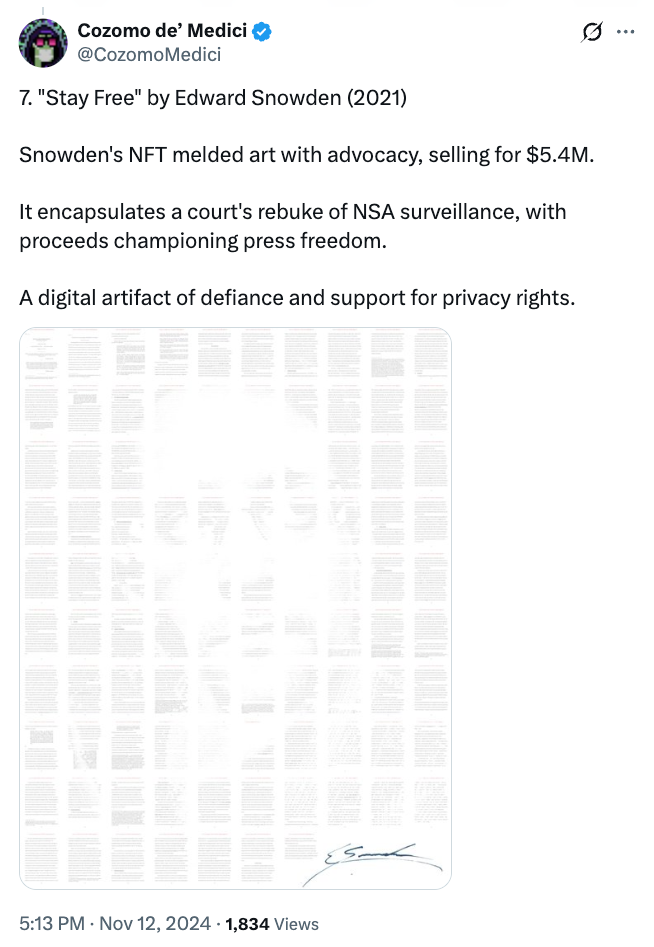
The platform also played a pivotal role in high-profile cultural and political intersections within crypto. Most notably, in 2021, American whistleblower Edward Snowden minted and sold his iconic digital artwork, “Stay Free,” on Foundation. The piece fetched approximately 2,200 Ether (ETH)—valued at roughly $5 million at the time—with all proceeds directed toward the Freedom of the Press Foundation.
The Onset of the Bear Market
However, the astronomical highs of 2021—marked by historic milestones like Beeple’s $69 million auction at Christie’s—were followed by a punishing multi-year crypto winter. As macroeconomic conditions tightened, interest rates rose, and speculative fervor cooled, the secondary trading volume for digital collectibles began a precipitous slide.
By late 2022 and throughout 2023, platforms like Foundation began facing severe economic headwinds. Transaction fees shrank, trading liquidity dried up, and the daily active user counts required to sustain a venture-backed infrastructure business evaporated.
The Blackdove Acquisition and Final Collapse
Recognizing the unsustainable trajectory of independent operations, Foundation sought an exit strategy to preserve its legacy and ensure the platform’s survival. In early 2025, digital art distribution platform Blackdove announced an agreement to acquire Foundation, with a public transition of ownership slated to roll out progressively.
The acquisition was billed as a symbiotic union: Blackdove’s hardware display integration and commercial distribution channels would merge with Foundation’s deep creator pedigree and Web3 infrastructure. However, behind the scenes, integration hurdles and macroeconomic pressures strained the deal.
On Wednesday, Tehranian revealed that the buyout had ultimately collapsed.
"The original goal of the sale was to ensure the platform would continue operating under new ownership. That’s no longer possible," Tehranian stated, explicitly noting that Foundation was no longer in any financial or operational position to resurrect the marketplace independently.
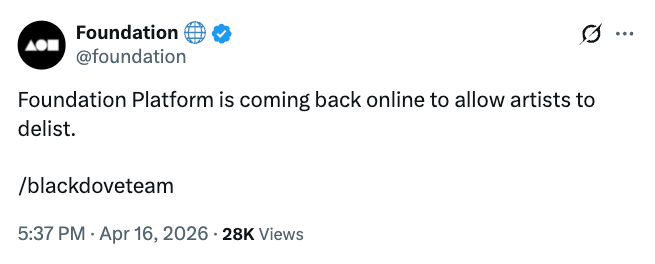
In a bittersweet final operational grace, Foundation announced a brief, temporary reopening of the site—signed by the Blackdove team—to allow stranded creators and collectors to safely delist their NFTs and withdraw remaining assets before the permanent blackout took effect.
Supporting Context & Metrics: The Mechanics of Market Contraction
Foundation’s demise is intimately tied to macroeconomic shifts in the broader crypto economy and a structural transformation in how digital assets are traded.
Return to Pre-Hype Valuations
Data compiled by industry analytics trackers, including DefiLlama, paints a stark picture of the digital asset sector’s decline. By February 2026, the aggregate market capitalization of the entire NFT sector had shrunk back to levels not seen since early 2021, effectively erasing five years of speculative gains.
While blue-chip collections and select generative art projects retain dedicated collector bases, the speculative middle class of the NFT market has vanished. Without high-frequency retail trading and lucrative creator royalties—many marketplaces infamously dropped optional creator royalties to compete for volume—the business model of running a standalone, curation-focused marketplace became economically unviable.
The Rise of Market Dominance
The fallout has left little room for boutique players. Today, the marketplace ecosystem is heavily concentrated. OpenSea continues to command a dominant market share, accounting for over 73% of overall sector activity at the time of publication, with aggressive competition coming from institutionalized rivals like Blur.
When liquidity concentrates in just one or two dominant hubs, smaller platforms find themselves trapped in a vicious cycle: lower volume leads to fewer buyers, which drives sellers away, accelerating the platform’s death spiral.
Official Statements and Industry Reactions
The crypto community reacted to Foundation’s shutdown with a mixture of mourning for a lost pioneer and pragmatic acceptance of market realities.
Kayvon Tehranian’s announcement on X triggered an outpouring of condolences from digital artists whose careers were launched on the platform. Many creators credited Foundation with legitimizing digital art as a viable, museum-grade medium rather than a passing internet fad.
At the same time, institutional stakeholders view the shutdown as part of a necessary, albeit painful, market purge. The closure of Foundation coincides with a broader wave of capitulation across the Web3 startup ecosystem:
- Mint Blockchain, an Ethereum-based NFT infrastructure network, announced on Friday that it was permanently ceasing operations and urging users to sweep their assets off the platform.
- Nifty Gateway, the Gemini exchange-backed NFT marketplace once heralded as an industry titan, announced its wind-down earlier this year.
- Rodeo, a social-focused NFT platform, became the second major casualty of its specific launch week when it announced its closure.
- MakersPlace, X2Y2, and major centralized exchanges like Bybit have all similarly shuttered or completely pivoted away from dedicated NFT marketplaces over the past year.
These developments signal the definitive end of the "wild west" era of NFT startups, replacing it with a hyper-consolidated landscape where only deeply integrated or heavily capitalized platforms can weather prolonged downturns.
Future Outlook: Is There Light at the End of the Crypto Winter?
Despite the devastating wave of closures—including Foundation, Mint Blockchain, and Nifty Gateway—industry veterans maintain that the underlying technology of tokenized ownership is far from dead.
Prominent figures, such as Animoca Brands Chairman Yat Siu, have consistently argued that the cyclical nature of crypto markets means current pessimism is merely a precursor to structural reinvention. Siu and other venture capitalists have previously predicted that the sector will eventually recover, driven by tokenized gaming, decentralized identity, real-world asset (RWA) tokenization, and programmatic intellectual property rights.
However, the path forward for digital art specifically will look vastly different from the 2021 boom. The era of easy venture capital funding, unchecked speculative valuations, and dozens of competing boutique marketplaces is officially over.
Platforms that survive the current contraction will likely need to integrate deeply with physical display technologies (such as Blackdove’s digital canvases), traditional fine art institutions, and cross-chain utility frameworks that extend far beyond simple speculative trading.
For now, the closure of Foundation marks the end of an era. As the digital art world bids farewell to one of its founding pillars, the ecosystem turns its eyes toward a leaner, more hardened future—one where survival requires far more than just a famous name and a pioneering spirit.