
Executive Overview
For two decades, fintech innovation was overwhelmingly confined to the top of the stack. Companies functioned as brilliant, user-friendly wrappers built around legacy plumbing: the Automated Clearing House (ACH), the Society for Worldwide Interbank Financial Telecommunication (SWIFT), and rigid, decades-old card networks. The stack was endlessly resold, repackaged, and remarketed, but it was rarely rebuilt.
This dynamic created an industry optimized for customer acquisition and marketing spend rather than infrastructure efficiency. As neobanks, embedded finance providers, and digital lenders crowded the market, they found themselves dependent on a shrinking pool of sponsor banks and traditional intermediaries. The resulting commoditization compressed margins, inflated compliance overhead, and left fintech founders as tenants on someone else’s land, paying rent to access closed, permissioned rails.
Today, however, the financial sector stands on the precipice of its most profound structural transformation. The emergence of stablecoins and permissionless financial infrastructure—collectively heralded as Fintech 4.0—promises to bypass legacy intermediaries altogether. By rendering custody, settlement, lending, and compliance into open, programmable software, stablecoins are collapsing the fixed costs of launching and operating financial products from millions of dollars down to a fraction of that.
As the economic barriers to entry evaporate, the traditional mandate for brute-force scale is giving way to a new paradigm: hyper-specialization. In this comprehensive investigation, we examine the four-decade evolutionary arc of fintech, the structural decay of the Banking-as-a-Service (BaaS) model, and how stablecoin-native infrastructure is enabling an entirely new generation of specialized financial services.
Detailed Chronology: The Four Eras of Fintech Evolution
To understand where the financial technology sector is heading, we must first trace how it arrived at its current crossroads. Broadly speaking, the evolution of modern fintech can be segmented into four distinct historical phases, each defined by its approach to distribution, infrastructure, and institutional dependency.
[Fintech 1.0: Digital Distribution] ---> [Fintech 2.0: Neobank Era] ---> [Fintech 3.0: Embedded Finance] ---> [Fintech 4.0: Stablecoins & Open Rails]
         (2000–2010)                           (2010–2020)                   (2020–2024)                    (2024–Future)
    Digitized Legacy Rails                 Smartphone & UX Focus             BaaS & API Abstraction          Programmable Settlement
Fintech 1.0: Digital Distribution (2000–2010)
The inaugural wave of digital finance made services significantly more accessible, but it did not make them fundamentally more efficient. Pioneering enterprises such as PayPal, E*TRADE, and Mint successfully digitized existing financial products by wrapping legacy systems—specifically ACH, SWIFT, and legacy card networks built decades prior—in consumer-accessible internet interfaces.

Despite the digital veneer, settlement remained slow, compliance workflows were manual, and payment processing operated on rigid, archaic schedules. This era successfully brought finance online, but it did not allow money to move in fundamentally novel ways. The variable that changed was who could access financial products, not how those underlying products actually functioned.
Fintech 2.0: The Neobank Era (2010–2020)
The subsequent technological unlock was propelled by the ubiquity of smartphones and social distribution channels. A fresh crop of digital-first competitors emerged: Chime tailored its value proposition to hourly wage earners seeking early access to paychecks; SoFi targeted upwardly mobile graduates eager to refinance student loans; and global players like Revolut and Nubank captured underbanked populations with consumer-friendly user experiences (UX).
While each company mastered storytelling for a hyper-specific demographic, they were all fundamentally selling identical underlying products: checking accounts and debit cards operating on legacy rails. They remained entirely dependent on sponsor banks, card networks, and ACH operators just like their predecessors.
These firms did not win by constructing new financial architecture; they triumphed through superior customer acquisition, brand-building, and digital marketing. Fintechs in this era effectively evolved into sophisticated distribution businesses layered delicately on top of traditional banking institutions.
Fintech 3.0: Embedded Finance (2020–2024)
By 2020, embedded finance achieved mainstream velocity. Application Programming Interfaces (APIs) democratized financial capabilities, allowing virtually any software company to offer banking and payment products out of the box. Infrastructure providers like Marqeta enabled instantaneous card issuance via API, while Banking-as-a-Service (BaaS) platforms such as Synapse, Unit, and Treasury Prime allowed non-financial apps to embed payments, cards, and lending capabilities natively.
Yet, beneath this sleek abstraction layer, the foundational architecture remained unchanged. BaaS providers remained inextricably linked to the same sponsor banks, compliance frameworks, and payment rails of preceding eras. The abstraction layer simply moved one tier upward—from traditional bank interfaces to developer-friendly APIs—while true economic leverage and institutional control remained firmly anchored within the legacy banking system.
Fintech 4.0: Stablecoins and Permissionless Finance (Present and Beyond)
Despite two decades of relentless software iteration, the plumbing underneath the global financial system barely budged. Whether products were accessed via traditional brick-and-mortar banks, mobile-first neobanks, or embedded APIs, value continued to traverse closed, permissioned networks controlled by an oligopoly of intermediaries.
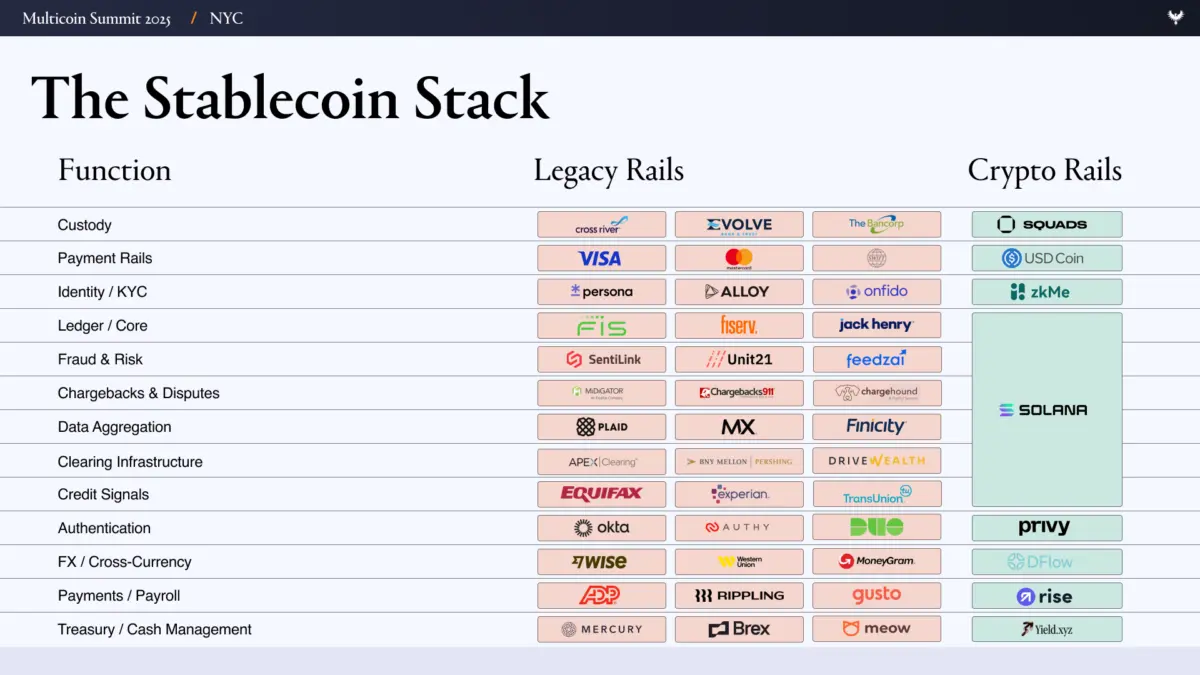
Stablecoins fundamentally shatter this paradigm. Rather than merely layering software on top of banks, stablecoin-native systems replace core banking functions directly at the architectural level. Builders interact directly with open, programmable networks where payments settle natively on-chain. Custody, lending, and compliance transition from complex contractual relationships to self-executing software protocols.
Supporting Context & Metrics: The Commoditization Crisis and Regulatory Backlash
By the early 2020s, the structural cracks within the Fintech 2.0 and 3.0 models became impossible to ignore. Because nearly every major neobank and embedded finance app relied on the exact same concentrated cluster of sponsor banks and BaaS providers, true architectural differentiation evaporated.
+-------------------------------------------------------------------------+
|                        THE TRADITIONAL FINTECH STACK                    |
|                                                                         |
|  [Consumer App / Fintech Frontend]                                      |
|         |                                                               |
|         v                                                               |
|  [BaaS / Middleware API Layer]  <--- (High Vendor Costs & Complexity)    |
|         |                                                               |
|         v                                                               |
|  [Sponsor Bank / FDIC Insurer]  <--- (Heavy Regulatory Scrutiny)        |
|         |                                                               |
|         v                                                               |
|  [Legacy Rails: ACH, SWIFT, Card Networks]                              |
+-------------------------------------------------------------------------+
The Marketing Arms Race and Margin Compression
As market saturation set in, customer acquisition costs (CAC) skyrocketed. Fintech competitors engaged in exhausting performance marketing wars, attempting to buy market share through superficial gimmicks: metallic card colors, sign-up cash bonuses, and aggressive cashback programs.
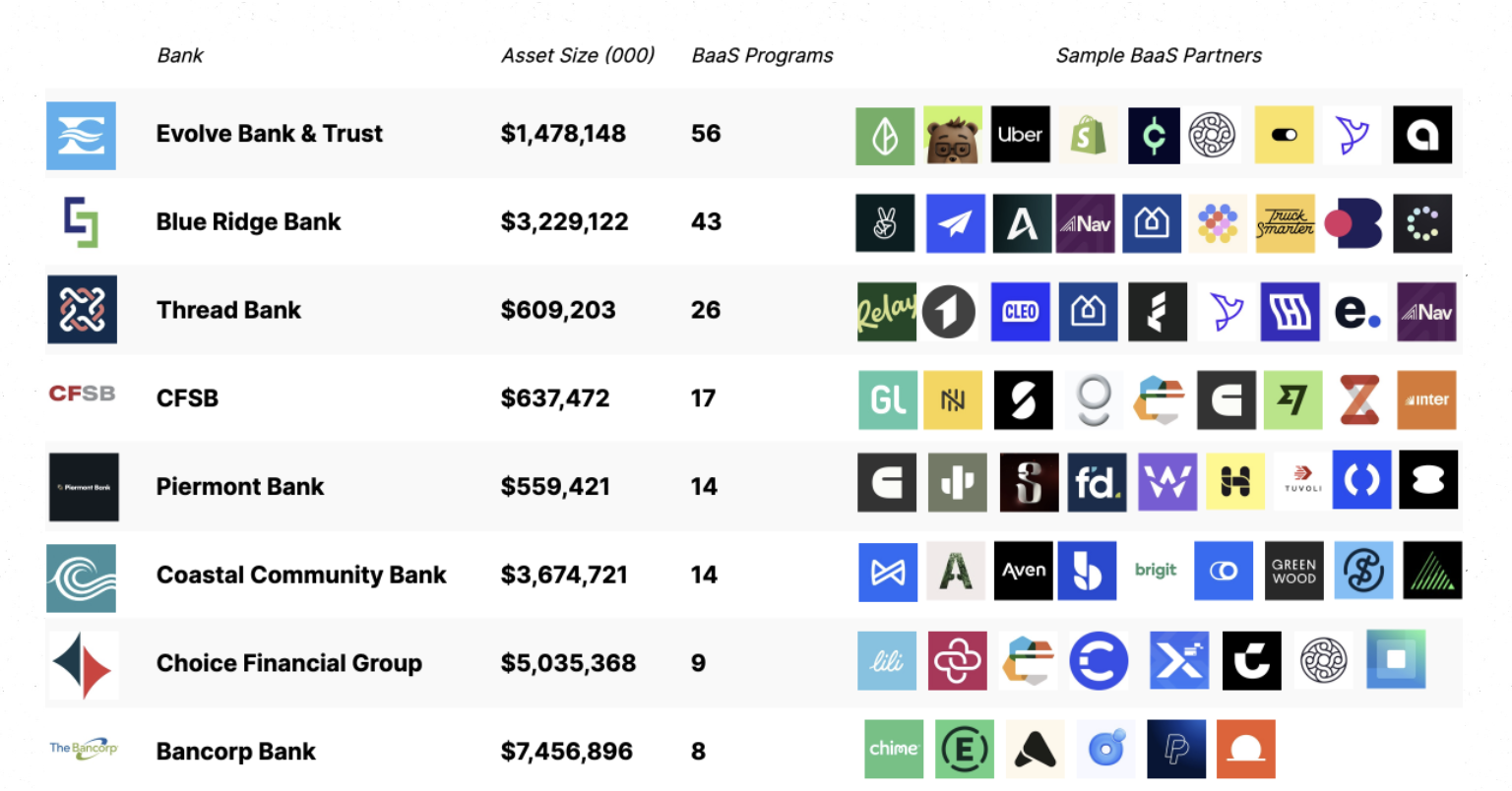
Simultaneously, financial risk and true value capture remained heavily concentrated at the bank layer. Tier-one financial institutions—regulated by bodies such as the Office of the Comptroller of the Currency (OCC)—retained exclusive privileges: accepting insured deposits, originating loans, and accessing foundational federal payment rails like Fedwire and ACH. Fintech startups, by contrast, lacked these statutory charters and were forced to rely on licensed partner banks, capturing mere scraps of interchange revenue while banks retained rich interest margins and platform fees.
Regulatory Squeeze on Sponsor Banks
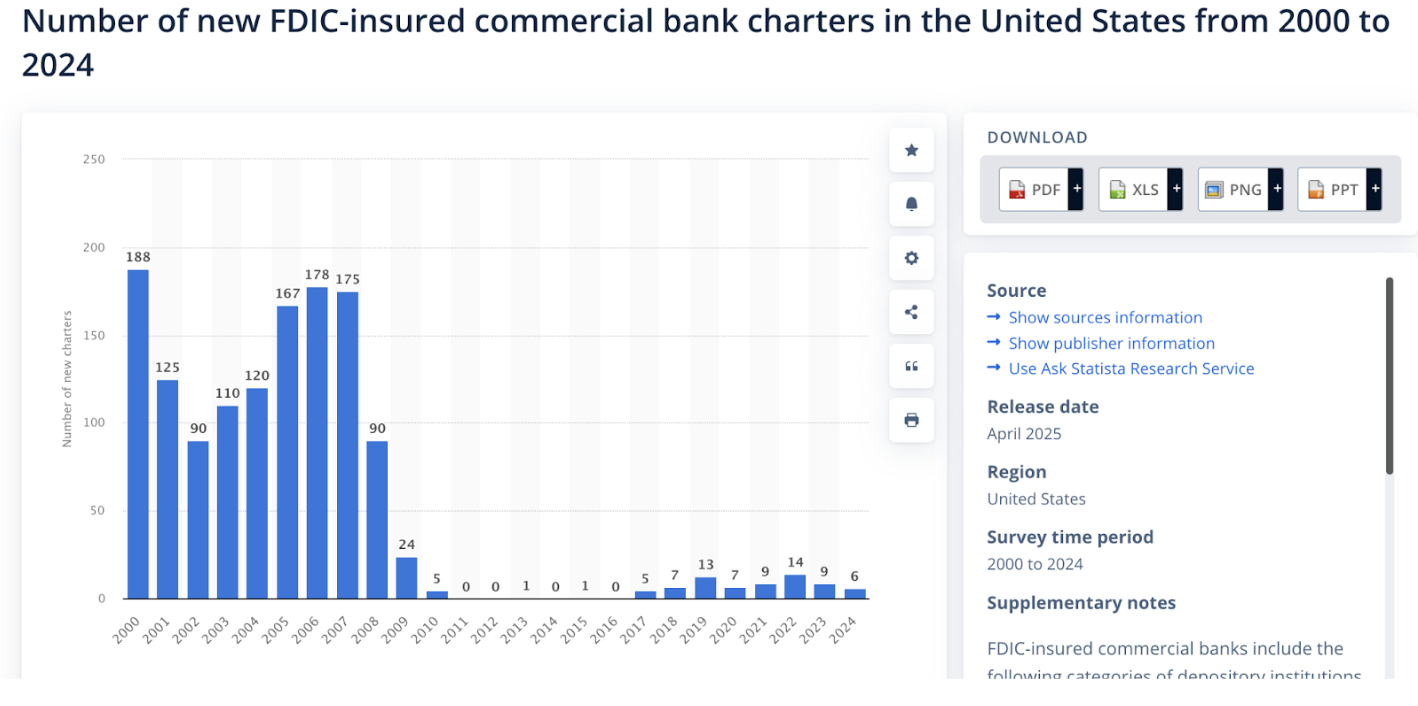
As third-party fintech programs proliferated, federal regulators turned their analytical lens toward the sponsor banks operating as the bedrock beneath them. Heightened supervisory expectations and stringent consent orders forced traditional institutions to drastically scale back their third-party risk management and compliance operations.
High-profile regulatory actions rippled through the industry:
- Cross River Bank entered into a formal consent order with the Federal Deposit Insurance Corporation ( FDIC).
- Green Dot Bank faced severe enforcement actions from the Federal Reserve.
- Evolve Bank & Trust was hit with a definitive cease-and-desist order by the Federal Reserve.
Faced with existential compliance burdens, sponsor banks abruptly slammed on the brakes. They tightened onboarding requirements, slashed the number of supported fintech programs, and dramatically slowed product iteration cycles. What was once an environment ripe for agile experimentation calcified into a slow, expensive, and risk-averse ecosystem biased exclusively toward broad, general-purpose products.
The Scale of the On-Chain Revolution
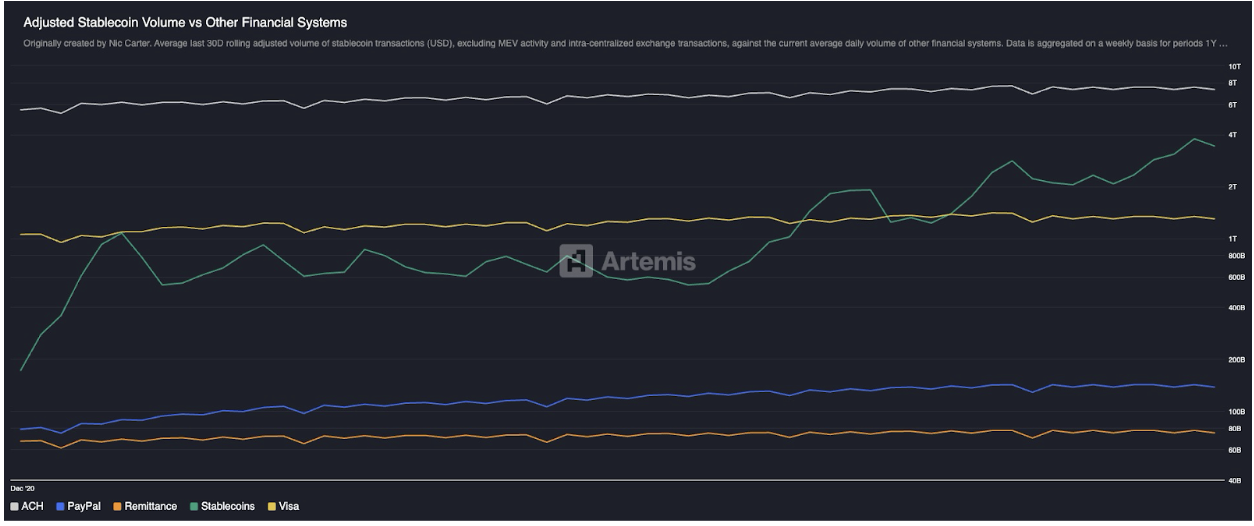
While traditional fintech struggled under regulatory weight, public blockchains scaled silently and efficiently. Stablecoins expanded from near-zero to a staggering market capitalization of roughly $300 billion in under a decade. More importantly, adjusted stablecoin transaction volumes began eclipsing the economic throughput of legacy payment monoliths like PayPal and Visa, proving conclusively that non-bank, non-card rails could operate reliably at true global scale.
Official Perspectives and Industry Analysis
Industry analysts and institutional researchers point to this structural divide as the primary driver behind the transition to Fintech 4.0. Traditional fintech architecture required managing a sprawling, fragmented vendor stack:
[Frontend App] ---> [KYC/AML Provider] ---> [Card Issuer] ---> [Ledger Provider] ---> [Compliance Engine] ---> [Sponsor Bank] ---> [Payment Rail]Managing this convoluted web meant coordinating multi-party contracts, expensive audits, disparate data feeds, and cascading failure modes across dozens of corporate counterparties. Every individual layer injected friction, financial overhead, and latent latency into the system.
In contrast, stablecoin-native systems achieve dramatic architectural compression. Functions that previously required half a dozen distinct corporate vendors now converge into unified, decentralized on-chain primitives:
- Banking & Custody $rightarrow$ Replaced by decentralized, fault-tolerant network architectures (e.g., Altitude).
- Payment Rails $rightarrow$ Replaced by global, instantaneous stablecoin transfers.
- Identity & Compliance $rightarrow$ Handled at the cryptographic wallet layer using privacy-preserving zero-knowledge proofs (e.g., zkMe).
- Data Aggregation $rightarrow$ Replaced by open on-chain data transparency augmented by fully homomorphic encryption (FHE).
As prominent financial technologists frequently observe: "In a stablecoin-native world, builders are no longer tenants begging legacy institutions for API access; they own the underlying land."
Future Outlook: The Rise of Specialized Stablecoin Fintechs
The ultimate downstream consequence of this architectural shift is profound: the fixed cost of launching a fully compliant, high-utility financial product collapses from millions of dollars down to a nominal investment in smart contract deployment.
Without the crushing overhead of sponsor-bank integrations, multi-day clearing windows, and redundant KYC infrastructure, a new wave of specialized stablecoin neobanks is poised to emerge. Just as early fintech pioneers initially targeted narrow niches before being forced to homogenize for scale, stablecoin-enabled startups can profitably serve hyper-specific market segments from day one.
Case Studies in Specialization
1. Adult Creators and Digital Performers
Adult content creators generate billions in collective annual revenue but are routinely subjected to arbitrary deplatforming by conservative legacy banks and payment processors fearful of reputational liability and chargeback risks. Payouts are routinely delayed for weeks under the guise of "compliance reviews," and creators face predatory take rates of 10% to 20% from high-risk merchant gateways.
- The Stablecoin Solution: Instantaneous, irreversible settlement backed by programmable compliance. Performers can self-custody earnings, automatically split revenue into tax withholding and savings vaults, and transact globally without predatory intermediaries.
2. Professional Athletes in Individual Sports
Athletes in sports like tennis, golf, and extreme athletics experience highly compressed career earnings windows. Their cash flows are irregular and heavily fragmented among agents, coaches, and training facilities. They incur tax liabilities across multiple international jurisdictions and face constant career-threatening injury risks.
- The Stablecoin Solution: Tokenized future earnings contracts, multi-signature corporate wallets for transparent staff payroll, and automated, multi-jurisdictional tax withholding executed via smart contracts.
3. Luxury Goods and Watch Dealers
High-end secondary market dealers regularly transport six-figure inventory across international borders, executing transactions via sluggish wire transfers or high-risk processors while waiting days for funds to clear. Crucial working capital remains trapped in physical inventory sitting in display cases.
- The Stablecoin Solution: Sub-second settlement for high-value transactions, instantaneous short-term liquidity lines collateralized by tokenized real-world asset (RWA) inventory, and embedded escrow execution.
Conclusion
For the past twenty years, financial technology innovation remained trapped at the surface level. Companies competed ferociously on branding, user interface design, and paid user acquisition, while the underlying plumbing of global money movement remained rigidly closed and heavily intermediated. While this expanded digital access, it ultimately fostered systemic commoditization, razor-thin operating margins, and acute regulatory vulnerability.
Stablecoins and permissionless financial infrastructure fundamentally alter this economic equation. By transforming custody, settlement, lending, and regulatory compliance into open-source, programmable software, they strip away the exorbitant rent-seeking overhead imposed by legacy banking intermediaries.
When infrastructure costs plummet, hyperspecialization becomes economically viable. Fintech enterprises will no longer need to capture millions of generic users to achieve operational sustainability. Instead, they can focus intensely on serving well-defined, culturally cohesive communities whose unique financial workflows are actively ignored by one-size-fits-all banking institutions.
The next generation of financial technology leaders will not win by attempting to serve everyone through brute-force marketing spend. They will triumph by serving specialized cohorts with absolute precision—built upon an unyielding technological foundation designed specifically for how money was always meant to move.