
Executive Overview
When we originally published our thesis on stablecoins in The Endgame for Stablecoins, we highlighted that stablecoins represent one of the largest addressable markets within the cryptocurrency sector, with yield serving as the final frontier for widespread adoption. While our directional thesis regarding yield-bearing stablecoins proved accurate, we initially underestimated the sheer velocity and total addressable market size for synthetic dollars.
Unlike traditional stablecoins backed entirely by fiat reserves or short-term U.S. Treasury bills, synthetic dollars generate sustainable yields and maintain price stability by executing delta-neutral trading strategies within global financial markets. Ethena has emerged as the pioneer and dominant operator of this model, anchoring its USDe token through one of the most thoroughly proven mechanisms in traditional finance: the basis trade. As the digital asset ecosystem evolves, Ethena sits squarely at the intersection of three historic macroeconomic tailwinds: the massive expansion of stablecoin supply, the global "perpification" of financial assets, and the unstoppable wave of real-world asset tokenization.
Detailed Chronology: From Theoretical Trilemma to Multi-Billion-Dollar Reality
The conceptual foundation of a synthetic dollar built upon basis-trading dynamics is not entirely new; rather, its execution has required years of maturation across crypto market infrastructure.

Laying the Groundwork
Back in 2021, our team published a comprehensive essay exploring the mechanics of solving the stablecoin trilemma. Concurrently, we announced our foundational investment in the UXD Protocol—the digital asset ecosystem’s first token fully backed by a cash-and-carry basis trade. While the UXD Protocol was undeniably ahead of its time, constrained by nascent decentralized derivatives infrastructure and underdeveloped liquidity pools, it proved the core viability of the synthetic model.
Enter Guy Young, founder and CEO of Ethena Labs. Bringing a sharp background in traditional capital stack investing from Cerberus, Young recognized the precise moment when market depth, institutional counterparty frameworks, and perpetual swap markets aligned. He launched Ethena shortly after historic market collapses in the broader crypto space, methodically assembling a world-class team of operators.
Rapid Ascent and Market Resilience
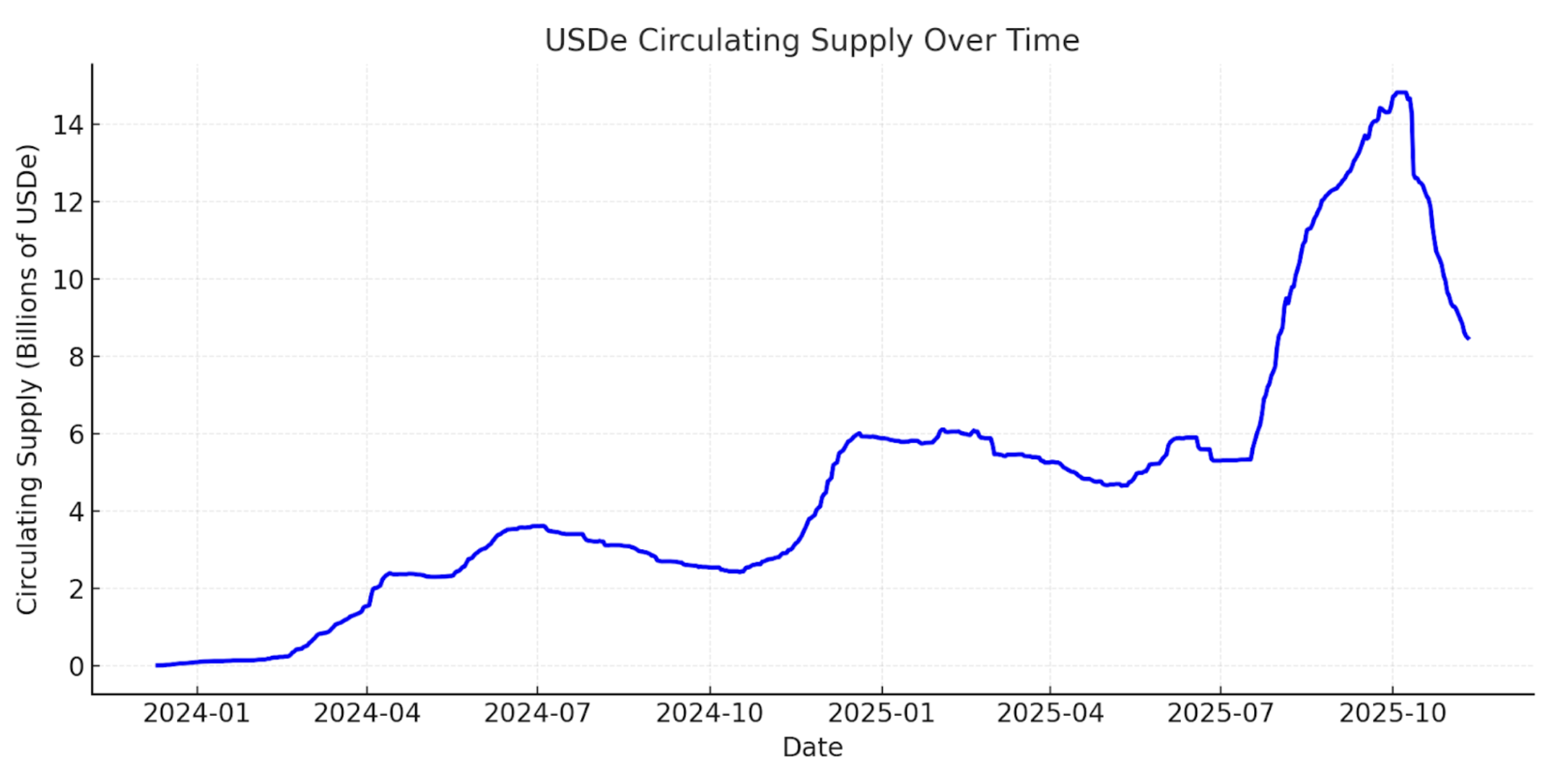
Within two years of its public launch, Ethena’s USDe skyrocketed to a peak of $15 billion in circulating supply, cementing its status as the third-largest digital dollar globally behind only Tether’s USDT and Circle’s USDC. Even following a sweeping market deleveraging event in October, circulation stabilized near the $8 billion mark, proving the protocol’s systemic importance.
Ethena’s trajectory has been defined by two major, real-world stress tests that served as ultimate validators of its risk architecture:
- The Bybit Hack (February 2025): Following a historic $1.4 billion hot-wallet exploit on the Bybit exchange, the wider crypto market experienced severe panic. Because Ethena prudently diversified its hedging infrastructure and maintained off-exchange custody solutions, no protocol collateral was lost, and mint-and-redeem cycles experienced zero operational friction.
- The October 10 Deleveraging Event: An unprecedented $20 billion liquidation cascade swept across centralized and decentralized exchanges, causing temporary venue-specific oracle dislocations on platforms like Binance. Despite fleeting price discrepancies on centralized order books, USDe maintained strict parity on liquid on-chain Automated Market Makers (AMMs) like Curve, with hundreds of millions in redemptions processed seamlessly on-chain.
These trials separated theoretical vulnerabilities from actual operational resilience, transforming Ethena into a battle-tested financial fortress.
Supporting Context & Metrics: Decoding the Mechanics of Ethena
To understand Ethena’s rapid rise, one must analyze the vectors of stablecoin competition, the economics of the basis trade, and the institutional integration of USDe.
The Three Vectors of Stablecoin Competition: Distribution, Liquidity, and Yield
Stablecoins traditionally compete across three distinct dimensions:
- Distribution: Tether (USDT) has dominated global distribution, capturing emergent markets as a primary dollar alternative. Circle (USDC) has aggressively expanded distribution through strategic partnerships, though at the expense of margin compression.
- Liquidity: USDT serves as the dominant quote asset across the vast majority of centralized crypto trading venues.
- Yield: For crypto-native participants, traditional U.S. Treasury yields often fail to clear the hurdle rate imposed by native opportunity costs.
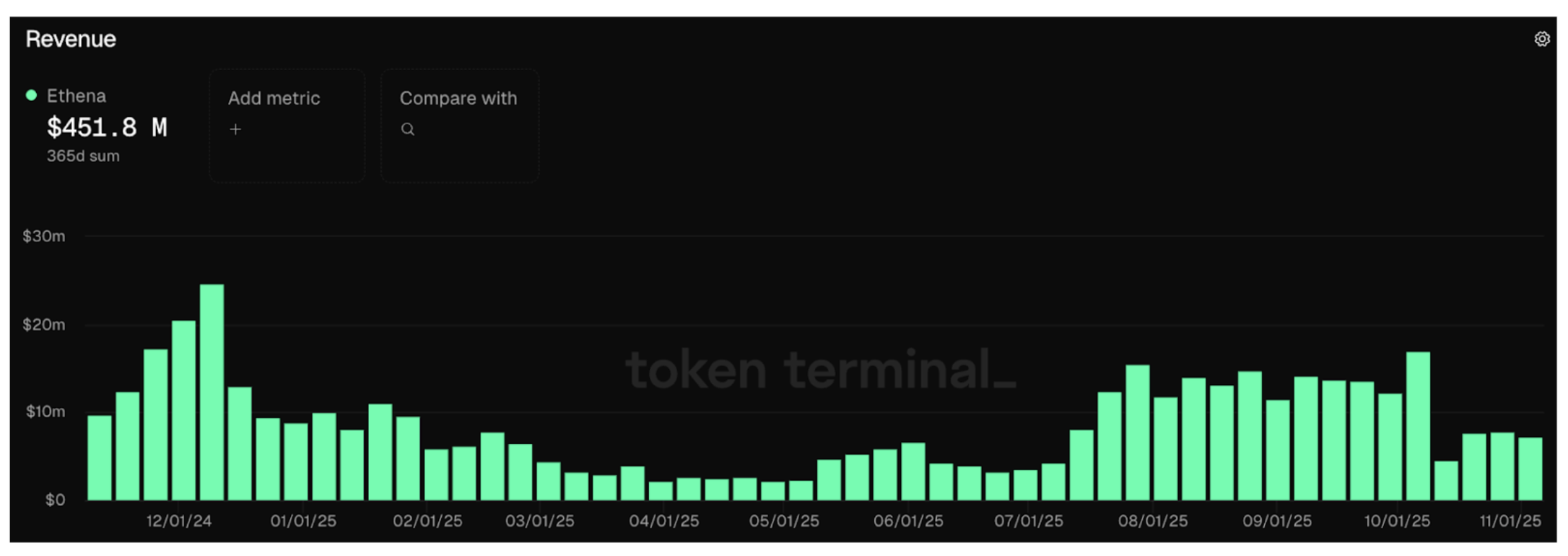
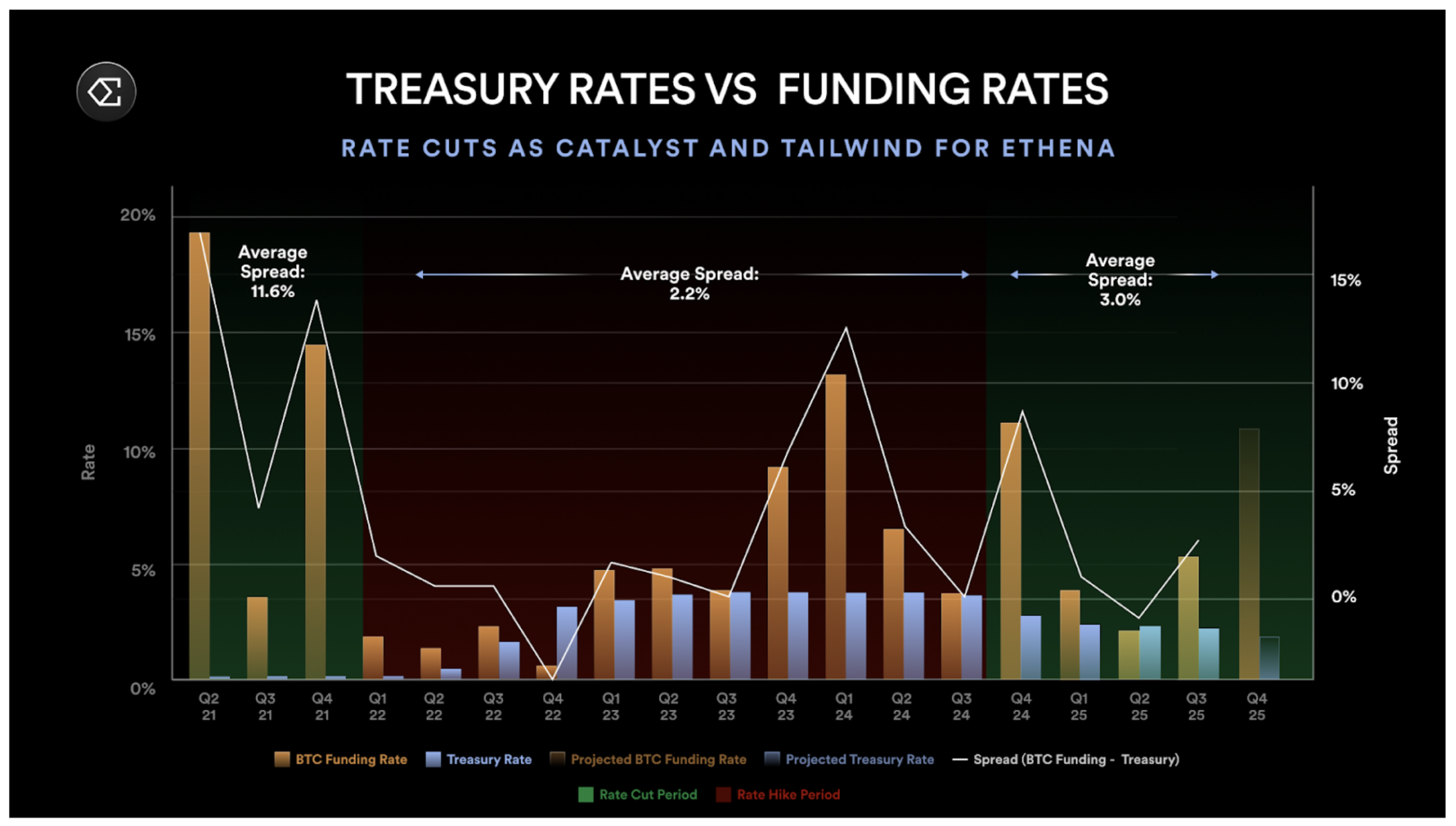
Ethena uniquely bridges this gap by deploying the basis trade—monetizing the perpetual futures market’s structural demand for leverage. Since inception, sUSDe (the staked variant of Ethena’s synthetic dollar) has delivered an estimated annualized yield exceeding 10%, more than double the returns offered by standard Treasury-backed stablecoins. This performance has driven astronomical revenue generation, with the protocol pulling in close to $600 million in cumulative revenue, over $450 million of which was captured in a single twelve-month window.
Integration as Core Collateral
A synthetic dollar’s ultimate test is its acceptance as institutional-grade collateral. Ethena has achieved remarkable success here, integrating USDe directly into major platforms like Binance and Bybit as a high-utility, yield-bearing collateral asset.
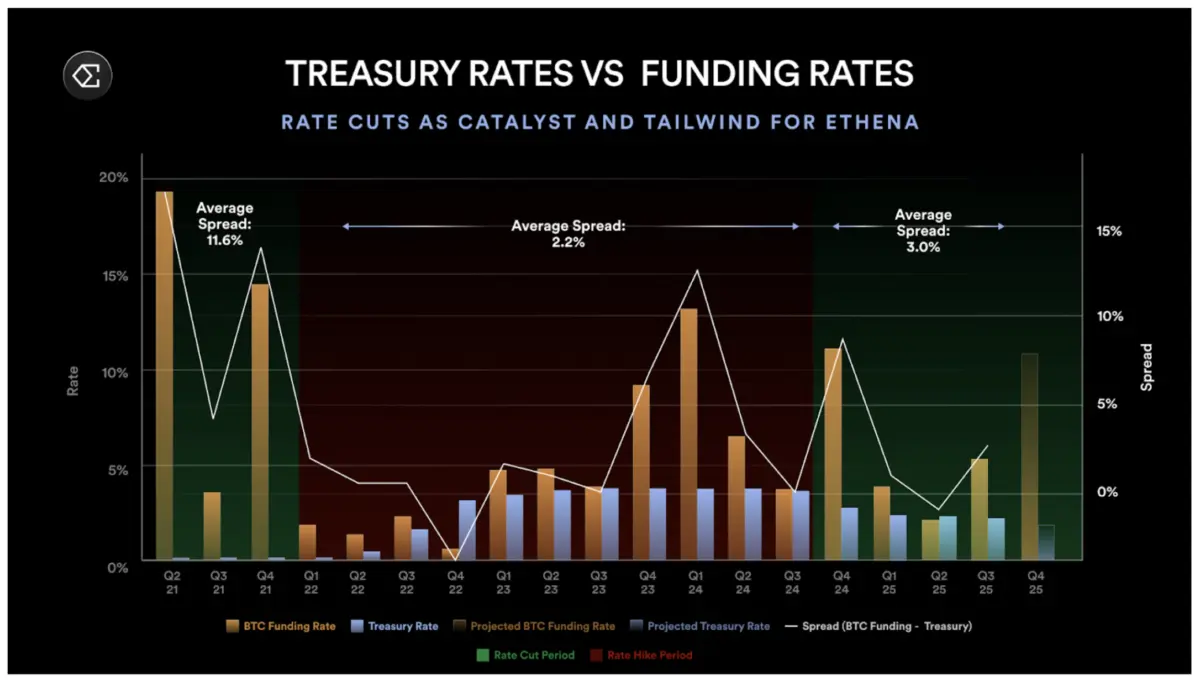
Furthermore, Ethena exhibits a mild negative correlation to Federal Funds rates. Unlike Treasury-backed stablecoins that suffer when central banks cut rates, Ethena benefits: lower interest rates stimulate macroeconomic risk-taking, amplify demand for leveraged perpetual trading, widen funding rate spreads, and ultimately supercharge the profitability of the underlying basis trade.
Official Statements and Institutional Perspectives
Industry leaders and macroeconomic forecasters are increasingly aligning with the trajectory of yield-bearing synthetic dollars. Prominent financial institutions have begun forecasting major structural shifts in the digital asset landscape.
J.P. Morgan analysts have projected that yield-bearing stablecoins could capture up to 50% of the aggregate stablecoin market over the coming years. With the broader stablecoin sector projected by institutions like Bloomberg to scale into the trillions of dollars by the end of the decade, the addressable market for protocols capable of safely distributing yield is virtually boundless.
Reflecting on the protocol’s operational philosophy, Ethena Founder Guy Young frequently emphasizes the deliberate nature of the team’s build:
"I quit my job to build Ethena a few days after Luna collapsed and hired the team a couple of months post-FTX."
This trauma-tested origin story directly influenced Ethena’s conservative approach to counterparty diversification, off-chain settlement structures, and risk management committees.
Complementing this, the foundational philosophy articulated by venture partners in prior essays—that "DeFi protocols don’t capture value, DAOs manage risk"—finds its ultimate expression in Ethena. By actively monitoring, underwriting, and balancing complex market risks rather than merely acting as an unhedged token printer, Ethena justifies its substantial fee-generation capabilities.
Future Outlook: Perpetuals, Tokenized Equities, and the ENA Value Proposition
Looking ahead, Ethena is positioned to capitalize on three massive structural waves: perpification, tokenization, and institutional integration.
1. The Perpetuals and Equity Expansion
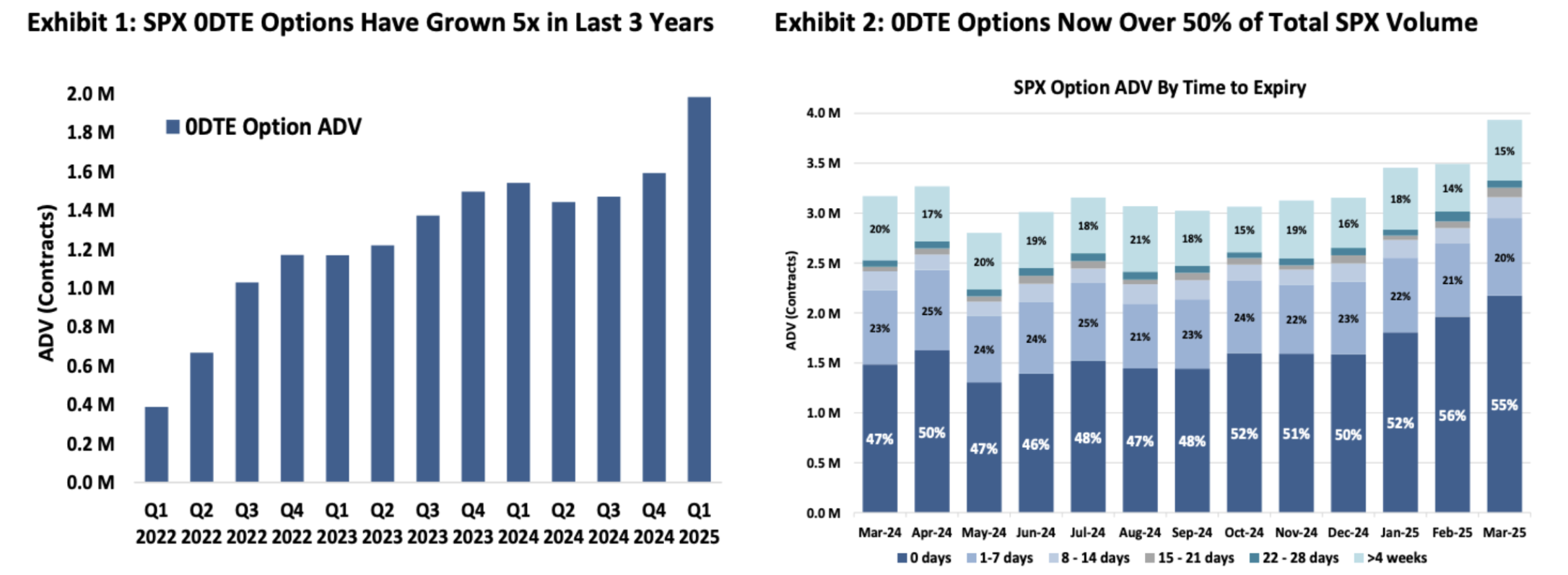
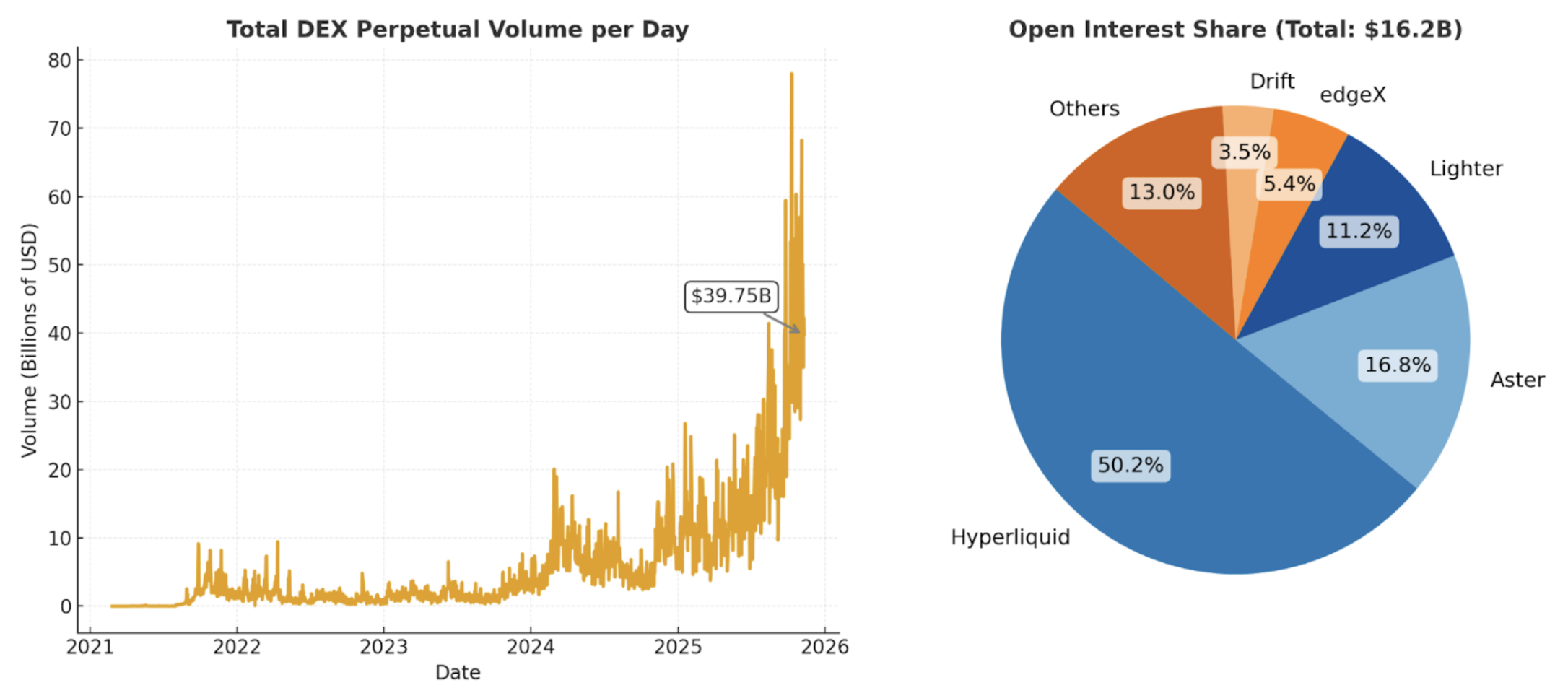
Perpetual swaps constitute the beating heart of crypto derivatives, regularly driving over $100 billion in daily trading volume. However, the true long-term horizon extends far beyond crypto assets. The global equity market commands a staggering $100 trillion valuation. As traditional financial assets undergo tokenization, the demand for leveraged equity exposure—currently demonstrated by the explosive popularity of 0DTE (zero-day-to-expiry) options—will naturally migrate toward decentralized perpetual products.
By integrating equity perpetuals and partnering with fintech giants (such as Phantom’s integration with Hyperliquid and Robinhood’s strategic moves into decentralized derivatives), Ethena stands to expand the capacity of its basis-trading apparatus by orders of magnitude.
2. Diversification of Yield Sources
Ethena is not resting solely on the traditional crypto basis trade. Through innovative ecosystem products like USDtb—a stablecoin partially backed by BlackRock’s tokenized Treasury fund, BUIDL—Ethena can dynamically reallocate collateral reserves. When crypto funding rates compress, the protocol can effortlessly pivot toward tokenized real-world assets, optimizing portfolio yield and ensuring perpetual economic stability.
3. The ENA Value Capture Mechanism
While ENA has historically functioned primarily as a decentralized governance token, a monumental transition is on the horizon. Having generated hundreds of millions in protocol revenue without distributing direct value to token holders, the Ethena Foundation and risk committees are actively reviewing the implementation of the long-awaited fee switch.
With core circulating supply metrics aligning with governance proposals, activating the fee switch will direct substantial protocol revenues straight to ENA stakers. This structural shift is expected to fundamentally alter ENA’s supply-demand dynamics, aligning token incentives with protocol profitability and sharply reducing circulating sell pressure.
Conclusion
Ethena has defied skeptics to become the undisputed market leader in the synthetic dollar category. By harmonizing institutional-grade risk management, robust cross-exchange liquidity, and innovative yield-sharing mechanics, Ethena is reshaping how the world interacts with digital cash. As the lines between traditional finance and decentralized markets continue to blur, our investment in ENA reflects our deep conviction that Ethena is not merely participating in the stablecoin revolution—it is defining its ultimate destination.