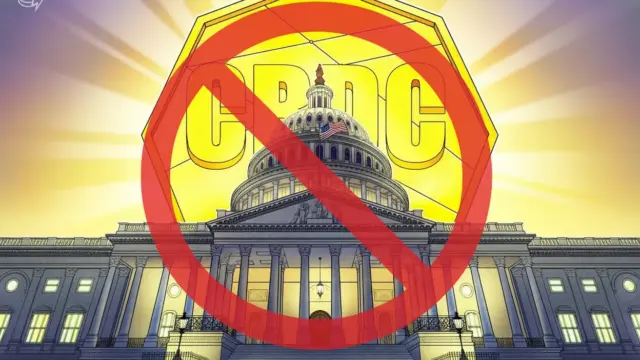


Executive Overview
The revelation arrives at a tumultuous time for British politics and the cryptocurrency sector alike. Farage—the charismatic leader of the UK’s Reform Party, architect of the Brexit movement, and a fierce opponent of state-backed digital currencies—abruptly resigned his parliamentary seat following explosive media reports accusing him of accepting undeclared "gifts" from individuals connected to the crypto industry. While Farage has vehemently denied any wrongdoing, maintaining in an X (formerly Twitter) livestream that he has "not broken the law in any way at all," the political fallout has sent shockwaves through Westminster.
Compounding the controversy, the UK’s National Crime Agency (NCA) launched simultaneous investigations into multiple high-value financial transactions linked to other senior Reform UK figures over suspected money laundering. Against this backdrop of political scandal, financial corruption allegations, and fierce ideological battles over monetary privacy, the Bank of England continues to advance its technical exploration of the "digital pound." This in-depth report examines the intersection of central bank independence, political lobbying, cryptocurrency controversies, and the future of the UK’s financial infrastructure.
Detailed Chronology: The Meeting, The Letter, and The Resignation
The Confluence of Lobbying and Monetary Policy
The sequence of events leading to Governor Bailey’s public clarification began with a closed-door meeting between the central bank chief and Nigel Farage. The two figures discussed an array of macroeconomic topics, with a notable emphasis on the rapidly evolving digital asset landscape, decentralized finance, and the controversial concept of a digital pound.
Following the meeting, Farage reportedly spoke with members of the press, framing the discussion in a manner that suggested his anti-CBDC arguments had found a receptive audience within the corridors of Threadneedle Street. This public posturing raised immediate red flags among financial observers, who closely guard the perceived and actual independence of the United Kingdom’s monetary authority.
In response to inquiries regarding the nature of the conversation, Governor Bailey addressed the situation head-on in a letter obtained by The Guardian. Bailey wrote:
"Following our meeting, Mr. Farage spoke with the press outlining that we had discussed a range of topics, including cryptocurrencies. I am happy to confirm that no policy changes have taken place as a result of interventions by Mr. Farage."
Furthermore, Bailey emphasized the central bank’s institutional resilience, noting that the BoE’s policymaking apparatus is entirely "able to spot" and neutralize external attempts to manipulate its regulatory or developmental trajectory.
Farage’s Sudden Parliamentary Exit and Crypto Scandals
The release of Bailey’s letter coincided with a dramatic political crisis for Farage. Facing intense scrutiny over journalistic investigations revealing that he had accepted substantial gifts and financial backing from individuals with deep ties to the cryptocurrency industry—including a convicted fraudster—Farage announced his immediate resignation from his parliamentary seat.
The resignation marks a sudden and dramatic chapter in the career of one of Britain’s most polarizing political figures. Farage has long positioned himself as a champion of the common citizen against what he terms the "overreach" of institutional elites. His stance on Central Bank Digital Currencies has been particularly aggressive; Farage has repeatedly stated that he would "rather go to prison" than live under a government-monitored digital currency regime, arguing that a CBDC represents an existential threat to personal financial privacy and a slippery slope toward totalitarian state surveillance.
Despite stepping down from his parliamentary role, Farage has aggressively pushed back against the allegations of corruption. Taking to social media via an X livestream, the Reform Party leader declared his absolute innocence:
"I have not broken the law in any way at all."
Broadening Law Enforcement Investigations
The turmoil surrounding Farage is no longer isolated to individual ethics violations. Investigative journalism published concurrently by The Guardian revealed that the UK’s National Crime Agency (NCA) has broadened its investigative scope. The agency is currently reviewing a series of complex financial transactions involving other senior figures within Reform UK, probing potential violations related to money laundering and illicit political financing.
As law enforcement agencies dig deeper into the party’s financial ecosystem, the intersection of populist politics, alternative finance, and regulatory scrutiny has become a focal point of national media attention.

Supporting Context & Metrics: The Battle Over Financial Privacy and CBDCs
The Ideological Fault Lines of the Digital Pound
To fully understand the friction between figures like Nigel Farage and the Bank of England, one must examine the philosophical debate surrounding Central Bank Digital Currencies. Unlike decentralized cryptocurrencies such as Bitcoin—which operate on trustless, peer-to-peer networks outside the control of sovereign entities—a CBDC is a digital liability of the central bank itself.
Proponents argue that a digital pound is essential for maintaining the supremacy of sovereign money in a cashless society, reducing settlement friction, enhancing cross-border payment efficiency, and fostering financial inclusion. However, civil liberties advocates, privacy groups, and libertarian politicians share deep-seated concerns. Their primary objections center on:
- Surveillance Risks: The potential for governments to track, monitor, or program how citizens spend their money.
- Financial Censorship: The risk that individuals could be blocked from accessing goods, services, or capital based on political behavior or social credit scores.
- Commercial Bank Disintermediation: Fears that a central bank digital wallet could trigger massive bank runs during financial panics, destabilizing the traditional lending market.
Real-World Asset Tokenization and BoE’s Technological Trials
While the public debate remains politically charged, the Bank of England is pressing forward with the practical, technical realities of financial modernization. The central bank continues to explore the design phase of the proposed digital pound, emphasizing that no definitive political or administrative decision has been made regarding its ultimate rollout.
In a recent policy update, the central bank reiterated:
"No decision has been made on whether to introduce a digital pound."
The BoE stressed that any future implementation would require exhaustive technical analysis, stringent privacy safeguards, and comprehensive public consultations.
Parallel to its CBDC research, the central bank has taken concrete steps to integrate modern distributed ledger technology (DLT) into the existing financial architecture. Earlier this year, the Bank of England launched a highly anticipated six-month pilot program. This initiative explores how tokenized real-world assets (RWAs) can be safely and efficiently settled using central bank money. Collaborating with 18 major financial and technology companies, the project—which notably selected Chainlink for its synchronization lab to test on-chain settlement—demonstrates that the BoE views blockchain infrastructure not as an enemy, but as a potential tool for modernizing wholesale financial markets.
Official Statements and Institutional Reactions
The defense of institutional integrity by Governor Andrew Bailey serves as a critical reminder of the walls separating partisan politics from monetary policy formulation. Central bank independence is widely regarded by economists as a cornerstone of macroeconomic stability. When political actors attempt to leverage public meetings or media appearances to claim influence over central bankers, it undermines public trust in financial governance.
Financial Regulators and Compliance Standards
In light of the NCA investigations and the controversies surrounding crypto-linked political donations, regulatory bodies across the United Kingdom are facing renewed pressure to tighten transparency requirements. The UK Electoral Commission and the Financial Conduct Authority (FCA) are under scrutiny to ensure that political donations originating from digital asset ecosystems comply fully with anti-money laundering (AML) laws and know-your-customer (KYC) frameworks.
While the Bank of England has successfully distanced its CBDC roadmap from Farage’s personal lobbying, the broader political fallout highlights a growing vulnerability: the increasing convergence of populist politics and the crypto industry. As digital assets become a mainstream political battleground, regulatory watchdogs are signaling that compliance standards will be enforced with absolute impartiality, regardless of political affiliation.
Future Outlook: What Lies Ahead for the Digital Pound and UK Politics
The Roadmap for the Digital Pound
Looking forward, the Bank of England’s digital pound project is entering a critical juncture. As the design phase progresses, the central bank faces the dual challenge of addressing legitimate public concerns regarding data privacy and overcoming the political toxicity that digital currencies have acquired amidst ongoing Westminster scandals.
Key milestones to watch in the coming quarters include:
- Privacy Framework Finalization: How the BoE plans to implement cryptographic privacy safeguards that satisfy both anti-money laundering authorities and civil liberties advocates.
- Wholesale Settlement Integration: The results of the six-month tokenized asset pilot program, which will determine whether commercial banks and financial institutions adopt distributed ledger technology for institutional settlements.
- Parliamentary Oversight: How newly elected or shifting political figures in Parliament approach the legislative framework required before any digital fiat currency can be legally authorized.
The Political Aftermath for Reform UK
For Reform UK, the sudden departure of Nigel Farage and the ongoing NCA money-laundering investigations into party transactions represent a severe existential test. Whether the party can distance itself from the unfolding scandals and retain its populist momentum—particularly among anti-establishment and crypto-friendly voters—remains to be seen.
Ultimately, Governor Bailey’s clear dismissal of Farage’s lobbying claims serves to insulate the Bank of England’s technocratic mandate from political turbulence. As the UK navigates an increasingly digital financial future, Threadneedle Street has made one thing abundantly clear: monetary policy will be guided by empirical economic science and public interest, not by political posturing or backroom lobbying.