rifanmuazin is a reporter for DeBitcoin covering Ethereum & Altcoins. She/He is based in Indonesia.
6 July 2026 • 9 min read
Just when skeptics and institutional onlookers alike assume the cryptocurrency ecosystem has entered a period of bureaucratic stagnation or dull sideways trading, a disruptive innovation manages to electrify Crypto Twitter. Enter Fake World Assets (FWAs), the latest manifestation of the rapidly evolving "onchain gacha" phenomenon.
Executive Overview
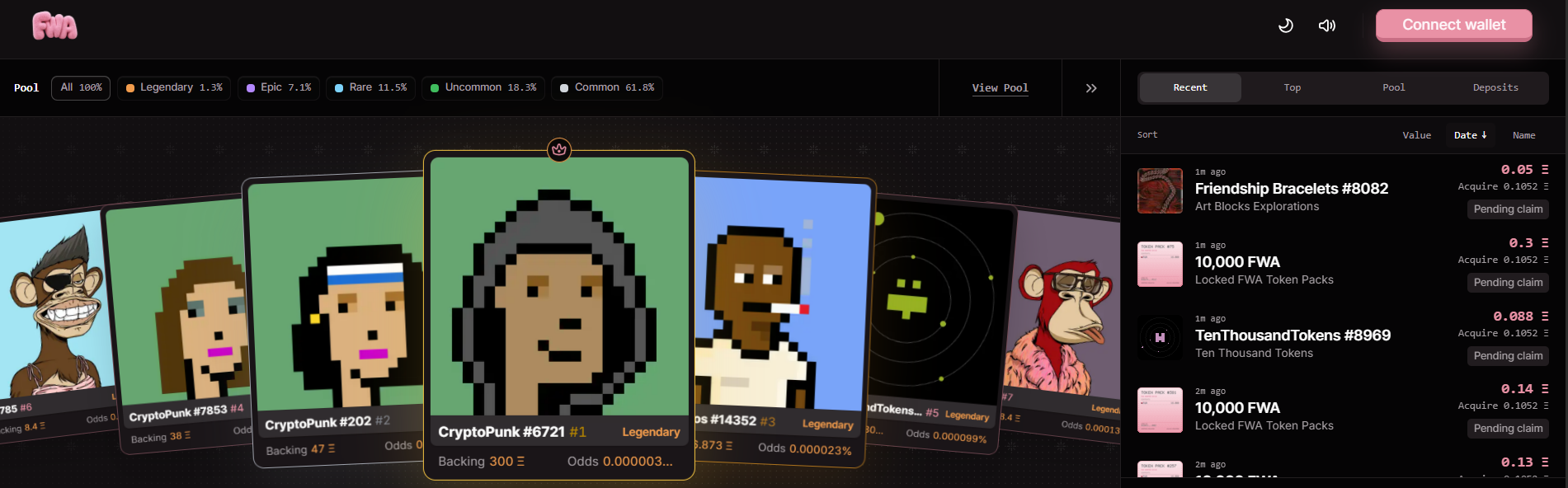
At its core, the FWA protocol flips the traditional narrative of real-world asset (RWA) tokenization on its head. For years, the industry has labored to bring physical and financial instruments—ranging from corporate bonds and real estate to fine art, luxury goods, and even tokenized livestock—onto public blockchains. FWAs, however, introduce a playful, highly speculative counter-culture. Instead of purchasing a specific, predetermined asset like a Bored Ape Yacht Club NFT or a fractionalized piece of commercial real estate, users pay to spin an automated onchain "gacha" machine. This mechanism gives them a randomized chance to secure high-value blue-chip NFTs backed by Ether (ETH), combining the psychology of lottery play, digital collectibles, and decentralized finance (DeFi) primitives.
Within days of its quiet debut, the protocol triggered a massive shockwave across the Ethereum network. Consuming blockspace at an unprecedented rate, FWAs briefly eclipsed heavyweights like Tether and Circle to become the single largest gas-consuming protocol on the network over a 24-hour period. While supporters praise the project as a masterclass in gamified commerce and the triumphant return of "money legos," critics argue that the craze is heavily reliant on short-term token incentives, speculative fervor, and crypto-native degen culture.
As the total value locked (TVL) climbs and daily fee revenues capture the attention of venture capitalists and retail traders alike, a critical question emerges: Is FWA simply another fleeting obsession destined to burn out, or has the blockchain industry finally stumbled upon a sustainable, gamified retail use case that will define the next generation of commerce?
Detailed Chronology: From Launch to Network Dominance
The trajectory of Fake World Assets can only be described as meteoric. The protocol, developed by the team at TokenWorks, went live in late July, entering a market where users were already showing a voracious appetite for randomized onchain mechanics.
The Explosive Debut
Within four days of its public launch, FWAs began guzzling Ethereum gas at an alarming velocity. The network activity was so intense that DeFi tracking platforms and analytics dashboards flagged FWA as the network’s largest gas consumer by fees over a 24-hour cycle.
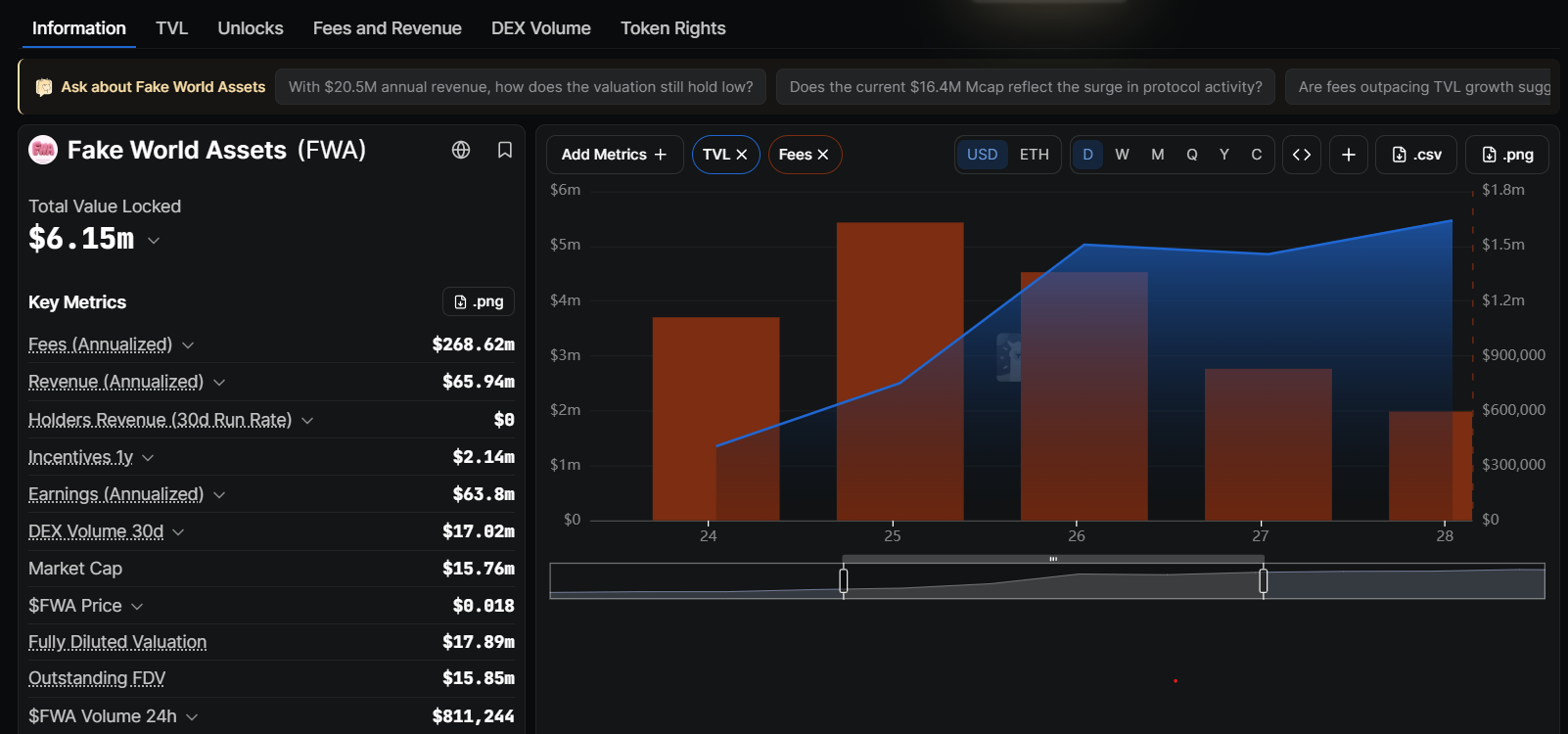
At the height of the frenzy on July 25, the protocol generated approximately $1.53 million in daily fees. To put this in perspective, FWA momentarily leapfrogged industry stalwarts Tether (USDT) and Circle (USDC) to rank among the absolute biggest consumers of Ethereum blockspace. Emboldened by the chaotic influx of users, TokenWorks took to social media to proclaim:
"4 days since launch. Fake World Assets are the next big thing."
While the creators are far from impartial observers, the raw onchain data supported their initial triumph. Total Value Locked (TVL) continued a relentless upward trajectory, scaling past $6.15 million by July 31. Although daily fee revenue eventually eased down to a steady baseline of roughly $350,000 per day—still equating to an impressive annualized run rate of approximately $268 million—the protocol’s footprint continued to expand. By August 1, FWA had surpassed 10,000 ETH in cumulative trading volume, backed by more than 100,000 individual purchases.
While a portion of this transactional volume was undeniably catalyzed by users jockeying for position to secure early FWA token incentives, industry analysts agree that a core layer of genuine, organic interest in the gamified mechanic kept the wheels turning.
Supporting Context & Metrics: Unpacking the Onchain Gacha Phenomenon
To fully understand the mechanics and cultural appeal of Fake World Assets, one must examine its technological lineage and the broader market trends surrounding "gacha" mechanics in crypto.
What is Onchain Gacha?
The term "gacha" is an abbreviation of gachapon or gashapon, referring to the ubiquitous toy-dispensing vending machines invented in Japan in the 1960s, which release a randomized collectible toy sealed inside a plastic capsule. This psychological loop successfully migrated to mobile and browser-based video games—most notably exemplified by Dragon Collection in 2010—where digital loot boxes captivated millions of players. A parallel mechanism has long driven traditional physical collecting, such as Pokémon trading card booster packs, which offer a random assortment of cards featuring varying levels of rarity and market value.
In recent months, these physical collectibles have increasingly been tokenized onchain by specialized projects like Collector Crypt, Beezie, and Courtyard. As reported previously by industry media outlets, the broader onchain gacha sector experienced a record-breaking month in June, generating a staggering $324 million in volume. Many of these tokenized cards have subsequently been "wrapped" and integrated directly into the FWA ecosystem.
The ecosystem is expanding laterally at a breakneck pace. Developers are continually experimenting with randomized "token packs" containing ERC-20 tokens, while parallel experiments on alternative networks—such as StockRip on Robinhood’s associated chain infrastructure—demonstrate how tokenized equities can similarly be bundled into NFT-based gacha packs.
As AzFlin, founder of the DAO launchpad daos.world and a former Uniswap engineer, aptly observed:
"Just when you think everything in crypto has been invented, something new springs up."
The Dual Structure: How FWA Operates
The FWA protocol establishes a fascinating dual-sided market dynamic where participants can act as both liquidity providers and speculators:
Liquidity Providers (LPs): NFT holders deposit their digital collectibles alongside pools of Ether (ETH), earning a proportional share of the protocol’s generated fees for as long as their specific asset remains locked within the pool. LPs essentially cross their fingers, hoping their asset earns steady fee yields before it happens to be selected and claimed by a player.
Players (Speculators): Users pay a set price for the chance to pull a randomly selected NFT from the pool. Once the pull is executed, the player can choose to either keep the digital collectible or redeem most of its underlying ETH value directly through the protocol. According to data from Blockworks Research, approximately 70% of purchasers currently opt to convert their winnings back into FWA-associated mechanisms.
This structure creates a high-stakes ecosystem that pseudonymous crypto commentator 2Lambroz describes as buying a "lottery ticket on the pool," where users can act as "both players and the house at the same time."
Official Statements & Industry Perspectives
The sudden rise of Fake World Assets has ignited a fierce debate among venture capitalists, economists, and core crypto builders regarding the true nature and longevity of gamified commerce.
The Skeptic’s View: Incentives vs. Demand
Not everyone in the venture capital space is convinced that the excitement surrounding FWA has long-term legs. Simon Dedic, founder of venture capital firm Moonrock Capital and an early backer of various onchain collectible platforms, expressed measured skepticism during an interview:
"I’m very bullish on gamified commerce… my skepticism on FWA is specific. The whole thing is purely aimed at crypto degens so they can gamble and speculate."
Dedic argues that a substantial portion of the current transactional velocity is artificially stimulated by generous token incentive programs rather than organic, enduring consumer demand.
The Behavioral Finance Perspective
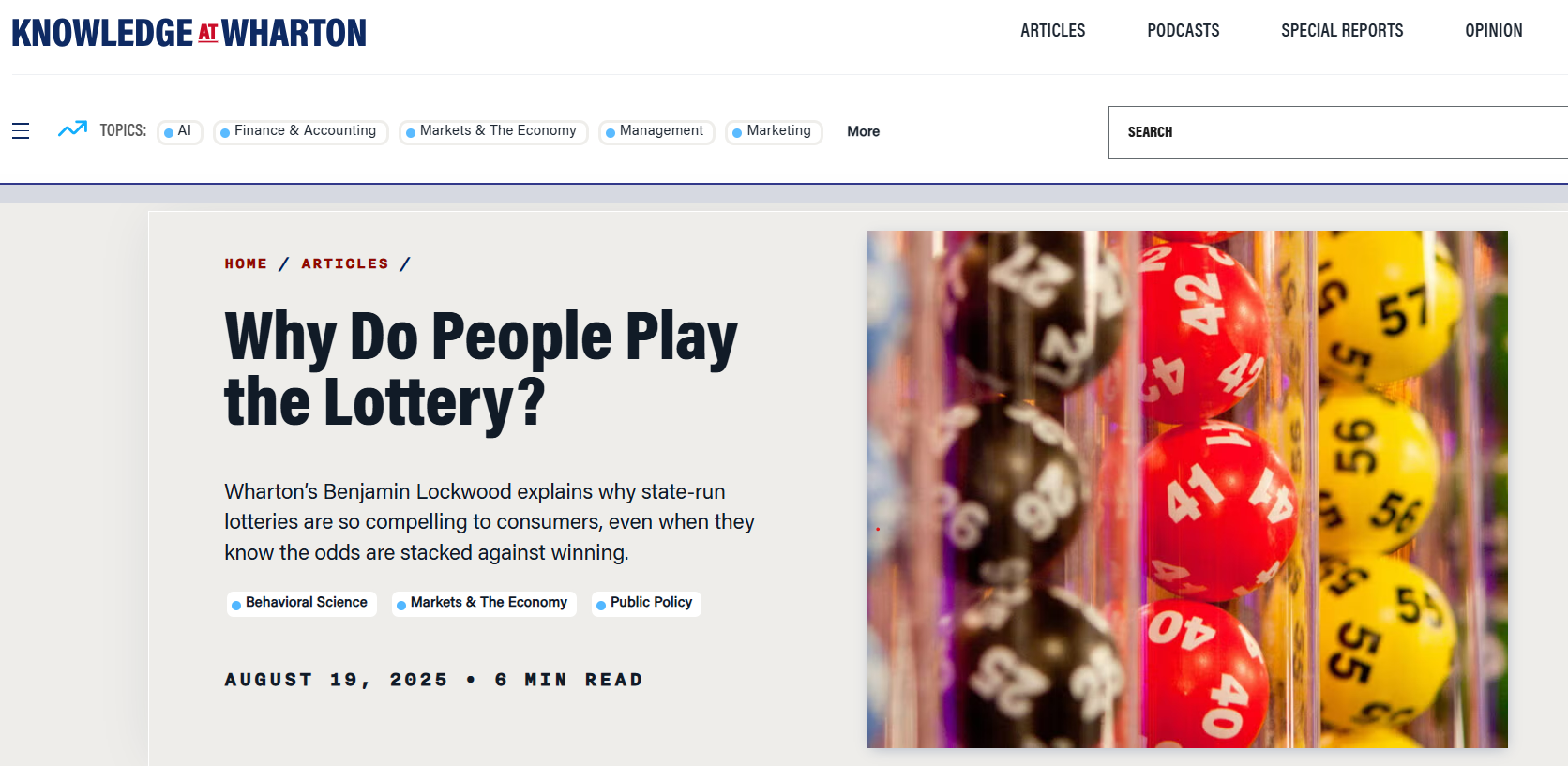
To understand why users flock to these mechanics, one must look beyond traditional financial models and into behavioral economics. Benjamin Lockwood, a Wharton economist whose academic research into state-run lotteries explored consumer motivations, notes that people assign immense value to the experience of playing itself, independent of statistical probabilities of winning.
Meir Statman, a pioneer in behavioral finance, professor at Santa Clara University, and author of A Wealth of Well-Being, draws a direct psychological parallel to popular culture:
"There is a parallel to ‘onchain gacha’ in people bidding on the contents of abandoned storage units. Most find items worth placing in the trash, but some find items they can sell on eBay. One found a painting worth hundreds of thousands of dollars. These combine hope for riches with playfulness. This is what lotteries offer."
Despite these warnings, proponents of the Ethereum ecosystem remain steadfastly enthusiastic. Self-proclaimed Ethereum advocate Materkel championed the protocol as a landmark milestone for decentralized finance:
"The most fun NFT/casino primitive in over a decade of crypto, where users actually get to be both players and the house at the same time […] Money legos on Ethereum are back!"
Future Outlook: A Sustainable Paradigm or a Passing Fad?
As the initial dust settles, the ultimate test for Fake World Assets—and the broader onchain gacha movement—lies on the horizon.
While venture capitalist Simon Dedic remains critical of protocols built around speculative tokens with little fundamental utility, he maintains an overwhelmingly optimistic outlook on the broader concept of gamified commerce for a generational reason:
"The further Gen Z moves into being the generation with the strongest buying power, the more shopping is going to be gamified and come with a dopamine kick attached."
Dedic suggests that the true evolution of this mechanism will not rely on random, hyper-speculative NFTs from previous market cycles, but rather on high-demand, tangible consumer goods that people actively desire to own—such as rare Pokémon trading cards, luxury watches, and fine spirits.
"I see enormous potential in selling much-demanded assets in a gamified way," Dedic concludes. "I see very little in building Ponzi schemes to create demand for assets nobody wanted in the first place."
The Road Ahead
The coming months will serve as the definitive proving ground for FWAs. When the initial novelty wears off, speculative liquidity rotates elsewhere, and token reward emissions inevitably taper down, the protocol will face its ultimate existential audit.
If users continue to spin the wheel, engage with the liquidity pools, and trade digital mystery boxes regardless of token incentives, onchain gacha may have successfully engineered the elusive, consumer-facing retail use case that the blockchain industry has spent over a decade searching for. If, however, user activity evaporates alongside the hype, Fake World Assets will quietly join the long roster of brilliant, high-velocity crypto experiments that burned brightly before fading into digital obscurity.