rifanmuazin is a reporter for DeBitcoin covering Ethereum & Altcoins. She/He is based in Indonesia.
26 August 2026 • 8 min read
Just when market participants had begun writing off the current cycle as a prolonged lull marked by sideways trading and diminishing retail participation, Crypto Twitter ignited. The catalyst is an unconventional protocol mechanism called Fake World Assets (FWAs). Developed by TokenWorks, FWAs represent the latest evolution of the "onchain gacha" craze—a gamified, decentralized system where participants pay to spin digital vending machines in hopes of securing randomized, high-value non-fungible tokens (NFTs).
Executive Overview
Far from a quiet experiment, FWAs exploded onto the scene with staggering velocity. Within four days of its launch, the protocol consumed such immense volumes of Ethereum gas that it briefly outpaced industry heavyweights, becoming the network’s largest single consumer of transaction fees over a 24-hour period. While critics point to aggressive token incentives and speculative fervor as the primary drivers of this activity, proponents argue that FWAs represent a vital breakthrough in gamified commerce—tapping into deep-seated psychological cravings for chance, entertainment, and digital-native speculation.
This deep-dive investigation explores the mechanics, metrics, behavioral economics, and divided industry opinions surrounding Fake World Assets, questioning whether onchain gacha is a fleeting fad or the blueprint for a new generation of Web3 consumer engagement.
Detailed Chronology: The Meteoritic Ascent of FWAs
The origin story of Fake World Assets is a masterclass in viral crypto marketing and rapid product-market fit.
Late July 2024: TokenWorks quietly deploys the FWA protocol on the Ethereum mainnet, introducing a paradoxical premise: rather than attempting to tokenize real-world assets (RWAs)—a multi-year crusade that has dominated institutional blockchain narratives—TokenWorks flips the script by offering "Fake World Assets," which are effectively standard NFTs wrapped in a high-stakes, randomized distribution framework.
July 25, 2024 (Peak Activity): The protocol reaches a watershed moment. Daily fee generation spikes to approximately $1.53 million, briefly leapfrogging stablecoin giants Tether and Circle to crown FWAs as the single largest consumer of Ethereum blockspace. TokenWorks proudly proclaims on social media: "4 days since launch. Fake World Assets are the next big thing."
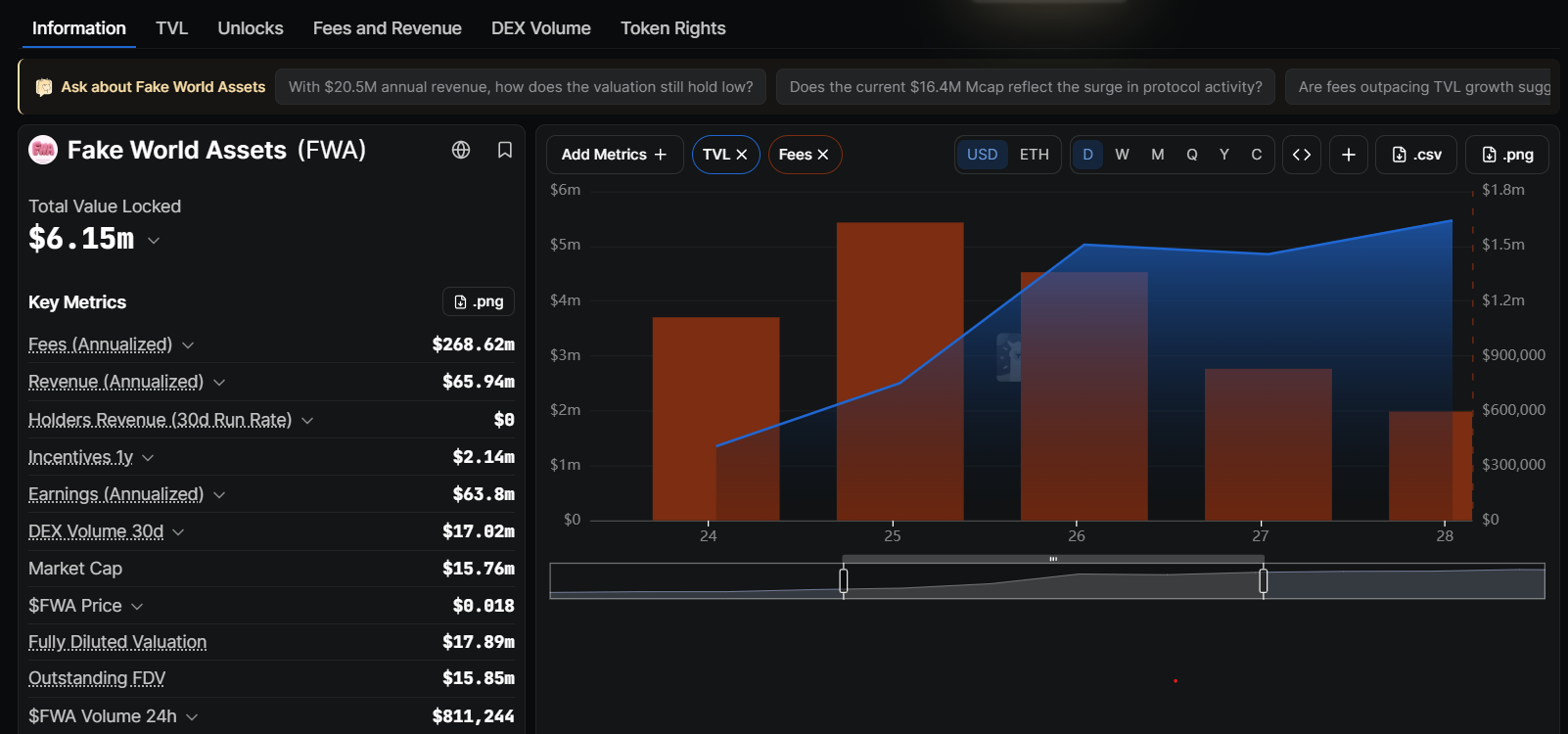
July 31, 2024: Total Value Locked (TVL) climbs steadily, surpassing the $6.15 million milestone. Although daily fee revenue moderates to roughly $350,000, the annualized run rate hovers at an impressive $268 million.
August 1, 2024: Cumulative platform metrics reveal monumental engagement: total trading volume breaches the 10,000 ETH threshold, driven by upwards of 100,000 individual purchases. While early token incentives undeniably catalyze this velocity, organic participation surges as users hunt for rare digital collectibles.
Supporting Context & Metrics: Unpacking the Numbers
To understand the gravity of the FWA phenomenon, one must examine the macroeconomic and technical indicators driving its momentum.
The Gas Wars
Blockspace consumption serves as the ultimate litmus test for onchain demand. During its late-July zenith, FWA’s hyper-active smart contracts choked Ethereum’s mempool, forcing network fees upward. DefiLlama data highlights that the protocol briefly captured top billing among gas-guzzling applications, illustrating that retail-driven speculation can still rival institutional settlement volume under the right conditions.
Volume and Liquidity Dynamics
By August 1, the protocol’s cumulative volume hit 10,000 ETH, supported by a TVL cresting above $6.1M. Dual incentives sustain this ecosystem:
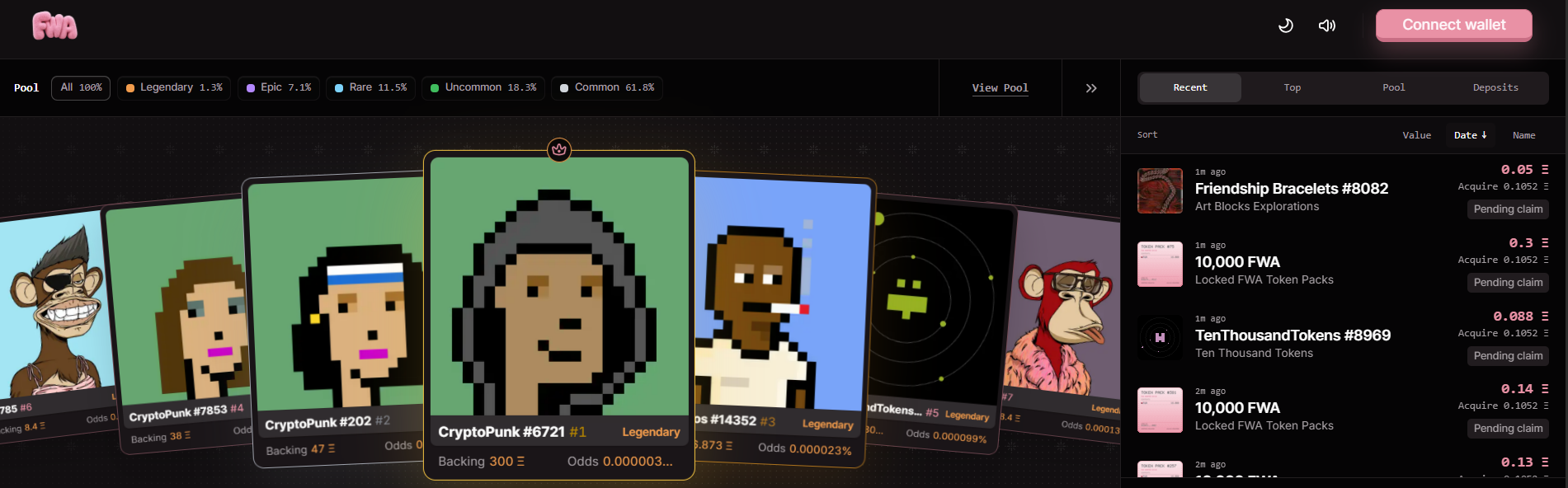
Liquidity Providers (LPs): NFT holders deposit their digital collectibles—ranging from blue-chip collections like CryptoPunks, Azuki, and Lil Pudgys to Art Blocks—alongside Ethereum into a shared pool. LPs earn proportional cuts of the platform’s transaction fees while their assets remain locked.
Players (Speculators): Participants pay a flat fee to pull the digital lever. Upon winning a randomized NFT, users face a strategic choice: retain the collectible or immediately redeem it for a substantial portion of its underlying ETH value. Current data compiled by Blockworks Research indicates that roughly 70% of winners opt to convert their winnings back into FWA ecosystem tokens.
The Evolution of Onchain Gacha
FWAs do not exist in a vacuum; they inherit a rich history of randomized reward systems. "Gacha" is a modern abbreviation of gashapon, the mechanical capsule-toy vending machines introduced in Japan during the 1960s. This psychology migrated into digital domains via mobile gaming (such as Dragon Collection in 2010) and physical collectible markets (most notably Pokémon card booster packs).
As real-world asset (RWA) tokenization platforms like Collector Crypt, Beezie, and Courtyard successfully brought physical graded cards onchain—propelling onchain gacha to a record $324 million in volume in June—developers began creatively "wrapping" these assets into speculative financial products. From randomized ERC-20 token packs to stock-based gacha structures on emerging app-chains like Robinhood’s network, the boundaries of gamified finance continue to expand.
Official Statements and Industry Perspectives
The sudden rise of FWAs has sharply polarized the Web3 community, dividing traditional venture capitalists, behavioral economists, and prominent crypto commentators.
The Skeptics: Speculation Over Substance
Simon Dedic, founder of venture capital firm Moonrock Capital and an early investor in onchain collectible platforms, maintains a nuanced stance. While acknowledging his long-term bullishness on gamified commerce, Dedic voices sharp criticism regarding FWAs specifically:
"I’m very bullish on gamified commerce… my skepticism on FWA is specific. The whole thing is purely aimed at crypto degens so they can gamble and speculate."
Dedic argues that much of the protocol’s high-flying metrics are propped up by generous token distribution incentives rather than structural, organic demand.
The Behavioral Economists: The Psychology of the Spin
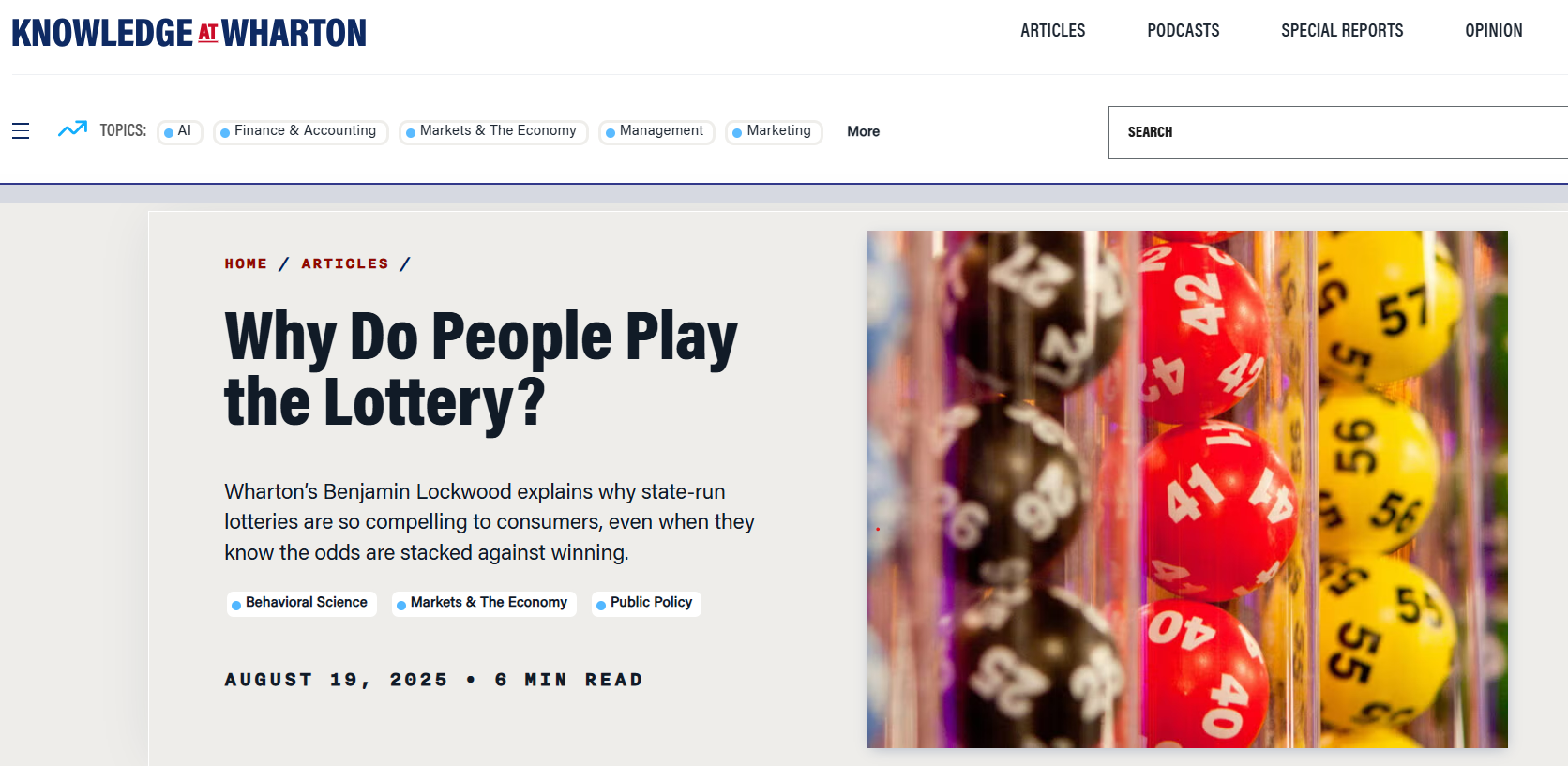
Conversely, academic and behavioral finance experts view onchain gacha through the lens of human psychology. Benjamin Lockwood, a Wharton economist whose research into state-run lotteries explores why citizens voluntarily participate in negative-sum games, notes that individuals fundamentally value the interactive experience and the emotional thrill of possibility, not merely the mathematical probability of a payout.
Meir Statman, a behavioral finance pioneer and professor at Santa Clara University, draws a direct parallel between onchain gacha and traditional treasure hunts:
"There is a parallel to ‘onchain gacha’ in people bidding on the contents of abandoned storage units. Most find items worth placing in the trash, but some find items they can sell on eBay. One found a painting worth hundreds of thousands of dollars. These combine hope for riches with playfulness. This is what lotteries offer."
The Enthusiasts: Financial "Money Legos"
Among crypto-native builders, the reception is overwhelmingly enthusiastic. Pseudonymous commentator 2Lambroz summarizes the player experience succinctly: "You’re buying a lottery ticket on the pool."
Meanwhile, prominent Ethereum advocate Materkel celebrates the composability of the protocol:
"The most fun NFT/casino primitive in over a decade of crypto, where users actually get to be both players and the house at the same time […] Money legos on Ethereum are back!"
AzFlin, founder of DAO launchpad daos.world and a former Uniswap engineer, captures the enduring spirit of industry innovation: "Just when you think everything in crypto has been invented, something new springs up."
Future Outlook: Fad or Foundational Retail Use Case?
As the initial dust settles, the ultimate question facing Fake World Assets—and the broader onchain gacha sector—is sustainability. Can a protocol sustained by speculative adrenaline transition into a enduring pillar of decentralized finance?
Simon Dedic believes that while pure-speculation token pools may eventually burn out, the underlying infrastructure holds immense multi-generational promise, particularly as Generation Z commands an increasingly dominant share of global purchasing power:
"The further Gen Z moves into being the generation with the strongest buying power, the more shopping is going to be gamified and come with a dopamine kick attached. I see enormous potential in selling much-demanded assets in a gamified way. I see very little in building Ponzi schemes to create demand for assets nobody wanted in the first place."
Dedic envisions a future where gamified commerce graduates from speculative NFTs of past market cycles to tangible, highly demanded items—such as authenticated Pokémon cards, luxury timepieces, and rare spirits.
For now, Fake World Assets stands at a critical crossroads. The true litmus test will arrive when token incentives cool and novelty wears thin. If retail participants continue to spin the wheel regardless of external rewards, onchain gacha may have successfully cracked the elusive retail engagement code that Web3 has chased for years. If not, FWAs will serve merely as another brilliantly coded footnote in the volatile history of crypto speculation—a bright bonfire that burned fast before fading into memory.
Disclaimer: Cointelegraph publishes long-form journalism, analysis, and narrative reporting produced by its in-house editorial team. All articles are edited and reviewed in line with rigorous editorial standards. Content published herein does not constitute financial, legal, or investment advice. Readers should conduct independent research and consult qualified professionals before engaging with decentralized protocols.