
Executive Overview
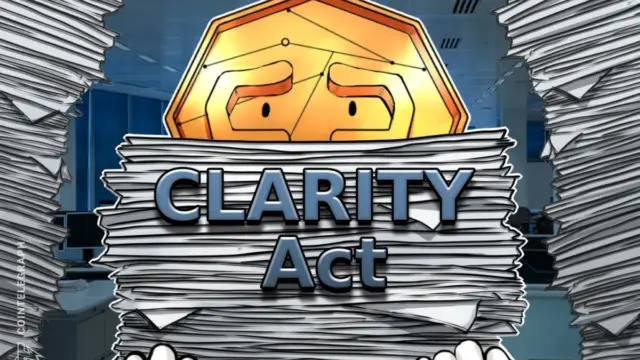
Targeting upcoming primary contests in Florida, Alaska, and Wyoming, these financial injections aim to fortify congressional candidates who have historically championed digital asset legislation, most notably the Digital Asset Market Clarity (CLARITY) Act.
This decisive maneuver arrives mere days after Protect Progress, a prominent Democratic-leaning affiliate of Fairshake, suffered a major setback in Michigan’s 13th Congressional District. Despite a war chest exceeding $2 million deployed by the Super PAC to back incumbent Democratic Representative Shri Thanedar, voters ultimately handed the primary victory to State Representative Donavan McKinney.
Rather than signaling a retreat from electoral politics, the Michigan loss has seemingly galvanized the crypto lobby. Federal Election Commission (FEC) filings analyzed through Thursday reveal that Fairshake’s interconnected networks—specifically Defend American Jobs and Protect Progress—are doubling down. They are actively utilizing targeted media buys to reward crypto-friendly voting records, send a chilling message to industry opponents, and cement a pro-innovation voting bloc ahead of the pivotal 2026 midterms.
With all 435 House seats and 33 Senate seats up for grabs in the upcoming congressional elections, the crypto industry is transforming legislative loyalty into a non-negotiable litmus test. As digital asset advocacy groups like Stand With Crypto operationalize voter scorecards and direct campaign capital, the intersection of blockchain technology and American electoral politics has never been more contentious, expensive, or influential.
Detailed Chronology of Events
To understand the current multi-state spending blitz by Fairshake affiliates, one must trace the rapid sequence of events that unfolded throughout the week, bridging Capitol Hill lobbying efforts with grassroots primary battles.
The Michigan Primary Shockwave (Tuesday)
The strategic pivot by crypto Super PACs was catalyzed on Tuesday evening in Michigan’s 13th Congressional District. Protect Progress, a crypto-backed PAC focused on supporting pro-innovation Democrats, had invested heavily—pouring more than $2 million into television, digital, and radio media campaigns—to secure the re-election bid of incumbent Rep. Shri Thanedar.
Thanedar, who has been a visible presence in digital asset legislative conversations, was widely expected to cruise through the primary. However, grassroots momentum coalesced around State Representative Donavan McKinney. When the ballots were tallied, McKinney emerged victorious, handing Protect Progress a high-profile and costly defeat. Thanedar’s current term in Congress is now slated to conclude in January 2027, cutting short his legislative tenure and leaving crypto advocates searching for ways to patch vulnerabilities in their defensive perimeter.
The Rapid Pivot and FEC Disclosures (Thursday)
Faced with a shifting political landscape in the Midwest, Fairshake affiliates immediately shifted resources toward safer or more malleable ideological terrain. According to official Federal Election Commission (FEC) filings updated through Thursday, Defend American Jobs and Protect Progress initiated a combined $1.5 million media blitz spanning three distinct states: Alaska, Florida, and Wyoming.
The timing of these filings underscores the nimble, data-driven nature of modern Super PAC operations. Rather than lamenting the Michigan loss, the PACs rapidly reallocated capital to secure footholds in upcoming August 18 primary elections, signaling to lawmakers nationwide that legislative support for bills like the CLARITY Act yields immediate financial backing from the blockchain sector.
State-by-State Breakdown of the $1.5M Media Blitz
The newly disclosed expenditures target strategic races where pro-crypto candidates are either defending their seats or seeking to capture soon-to-be-vacant legislative power structures:
- Alaska’s At-Large Congressional District: Defend American Jobs deployed more than $500,000 toward media and advertising supporting the re-election campaign of Representative Nick Begich. Alaska’s primary is scheduled for August 18, and the district is viewed as a vital stronghold for maintaining pragmatic digital asset oversight.
- Florida’s 16th Congressional District: Matching its investment in Alaska, the Super PAC funneled approximately $500,000 into supporting Republican candidate Sydney Gruters. Gruters is competing in a high-stakes Florida primary also slated for August 18.
- Wyoming’s Senate Seat: Defend American Jobs expanded its Senate footprint by investing roughly $500,000 to back Representative Harriet Hageman. Hageman is running for the prestigious Senate seat currently occupied by retiring Senator Cynthia Lummis—a legendary champion of Bitcoin and digital assets in the upper chamber. Retaining an ideologically aligned successor in Lummis’s seat is viewed by crypto strategists as an existential priority.
- Florida’s 23rd Congressional District: On the Democratic side of the ledger, Protect Progress reported spending in excess of $50,000 to support the re-election bid of Representative Lois Frankel. Frankel has a documented history of voting in alignment with industry priorities on crucial financial technology legislation.
Supporting Context & Metrics: The $170 Million Juggernaut
The $1.5 million injection disclosed this week, while substantial for local primary races, represents merely a fraction of the unprecedented financial resources the cryptocurrency industry has marshaled for American electoral politics.
During the 2024 election cycle, Fairshake and its associated Super PACs shattered political fundraising records, reporting aggregate expenditures exceeding $170 million. This war chest was deployed strategically across dozens of House and Senate races nationwide, effectively altering the legislative makeup of the current Congress. By funding both Democratic and Republican candidates on a bipartisan basis, Fairshake successfully insulated the digital asset sector from becoming a partisan wedge issue, ensuring that crypto-friendly lawmakers occupy influential committees regardless of which party holds the majority.
The Legislative Litmus Test: The CLARITY Act and GENIUS Act
The primary metric by which Fairshake affiliates and allied grassroots organizations evaluate candidates is their legislative record on foundational market structure bills. The two primary legislative vehicles driving crypto PAC spending are:
- The Digital Asset Market Clarity (CLARITY) Act: Designed to establish clear regulatory boundaries between the Securities and Exchange Commission (SEC) and the Commodity Futures Trading Commission (CFTC), providing digital asset issuers and exchanges with long-sought regulatory certainty.
- The GENIUS Act: Another cornerstone piece of financial technology legislation aimed at fostering domestic blockchain innovation while safeguarding consumer protections.
Lawmakers targeted in this week’s $1.5 million spending wave—including Rep. Nick Begich, Rep. Harriet Hageman, and Rep. Lois Frankel—all share a common denominator: they voted in favor of the GENIUS Act and the CLARITY Act during their time in Congress.
Meanwhile, first-time candidates like Sydney Gruters have been vetted through specialized advocacy pipelines. While Gruters has not an extensive public voting record on blockchain technology, she explicitly signaled her endorsement of comprehensive crypto market structure legislation via candidate questionnaires administered by advocacy groups such as Stand With Crypto.
Official Statements and Industry Perspectives
The escalating involvement of crypto-backed PACs has ignited fierce debates regarding the role of corporate and sector-specific money in federal elections. While critics argue that outside spending undermines local democratic accountability, industry defenders maintain that such investments are necessary to counteract years of regulatory hostility from federal agencies.
Mason Lynaugh, Community Director at Stand With Crypto, outlined the overarching political strategy of the grassroots advocacy network in statements to industry media outlets. Lynaugh emphasized that the organization’s primary objective—and indeed the objective of the broader blockchain lobby—is securing the passage of comprehensive crypto market structure legislation through Congress.
"How lawmakers vote on these foundational bills directly impacts their political capital and community backing," Lynaugh noted, highlighting that legislative scorecards are actively utilized by PACs to determine capital allocation.
Stand With Crypto evaluates political candidates on a transparent, sliding scale ranging from “strongly supports crypto” to “strongly against crypto.” This grading system is compiled using a meticulous analysis of historical voting records, public statements, and direct candidate surveys. Consequently, when Super PACs like Defend American Jobs and Protect Progress draft their media spending strategies, they rely heavily on these objective indices to ensure their financial support flows exclusively to proven legislative allies.
At the same time, institutional leaders within the cryptocurrency sector argue that political engagement is an act of self-defense. Following years of what executives term "regulation by enforcement" by federal financial regulators, the industry recognized that relying solely on traditional lobbying was insufficient. By building a bipartisan war chest capable of swinging primary and general elections, the crypto industry has successfully forced Washington policymakers to take digital asset legislation seriously.
Future Outlook: The 2026 Midterms and Beyond
As the political dust settles from the Michigan primary upset and the subsequent multi-state spending disclosures, all eyes turn toward the legislative calendar in Washington and the looming horizon of the 2026 midterm elections.
The Senate Battleground and the CLARITY Act Vote
As of Thursday, intense speculation surrounded whether the US Senate would manage to bring the CLARITY Act to a definitive floor vote before lawmakers departed Washington for their scheduled month-long legislative recess. Senate leaders, including figures like Sen. Tim Scott, have expressed unwavering confidence that a vote will materialize "without any question."
However, the legislative calendar remains notoriously unpredictable. Whether the bill passes the upper chamber immediately or spills over into subsequent legislative sessions, the vote itself will serve as an indelible marker for the crypto lobby. Every "aye" or "nay" recorded on the Senate floor will be permanently etched into candidate scorecards, instantly shaping fundraising dynamics for the 2026 cycle.
2026: The Ultimate Electoral Stress Test
Looking further ahead, the 2026 midterms promise to be an unprecedented stress test for crypto-backed political influence. With all 435 seats in the House of Representatives and 33 seats in the US Senate up for grabs, political strategists anticipate that Super PAC spending could easily eclipse the records set during the 2024 presidential cycle.
The Michigan primary loss serves as a sobering reminder to crypto strategists that money alone cannot guarantee victory—local grassroots dynamics, candidate charisma, and community engagement remain paramount. In response, PACs are expected to refine their methodologies, combining heavy media advertising with sophisticated, data-driven ground game operations.
Ultimately, the message sent by Fairshake, Defend American Jobs, and Protect Progress this week is unmistakable: the cryptocurrency industry is playing the long game. Lawmakers who champion digital asset innovation can expect robust financial backing to survive tough primary challenges, while those who obstruct regulatory clarity do so at their own political peril. As blockchain technology becomes increasingly interwoven with the global financial architecture, the ballot box has officially become the newest frontier for the future of digital finance.