

Executive Overview
Today, eight years later, that ideological fringe has matured into an institutional reality. Billions of global citizens, alongside the world’s leading banks, payment giants, institutional asset managers, and sovereign governments, recognize digital assets as the undisputed future of commerce. Driven by monumental regulatory milestones like the passage of the GENIUS Act and substantive legislative progress on the CLARITY Act within the United States Congress, crypto adoption is poised for exponential acceleration. Industry analysts predict that cryptographic rails will soon be natively embedded into every major operating system, browser, and consumer application, operating seamlessly beneath the surface of everyday digital interactions.
This overarching transformation serves as the spiritual successor to Multicoin Capital’s seminal 2019 Crypto Mega Theses essay. That foundational text cast a spotlight on three major structural shifts: Open Finance, Global State-Free Money, and Web3. In the years since, the growth trajectory of these sectors has shattered even the most optimistic projections, fundamentally shifting the paradigm of how capital moves across borders and how wealth is preserved.
Detailed Chronology: Eight Years of Transformation
The 2017 Genesis and the Philosophy of the Phoenix
When Multicoin Capital first opened its doors in late 2017, the digital asset ecosystem was recovering from the initial retail ICO (Initial Coin Offering) boom. The firm’s founders established their investment strategy on a core macroeconomic view: legacy financial infrastructure was fundamentally obsolete, burdened by high friction, delayed settlement times, and exclusionary practices. The phoenix logo was not merely branding; it was an explicit statement of intent—that open-source, decentralized ledger technology would systematically dismantle and rebuild global financial markets from the ground up.
The 2019 Turning Point: Charting the Mega Theses
By 2019, the firm formalized its investment vision by publishing its Crypto Mega Theses. At a time when skeptics dominated mainstream financial media and dismissed blockchains as speculative novelties, Multicoin identified the exact vectors through which crypto would scale. They argued that finance would inevitably move on-chain, that sovereign currencies would face systemic headwinds favoring state-free alternatives, and that user-owned networks (Web3) would redefine digital interaction.
The Regulatory Watershed of 2025
The intervening years brought severe macro shocks, brutal bear markets, and persistent regulatory friction. However, the narrative shifted dramatically in July 2025, when SEC Chair Paul Atkins announced Project Crypto, marking a historic turning point for institutional compliance and clarity in the United States. Following this initiative, the Commodity Futures Trading Commission (CFTC)—bolstered by the confirmation of Chairman Selig—actively joined the regulatory harmonization effort.

Programmable money transitioned swiftly from academic thought experiments to urgent national priorities. With legislative frameworks finally taking shape, major financial institutions, institutional exchanges, brokerages, and corporate issuers began scrambling to position themselves within the new regulatory perimeter.
Supporting Context & Metrics: The Explosion of On-Chain Finance
The theoretical projections outlined by crypto venture firms nearly a decade ago have been decisively validated by hard, empirical data.
1. The Explosive Growth of Decentralized Finance (DeFi)
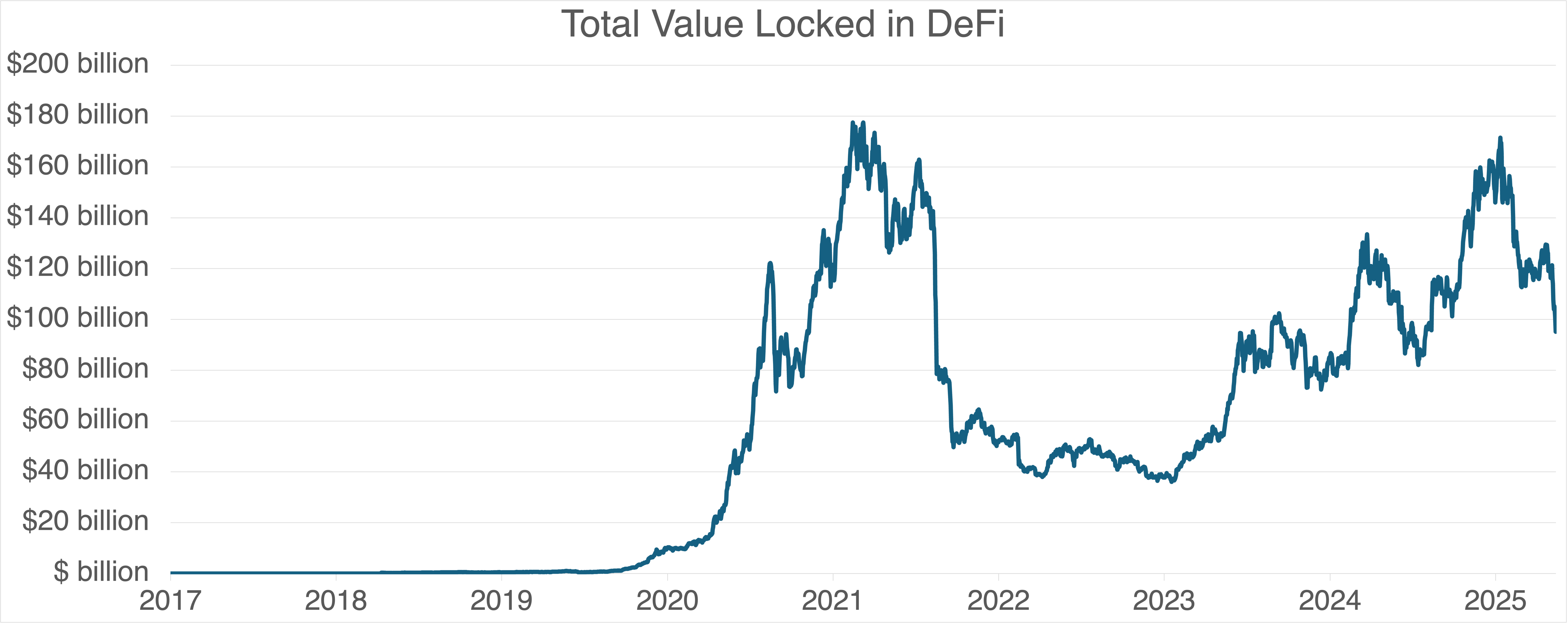
Multicoin Capital’s first mega thesis—Open Finance—has surpassed all early expectations. In 2019, decentralized finance protocols managed less than $1 billion in total capital. Today, DeFi protocols manage an astonishing $121 billion in Total Value Locked (TVL). This staggering multi-fold increase underscores the reliability, liquidity, and utility of automated market makers, decentralized lending pools, and algorithmic yield generators.
[DefiLlama Metrics Snapshot]
2019 TVL: < $1 Billion
2026 TVL: $121 Billion
2. The Stablecoin Revolution
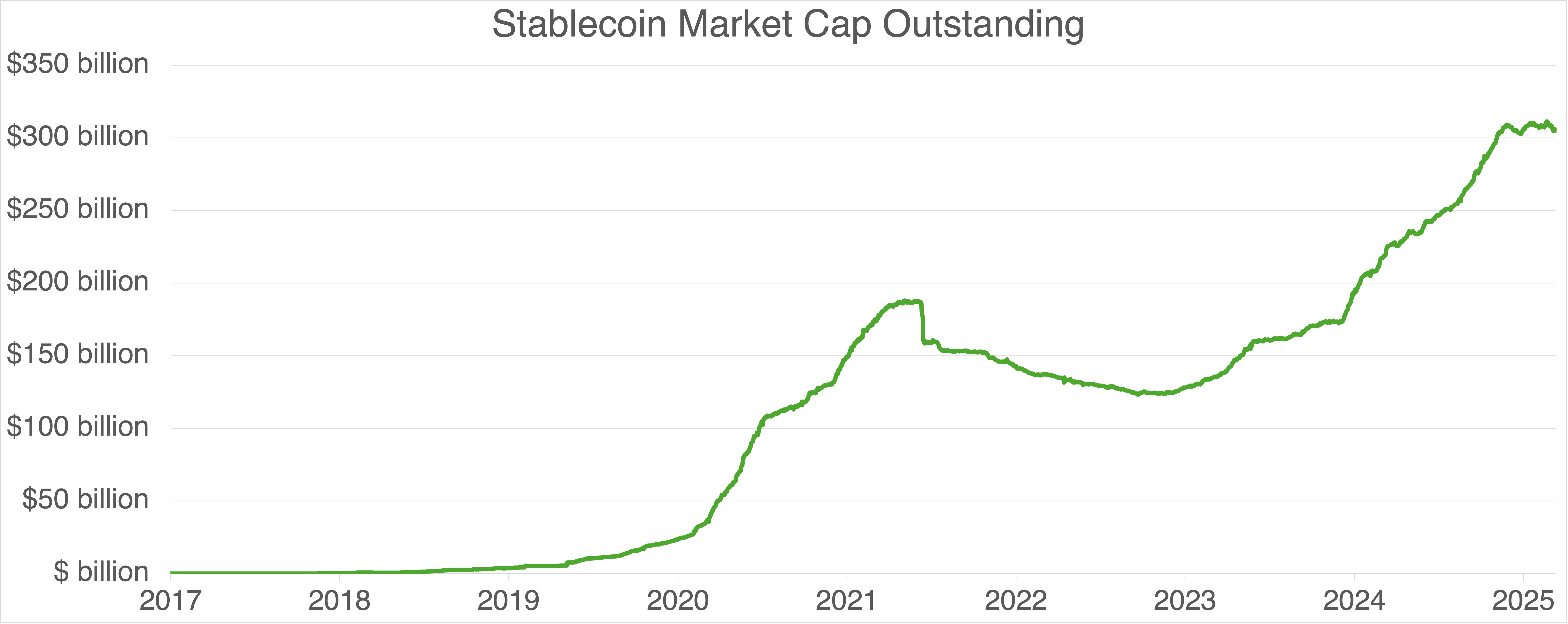
Operating as a critical subsector of open finance, stablecoins have evolved from simple trading pairs into dominant global settlement layers. At the time of the original Crypto Mega Theses publication, the aggregate stablecoin market capitalization hovered below $1 billion. Today, the total market cap of outstanding stablecoins exceeds $310 billion, providing dollar-denominated liquidity, instantaneous cross-border remittances, and inflation-resistant savings vehicles to populations across emerging and developed economies alike.
[Stablecoin Market Capitalization Growth]
2019 Market Cap: < $1 Billion
2026 Market Cap: > $310 Billion
3. The Erosion of Fiat Trust and Sovereign Money
The firm’s second mega thesis—Global, State-Free Money—initially appealed primarily to libertarians and gold bugs. For decades, the U.S. Dollar (USD) was treated as the unassailable global store of value. However, trust in fiat dominance has eroded significantly.
Following the unprecedented decision by Western powers to freeze Russia’s foreign exchange reserves, sovereign nations began viewing the weaponization of the dollar with acute alarm. Esteemed macroeconomic figures, including Ray Dalio, famously declared that "cash is trash" in an environment of perpetual debt expansion. Concurrently, years of domestic fiscal dominance, unchecked government spending, and mounting political interference in Federal Reserve monetary policy have degraded household purchasing power. These combined macro pressures have rendered state-free, mathematically scarce assets like Bitcoin (BTC), Ethereum (ETH), and Solana (SOL) increasingly compelling alternatives for institutional treasuries and retail investors alike.
4. The Financialization of Crypto: What the Revenue Data Tells Us
Having deployed capital across more than 100 portfolio companies over eight years, Multicoin Capital’s leadership has navigated speculative bubbles, transient narratives, and regulatory shifts. These trials yielded critical lessons: not every asset requires a permissionless blockchain, not every product needs a native token, and not every token can sustainably capture economic value.
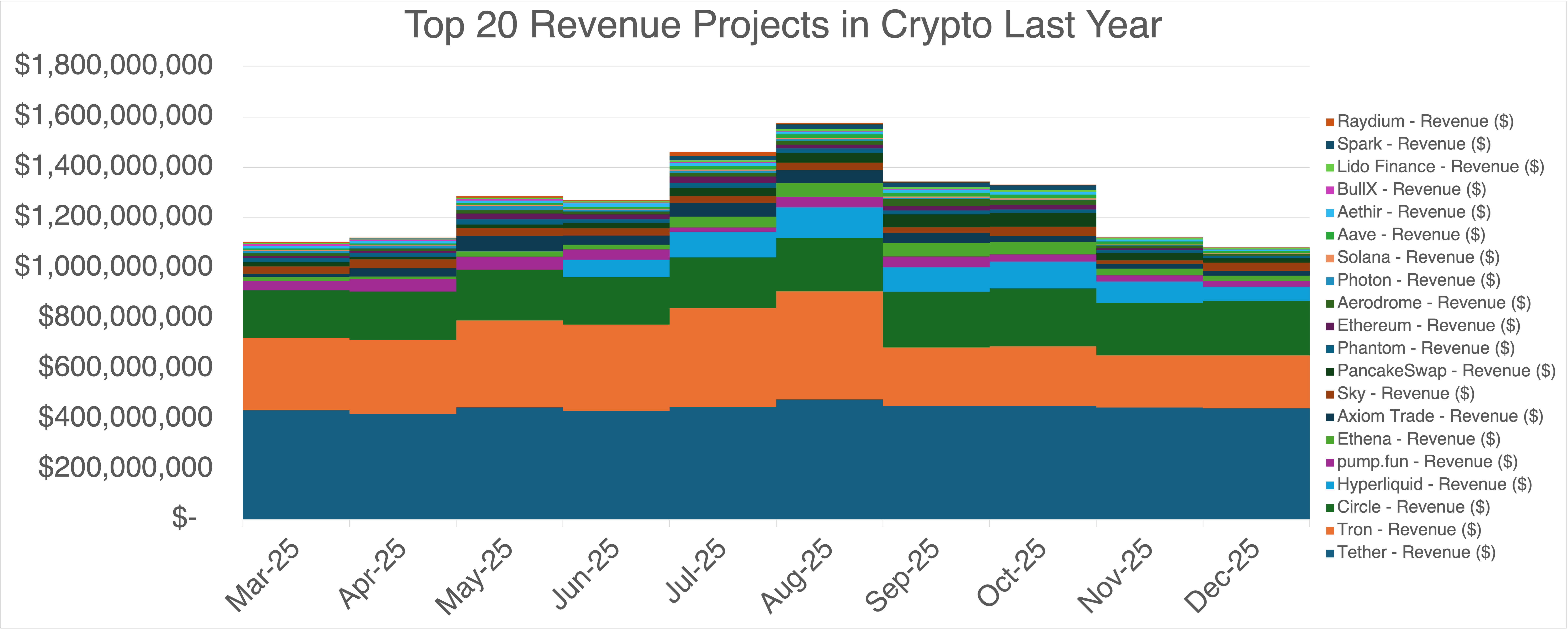
Empirical data reveals a clear and undeniable truth: blockchains serve primarily as superior asset ledgers. Projects focused strictly on finance and payments—including Decentralized Exchanges (DEXs), Centralized Exchanges (CEXs), crypto neobanks, institutional trading platforms, lending markets, and stablecoin issuers—are the entities that have successfully endured. A comprehensive review of the top 20 revenue-generating crypto projects over the past year demonstrates that only one project is not directly tied to finance or payments.
Official Statements & Industry Perspectives
The convergence of traditional finance and cryptographic infrastructure has prompted a profound reassessment among regulators and market leaders.
"Blockchains are the first-principles-correct technology to move money, coordinate and program capital formation, and power global financial markets."
— Multicoin Capital Core Investment Thesis
The institutionalization of this technology is further reflected in recent regulatory actions. SEC Project Crypto and the CFTC’s collaborative framework harmonization signal that governments no longer view blockchains as an adversarial threat, but rather as critical national infrastructure. As institutional heavyweights build out compliant pathways, the friction between traditional capital markets and on-chain liquidity continues to dissolve.
Future Outlook: Multicoin Capital’s 8 Core Investment Themes
Looking forward to the next decade of digital asset evolution, Multicoin Capital has crystallized its strategy around eight foundational investment themes designed to drive permissionless finance into mainstream prominence:
1. Fintech 4.0
Blockchains and stablecoins represent the first genuine paradigm shift in payment settlement speeds and transaction efficiency in decades. By making money and financial assets fully programmable, Fintech 4.0 slashes operational overhead for developers while directly challenging legacy monopolies held by traditional card networks and correspondent banking giants.
2. The DeFi Mullet
As the decentralized finance technology stack matures and engineering barriers fall, economic value is being captured across all layers. This includes specialized frontends that own direct customer relationships, highly scalable global DeFi backends, and essential DeFi middleware connecting user interfaces to liquidity engines.
3. Financial Globalization
Traditional asset classes—such as equities, foreign exchange, interest rates, and debt instruments—remain regionally fragmented and heavily gated. Blockchains democratize access by globalizing liquid markets, shedding transparency on opaque financial corners, reducing asset issuance costs, and opening trading to previously unserved populations.
4. More Efficient Borrowing and Lending
Historically, credit access relied heavily on geographical proximity and personal networking. On-chain credit primitives, institutional prime brokerages, and advanced DeFi vaults eliminate geographic bias, enabling instantaneous, algorithmic credit underwriting and collateral mobility on a global scale.
5. Entertainment Finance
In eras where traditional long-term financial milestones feel out of reach for younger demographics, public risk tolerance naturally shifts. Entertainment finance leverages crypto rails to support consumer-facing prediction markets, creator economies, and decentralized gaming ecosystems (such as Cheddr and Novig), stripping away predatory intermediary fees.
6. Programmable Ownership
Tokens, when engineered with robust economic design, serve as powerful tools for network bootstrapping and community alignment. They establish verifiable, programmable ownership models across Decentralized Physical Infrastructure Networks (DePIN), tokenized equity structures, and decentralized online marketplaces.
7. Credibly Neutral Blockchains
Base-layer neutrality is paramount. Financial markets scale most rapidly when competing market participants trust that the underlying infrastructure is impartial. Enterprise-specific or corporate-controlled chains will likely struggle to attract third-party builders—just as established fintech firms would hesitate to build atop a direct competitor’s proprietary ledger. Consequently, Multicoin remains focused on credibly neutral base layers like Aptos (APT), Solana (SOL), and Sei (SEI), while anticipating that long-term value capture will increasingly migrate up the application stack.
8. Cryptographic Primitives & Agentic Commerce
As artificial intelligence (AI) agents proliferate, they require native, borderless payment rails—a role fulfilled perfectly by stablecoins. Simultaneously, advanced cryptographic primitives (such as zero-knowledge proofs and fully homomorphic encryption championed by teams like Zama, Fhenix, and zkMe) allow users to cryptographically verify data authenticity without exposing sensitive personal information or creating centralized honey-pots of data. This infrastructure provides the necessary trust substrate for an internet economy driven by autonomous agentic systems.
Conclusion
As the digital asset ecosystem reflects on one of its most consequential years, the horizon for permissionless finance has never looked brighter. Multicoin Capital remains committed to partnering with visionary founders who push the boundaries of what is possible on cryptographic rails. For builders ready to challenge legacy financial monopolies and architect the next generation of global markets, the phoenix has only just begun to fly.