
Executive Overview
As the industry matured, the focus shifted from mere liquidity availability to structural price quality. Innovations such as Uniswap V2, V3, and V4 introduced concepts like concentrated liquidity, while high-performance layer-1 networks and Ethereum layer-2 solutions gave rise to onchain CLOBs like Phoenix. Simultaneously, fragmentation across a proliferating array of decentralized exchanges (DEXs) birthed aggregation services like 1inch, designed to optimize routing and minimize slippage.
Yet, despite these monumental strides in liquidity aggregation and price tightening, a critical vulnerability has remained largely unaddressed: the systemic inefficiency and prevalence of adverse selection within onchain order flow. Across both traditional financial markets and decentralized ledgers, market makers and liquidity providers (LPs) constantly contend with the dichotomy between "informed" and "uninformed" order flow. Because public blockchains operate on radical transparency—where user intent is broadcasted before execution—onchain liquidity is frequently priced under the assumption that every incoming trade is toxic. This default posture widens bid-ask spreads, degrades execution quality for everyday users, and forces retail participants to inadvertently subsidize sophisticated actors.
This deep dive—the second installment in an ongoing series examining blockchain market microstructure—explores the root causes of adverse selection in DeFi, analyzes the structural inequalities plaguing onchain order flow, and evaluates the diverse toolkit protocols are deploying to safeguard markets, realign economic incentives, and protect ordinary users.
Detailed Chronology: The Evolution of Onchain Liquidity and Order Flow
To understand why adverse selection poses such an existential threat to modern DeFi, one must trace the chronological development of onchain market structures and the corresponding evolution of predatory trading vectors.
Phase 1: The Quest for Basic Connectivity (2018–2020)
Before the mainstream adoption of AMMs, decentralized trading was hamstrung by the physical and computational limitations of early smart contract platforms. Order books on Ethereum were economically unviable due to prohibitive gas costs for every cancellation and modification. The launch of Uniswap V1 in 2018 solved this by introducing the constant product formula ($x cdot y = k$), allowing anyone to pool assets and provide continuous liquidity. While revolutionary, these early pools were entirely naive to external price movements, making them sitting ducks for arbitrageurs who exploited stale onchain prices relative to centralized exchanges (CEXs).

Phase 2: Capital Efficiency and Price Discovery Upgrades (2021–2023)
As total value locked (TVL) surged, protocols recognized that static AMMs suffered from catastrophic capital inefficiency. Uniswap V2 introduced ERC-20 to ERC-20 direct pairs, while Uniswap V3 introduced concentrated liquidity, allowing LPs to allocate capital within specific price ranges. Around the same time, high-throughput networks like Solana and various Ethereum layer-2 networks enabled the deployment of high-performance onchain CLOBs.
However, as liquidity fractured across multiple venues, aggregators like 1inch emerged to stitch fragmented pools together. While this improved execution prices for takers, it did nothing to shield market makers from the fundamental issue: the complete lack of flow segmentation. Unlike traditional finance (TradFi), where broker-dealers can filter retail flow from institutional algorithms, the blockchain mempool treats a Mom-and-Pop wallet swap identically to a multi-million-dollar institutional arbitrage script.
Phase 3: The MEV Era and Radical Transparency (2022–Present)
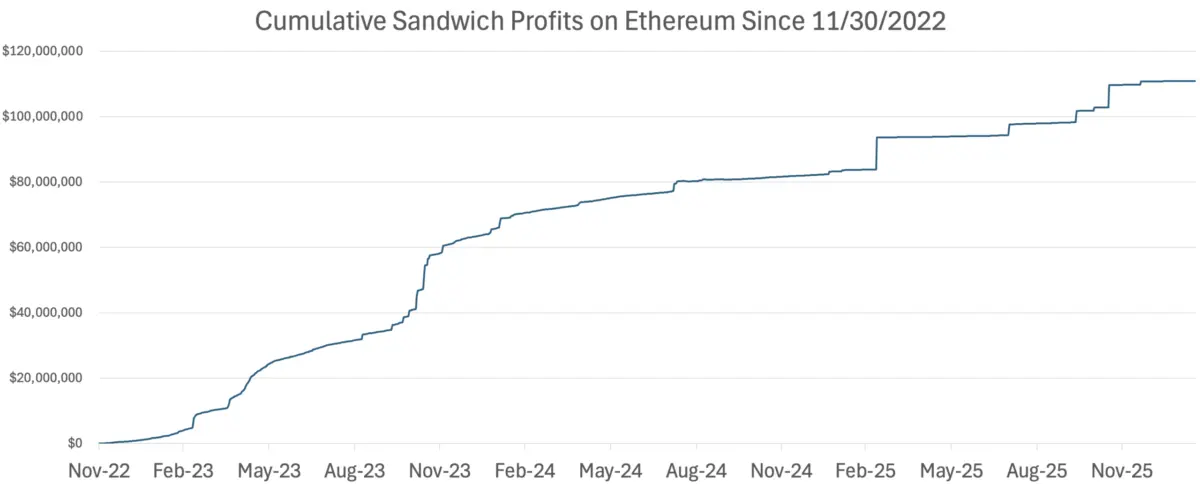
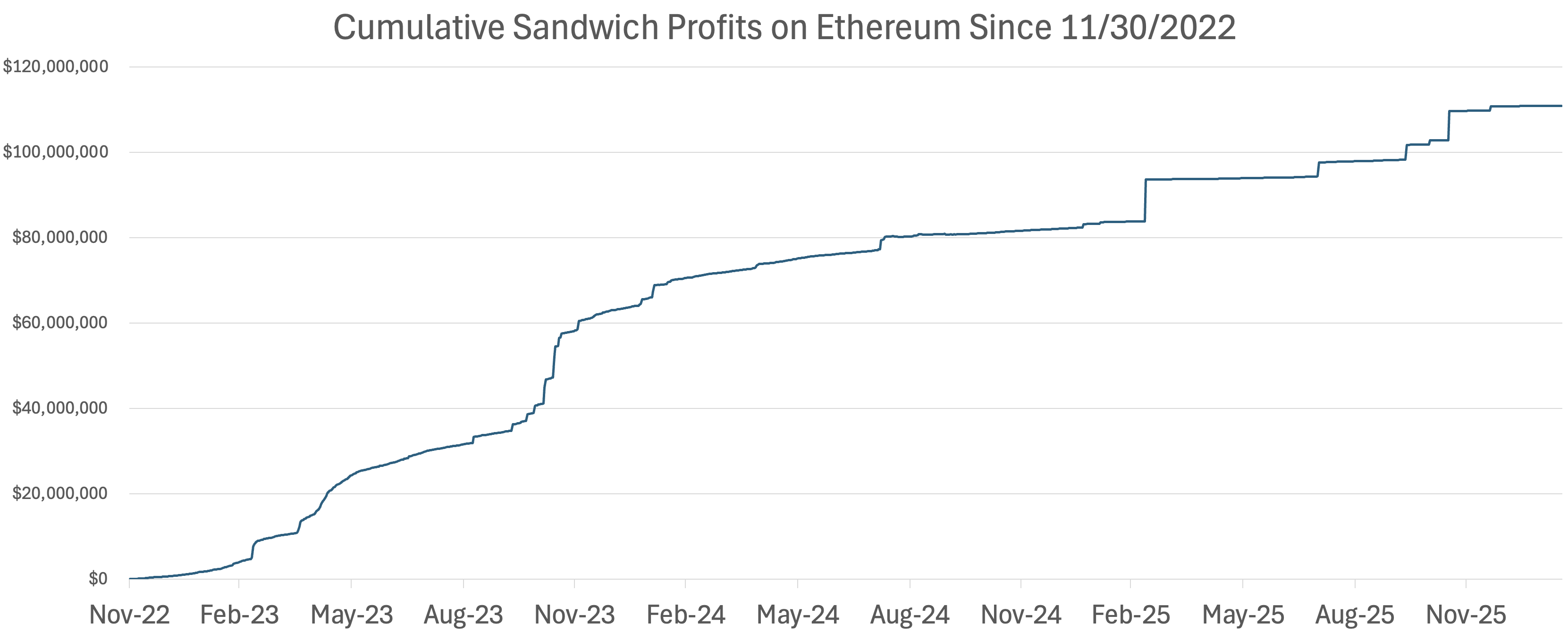
As smart contract execution logic advanced, so did the sophistication of extraction strategies. Maximal Extractable Value (MEV)—specifically predatory practices like sandwich attacks and front-running—became industrialised. On networks like Solana, the sheer volume of searcher traffic forced infrastructure providers like Jito to temporarily alter mempool dynamics by disabling public mempool features to protect retail users. On Ethereum, cumulative sandwich profits skyrocketed into the tens of millions of dollars, cementing the reality that radical public transparency was actively penalizing uninformed participants.
Supporting Context & Metrics: Informed vs. Uninformed Flow
In any financial market, high-frequency trading (HFT) firms and professional market makers invest millions of dollars in infrastructure, private fiber-optic networks, colocated servers, and predictive data feeds to anticipate price movements over fractions of a second. The average retail trader, interacting via a browser wallet over the public internet, possesses no such advantages.
Market makers categorize order flow based on a simple premise:
- Uninformed (Non-Toxic) Flow: Consists of random, retail, or structural portfolio rebalancing trades. Market makers generate revenue from these flows by capturing the bid-ask spread.
- Informed (Toxic) Flow: Consists of trades executed by actors with superior information or speed, such as arbitrageurs reacting to offchain CEX price movements. Market makers consistently lose money when trading against informed flow.
+-----------------------------------------------------------------+
|                       INCOMING ORDER FLOW                       |
+---------------------------------+-------------------------------+
                                  |
         +------------------------+------------------------+
         v                                                 v
+-------------------------+                     +-------------------------+
|   UNINFORMED (RETAIL)   |                     |    INFORMED (TOXIC)     |
|  - Random swaps         |                     |  - CEX-DEX Arbitrage    |
|  - Portfolio rebalancing|                     |  - Latency exploitation |
+------------+------------+                     +------------+------------+
             |                                                 |
             v                                                 v
+-------------------------+                     +-------------------------+
|     DESIRABLE FLOW      |                     |      TOXIC TO LPs       |
|  - Narrows spreads      |                     |  - Widens spreads       |
|  - Profitable for LPs   |                     |  - Causes inventory loss|
+-------------------------+                     +-------------------------+
According to interviews with DeFi founders and quantitative researchers, the toxicity of order flow is measured across rolling windows ranging from a few microseconds to ten minutes, depending on the asset’s liquidity profile. For highly liquid assets, toxicity is evaluated almost instantly. If a market maker has sufficient time to offload risk (e.g., one hour) and the trader’s long-term markout is profitable while their short-term markout appears random, the market maker does not classify them as a toxic trader. Conversely, for illiquid long-tail assets, market makers require much longer time horizons to offset risk, amplifying their vulnerability.
When toxic flow dominates a pool, market makers protect themselves by widening their quotes. Consequently, the entire market suffers: spreads widen, execution costs climb, and everyday users are forced to subsidize the execution costs of sophisticated extraction engines.
Official Industry Perspectives & Structural Solutions
Recognizing that the default assumption of universal order toxicity inhibits true best execution, the DeFi ecosystem is actively experimenting with structural countermeasures. These interventions generally fall into six distinct categories:
1. Delaying Execution
By introducing time delays or batching mechanisms, protocols reduce the value of reacting instantly to visible state changes.
- Batch Auctions: Trades are aggregated over a short temporal window and settled at a single clearing price. This neutralizes front-running and sandwich attacks because priority within the batch becomes irrelevant.
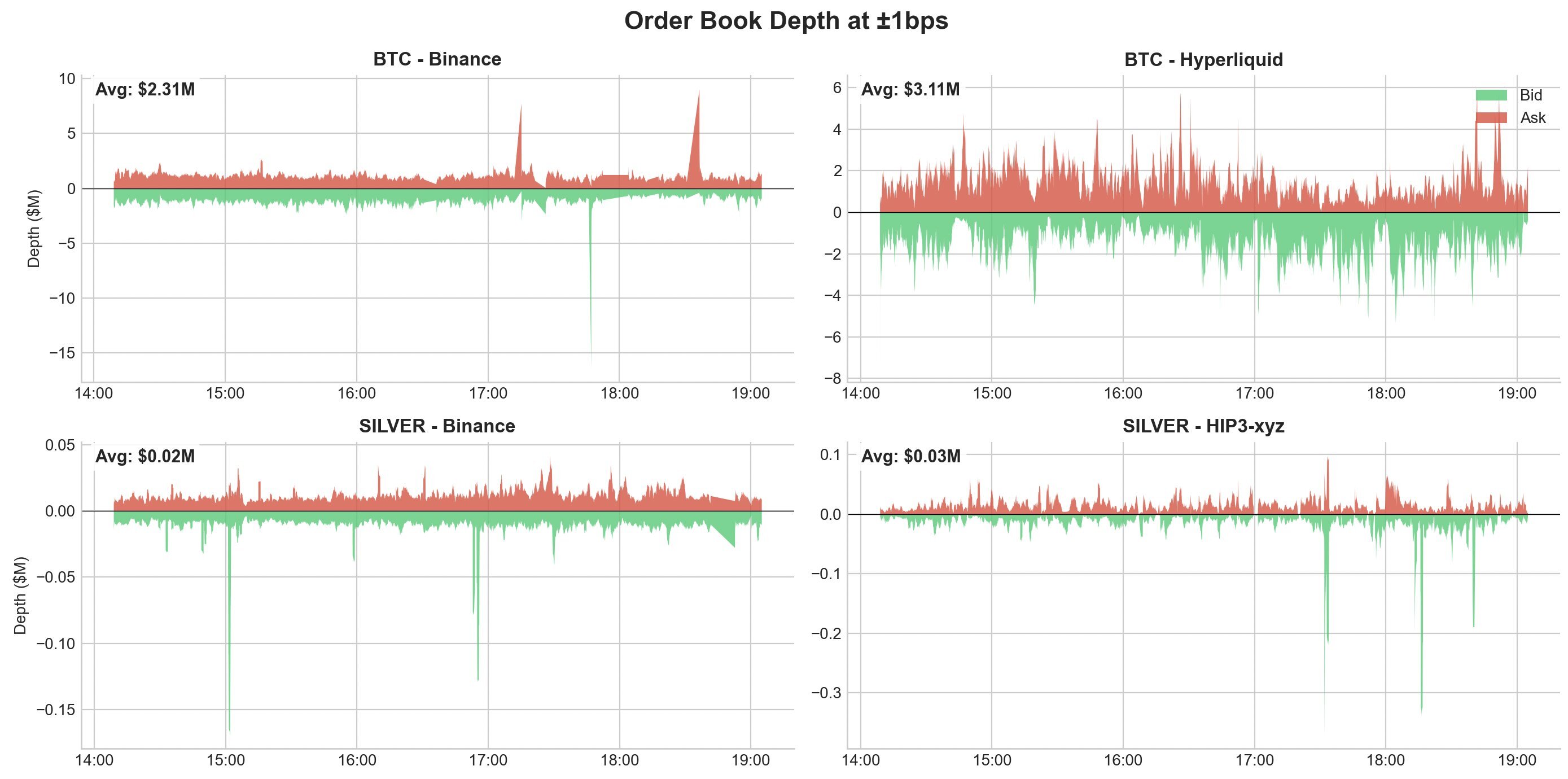
- Maker Priority (Cancellation Delays): Platforms like Hyperliquid implement latency models where market makers are granted the ability to cancel or update quotes ahead of incoming taker orders during fast-moving markets. This lowers the tail risk for market makers, enabling them to quote significantly tighter spreads during normal market conditions.
- Speedbumps in Prediction Markets: Comparing platforms like Kalshi and Polymarket reveals fascinating structural divergences. Polymarket applies a deliberate three-second delay on market orders, successfully curbing adverse selection and resulting in tighter liquidity near the midbook compared to competitors lacking such frictions.
2. Hiding Intent
Adverse transaction ordering relies entirely on the pre-execution visibility of user intent. By concealing trade details until execution, protocols can eliminate information leakage.
- Private Routing & Order Flow Auctions (OFAs): Services like Flashbots and MEV Blocker allow users to route transactions through private relays rather than the public mempool. While this shields users from front-running, it introduces trust assumptions regarding the entities operating the relays. Dune Analytics data highlights that the vast majority of Ethereum DEX order flow now transacts via private channels.
- Encrypted Mempools: Utilizing Trusted Execution Environments (TEEs) or Fully Homomorphic Encryption (FHE), encrypted mempools keep transaction parameters completely obscured until they are definitively sequenced into a block. While theoretically optimal, this approach adds infrastructural complexity and requires fundamental changes to public blockchain architectures.
3. Flow Segmentation
In TradFi, retail order flow is systematically segmented and routed to wholesalers. Onchain protocols are adopting permissionless analogues to achieve the same result.
- Conditional Liquidity & Tagged Wallets: Infrastructure providers like DFlow enable frontends, wallets, and brokerages to tag addresses as non-toxic retail flow. Market makers can then quote tighter pricing specifically for these tagged wallets, rewarding them with lower fees while preserving the wallet provider’s economic model.
- Retail Price Improvement (RPI) Models: Pioneered by platforms like Paradex and subsequently adopted by centralized venues like Binance for futures trading, RPI models display limit orders exclusively to retail user interfaces while hiding them from programmatic API access, effectively fencing off toxic HFT traffic.
4. Dynamic Pricing
Rather than relying on static swap fees—which assume uniform risk across all market conditions—protocols are deploying dynamic fee structures that scale alongside volatility and adverse selection risk. LFJ’s Liquidity Book serves as a prime example, automatically adjusting swap fees upward during periods of high price turbulence and downward during calm regimes, ensuring LPs are adequately compensated for the heightened risk of toxic flow.
5. Refusing Flow Altogether
Abandoning the dogma that liquidity must remain unconditionally accessible at all times, modern DeFi designs utilize programmatic circuit breakers, position limits, and Just-In-Time (JIT) liquidity models. By explicitly pausing specific execution paths or rejecting toxic flow during extreme volatility, protocols protect their LPs from catastrophic inventory loss, fostering long-term capital confidence.
6. Social Coordination
Operating at the base layer rather than the application layer, social coordination relies on cultural norms, public reputation dashboards (e.g., ibrl.wtf and sandwiched.me), and validator staking behavior to disincentivize predatory ordering strategies. While it cannot be programmatically enforced, social coordination acts as a crucial supplementary defense against the worst excesses of block builders and searchers.
Future Outlook
The challenge of adverse selection and toxic order flow is not an insurmountable design flaw, but rather an ongoing engineering frontier. As decentralized market microstructure continues to evolve, there is no single silver bullet. Spot and derivatives DEXs must embrace a modular toolkit—combining encrypted mempools, flow segmentation, dynamic pricing, and strategic execution delays—tailored to their specific asset classes and liquidity profiles.
Looking ahead, the intersection of onchain market structure and traditional finance will accelerate. In the next installment of this series, we will examine the mechanics of bringing Real-World Assets (RWAs)—including equities, foreign exchange, credit, commodities, and US Treasuries—onto public blockchains, analyzing the path dependencies of synthetic models, custody frameworks, and primary issuance pathways.
Getting market microstructure right is the definitive key to unlocking massive venture-scale outcomes in DeFi. Developers and researchers tackling these foundational problems are invited to engage with the authors and shape the positive-sum future of onchain finance.