

Executive Overview
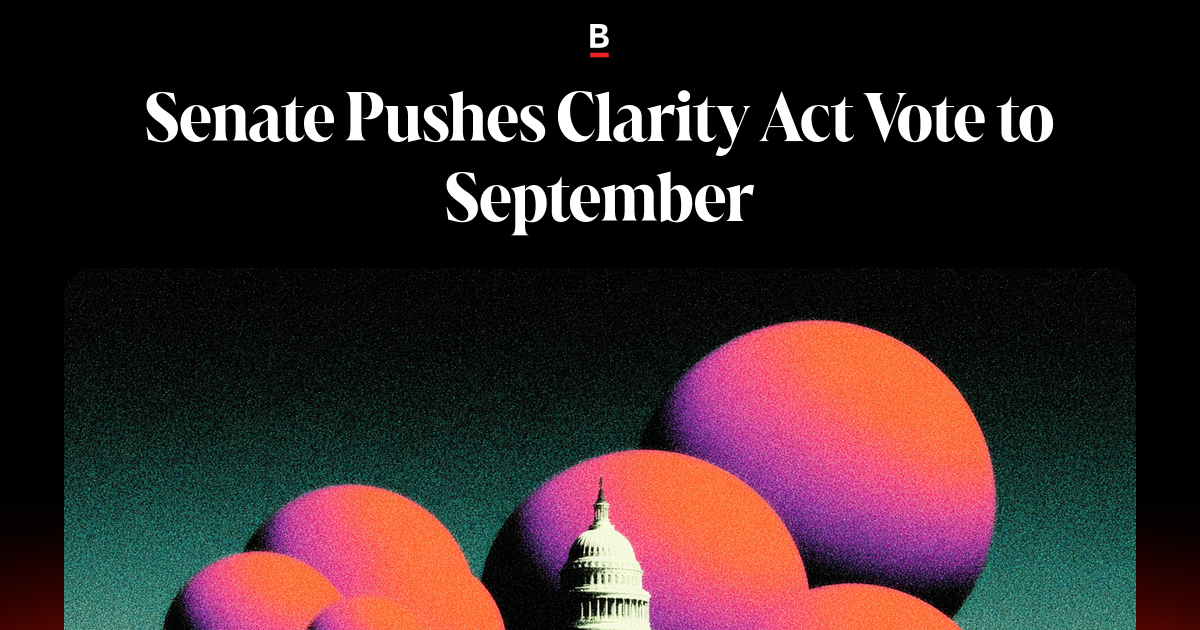
The postponement shoves the timeline for the landmark crypto framework into a precarious window in September. Lawmakers will now have to navigate a compressed legislative calendar complicated by looming midterm elections, which threaten to subordinate substantive policy debate to political posturing. For an industry that has long clamored for comprehensive regulatory certainty, the delay is more than a mere scheduling hiccup—it is a glaring reminder of the deep divisions plaguing Capitol Hill regarding the future of digital assets, decentralized finance (DeFi), and the regulatory boundaries of the Securities and Exchange Commission (SEC) versus the Commodity Futures Trading Commission (CFTC).
This comprehensive report explores the anatomy of the Senate’s delay, examining the underlying ethics controversies, the contentious legislative friction points, the broader market implications, and what stakeholders can realistically expect when the Senate reconvenes in the autumn.
Detailed Chronology: The Road to the August Stalemate
To understand how the Clarity Act arrived at its current impasse, it is necessary to retrace the legislative breadcrumbs leading up to Majority Leader Thune’s announcement.
Early 2026: Momentum and Optimism
The year began with cautious optimism across the digital asset ecosystem. Following years of "regulation by enforcement" and protracted legal battles between crypto enterprises and federal regulators, lawmakers from both sides of the aisle signaled an appetite for structural reform. The Clarity Act emerged as the primary vehicle to establish clear jurisdictional lines, defining when a digital asset constitutes a security versus a commodity. Industry advocates praised the initial drafts for attempting to foster innovation while maintaining robust consumer protections.
Spring to Early Summer: Committee Wrangling
As the bill moved through various committee hearings, underlying tensions began to surface. Industry lobbyists, traditional financial institutions, and consumer advocacy groups locked horns over key definitions.
- The SEC Turf War: Traditional securities lawyers raised alarms over provisions that could potentially strip the SEC of its oversight authority over certain token distributions, while crypto-native advocates argued that the SEC’s historical approach was stifling domestic innovation.
- Jurisdictional Overlaps: Negotiations between the Senate Banking Committee and the Agriculture Committee—which oversees the CFTC—hit turbulence regarding how spot market crypto exchanges would be registered and supervised.
Late July: The Ethics Cloud
By mid-summer, the legislative machinery began to seize. Rumors of behind-the-scenes ethics disputes involving key legislators and digital asset holdings or lobbying ties began to circulate in Washington corridors. While specific details remained shielded by confidentiality protocols and committee investigations, the cloud of impropriety provided political leverage for opponents of the bill to demand thorough reviews and recusals. These ethics wrangles paralyzed the consensus-building process, eroding the fragile bipartisan trust required to bring a complex financial bill to the Senate floor.
Late August: The Official Delay
With the August recess rapidly approaching and legislative days dwindling, Majority Leader Thune confirmed what insiders had feared for weeks: the Senate would not take up the Clarity Act before the recess. The decision effectively kicks the political football into September, leaving market participants and lobbyists to regroup for the autumn sprint.
Supporting Context & Metrics: The Stakes for the Crypto Economy
The Clarity Act is not just another piece of administrative housekeeping; it represents a foundational pillar for the future integration of blockchain technology and traditional finance (TradFi) within the United States.
The Regulatory Void and "Regulation by Enforcement"
For years, the U.S. digital asset market has operated in a regulatory gray zone. Without statutory definitions passed by Congress, agencies like the SEC and the CFTC have engaged in aggressive enforcement actions against exchanges, token issuers, and decentralized protocols. Market participants argue that this approach—characterized by retroactive penalties rather than proactive rule-making—has driven billions of dollars in capital and thousands of engineering jobs offshore to jurisdictions with clearer frameworks, such as the European Union (via MiCA) and the United Arab Emirates.
Economic Metrics and Market Capitalization
- Capital Flight: Venture capital funding for U.S.-based Web3 startups has seen fluctuating quarters, heavily influenced by the perceived hostility of the domestic regulatory climate.
- Institutional Inflow: Major asset managers—having successfully launched spot Bitcoin and Ethereum exchange-traded funds (ETFs)—have repeatedly signaled that their broader product roadmaps (including multi-asset crypto indices and staking products) are contingent upon legislative clarity from Congress.
- Retail Participation: Millions of American retail investors remain exposed to market volatility driven by regulatory uncertainty, where a single speech, court ruling, or enforcement action can wipe out billions in market capitalization overnight.
The failure to pass the Clarity Act in July prolongs this state of limbo, forcing protocols, custodians, and institutional investors to continue operating under an ambiguous and hazardous legal framework.
Official Statements and Industry Reactions
The decision to delay the vote has elicited sharp reactions from Capitol Hill, regulatory watchers, and industry leaders alike.

Congressional Response
While Majority Leader Thune framed the postponement as a necessary step to resolve outstanding disputes and ensure the bill is thoroughly vetted, partisan finger-pointing has predictably ensued.
- Supporters of the Bill: Pro-crypto lawmakers expressed disappointment but insisted that a rushed bill is worse than a delayed bill. They argue that taking the extra weeks to iron out ethics concerns and jurisdictional overlaps will yield a more robust and legally sound statute.
- Critics and Skeptics: Conversely, opponents of the legislation utilized the delay to question whether the bill was fundamentally flawed from inception, pointing to the ethics disputes as evidence of undue industry influence and rushed drafting.
Industry and Advocacy Group Reactions
Decentralized finance advocates, venture capitalists, and corporate crypto representatives have expressed a mix of frustration and pragmatic acceptance.
- The Frustration: Many feel that traditional political gridlock continues to hold hostage an entire sector of the American economy, putting the U.S. at a competitive disadvantage globally.
- The Pragmatism: Industry leaders recognize that ramming a controversial financial bill through a fractured Senate right before a major electoral cycle was always a long shot. Securing a clean, uncompromised vote in September—even under a tight timeline—remains the preferred outcome over a hastily amended bill vulnerable to constitutional or judicial challenges down the road.
Future Outlook: Navigating the September Window and Midterm Pressures
As Washington settles into its August recess, the countdown to September begins. The political reality facing the Clarity Act upon Congress’s return is fraught with peril and opportunity.
The Legislative Bottleneck
When lawmakers return in September, their legislative calendar will be remarkably congested. They will face immediate deadlines regarding federal funding to avert government shutdowns, alongside ongoing debates over fiscal policy and national security appropriations. Fitting a complex financial market structure bill into this narrow window will require extraordinary bipartisan discipline and leadership resolve.
The Midterm Election Factor
Compounding the scheduling challenge is the encroaching shadow of the midterm elections. As campaigning ramps up, polarization typically intensifies. Lawmakers become increasingly hesitant to take votes on contentious issues that could be weaponized by political opponents or alienate key donor bases—including deep-pocketed political action committees (PACs) backing various digital asset interests.
Scenarios for the Fall
- The Grand Compromise (Optimistic Scenario): Leadership uses the August recess to quietly hammer out text amendments resolving the ethics disputes and bridging the gap between the SEC and CFTC mandates. The bill hits the floor in early September, passes with comfortable bipartisan margins, and moves rapidly toward reconciliation with the House.
- The Punt to the Lame-Duck Session (Neutral Scenario): Negotiations drag past September, pushing the vote into the post-election lame-duck session. While lame-duck sessions are historically notorious for bypassing standard political theater to pass omnibus legislation, they also suffer from low morale among defeated lawmakers and limited accountability.
- The Death of the Bill (Pessimistic Scenario): The ethics controversies deepen, partisan divides widen beyond repair, and the Clarity Act quietly dies on the legislative vine, ensuring that regulatory ambiguity remains the defining characteristic of the U.S. crypto market for the foreseeable future.
Conclusion
The postponement of the Clarity Act vote to September is a stark reminder that legislative reform for emerging technologies is rarely a linear path. While the delay is undeniably a setback for those seeking immediate legal certainty, it also affords stakeholders a final opportunity to engage lawmakers, clean up ethics disputes, and craft a regulatory framework capable of surviving the crucible of modern American politics. For better or worse, September will prove to be the ultimate litmus test for whether Congress is capable of governing the financial architecture of the digital age.