

Executive Overview
Drafted by Belgian Member of the European Parliament (MEP) Johan Van Overtveldt, the report represents a sophisticated shift in tone from the bloc’s historical skepticism toward a more pragmatic, integrationist approach. While the Markets in Crypto-Assets (MiCA) regulation has long been heralded as the global gold standard for comprehensive digital asset legislation, policymakers are increasingly recognizing that technology evolves faster than static legislation. The newly adopted ECON report not only champions the expansion of MiCA’s perimeter but also aggressively promotes financial tokenization, actively encourages the issuance of euro-denominated stablecoins, and warns member states against regulatory fragmentation.
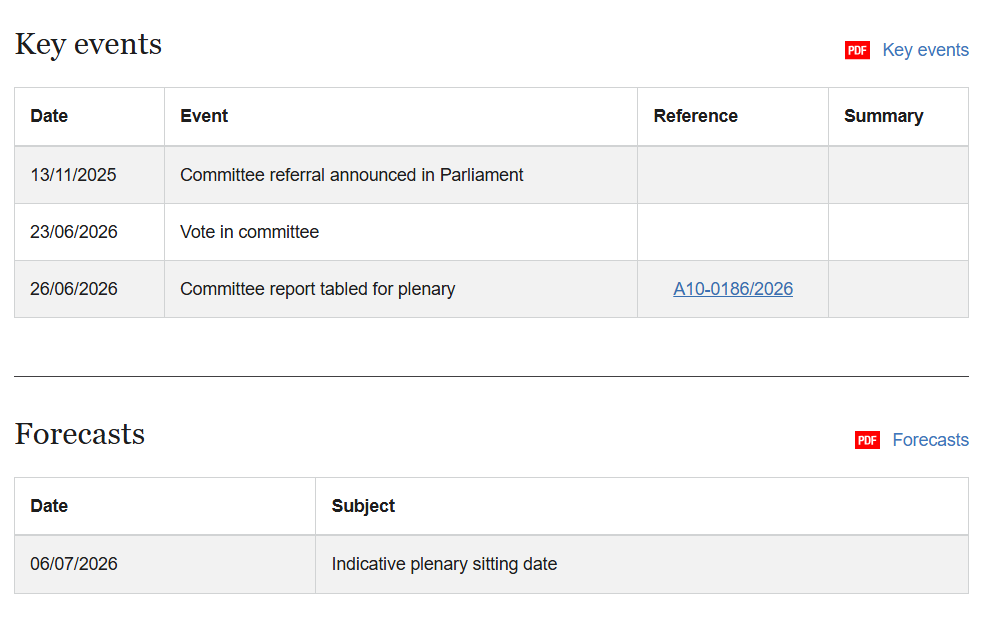
As the text prepares for a crucial plenary vote scheduled for July 6, stakeholders across traditional banking, fintech, and the Web3 ecosystem are closely monitoring the proceedings. If adopted, the resolution will crystallize as the European Parliament’s official stance on digital asset policy. Although it does not immediately amend MiCA or create sudden legal obligations, it functions as a powerful political catalyst, steering the European Commission’s ongoing statutory reviews and dictating the future trajectory of Europe’s digital economy.
Detailed Chronology: From 2023 Crisis to the Upcoming Plenary Vote
Understanding the momentum behind the ECON committee’s latest resolution requires tracing the rapid evolution of the European Union’s digital asset policy over recent years. The journey from crisis-driven skepticism to structured policy integration highlights a maturing regulatory landscape.
The 2023 Banking Crisis and the Anti-Crypto Sentiment
The ideological foundation of Europe’s current regulatory posture was heavily tested during the global banking turmoil of March 2023. The sudden collapses of Silicon Valley Bank (SVB), Signature Bank, and Silvergate Bank sent shockwaves through international financial systems. Within the digital asset sector, the fallout was acutely personal: major stablecoin issuer Circle held approximately $3.3 billion of its USD Coin (USDC) reserves stranded inside the collapsing walls of SVB, triggering a historic de-pegging event that saw USDC briefly plummet below $0.87.
In the heat of this crisis, rapporteur Johan Van Overtveldt adopted a hardline stance against cryptocurrencies, publicly drawing controversial parallels between decentralized digital assets and illicit substances. Lawmakers across the continent feared that systemic contagion from the crypto sector could destabilize traditional European banking institutions. This climate of urgency accelerated the finalization of MiCA, prioritizing consumer protection, reserve transparency, and rigorous oversight of centralized issuers to safeguard the macroeconomic stability of the eurozone.
The Pivot: From Restriction to Integration (February – June 2026)
Fast-forward to early 2026, and the tone among European policymakers has undergone a notable metamorphosis. In February, Johan Van Overtveldt presented the initial draft of the ECON digital asset report. Over the subsequent months, the text underwent meticulous scrutiny, debate, and amendment by committee members, transforming from a defensive posture into a proactive roadmap for European financial competitiveness.
The resulting report—brought forward for a plenary vote on Friday—reflects a maturing regulatory outlook. Policymakers are no longer asking if crypto should exist, but rather how Europe can harness distributed ledger technology (DLT) without sacrificing financial integrity. The legislative timeline now culminates in a high-stakes plenary vote expected on July 6. This vote will determine whether the European Parliament formally adopts the resolution, setting a definitive baseline for the Commission’s regulatory roadmap.
Supporting Context & Metrics: Stablecoins, Tokenization, and the Macroeconomic Landscape
The ECON committee’s recommendations do not exist in a vacuum; they are intrinsically tied to broader shifts in macroeconomic policy, central banking strategies, and the impending deadlines of the EU’s regulatory rollout.
+-----------------------------------------------------------------------------------+
|                        THE EU DIGITAL ASSET REGULATORY MATRIX                     |
+---------------------------+-------------------------------------------------------+
| Core Framework            | Markets in Crypto-Assets Regulation (MiCA)            |
| Transitional Deadline     | July 1 (Full authorization required for CASPs)        |
| ECON Committee Vote       | June (Report approved for plenary)                    |
| Upcoming Plenary Vote     | July 6 (Parliament official policy stance)            |
| Key Expansion Targets     | DeFi, Staking, Lending/Borrowing, NFTs                |
+---------------------------+-------------------------------------------------------+
The Rehabilitation of Stablecoins and the Geopolitical Role of the Euro
A striking development within the ECON report is its warm embrace of euro-denominated stablecoins. This shift mirrors a broader softening of international stances. Just days prior to the report’s release, former Bank for International Settlements (BIS) General Manager Agustín Carstens—a historically vocal critic of cryptocurrencies—softened his public stance regarding the coexistence of stablecoins and fiat currencies.
The ECON report explicitly encourages the development of euro-denominated stablecoins, arguing that they can act as a crucial catalyst for the bloc’s stagnant retail and wholesale payment sectors. By facilitating faster, cheaper cross-border transactions, regulated stablecoins are viewed as essential tools for bolstering the international competitiveness of EU financial markets and elevating the global status of the euro.
Furthermore, these private digital assets are envisioned to work in harmony with public sector initiatives. The committee emphasized that euro stablecoins can seamlessly complement tokenized commercial bank deposits and wholesale central bank digital currencies (wCBDCs). This aligns directly with the committee’s parallel support for the digital euro bill, reinforcing the legislative view that public and private forms of digital money must peacefully coexist rather than engage in destructive competition.
Navigating the MiCA Transitional Cliff and National Fragmentation
As policymakers deliberate on future expansions, the industry is currently navigating an immediate regulatory bottleneck. July 1 marks the absolute end of MiCA’s transitional period. Following this date, Crypto-Asset Service Providers (CASPs) operating within the European Union generally must hold full regulatory authorization under MiCA to continue offering services.
However, regulatory compliance has faced friction on the ground. Recent political hurdles—such as the repeated vetoes of national crypto bills by Poland’s president—have left some local firms scrambling to secure licenses in foreign jurisdictions, highlighting the growing pains of transitioning to a pan-European framework.
To prevent systemic chaos, the ECON report strongly urges the consistent, uniform application of MiCA across all 27 member states to preserve a level playing field. The committee explicitly warned national governments against introducing idiosyncratic local requirements that could fracture the single market, creating a patchwork of conflicting rules that would hinder cross-border scaling for European Web3 enterprises.
Official Statements and Regulatory Perspectives
The transition from a rigid enforcement mindset to an adaptive regulatory framework has been shaped by continuous dialogue among European institutions, banking executives, and industry leaders.
Johan Van Overtveldt, steering the digital asset file through ECON, has consistently emphasized the need for proportionality. While his initial reactions during the 2023 banking crisis prioritized defensive firewalls, his current legislative approach seeks balance. The own-initiative report underscores that pushing complex financial activities entirely underground through excessive bans is counterproductive. Instead, bringing activities like decentralized finance and staking into the light of regulatory oversight ensures consumer protection without stifling technological innovation.
Meanwhile, the European Commission is already laying the technical groundwork for these expansions. In May, the Commission launched a comprehensive public consultation specifically designed to gather empirical data and stakeholder feedback on whether MiCA’s current perimeter should be legally widened. The consultation targets precisely the blind spots highlighted in the ECON report:
- DeFi protocols and automated market makers (AMMs)
- Crypto lending and borrowing platforms
- Staking-as-a-service providers
- Non-Fungible Tokens (NFTs) with financial utility
- The ongoing debate surrounding the regulatory prohibition of interest-bearing stablecoins
By opening these avenues for public consultation, Brussels has signaled its willingness to adapt the legislative framework based on real-world market dynamics rather than theoretical assumptions.
Future Outlook: What the July 6 Vote Means for European Crypto
As the European Parliament prepares for the pivotal July 6 plenary vote, the implications for the global digital asset industry are profound.
If the resolution is successfully adopted, it will establish a unified parliamentary mandate compelling the European Commission to draft concrete legislative proposals targeting DeFi, NFTs, staking, and crypto lending. While an own-initiative resolution does not instantly alter existing laws, it carries immense political gravity. It serves as the official marching order for EU bureaucrats, virtually guaranteeing that the next legislative cycle will feature deep, structural amendments to Europe’s crypto rulebook.
+-----------------------------------------------------------------------------------+
|                        PATHWAY TO POLICY IMPLEMENTATION                           |
+-----------------------------------------------------------------------------------+
| 1. ECON Drafts Report  --->  2. Committee Approval  --->  3. Plenary Vote (July 6)|
|                                                                         |         |
| 6. Legislative Enactment <--- 5. Commission Proposals <--- 4. Official Mandate    |
+-----------------------------------------------------------------------------------+
For institutional investors and Web3 enterprises, Europe is signaling both increased oversight and unprecedented legal certainty. While entities operating in the gray areas of decentralized finance or staking will face the prospect of forthcoming compliance costs, the broader promotion of tokenization and euro stablecoins opens massive commercial opportunities.
By actively attempting to master—rather than ban—the next generation of financial technology, the European Union is positioning itself as a sophisticated global laboratory for digital asset regulation. Whether Brussels can successfully balance consumer protection, financial stability, and technological innovation will serve as a definitive blueprint for regulators worldwide.