

Executive Overview
Cryptocurrency infrastructure has comprehensively dismantled this paradigm. Today, protocols built on high-throughput layer-1 blockchains like Solana have trivialized asset creation. Any individual anywhere in the world can deploy a brand-new, globally tradeable asset in a matter of seconds for a fraction of a cent.
This technological leap has sparked an unprecedented explosion in User-Generated Assets (UGAs). Emerging first through experimental social tokens on platforms like BitClout and FriendTech, the UGA phenomenon has rapidly matured into highly liquid, culturally driven ecosystems characterized by memecoins on launchpads like pump.fun and content-backed coins on Zora.
Yet, as the mechanisms of asset creation underwent a radical transformation, the user interfaces of secondary markets remained frustratingly stagnant. For thirty years, the foundational modality of online trading has barely evolved: a user opens an application, inputs a contract address or a ticker symbol into a search bar, reviews a rudimentary chart, and clicks a buy or sell button. This exact pattern underpins early 1990s online brokerages, modern crypto wallets like Phantom and Coinbase, and traditional e-commerce giants like Amazon and eBay.
Fortunately, this era of interface stagnation is coming to an end. Empowered by the architectural flexibility of crypto rails, a new wave of entrepreneurs, developers, and product designers are pioneering innovative launchpads and trading modalities. These emerging systems purposefully break away from traditional browser-and-wallet workflows, embedding asset creation and execution directly into the software applications where modern consumers already spend their time. This profound, yet frequently under-appreciated, evolution in trading mechanics is permanently altering how human attention, culture, and liquidity intersect.
Detailed Chronology: The Evolution of Launchpads and Issuance Systems
The journey toward frictionless asset issuance has been a long-standing pursuit within the digital asset ecosystem, marked by several distinct eras of experimentation, failure, and ultimate breakthrough.
[2017: CoinList & SAFTs]
       │
       ▼
[2019: Binance Launchpad]
       │
       ▼
[2020-2022: L1 Land Grab (Solana, Avalanche, Polkadot)]
       │
       ▼
[Early 2024: pump.fun Breakthrough (Bonding Curves & Graduation)]
1. The Genesis Era (2017): CoinList and the Quest for Compliance
The modern crypto launchpad ecosystem traces its roots back to 2017 with platforms like CoinList. Pioneering the Simple Agreement for Future Tokens (SAFT) framework, CoinList attempted to bridge the gap between emerging blockchain networks and regulatory compliance. The watershed moment of this era was the Filecoin token sale, which established a blueprint for vetted, tokenized fundraising. While CoinList has successfully evolved over time—continuing to support institutional-grade validator sales, such as DoubleZero, and community offerings like Pipe Network—its core model remained bound by the friction of traditional compliance checks and curated listings.
2. The Centralized Exchange Hegemony (2019)
By 2019, centralized exchanges recognized the immense value proposition of primary token distribution. Binance launched its proprietary Launchpad product, creating a walled garden where platform tokens (such as BNB) could be staked to farm allocations of newly listed assets. While highly effective at driving retail participation and price appreciation, this model relied entirely on centralized gatekeepers who handpicked winners based on internal criteria, leaving the vast majority of aspiring asset creators entirely unserved.
3. The Layer-1 Land Grab (2020–2022)
During the high-growth cycle of 2020–2022, the proliferation of alternative layer-1 blockchains—including Solana, Polkadot, Avalanche, and Near—ignited a massive wave of localized launchpad development. Dozens of competing teams rushed to build initial DEX offerings (IDOs) and launchpad platforms designed to capture liquidity on their respective chains. However, nearly all of these platforms suffered from structural inefficiencies: they required complex token-gating, suffered from front-running bots, and failed to solve the fundamental UX friction of token deployment. By the end of the subsequent bear market, the vast majority of these early launchpads had quietly faded into obscurity.
4. The Breakthrough: pump.fun and Automated Issuance (Early 2024)
The paradigm shifted permanently in early 2024 with the arrival of pump.fun. By abstracting away the technical complexities of liquidity pool creation, automated market maker (AMM) provisioning, and smart contract deployment, pump.fun cracked the code on programmatic issuance. Utilizing a deterministic bonding curve paired with a graduation mechanism into decentralized exchanges like Raydium, the platform enabled zero-friction, instant memecoin creation. Since mastering primary issuance, pump.fun has systematically expanded its operational footprint, moving both down the stack by deploying proprietary AMMs and up the stack by introducing native trading modalities.
Simultaneously, alternative ecosystems like Zora have sought to apply these same programmatic issuance principles to creator content, turning every piece of digital media into a tradeable asset. While consumer behavior around content coins is still finding its definitive product-market fit, the foundational infrastructure for universal asset issuance has officially been established.
Supporting Context & Metrics: Analyzing the New Trading Modalities
As primary issuance has been commoditized, the formats through which users interact with, analyze, and trade these assets have fractured into a vibrant array of specialized modalities. Market participants are no longer tethered to monolithic web applications; instead, trading has been embedded directly into communication channels, media feeds, and gamified interfaces.
1. Single-Player and Multiplayer Telegram Bots
Emerging prominently in the summer of 2023, automated trading bots integrated directly within Telegram—such as Banana Gun, Unibot, Bonkbot, Trojan, and Maestro—redefined high-velocity retail execution. While traditional portfolio managers often criticize these bots for their cumbersome text-based interfaces and limited portfolio visualization tools (constrained heavily by the Telegram API), traders continue to flock to them for two primary reasons:
- Unmatched Convenience: Traders embedded in Telegram alpha groups can execute transactions within 1 to 2 seconds of receiving a signal, bypassing the 5-to-10-second friction penalty of opening an external browser extension wallet like Phantom.
- Aggressive Sniping Infrastructure: Built with a deep understanding of memecoin trader psychology, these bots incorporate automated sniping mechanisms designed to land transactions in the earliest possible blocks of a token launch.
Building upon single-player efficiency, platforms like PVP have introduced multiplayer Telegram trading environments. Operating inside shared group chats, PVP allows users to execute derivatives trades (such as longing Bitcoin via perpetual swaps) simply by issuing text commands. The trade is instantly broadcast alongside dynamic price charts, empowering friends within the chat to copy-trade or counter-trade one another in real time. The true value proposition here is not merely technical execution; it is the synthesis of finance, camaraderie, competition, and emotional volatility.
Traditional Workflow:
[Find Signal in Chat] ──► [Open External Wallet] ──► [Paste Contract] ──► [Approve Tx] (Time: 10s+)

Telegram Bot Workflow:
[Find Signal in Chat] ──► [Type /buy command] ──► [Instant Execution] (Time: 1-2s)
2. Doomscroll Feeds and Content-Native Trading
The modern internet is governed by the doomscroll feed—the ultimate content aggregator pioneered by TikTok, Instagram, and Twitter. A new cohort of crypto-native applications including Farcaster, Lens, 0xppl, Bags, and Zora are attempting to inject trading directly into these familiar social architectures.
Zora represents one of the most compelling iterations of this concept, operating an Instagram-style media feed where every piece of uploaded content automatically mints a memecoin with a fixed supply of one billion tokens, directing 1% directly to the creator. However, these networks face a persistent uphill battle against the insurmountable network effects of legacy social media giants.
To bypass the cold-start problem of building a brand-new social graph, platforms like Vector have inverted the paradigm. Rather than making a social post tradeable, Vector makes a trade the atomic unit of the social feed. By curating feeds of verified on-chain transactions, Vector capitalizes on the ultimate financial axiom: "put your money where your mouth is."
3. Gamified UX: Tinder-Inspired Mechanics and "Tap to Trade"
Recognizing that traditional trading terminals intimidate mainstream consumers, developers are increasingly turning to behavioral psychology borrowed from dating and gaming apps.
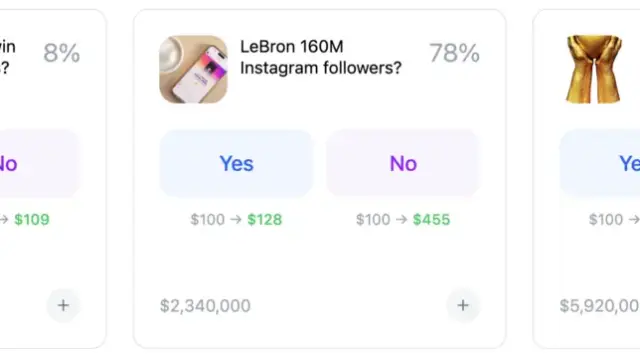
- Swipe-First Interfaces: Platforms like Hookt, Memelut, and Guess.best leverage swipe-to-trade mechanisms for prediction markets and event contracts. A left or right swipe executes a binary bet, radically lowering the cognitive overhead of decision-making. This modality is exceptionally well-suited for short-horizon events, such as live sports broadcasts or entertainment award shows.
- Tap-to-Trade Barrier Options: Applications like Euphoria have successfully gamified complex financial instruments—specifically barrier options traditionally reserved for Wall Street high-net-worth clients—turning them into responsive, smartphone-native experiences where users can bet on price thresholds with a single screen tap.
Official Statements and Industry Insights
The rapid evolution of trading modalities has not gone unnoticed by leading venture capital firms and market architects. Industry leaders emphasize that the traditional boundaries separating entertainment, culture, and finance are dissolving.
Vishal Kankani, Partner at Multicoin Capital:
"As trading layers into all software, the boundaries between culture and finance will blur… In this world, attention begets liquidity, and liquidity begets more attention. The apps that nail the user experience across different modalities will dominate order flow and ultimately produce exceptional outcomes."
Shayon Sengupta, Partner at Multicoin Capital:
(Reflecting on the foundational thesis of publisher exchanges and consumer applications) "The primary purpose of new trading environments is not merely asset discovery; it is capturing the inherent emotional volatility and social engagement of internet-native communities. Trading provides far more signal than likes and reposts because it requires users to take genuine financial risk."
Kyle Samani, Managing Partner at Multicoin Capital:
(Addressing the mechanics of swipe-first and prediction market architectures) "There are massive and interesting businesses to be built leveraging design paradigms that encourage explicit, immediate action. When you couple instant settlement rails with gamified UX, you unlock entirely new cohorts of market participants who view financial participation as an extension of social media."
Future Outlook: The Convergence of AI, Culture, and Capital
As the financial landscape continues its relentless decentralization, several clear trajectories are emerging for the future of asset issuance and trading modalities.
1. The Death of Interface Loyalty
The empirical lesson of the past two years is absolute: traders have zero brand loyalty to trading interfaces. In high-octane speculative markets—such as the memecoin trenches—participants prioritize raw execution speed, superior transaction land rates (leveraging custom RPCs and Jito bundles), and granular social signals over aesthetic design. If a newly launched terminal can consistently land transactions three blocks ahead of its competitors, users will migrate instantly. Consequently, future trading interfaces will need to remain hyper-adaptive to the changing behaviors of digital tribes.
2. Algorithmic and LLM-Driven Execution
Artificial intelligence is poised to become the underlying orchestration layer for all digital asset interactions. While the integration of Large Language Models (LLMs) does not fundamentally alter basic trading modalities, it exponentially increases their power. Future Telegram bots, wallets, and social feeds will utilize autonomous AI agents to parse multi-source data streams—blending on-chain transaction metrics with real-time off-chain social sentiment—to automatically execute complex financial strategies, ranging from automated yield-looping to dynamic hedging.
3. Financialization of Attention as the Ultimate Consumer App
Ultimately, the future of finance is no longer confined to dedicated portfolio viewers, brokerage accounts, or legacy banking portals. It lives natively across all software.
As trading capabilities become seamlessly embedded into livestreams, short-form video feeds, group chats, and interactive media, the application layer of the internet will transform into a unified engine for discovery, execution, and entertainment. In this imminent reality, the most successful consumer applications will not be passive stores of value; they will be dynamic arenas where culture is formed, attention is monetized, and capital flows freely across frictionless global rails.