

Executive Overview
What began as an era where "permissionless finance" was barely recognized outside specialized cryptographic circles has matured into a foundational reality. Today, billions of individuals alongside global institutions—ranging from tier-one commercial banks and dominant payment networks to massive asset managers and sovereign governments—increasingly view digital assets as the structural future of global finance.
This maturation has been accelerated by watershed regulatory and legislative milestones, notably the passage of the GENIUS Act and continuous congressional advancement on the CLARITY Act within the United States. As digital ledger technologies inch toward native integration into every major operating system, browser, and application backend, the industry stands on the precipice of exponential acceleration.
Acting as a spiritual successor to the firm’s landmark 2019 Crypto Mega Theses, Multicoin Capital’s latest strategic roadmap reflects hard-earned lessons from over 100 portfolio investments, brutal bear market cycles, and systemic regulatory evolution. The conclusion is clear: blockchains are not a universal panacea for every software problem, but they represent the first-principles-correct technology for moving money, programming capital formation, and operating global financial markets.
Detailed Chronology: From Radical Experiment to Institutional Paradigm
To understand the current state of crypto-economic infrastructure, one must trace the trajectory of the ecosystem over the past eight years—a timeline characterized by fierce ideological battles, regulatory hostility, technological breakthroughs, and ultimately, mainstream institutional capitulation.
The 2017 Inception and Ideological Foundations
When Multicoin Capital was founded in late 2017, the crypto landscape was largely dominated by retail speculation, rudimentary proof-of-concept tokens, and an adversarial relationship with traditional financial institutions. The prevailing narrative centered on digital gold and alternative payment networks. However, the firm recognized early on that programmable blockchains possessed the capacity to recreate the entire plumbing of global finance without trusted intermediaries.
The 2019 Mega Theses and the Rise of Decentralized Finance (DeFi)
In 2019, the firm published its foundational Crypto Mega Theses, establishing three core pillars for the industry:

- Open Finance
- Global, State-Free Money
- Web3
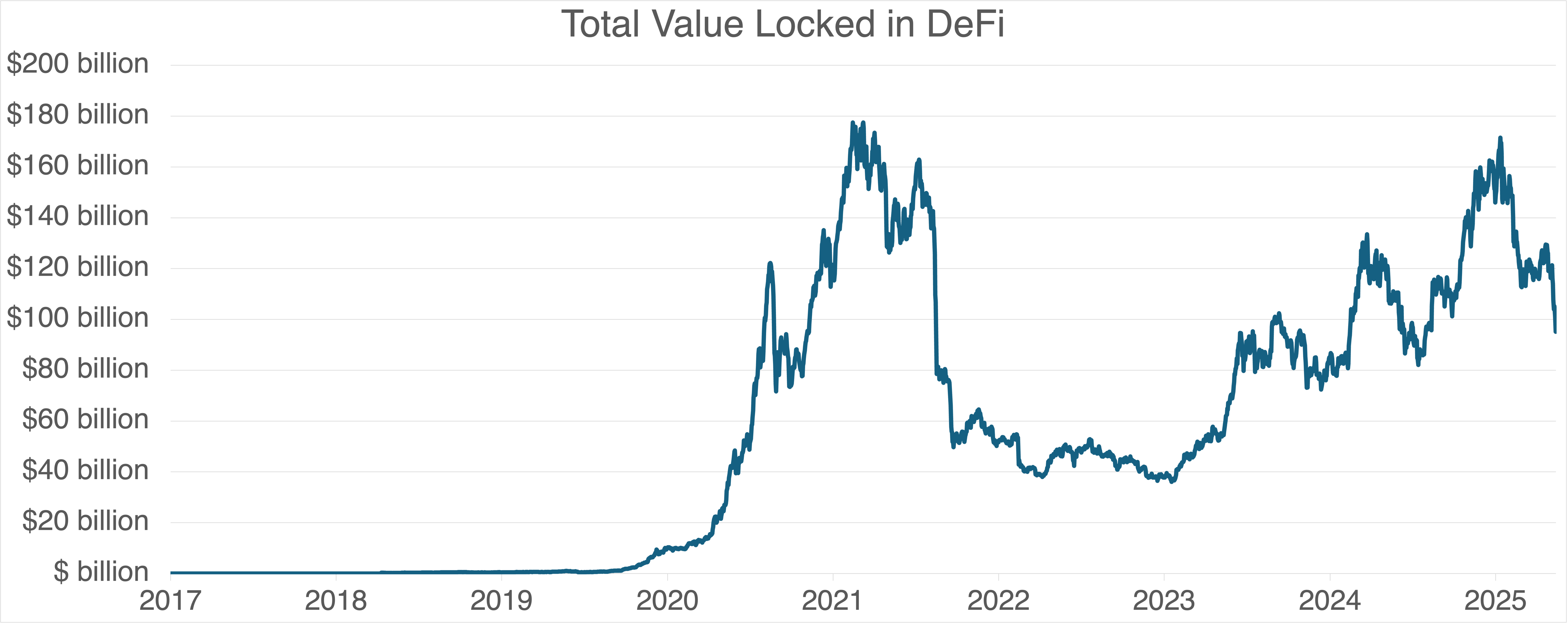
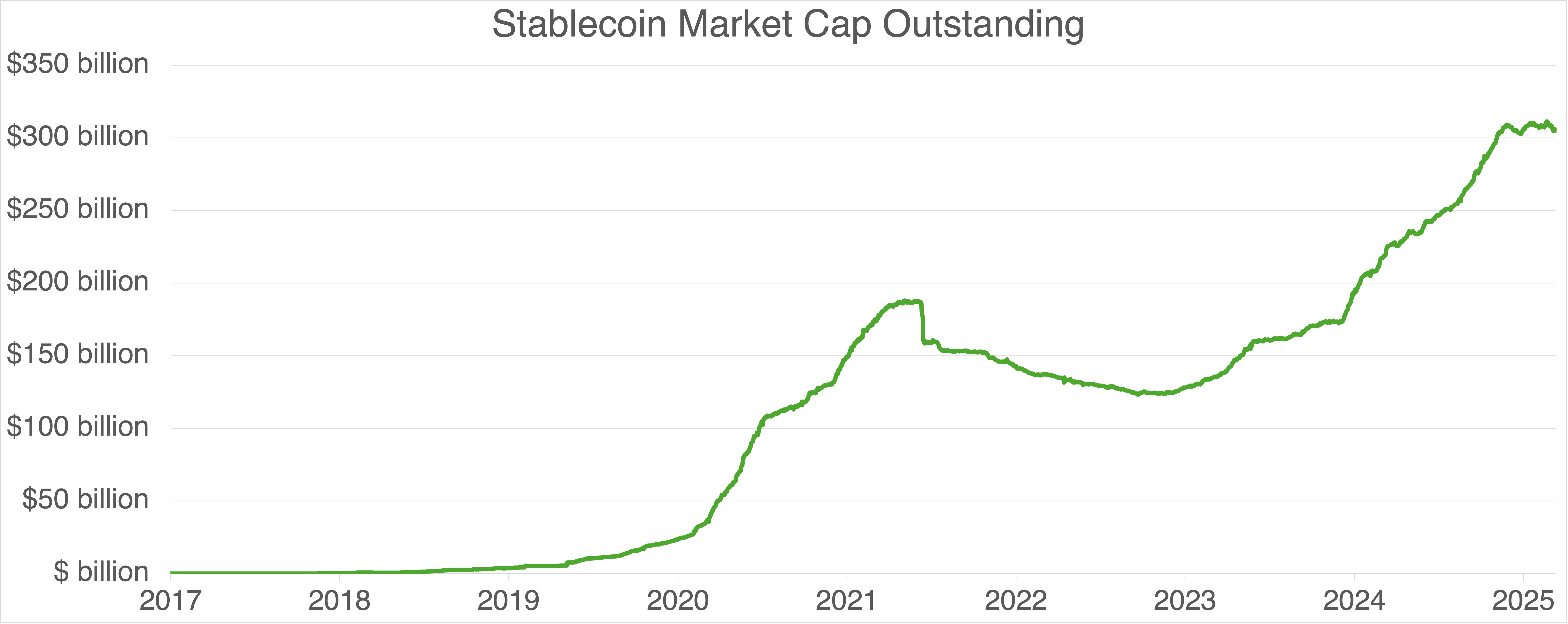
At the time of publication, decentralized finance (DeFi) protocols managed less than $1 billion in aggregate capital. Over the ensuing years, this thesis exploded beyond initial projections. By 2026, on-chain DeFi protocols commanded an astonishing $121 billion in total value locked (TVL). Concurrently, stablecoins—acting as the ultimate bridge between fiat currencies and decentralized ledgers—surged from a sub-$1 billion market capitalization in 2019 to over $310 billion.
The Erosion of Sovereign Trust and the Pivot to State-Free Assets
The second mega thesis—global, state-free money—was historically dismissed by mainstream economists as the preoccupation of fringe libertarians and goldbugs. For decades, the United States Dollar (USD) was treated as the unassailable global reserve asset and the default medium for long-term value storage.
However, structural geopolitical shifts shattered this illusion. Following the historic decision by Western powers to freeze Russia’s foreign exchange reserves, sovereign states worldwide recognized the weaponization of the dollar-dominated financial system. Prominent macroeconomic strategists, such as Ray Dalio, began publicly proclaiming that "cash is trash" in an era of fiscal dominance and unmitigated government spending.
Domestically, relentless fiscal expansion eroded the purchasing power of fiat currencies, while intensifying political pressure on central banks cast doubt on monetary independence. In this environment, state-free assets like Bitcoin (BTC), Ethereum (ETH), and Solana (SOL) evolved from speculative assets into vital institutional hedges.
The 2025 Regulatory Watershed
The turning point for regulatory clarity materialized in July 2025, when SEC Chair Paul Atkins announced Project Crypto, signaling an unprecedented institutional embrace of digital assets. This initiative was swiftly complemented by the Commodity Futures Trading Commission (CFTC), which—under the leadership of newly confirmed Chairman Selig—prioritized international regulatory harmonization. Programmable money transitioned from an academic thought experiment to a core pillar of national economic strategy. Consequently, legacy issuers, global exchanges, prime brokerages, and multinational financial institutions began aggressively positioning themselves to capture market share within the burgeoning regulatory framework.
Supporting Context & Metrics: The Financialization of Blockchains
After weathering transient narratives, regulatory whiplash, and severe cyclical downturns, Multicoin Capital’s empirical review of historical data yielded a vital realization: blockchains are fundamentally exceptional asset ledgers.
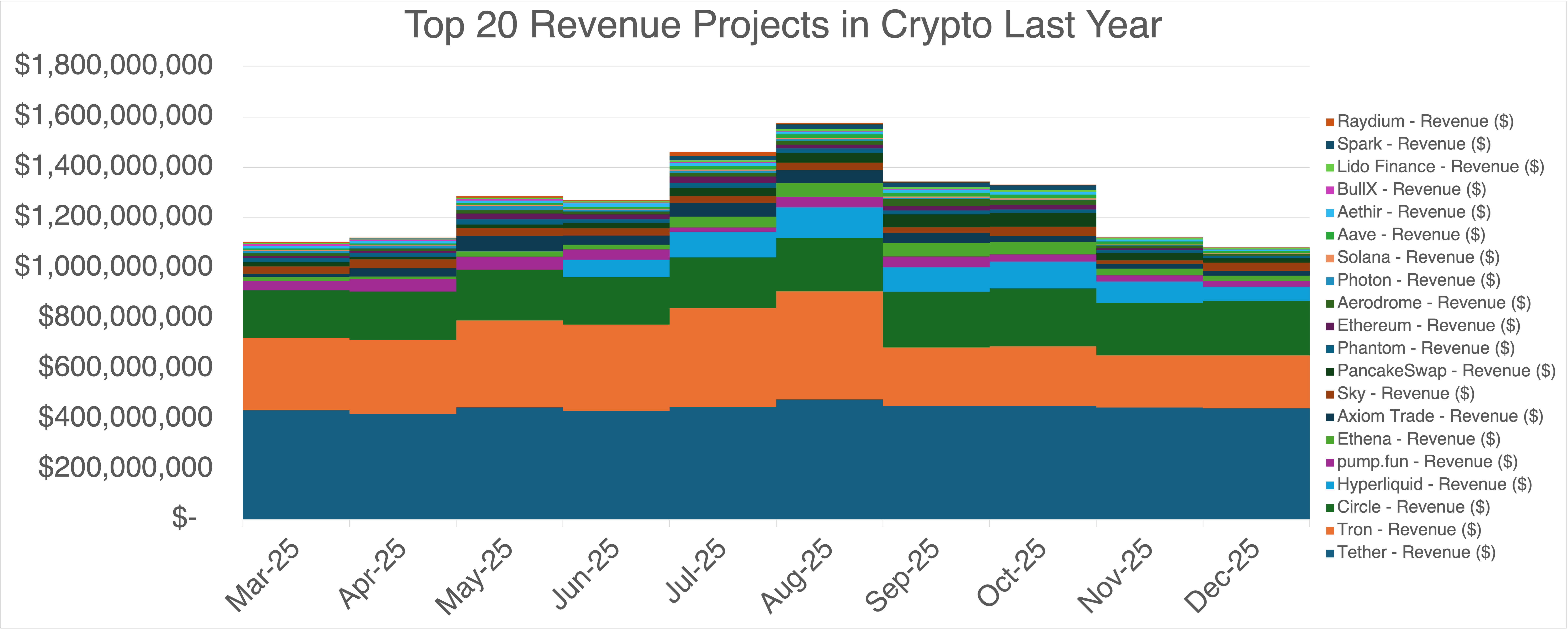
An analysis of token economics and protocol revenues reveals a stark reality. Examining the top 20 revenue-generating crypto projects over the preceding year demonstrates that virtually every single one is directly tethered to finance and payments.
[Decentralized Exchanges & CEXs] ---> Capture Deep Liquidity
[Payment Firms & Neobanks]      ---> Power Global Settlement
[Lending & Prime Brokerage]     ---> Optimize Capital Efficiency
Non-financial applications, while technologically innovative, have historically struggled to capture sustainable, long-term value at the base and application layers. This empirical validation underpins Multicoin’s refined core thesis:
Blockchains are the first-principles-correct technology to move money, coordinate and program capital formation, and power global financial markets.
Key Growth Metrics at a Glance
- DeFi Total Value Locked (TVL): Rose from <$1 billion (2019) to $121 billion.
- Stablecoin Aggregate Market Capitalization: Expanded from <$1 billion (2019) to over $310 billion.
- Portfolio Scale: Multicoin Capital has deployed capital across more than 100 strategic investments spanning protocols, infrastructure, and consumer applications.
Official Statements and Industry Perspectives
The convergence of institutional finance and decentralized technology has elicited commentary from key macroeconomic and regulatory figures. The weaponization of sovereign reserves fundamentally altered how developing and developed economies view counterparty risk in legacy settlement systems.
As regulatory bodies align under frameworks like Project Crypto, industry leaders emphasize that the debate has shifted from if blockchains will power global markets to how quickly legacy institutions can migrate their infrastructure onto credibly neutral base layers.
In a retrospective essay titled "Recapping Crypto’s Most Consequential Year" published in December 2025, analyst John Robert Reed captured the sentiment of the industry:
"When we look back in a not-so-distant future, I believe we’ll remember 2025 as one of the most consequential years in the history of crypto."
This sentiment is echoed by Multicoin Capital’s leadership team—including Spencer Applebaum, Shayon Sengupta, and Tushar Jain—who continue to actively source and partner with founders pushing the absolute limits of permissionless design spaces.
Future Outlook: Multicoin Capital’s Eight Core Investment Themes
Looking toward the next decade, Multicoin Capital has delineated eight distinct investment themes poised to drive the future of permissionless finance and technological infrastructure.
1) Fintech 4.0
Stablecoins and high-performance blockchains represent the first structural modernization of money movement and transaction settlement in decades. By making payments natively programmable and universally accessible, these technologies drastically reduce operational costs for fintech builders while challenging legacy monopolies held by traditional card networks and correspondent banking giants.
2) The "DeFi Mullet"
As the decentralized finance stack matures and software development barriers plummet, value capture is organizing dynamically across three layers:
- Specialized Frontends: Owning direct customer relationships and user experience.
- Global DeFi Backends: Benefiting from profound network effects and liquidity economies of scale.
- DeFi Middleware: Seamlessly connecting consumer-facing frontends to deep liquidity backends.
3) Financial Globalization
Traditional asset classes—including equities, foreign exchange, interest rate derivatives, and debt instruments—remain heavily siloed and regionally restricted. Blockchains eradicate these geographic barriers, democratizing market access, bringing radical transparency to opaque "dark pools," and drastically reducing the friction and cost of asset issuance. The ultimate vision is a frictionless global marketplace where any participant can trade any asset instantaneously, anywhere in the world.
4) More Efficient Borrowing and Lending
Historically, access to institutional credit was dictated by geography, institutional pedigree, and interpersonal networking rather than objective creditworthiness. On-chain credit primitives eliminate these biases, enabling collateral and capital to flow frictionlessly between global lenders and borrowers. The proliferation of on-chain prime brokerages and automated DeFi vaults enables real-time, global underwriting of productive debt.
5) Entertainment Finance
In socioeconomic environments where generational milestones like homeownership or traditional wealth accumulation feel increasingly out of reach, retail capital naturally gravitates toward higher-beta, high-upside alternatives. Entertainment finance encapsulates this cultural shift, utilizing crypto rails as a transparent, disintermediated marketplace where participants can engage in speculative and gamified economies without forfeiting egregious percentages to legacy intermediaries. Pioneering projects in this sector include platforms like Cheddr and Novig.
6) Programmable Ownership
When engineered with precise economic incentives, cryptographic tokens act as a super-powered coordination mechanism. They enable granular, programmable ownership structures across Decentralized Physical Infrastructure Networks (DePIN), tokenized real-world equities, and digital marketplaces, serving as the most effective instrument for bootstrapping and scaling nascent network effects.
7) Credibly-Neutral Blockchains
At the foundational base layer, credible neutrality is paramount. Global financial markets scale exponentially faster when competing market participants feel absolute security building atop shared, unmanipulated infrastructure. Corporate-owned blockchains face systemic adoption hurdles; major financial institutions (such as E*TRADE building on a competitor’s chain, or Adyen integrating with Stripe’s proprietary Tempo chain) will inherently resist building on corporate-controlled ledgers. Consequently, Multicoin continues to back credibly neutral base layers—such as Aptos (APT), Solana (SOL), and Sei (SEI)—while anticipating that long-term value capture will increasingly migrate to sophisticated applications built atop these shared rails.
8) Cryptographic Primitives & AI Agent Economies
As autonomous artificial intelligence agents proliferate, they require a native, frictionless settlement medium. Stablecoins provide AI agents with the exact financial substrate required to send and receive autonomous micro-payments. Simultaneously, advanced cryptographic primitives—such as Fully Homomorphic Encryption (FHE) and Zero-Knowledge proofs—allow users to verify digital authenticity and maintain data privacy without creating massive, vulnerable central data honeypots. Teams pioneering this frontier include Zama, Fhenix, and zkMe.
Conclusion
The evolution of Multicoin Capital over the past eight years mirrors the maturation of the digital asset industry itself. From ideological experiments to institutional-grade financial infrastructure, crypto has transitioned from the margins to the absolute center of global commerce. As regulatory frameworks crystallize and new technological primitives unlock unprecedented use cases, the phoenix is no longer just rising—it is actively powering the next generation of global financial markets.