
Executive Overview
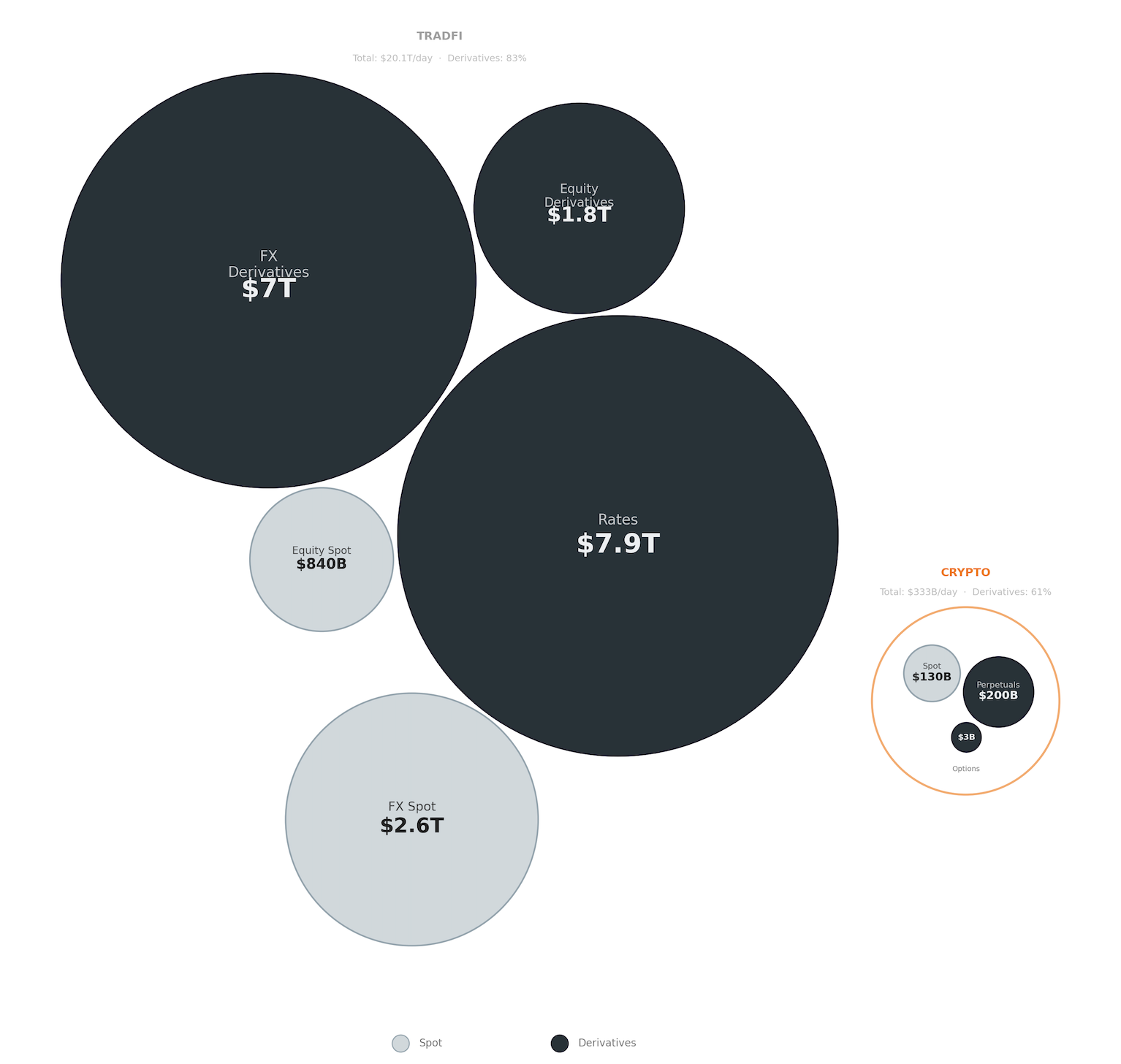
However, a fundamental structural transition is now underway. Propelled by shifting regulatory attitudes, institutional modernization, and maturing technological infrastructure, the next wave of DeFi growth will be driven by Real-World Assets (RWAs)—financial instruments exogenous to the traditional crypto ecosystem. Traditional finance (TradFi) routinely clears trillions of dollars daily across foreign exchange, interest rates, equities, and commodities, rendering current crypto market caps orders of magnitude smaller.
Blockchain rails offer an incomparably superior architecture for trading these global assets: cheap, frictionless, global, operational 24/7, and backed by robust settlement guarantees. As regulatory frameworks crystallize globally, the convergence of traditional finance and distributed ledgers is no longer a distant theoretical ambition, but an unfolding reality.
Detailed Chronology: From Early Experiments to the Modern RWA Era
To understand how real-world assets are currently capturing onchain market share, it is essential to trace the historical evolution of tokenization and the recurring roadblocks that have hindered its progression.

The First Wave (2016–2018): Premature Ambitions
The ambition to bring traditional financial instruments onto a blockchain is nearly as old as the technology itself. Between 2016 and 2018, an initial wave of experimentation saw projects like Polymath, Harbor, OpenFinance Network, and Neufund attempt to tokenize real estate and equity securities directly on-chain.
While the conceptual foundation was sound, the timing was fundamentally flawed. Stablecoins were not yet adopted as liquid settlement mediums, onchain liquidity pools were shallow, secondary trading venues were primitive, and institutional-grade regulatory frameworks for primary issuance, custody, and secondary transfers were non-existent. Consequently, most pioneers from this era either shuttered operations, pivoted away from tokenization, or faded into irrelevance.
The Modern Backdrop (2020–Present): Maturation and Institutional Readiness
The macroeconomic and regulatory backdrop has shifted dramatically. Today, stablecoins function as robust, widely accepted settlement assets. Onchain market microstructures have evolved to clear billions in sustained volume daily, while sophisticated institutional custody frameworks and compliance primitives have emerged.
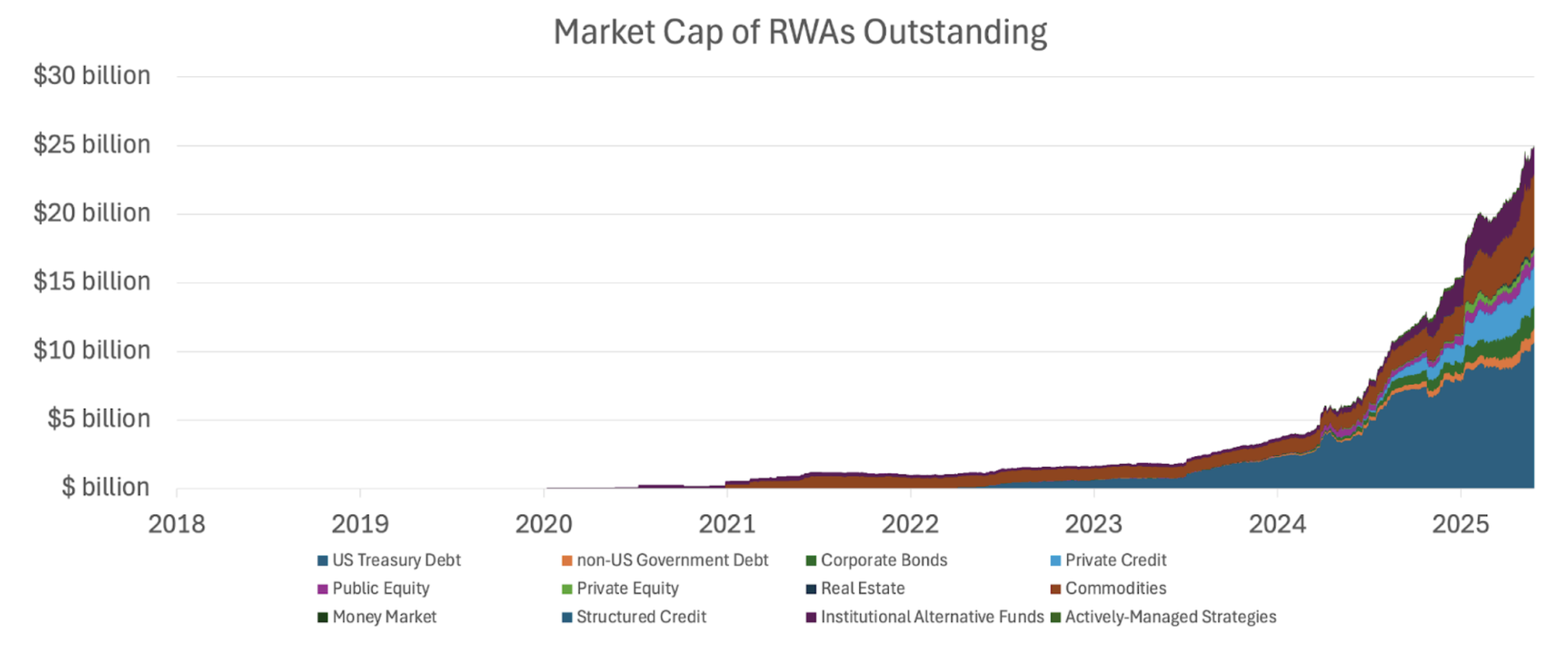
Furthermore, regulatory bodies are actively clearing a path for institutional experimentation. Legislative efforts in the United States—such as the GENIUS Act and the CLARITY Act—signal a regulatory environment that is increasingly welcoming to digital asset innovation. This shifting paradigm has triggered a Cambrian explosion of RWA adoption, pushing total onchain RWA capitalization to unprecedented heights.
Supporting Context & Metrics: Unpacking the Four Architectural Models
Rather than adopting a monolithic approach, the industry has experimented with four distinct architectural models to bridge offchain assets onto distributed ledgers. Each model introduces its own unique trade-offs regarding legal rights and operational settlement.
Model 1: Synthetic Derivatives
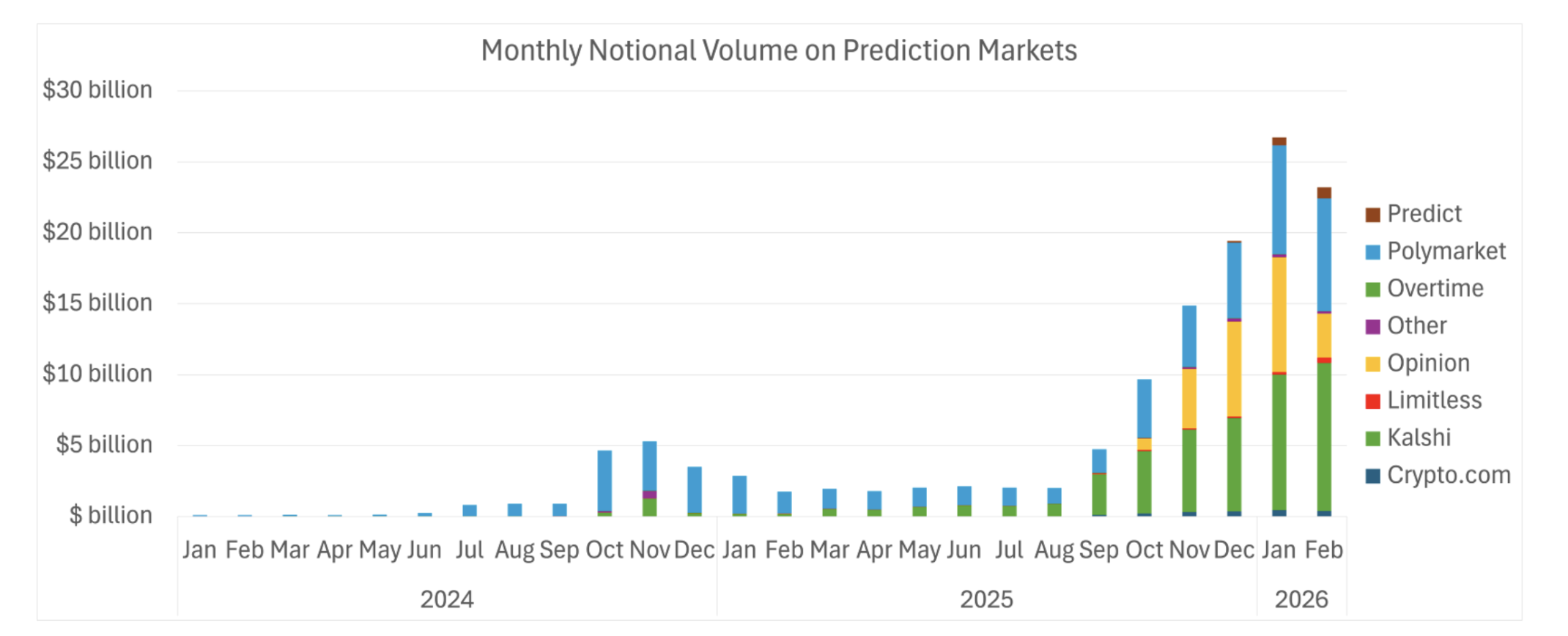
Synthetic derivatives bypass the need to physically hold an asset by using oracles to track external price feeds. Protocols establish perpetual or dated futures contracts backed by a shared pool of collateral, with all margin requirements and liquidations settling directly on-chain in stablecoins.
- Examples: Perpetuals on Hyperliquid, Ostium, and Lighter; prediction markets like Kalshi.
- Trade-offs: Offers unmatched 24/7 global accessibility and zero friction, but users hold no direct legal claim to the underlying asset, remain exposed to oracle risk, and must navigate funding rate costs.
Model 2: Wrapped Assets (The Custody Model)
In this approach, a regulated institutional entity (such as a fund, special purpose vehicle, or trust) acquires and holds the underlying RWA offchain, subsequently issuing digital receipt tokens that represent fractionalized claims on those holdings.
- Examples: Dinari (tokenized equities), Ondo’s OUSG, Franklin Templeton’s BENJI, and Centrifuge credit pools.
- Trade-offs: Establishes a clear legal tie to the underlying asset, but introduces operational bottlenecks such as KYC/AML gates, redemption minimums, geographic restrictions, and traditional settlement windows.
Model 3: Collateralized Borrowing
Rather than tokenizing an asset itself, this model leverages offchain assets as collateral to back onchain debt. Borrowers pledge offchain real estate, invoices, or corporate credit facilities to draw down onchain stablecoins.
- Examples: Kamino’s institutional integrations with Anchorage, Sky RWA vaults, and Figure Markets (HELOCs).
- Trade-offs: Unlocks substantial offchain liquidity without requiring direct asset tokenization, but relies heavily on complex legal structures, offchain court-managed liquidations, and significant overcollateralization ratios.
Model 4: Primary Onchain Issuance
This represents the crypto-native "north star." Issuers create new securities directly on a blockchain, utilizing the distributed ledger as the official, canonical book of record. Smart contracts natively enforce compliance, transfer restrictions, and cap table updates.
- Examples: Early tokenized corporate equity experiments (e.g., Galaxy and Superstate collaborations, Figure Open).
- Trade-offs: Eliminates cumbersome intermediary wrappers and enables real-time programmable compliance, but requires individual regulatory sign-offs for each issuance and limits cross-chain DeFi composability due to strict transfer restrictions.
Official Statements and Regulatory Landscapes
Regulatory oversight remains the primary catalyst—and potential bottleneck—for the expansion of onchain RWAs.
U.S. Securities and Exchange Commission (SEC) Chairman Paul Atkins has repeatedly emphasized that traditional U.S. financial markets are poised for a massive migration toward tokenized infrastructure, predicting that the wholesale transition of equities, bonds, and derivatives onto distributed ledgers could materialize "within two years."
This sentiment is echoed by active regulatory guidance. In January, the SEC released a landmark advisory regarding tokenized security models, prompting a wave of compliance-focused framework updates. Simultaneously, agencies like the CFTC and SEC are actively drafting rules to dictate how tokenized financial instruments must move, settle, whitelist holders, and transfer rights under state and federal law. These regulatory parameters will heavily dictate the design choices of future RWA products, ensuring that distributed ledger technology scales hand-in-hand with traditional compliance mandates.
Granular Asset Class Breakdown
The financial industry often groups "RWAs" into a single monolithic category. However, a closer examination reveals that asset classes such as equities, commodities, private credit, and foreign exchange have vastly different custody, settlement, and liquidity requirements.
+---------------------------------------------------------------------------------+
|                         RWA ASSET CLASS ADOPTION MATRIX                         |
+--------------------+-----------------------------+------------------------------+
| Asset Class        | Dominant Onchain Model      | Trajectory & Outlook         |
+--------------------+-----------------------------+------------------------------+
| Treasuries / MMFs  | Model 2 (Wrapped Assets)    | Dominant sector; highly      |
|                    |                             | scalable via fund shares.    |
+--------------------+-----------------------------+------------------------------+
| Private Credit     | Model 2 / Model 3           | Bypasses slow bilateral      |
|                    | (Wrapped & Collateralized)  | legal frameworks effectively.|
+--------------------+-----------------------------+------------------------------+
| Public Equities    | Model 1 (Synthetics)        | Explosive growth in perps;   |
|                    | & Model 4 (Primary Issuance)| private cap tables next.     |
+--------------------+-----------------------------+------------------------------+
| Commodities        | Model 1 (Synthetics)        | Gold uses wrappers; energy/  |
|                    |                             | oil leverage via perps.      |
+--------------------+-----------------------------+------------------------------+
| Foreign Exchange   | Model 1 (Synthetics)        | Major FX solved by stable-   |
|                    |                             | coins; EM expansion ahead.   |
+--------------------+-----------------------------+------------------------------+
| Real Estate        | Model 2 (Wrapped) / Model 3 | Illiquidity remains a core   |
|                    | (Collateralized Borrowing)  | hurdle for direct tokens.    |
+--------------------+-----------------------------+------------------------------+
Treasuries and Money Market Funds
While tokenized U.S. Treasuries and Money Market Funds (MMFs) represent the most conservative segment of the RWA landscape, they currently dominate total asset value. Driven primarily by Model 2 (Wrapped Assets) via offerings like Franklin Templeton’s BENJI and Ondo’s OUSG, this sector thrives because short-duration government paper feeds directly into the Federal Reserve’s established book-entry system. Fund structures capture essential economies of scale to overcome thin spreads, maintaining a reliable, highly liquid yield-bearing baseline for onchain participants.
Private Credit
Private credit has emerged as the second fastest-growing RWA category, utilizing Model 2 (Wrapped Asset securitized pools via Centrifuge, Credix, and Goldfinch) and Model 3 (Collateralized Borrowing via Sky vaults). Private credit maps seamlessly to distributed ledgers because it replaces opaque, fragmented, bilateral legal agreements with transparent smart contracts, drastically reducing administrative drag compared to traditional securitization workflows.
Equities
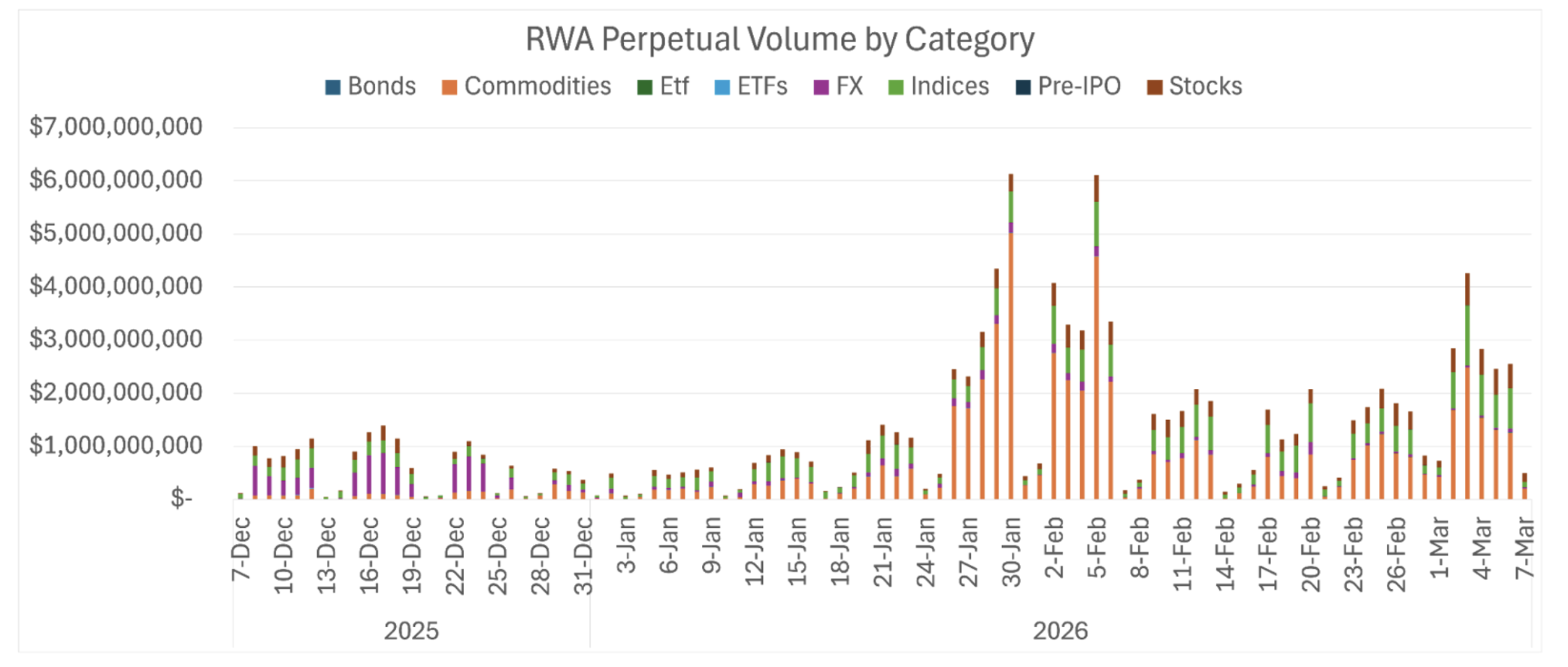
Public equities are approaching on-chain markets through both synthetic derivatives and wrapped assets. Synthetic stock perps on platforms like Hyperliquid, Ostium, and Lighter have expanded rapidly, offering 24/7 global exposure without traditional brokerage constraints or market-hour limitations. Meanwhile, Model 4 (Primary Issuance)—exemplified by early corporate experiments from Galaxy and Superstate—points toward a future where private companies utilize smart contracts for real-time cap table management and automated equity distribution.
Commodities
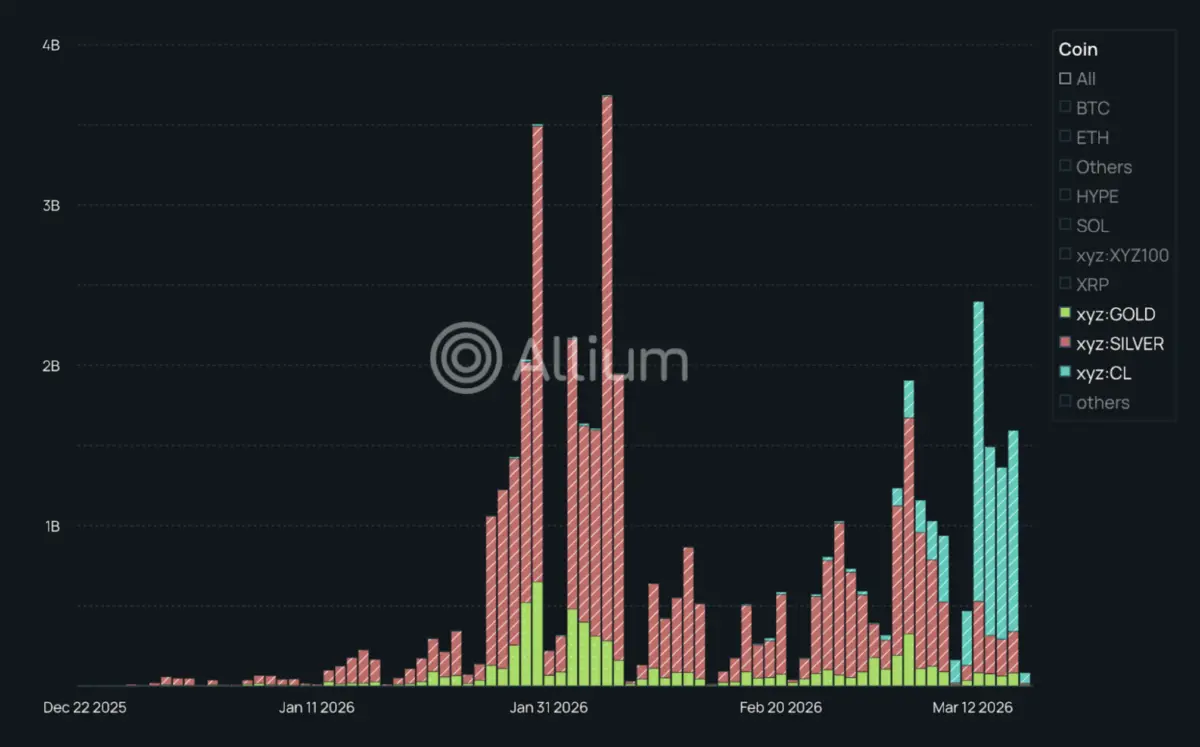
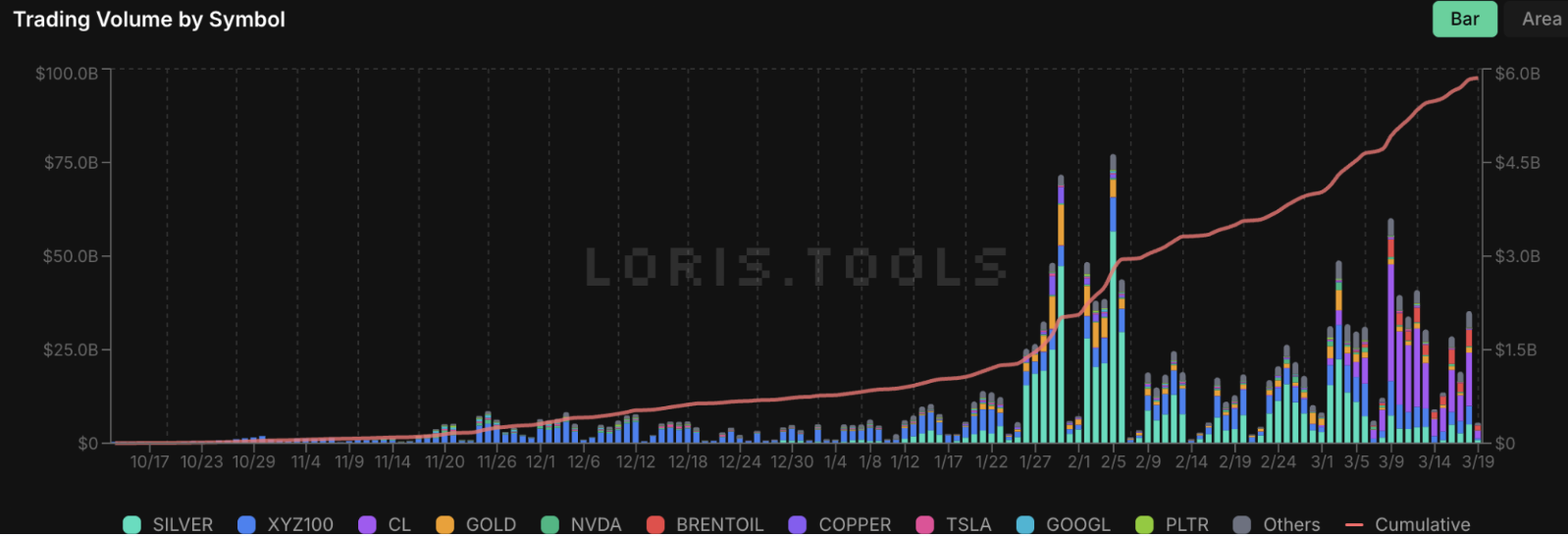
Physical commodities are increasingly traded via Model 1 synthetics. Energy and industrial commodities like crude oil (CL-USDC) record massive daily notional volumes and open interest on decentralized margin venues. Precious metals like gold utilize Model 2 wrappers (Paxos Gold and Tether Gold), benefiting from straightforward physical storage dynamics. Simultaneously, digitally native commodities—such as GPU compute hours (Akash, io.net), decentralized storage (Filecoin, Arweave), and edge energy (Fuse)—are leveraging Model 4 primary issuance to build entirely autonomous, on-chain resource economies.
Foreign Exchange
The foreign exchange market is largely optimized on-chain through the widespread adoption of fiat-backed stablecoins (USDC, USDT, EURC). These assets function as native digital currencies that settle instantly across borders without the friction of legacy correspondent banking networks. The next frontier for onchain FX involves penetrating emerging market (EM) currencies (such as the Brazilian Real, Mexican Peso, and Indian Rupee), utilizing compliance-forward stablecoin architecture or algorithmic hedging options to streamline international remittances.
Real Estate
Real estate remains the most structurally complex asset class to bring onchain. While platforms like Parcl and PricedOut offer synthetic index exposure, and RealT utilizes fractionalized wrapped structures for rental yield distribution, tokenization alone cannot solve the intrinsic illiquidity of physical property. Consequently, Model 3 (Collateralized Borrowing via home equity lines of credit) has gained more traction than direct tokenized ownership, unlocking real estate liquidity without forcing cumbersome physical foreclosures onto-chain.
Future Outlook and Strategic Path Dependency
Path dependency will dictate the timeline and trajectory of RWA adoption across global capital markets. Assets anchored by deeply entrenched settlement infrastructure—such as U.S. Treasuries and public equities—will remain reliant on wrapped structures for years to come. Conversely, fragmented, relationship-driven markets like private credit and venture-backed equity cap tables are positioned to leapfrog legacy intermediaries entirely, migrating directly to native onchain primitives.
As regulatory clarity expands and institutional market microstructures continue to harden, the artificial boundary separating traditional finance from decentralized finance will dissolve. The future state of global markets is not a choice between traditional rails and public blockchains, but a unified financial ecosystem where any asset can be traded globally, programmatically, and instantaneously against any other asset.