
Executive Overview
That era is rapidly coming to a close. Propelled by shifting macroeconomic realities, institutional momentum, and a thawing regulatory climate in the United States—exemplified by statements from SEC Chairman Paul Atkins predicting that traditional financial markets could move onchain within two years—the industry stands on the precipice of its next grand transition. The next wave of explosive growth in decentralized finance will not be driven by cyclical crypto tokens, but by Real-World Assets (RWAs): financial instruments that are exogenous to the traditional crypto ecosystem.
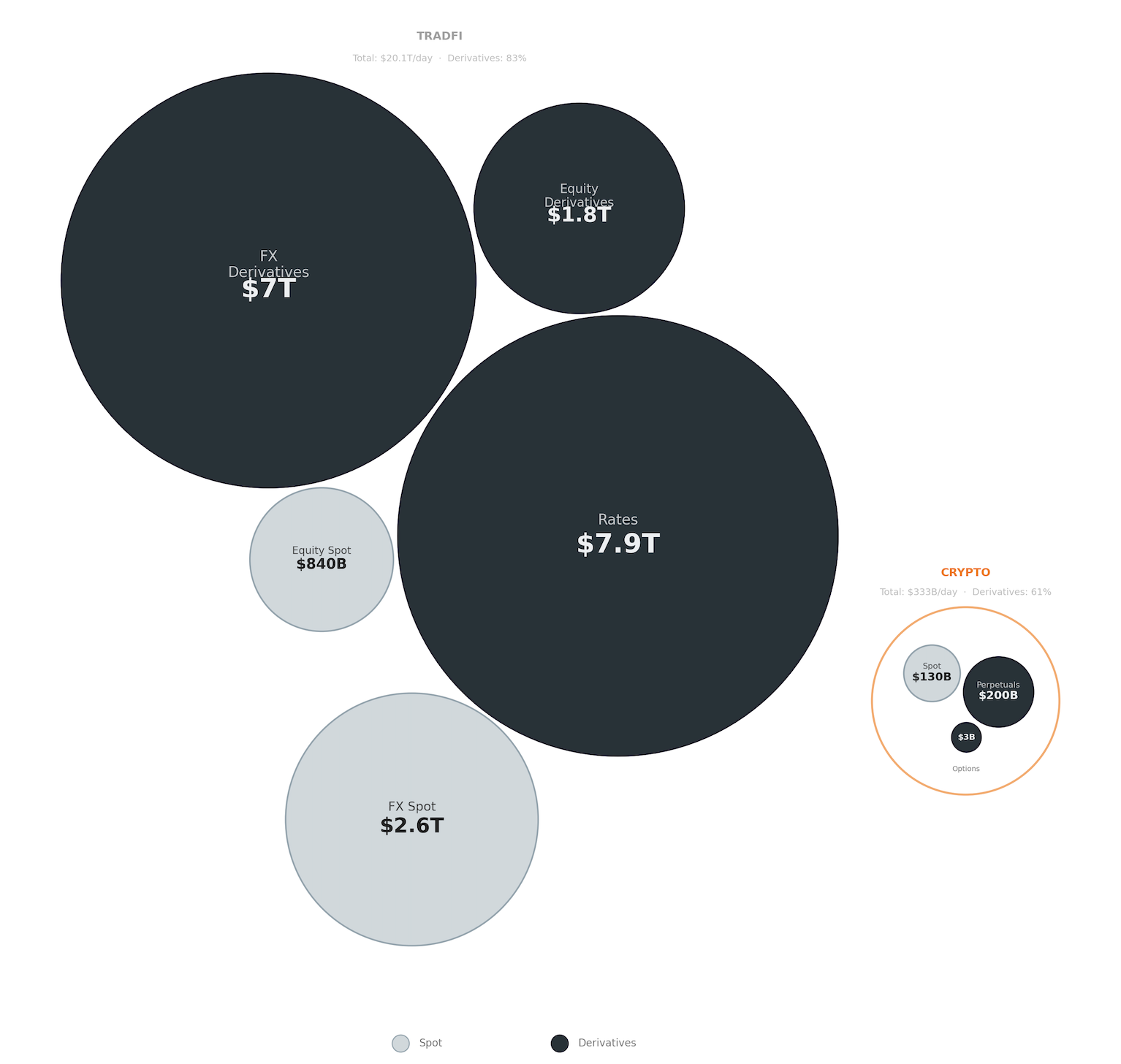
Traditional finance (TradFi) moves trillions of dollars every single day across global foreign exchange (FX) desks, interest rate markets, equities, and commodities. By comparison, the crypto economy remains orders of magnitude smaller. Yet, blockchain rails offer an indisputably superior infrastructure for trading, settling, and managing these assets. As tokenization matures, the industry is moving toward a unified global hub where users can exchange any asset for any other asset—cheaply, globally, 24/7, and backed by robust settlement guarantees.
However, treating "RWAs" as a monolith is a critical analytical error. Equities, private credit, foreign exchange, commodities, real estate, and government treasuries do not share the same liquidity profiles, legal frameworks, or settlement requirements. Consequently, they will not migrate to the blockchain via a one-size-fits-all mechanism. Understanding the nuances of onchain market structure requires deep engagement with the fundamental variables of asset tokenization: rights and settlement.
Detailed Chronology: A Decade of Ambition and Adaptation
The ambition to bridge traditional financial assets onto blockchain rails is nearly as old as smart contract platforms themselves. For the past decade, financial pundits have routinely proclaimed that equities, credit, commodities, and real estate are "about to move onchain."

The Early Era of Friction (2016–2018)
The initial wave of RWA experimentation occurred between 2016 and 2018. Pioneering projects such as Polymath, Harbor, OpenFinance Network, and Neufund attempted to tokenize real estate and private securities directly onto early-generation blockchains. While the core thesis was sound, the timing was premature.
The infrastructure simply did not support the vision:
- Stablecoins were not yet widely adopted as liquid settlement mediums.
- Onchain liquidity was fragmented and thin.
- Secondary trading venues lacked compliance guardrails.
- Regulatory frameworks for digital issuance, custody, and secondary market transfers were practically nonexistent.
Faced with mounting compliance overhead and an absence of users, most of these first-generation platforms quietly shuttered, pivoted to enterprise software consulting, or faded into irrelevance.
The Modern Renaissance (2024–2026)
The macroeconomic and regulatory backdrop of the mid-2020s bears little resemblance to the experimental wilderness of 2016. Today, stablecoins serve as entrenched, highly liquid global settlement assets. Onchain market microstructure has evolved past primitive AMMs, handling massive institutional-grade trading volumes. Institutional-grade custody and compliance infrastructure are now fully operational, and regulatory bodies are actively welcoming structured experimentation.
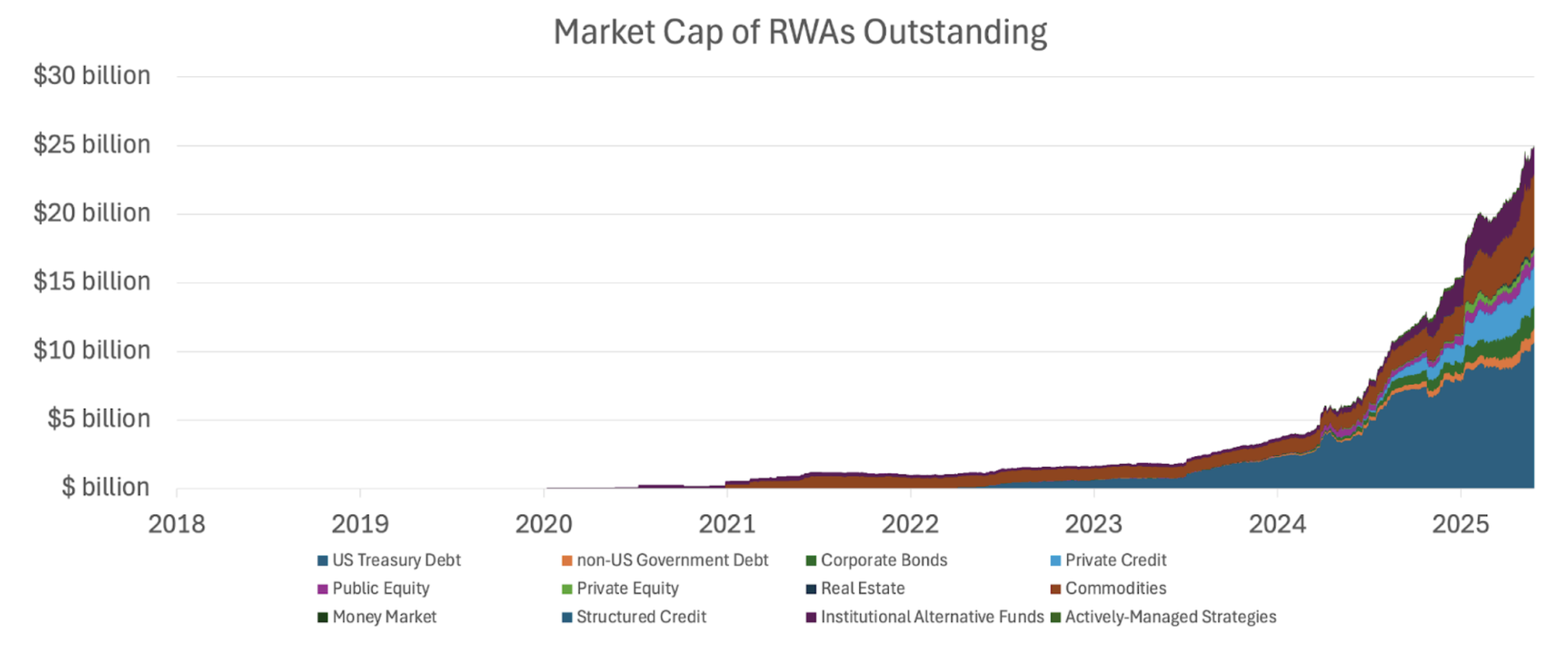
In the United States, legislative frameworks like the GENIUS Act and the CLARITY Act signal a pragmatic, forward-looking approach to digital asset regulation. This regulatory thaw has catalyzed a cambrian explosion of RWA activity, shifting the market from theoretical whitepapers to multi-billion-dollar production environments.
Supporting Context & Metrics: Decoding Rights and Settlement
To dissect how different asset classes are moving onchain, one must evaluate two defining variables: Rights and Settlement.
                           [ONCHAIN RWAs]
                                 |
         +-----------------------+-----------------------+
         |                                               |
    [1. RIGHTS]                                   [2. SETTLEMENT]
         |                                               |
   +-----+-----+                                   +-----+-----+
   |           |                                   |           |
Economic   Legal / Direct                         Offchain   Onchain
Exposure     Ownership                            (Wrapped)  (Native)
1. The Variable of Rights
When a user holds a tokenized real-world asset, what are they actually holding?
- Economic Exposure Only: Synthetic assets represent this category. A token may track the price of Apple stock or crude oil, but holders possess zero legal claim to the underlying physical asset.
- Contractual Claims (Indirect Ownership): Many tokenized U.S. Treasury products operate this way. The token represents a fractional claim on a special purpose vehicle (SPV), fund, or corporate issuer that holds the actual assets offchain.
- Direct Legal Ownership: At the furthest extreme, the token serves as the definitive digital title of the asset itself, with the blockchain acting as the legally recognized system of record.
2. The Variable of Settlement
Where does the ultimate transfer of value take place?
- Offchain Settlement: Many current RWAs use blockchains merely as a distribution and recordkeeping overlay, while final clearing and settlement occur via traditional financial infrastructure (e.g., legacy custodians and banking rails).
- Onchain Settlement: In this model, the blockchain is the authoritative settlement layer. When a synthetic perpetual future or digital commodity is traded, collateral physically shifts onchain between long and short positions instantly.
Misunderstanding this dichotomy introduces systemic risks. For instance, reliance on offchain settlement for complex financial looping can create devastating redemption delays during market stress. Conversely, assets utilizing fully onchain settlement eliminate counterparty drag entirely, though they often trade off certain legal flexibilities.
Official Statements and Regulatory Landscapes
Regulatory posture remains the ultimate governor of the RWA velocity. Government agencies are aggressively drafting the boundaries within which tokenized instruments must operate.
In January, the U.S. Securities and Exchange Commission (SEC) released an extensive advisory statement addressing tokenized securities. Concurrently, agencies like the Commodity Futures Trading Commission (CFTC) have increasingly weighed in on jurisdictional boundaries. These regulatory frameworks directly dictate how tokenized assets can move, settle, whitelist holders, and transfer legal rights under state and federal law.
SEC Chairman Paul Atkins has repeatedly emphasized that U.S. financial markets are primed for an inevitable migration to tokenized rails. Predicting that stocks, bonds, and derivatives could move onchain within a remarkably short window, Atkins noted that modern blockchain architecture offers structural efficiencies that legacy systems simply cannot match: lower overhead, global accessibility, and near-instantaneous execution.
The Four Pillars of Onchain RWA Integration
Because no single regulatory or technical standard governs RWAs, the market has bifurcated into four distinct architectural approaches, each carrying unique trade-offs.
Model 1: Synthetic Derivatives
In traditional finance, absolute ownership is often secondary to clean exposure and efficient leverage. If a market participant wants to speculate on a company’s performance, they rarely demand physical share certificates; they want price exposure, leverage, and a clear exit path.
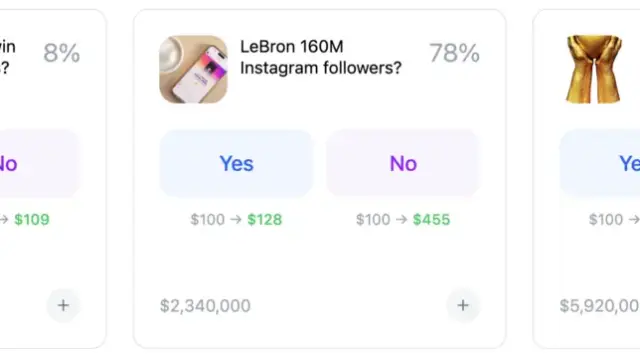
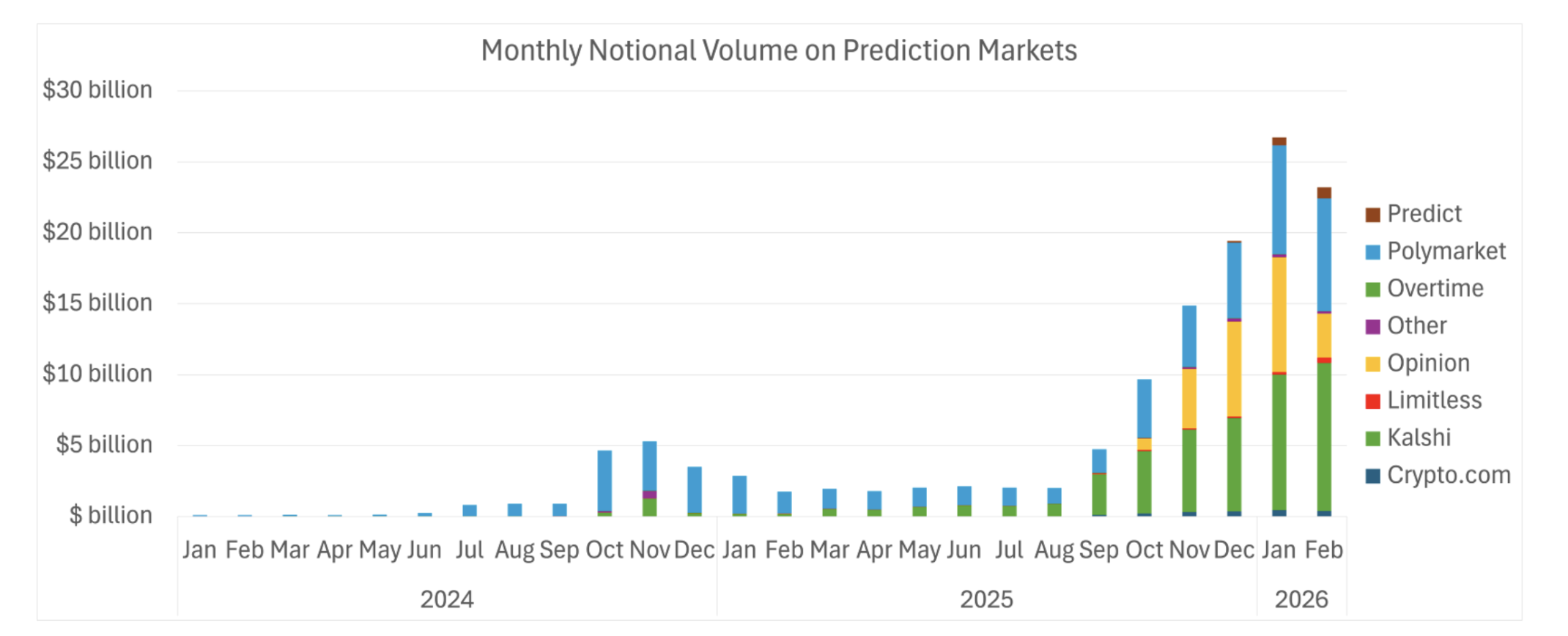
Crypto-native synthetic protocols replicate this behavior by tracking external prices via oracles. Perpetual futures ("perps") and binary prediction markets (such as Kalshi) allow traders to gain direct exposure to real-world indices, commodities, and events without touching the underlying asset.
- Pros: 24/7 global accessibility, zero middlemen, instantaneous execution, and deep capital efficiency.
- Cons: Absence of governance rights or dividends, dependency on oracle integrity, exposure to funding rates, and evolving regulatory ambiguity.
Model 2: Wrapped Assets (The Custody Model)
The wrapped asset model relies on a regulated entity—such as a fund, trust, or SPV—purchasing and holding the physical RWA offchain, subsequently issuing digital receipt tokens representing fractionalized claims.
- Pros: Provides legal backing, yield generation (e.g., T-bill yields), and clear auditability.
- Cons: Subject to traditional banking hours, redemption windows, minimum capital requirements, and strict KYC/AML verification.
Model 3: Collateralized Borrowing
Rather than tokenizing the asset itself, this model utilizes offchain assets as collateral to back onchain debt. Borrowers pledge real estate, corporate credit, or accounts receivable offchain to draw stablecoin liquidity onchain (e.g., Sky RWA vaults and Kamino’s institutional borrowing solutions).
- Pros: Unlocks liquidity from illiquid offline balance sheets without requiring full asset tokenization.
- Cons: Complex legal structuring, court-enforced liquidations rather than automated smart contract execution, and high overcollateralization ratios.
Model 4: Primary Onchain Issuance
The holy grail of tokenization: issuers bypass wrappers entirely, creating securities natively on a blockchain. The token is the security, and the blockchain serves as the official, legally binding cap table.
- Pros: Programmable compliance, automated transfer restrictions, instant cap table management, and absolute disintermediation.
- Cons: Requires bespoke regulatory sign-offs for every single issuance and limits broad DeFi composability due to necessary transfer restrictions.
Sector Breakdown: How Specific Asset Classes Are Migrating
The broad categorization of "RWAs" obscures the reality that different asset classes travel on entirely separate trajectories.
Treasuries and Money Market Funds
Government debt currently dominates the onchain RWA landscape, almost exclusively via Model 2 (Wrapped Assets). Because U.S. Treasuries can only be held through the Federal Reserve’s book-entry system, institutional funds like Franklin Templeton (BENJI) and Ondo (OUSG) pool capital offchain to pass yield back to tokenholders. True primary issuance onchain is unlikely until the U.S. government natively issues debt on public networks—a scenario improbable in the near term.
Private Credit
Private credit represents the second-fastest-growing RWA vertical, utilizing Model 2 (Wrapped Securitized Pools) via protocols like Centrifuge, Credix, and Goldfinch, alongside Model 3 (Collateralized Borrowing). Private credit maps exceptionally well to onchain infrastructure because the market is inherently fragmented and bilateral, allowing smart contracts to easily replace sluggish legal paperwork and traditional syndication desks.
Equities
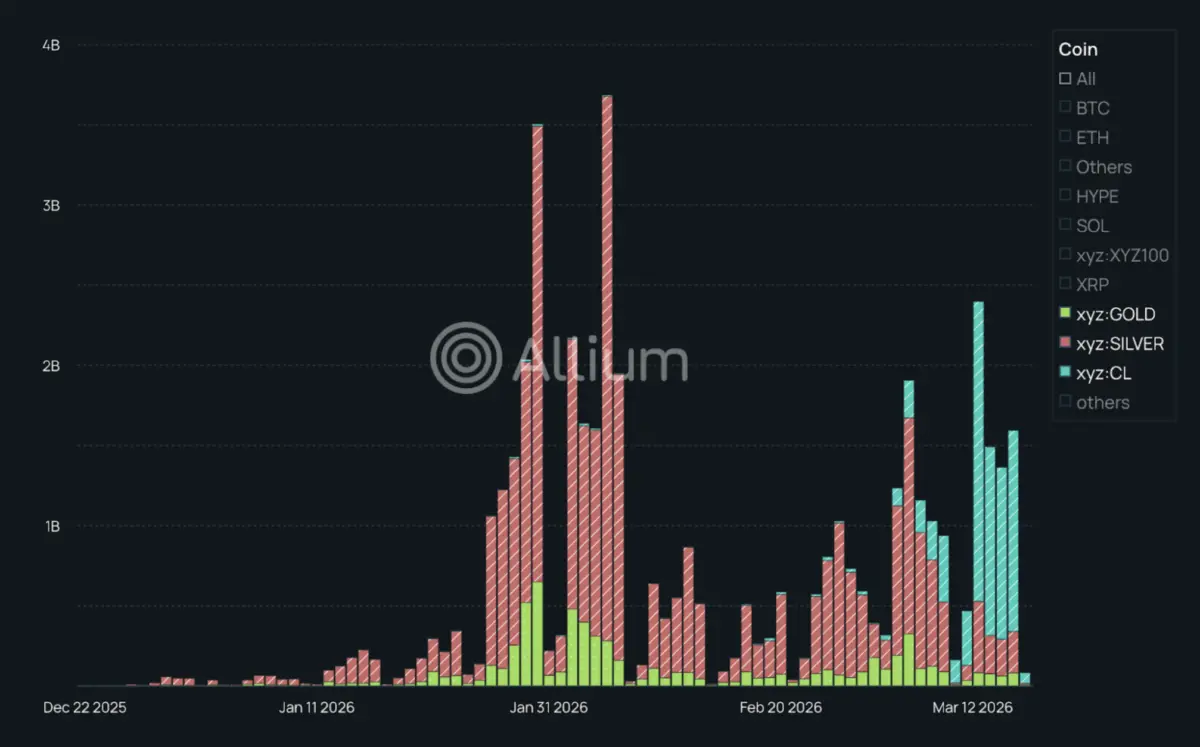
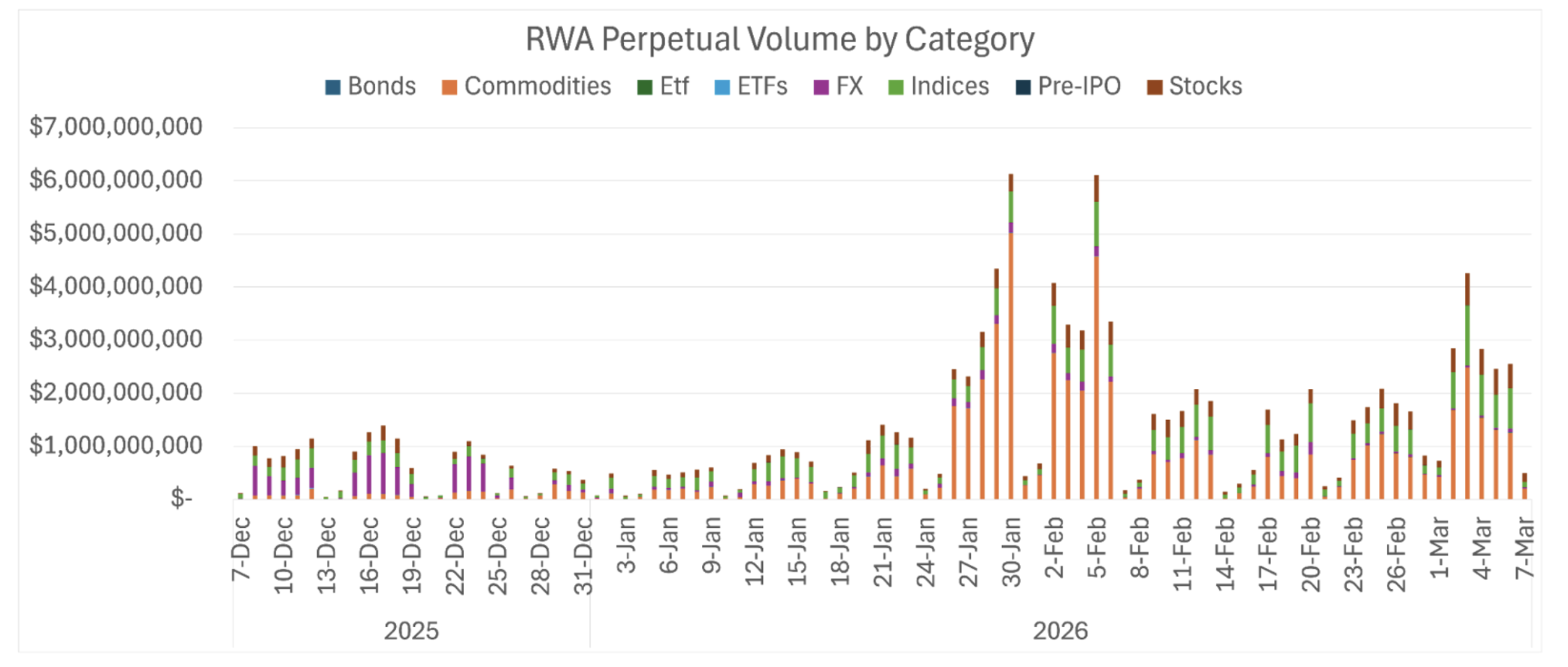
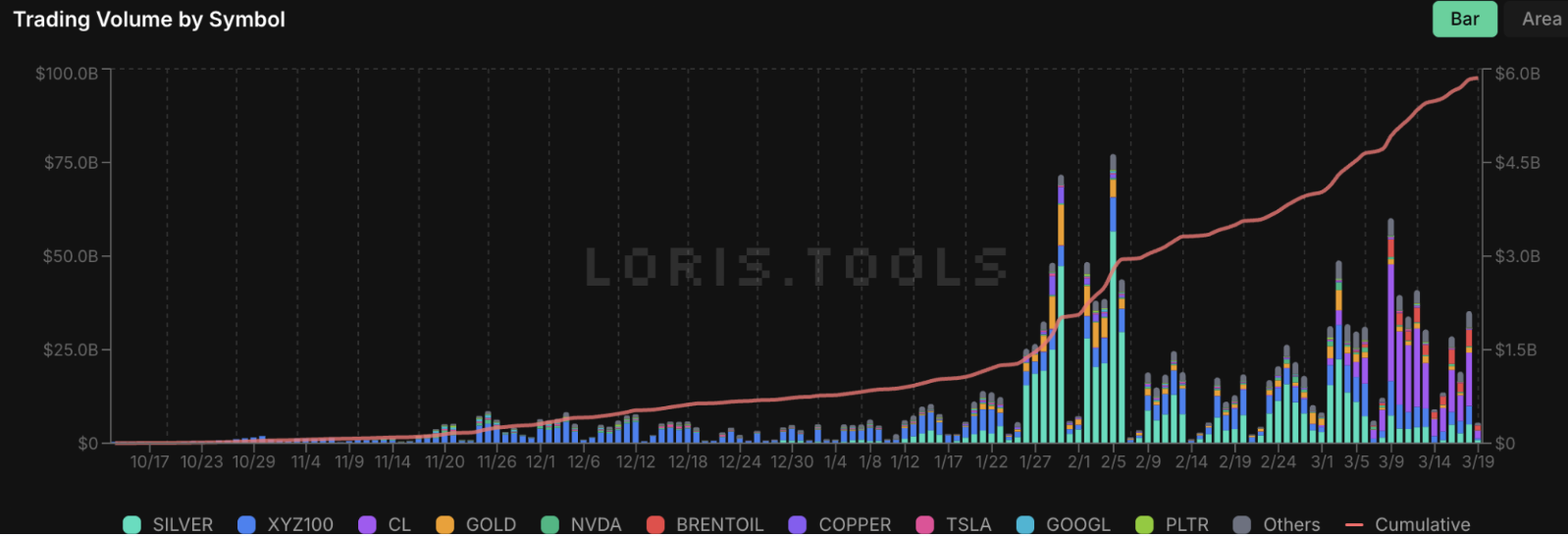
Public equities are split between Model 1 (Synthetics) and Model 2 (Wrapped Custody). Synthetic equity perps on platforms like Hyperliquid and Ostium have experienced explosive volume growth, allowing global users to trade 24/7 equity exposure. Conversely, wrapped equity providers like Dinari offer true ownership backed by broker-dealer custody. However, until corporate and securities laws undergo sweeping modernization, primary onchain equity issuance will likely remain restricted to early-stage private companies managing internal cap tables.
Commodities
Physical commodities rely heavily on Model 1 (Synthetics) for speculative and hedging flows, alongside Model 2 (Wrapped Assets) for precious metals like gold (e.g., PAXG and XAUT). Industrial commodities (oil, agricultural goods) are entirely unsuited for physical wrapping due to storage costs and spoilage, making synthetic derivatives the preferred mechanism for global producers and hedgers. Simultaneously, a new class of digitally native commodities—such as decentralized compute (Akash, io.net), storage (Filecoin), and bandwidth (Pipe Network)—is emerging under Model 4, bypassing physical custody entirely.
Foreign Exchange (FX)
The traditional FX market trades over $7 trillion daily. Onchain FX is largely solved for major currencies via fiat-backed stablecoins (USDC, USDT) and synthetic currency pairs. The frontier here is expanding into long-tail Emerging Market (EM) currencies (Brazilian real, Mexican peso, Nigerian naira), where synthetic options and algorithmic stablecoins bypass stifling capital controls to streamline cross-border payments.
Real Estate
Real estate remains the most friction-laden asset class to bring onchain. While fractionalized property tokens (Model 2) and real estate perpetuals (Model 1) exist, tokenization does not alter the underlying physical illiquidity of a building. While home equity lines of credit (HELOCs) find success via collateralized borrowing (Model 3), true onchain title registration (Model 4) remains years away in developed legal jurisdictions.
Future Outlook
The convergence of traditional finance and decentralized rails is no longer a speculative fever dream; it is an active institutional engineering project. Path dependency will dictate the speed of this transition: asset classes burdened by entrenched infrastructure (such as public equities and government bonds) will rely on wrapped wrappers for years, while fragmented markets (such as private credit and synthetic commodities) will continue to leapfrog legacy intermediaries entirely.
As compliance frameworks mature and onchain market microstructure evolves, the artificial barrier separating "crypto" and "real-world" assets will dissolve. The future financial system will not be divided into TradFi and DeFi—it will simply be onchain.