

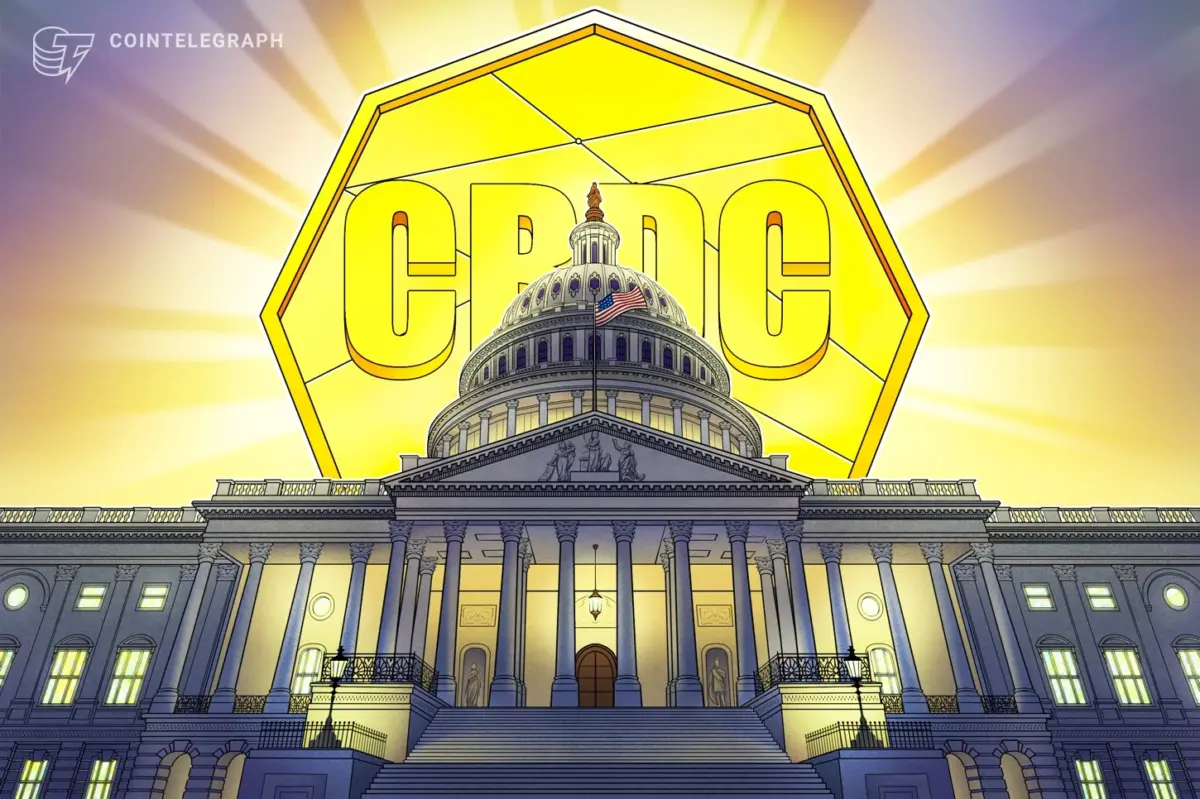
The agreement, unveiled following intensive bipartisan negotiations, centers on an updated iteration of the sweeping 21st Century Road to Housing Act. While the primary objective of the legislative package is to alleviate a persistent national housing affordability crisis—including controversial measures targeting corporate real estate acquisitions—the inclusion of the CBDC prohibition represents a major policy victory for congressional Republicans and cryptocurrency advocates. For years, opponents of a digital dollar have warned against the systemic risks of state-controlled digital assets, viewing them as a potential vector for government overreach and financial surveillance.
With the text finalized, congressional leadership is positioning the bill for rapid consideration. House Republicans plan to bring the package to the floor for a final vote immediately following the chamber’s return from recess on June 23. The anticipated passage of this legislation not only reshapes the regulatory trajectory of American real estate but also clears a vital legislative bottleneck, enabling lawmakers to pivot toward broader digital asset frameworks, such as the highly anticipated CLARITY Act, ahead of the November midterm elections.
Executive Overview
The convergence of housing reform and monetary policy within a single legislative vehicle underscores the complex, interconnected nature of modern financial regulation. The compromise text of the 21st Century Road to Housing Act bridges longstanding divisions between the House and Senate, synthesizing disparate versions passed earlier in the legislative cycle.
Key pillars of the comprehensive legislative package include:
- The Federal Reserve CBDC Moratorium: A strict statutory ban blocking the U.S. central bank from directly or indirectly issuing, creating, or supporting any digital asset substantially similar to a CBDC, effective through December 31, 2030.
- Stablecoin Carveout: Explicit statutory protections ensuring that permissionless, open, and private dollar-denominated crypto stablecoins are entirely exempt from the CBDC ban.
- Single-Family Housing Protections: Targeted measures designed to curb housing inflation by restricting large institutional investors from purchasing existing single-family residential properties strictly for rental purposes.
- Legislative Clearinghouse: The resolution of the housing bill frees up congressional bandwidth, enabling the House and Senate to prioritize upcoming crypto-regulatory frameworks, specifically the CLARITY Act, before the legislative calendar is dominated by the August recess and November midterm campaigns.
Detailed Chronology: From Standalone Stalls to Bipartisan Synthesis
The journey toward a codified federal ban on a central bank digital currency has been marked by years of incremental legislative battles, executive actions, and ideological friction between monetary traditionalists and digital asset proponents.
The Genesis of Anti-CBDC Legislation
The legislative groundwork for the current moratorium was largely laid by Republican lawmakers who viewed the prospect of a Federal Reserve-issued digital dollar as an existential threat to financial privacy. In June 2025, Representative Tom Emmer introduced the Anti-CBDC Surveillance State Act, a standalone bill designed to prevent the central bank from deploying a programmable asset capable of tracking consumer spending habits. Buoyed by growing skepticism among fiscal conservatives and the broader crypto community, the House successfully passed Representative Emmer’s bill in July 2025. However, the legislation subsequently stalled in the Senate, where committee prioritization and procedural hurdles prevented a floor vote.
Executive Intervention in Early 2025
The legislative debate gained executive momentum in January 2025, when President Donald Trump signed an executive order explicitly titled “Strengthening American Leadership in Digital Financial Technology.” The directive ordered federal agencies to cease all developmental and exploratory work related to a U.S. CBDC. The executive order cited grave concerns that a state-controlled digital currency would threaten “the stability of the financial system, individual privacy, and the sovereignty of the United States.” While the executive order established immediate administrative roadblocks for the Federal Reserve, proponents of permanent legislative action argued that a statutory ban was necessary to prevent future administrations from reversing course.
Momentum in the 116th/117th Congresses and the Housing Vehicle Strategy
Realizing that standalone anti-CBDC bills faced steep procedural obstacles in the upper chamber, lawmakers pursued a legislative strategy of attaching high-priority provisions to must-pass omnibus bills or major bipartisan initiatives.
The 21st Century Road to Housing Act emerged as the ideal vehicle. The Senate passed an amendment incorporating the CBDC ban in March 2026, signaling strong cross-party appetite to address domestic affordability alongside monetary boundaries. Although the House passed its own version of the housing package with overwhelming bipartisan support in May 2026, divergences remained regarding specific regulatory thresholds and funding mechanisms.
Following weeks of closed-door bicameral negotiations, a bipartisan group of House and Senate leaders—including key members of the Senate Banking Committee—released the updated text of the housing act on Tuesday. This updated compromise incorporates the Senate’s anti-CBDC amendments alongside tightly calibrated housing affordability provisions, creating a cohesive package primed for swift enactment.
Supporting Context, Legal Mechanics, and Metrics
The specific statutory language embedded within the updated 21st Century Road to Housing Act is both precise and sweeping, carefully drafted to prevent administrative workarounds by the central bank while protecting private-sector innovation.
Statutory Language and Scope of the Ban
According to text released by congressional committees, the bill stipulates that the Federal Reserve may not, “directly or indirectly, issue or create a central bank digital currency or any digital asset that is substantially similar to a central bank digital currency.”
Legal analysts have noted that the inclusion of the phrase “substantially similar” is designed to preempt semantic workarounds by federal regulators who might otherwise attempt to pilot wholesale digital settlement tokens under alternative nomenclatures. The provision carries a definitive expiration date of December 31, 2030, leaving the long-term future of a U.S. digital currency to be revisited by future Congresses in the next decade.
The Stablecoin Sanctuary
Crucially, the legislation includes a carefully crafted carveout to safeguard the commercial stablecoin sector. The text explicitly excludes “dollar-denominated currency that is open, permissionless, and private” from the definition of a prohibited CBDC. This distinction is vital for the broader digital asset economy, ensuring that private-sector issuers of stablecoins—such as USDT and USDC—can continue to operate, scale, and integrate into global payment rails without federal interference or legal ambiguity.
Housing Affordability Metrics and Institutional Real Estate
While the digital asset community has focused heavily on the CBDC moratorium, the foundational purpose of the legislation remains rooted in addressing America’s severe housing affordability crisis. Data compiled by housing economists indicates that institutional investors—including private equity firms and Wall Street asset management funds—purchased up to 25% of all single-family homes sold in major metropolitan housing markets over the past several years.
By banning institutional investors from acquiring single-family homes strictly for conversion into rental portfolios, the bill aims to restore inventory for first-time homebuyers. Proponents argue that curbing corporate dominance in the residential housing market will help stabilize skyrocketing home prices and alleviate generational wealth-building barriers for middle-class families.
Official Statements and Industry Reactions
The bipartisan announcement has elicited a wave of commentary from lawmakers, financial regulators, and digital asset industry leaders, reflecting the multifaceted impact of the legislation.
Congressional Leadership Perspectives
Speaking on condition of anonymity to Politico, congressional aides involved in drafting the compromise emphasized that the pairing of housing reform with monetary policy was a strategic necessity to secure a legislative consensus before the summer recess.
“We have addressed a critical kitchen-table issue for American families while simultaneously establishing firm boundaries for the future of our monetary system,” one senior congressional staffer remarked. “American citizens deserve absolute certainty that their private financial transactions will not be subjected to government surveillance via a central bank digital token.”
Cryptocurrency Advocacy and Sector Response
Crypto advocacy groups, which have long campaigned against the implementation of state-controlled digital tokens, hailed the agreement as a watershed moment for financial privacy. For years, organizations and think tanks have warned that a Federal Reserve CBDC would grant the federal government unprecedented visibility into consumer spending habits, effectively eliminating financial anonymity akin to cash transactions.
“The inclusion of a hard ban on CBDCs until 2030 is a massive victory for civil liberties and the decentralized finance ecosystem,” noted a policy strategist at a prominent digital asset advocacy group. “By protecting permissionless stablecoins while definitively slamming the door on a surveillance-state digital dollar, Congress has established a rational blueprint for the future of money.”
Financial markets have similarly responded with cautious optimism, viewing the resolution of the housing bill as a positive sign that Congress can successfully navigate complex partisan divides to pass meaningful regulatory frameworks.
Future Outlook: The Road Ahead for Digital Asset Regulation
The impending passage of the 21st Century Road to Housing Act serves as a critical bellwether for the remainder of the 2026 legislative calendar. With the contentious CBDC debate temporarily resolved through the 2030 sunset clause, congressional leadership is preparing to pivot toward broader, highly anticipated crypto legislation.
The CLARITY Act and Summer Legislative Priorities
Lawmakers are increasingly focused on advancing the CLARITY Act, a landmark regulatory bill designed to establish clear jurisdictional boundaries between the Securities and Exchange Commission (SEC) and the Commodity Futures Trading Commission (CFTC) regarding digital assets. Proponents of the bill argue that regulatory clarity is desperately needed to retain fintech innovation within the United States and protect institutional and retail investors alike.
House Republican leadership has confirmed that following the floor vote on the housing bill—scheduled immediately after the House returns from recess on June 23—floor time will be prioritized for these secondary financial modernization bills.
Broader Policy Implications
The legislative momentum behind the housing and CBDC deal reflects a shifting political consensus in Washington. Rather than treating cryptocurrency and digital financial technology as partisan wedge issues, lawmakers from both sides of the aisle are increasingly recognizing the necessity of establishing transparent, innovation-friendly guardrails.
As the bill heads toward a final vote and subsequent presidential signature, the message from Capitol Hill is unmistakable: while the United States is prepared to embrace private-sector financial innovation and permissionless stablecoins, the infrastructure for a state-controlled digital currency has been firmly locked away for the remainder of the decade.