


Executive Overview
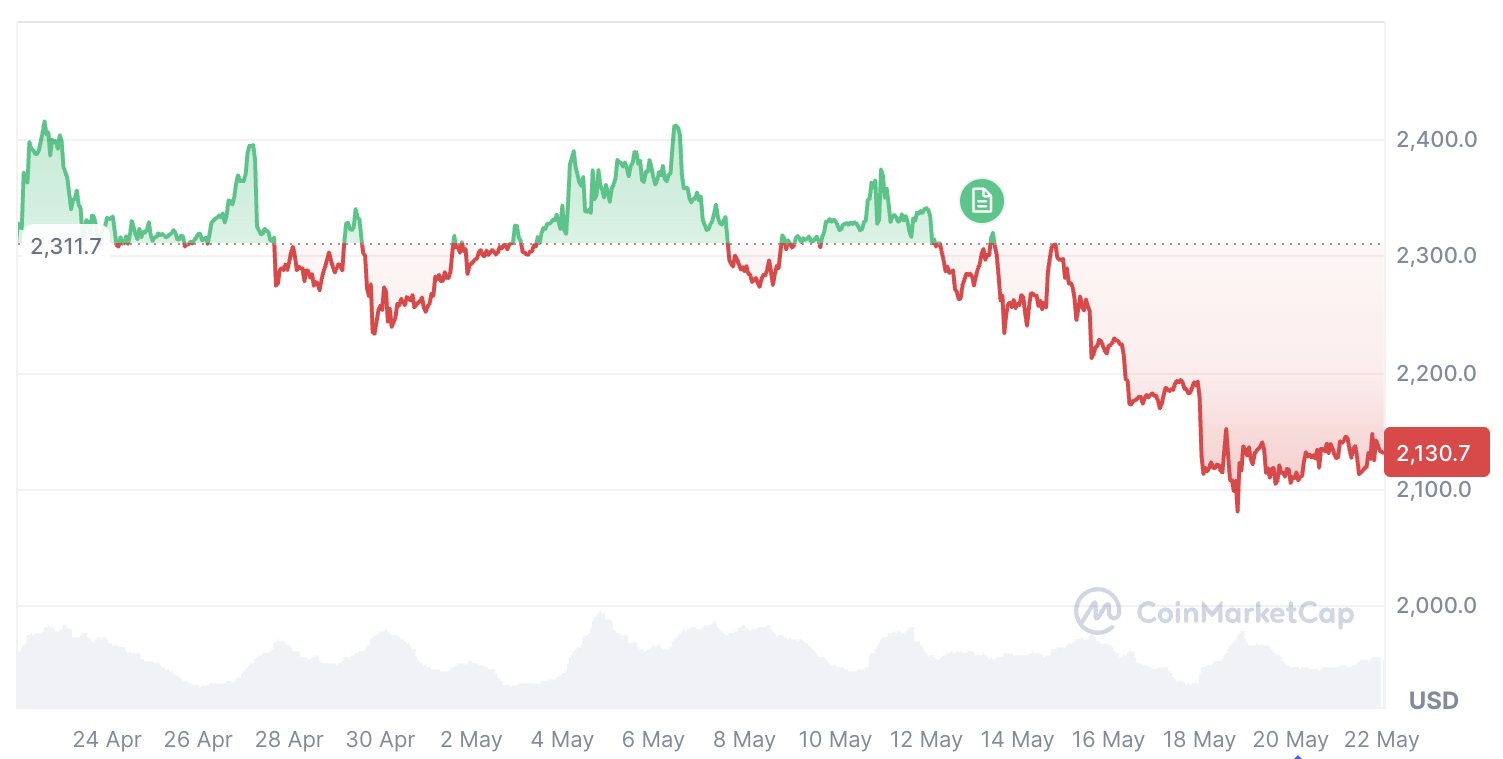
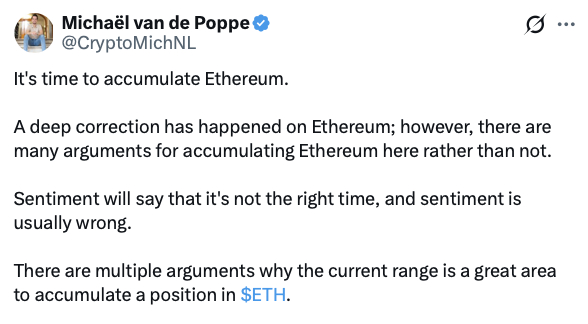
Simultaneously, the smart contract sector is experiencing severe downward pressure. Ethereum (ETH) has suffered a dramatic correction, slipping past key psychological supports down to the $2,100 threshold. Market analysts confirm that bearish momentum has firmly seized control, backed by aggressive futures selling volumes on major derivatives platforms like Binance. However, corporate treasury giants are viewing the bloodbath differently; institutional heavyweights such as Bitmine Immersion Technologies are aggressively accumulating discounted tokens, drawing structural parallels to corporate Bitcoin accumulation strategies.
Away from the anchor assets, the altcoin market is showing mixed signs of defensive consolidation and aggressive speculation. Prominent analysts suggest XRP is primed for a massive structural expansion out of a multi-month accumulation range, while regulatory horizons continue to clear for alternative layer-1 assets, evidenced by Grayscale and VanEck pushing forward with amended spot BNB Exchange-Traded Fund (ETF) filings in the United States. This report delivers a granular investigative breakdown of these critical market developments, charting the data, the corporate responses, and the shifting technological horizons defining the current crypto economy.
Detailed Chronology & Market Events
1. The Quantum Threat Vector: Glassnode’s 10% Bitcoin Warning
The week commenced with a stark technical wake-up call for the world’s premier cryptocurrency network. According to data analytics platform Glassnode, roughly 1.92 million Bitcoin—accounting for nearly 10% of the total existing supply—is structurally exposed to future advancements in quantum computing.
In a technical brief published via social media on Wednesday, Glassnode outlined that these vulnerable coins are tied to specific, legacy output types that reveal their public keys or public-key equivalents by architectural design, bypassing ordinary address management safeguards.
The compromised pool is broadly categorized into three distinct tranches:

- Satoshi-Era Pay-to-Public-Key (P2PK) Outputs: Representing the lion’s share of the risk, coins mined personally by Bitcoin’s pseudonymous creator, Satoshi Nakamoto, account for approximately 1.1 million BTC (roughly 5.5% of the total supply).
- Early Legacy Multi-Sig Structures: Pay-to-Multisig (P2MS) architectures from Bitcoin’s formative years account for another 620,000 coins, or 3.1% of the supply.
- Modern Pay-to-Taproot (P2TR) Outputs: Approximately 200,000 coins (1% of the supply) residing in modern Taproot addresses also intrinsically expose data relevant to quantum decryption models.
While a functional quantum computer capable of cracking cryptographic elliptic-curve signatures (secp256k1) does not yet exist, cryptographers agree that the eventual maturation of quantum hardware poses an existential risk to funds sitting in address formats where the public key is explicitly visible on-chain.
2. Ethereum’s Sharp Rejection and Fall to $2,100
While structural risks threatened Bitcoin’s long-term horizon, Ethereum faced an acute, short-term crisis. Following a failed push and subsequent rejection at the $2,400 resistance level earlier in the week, Ether prices plummeted, touching local lows of $2,090 on the Bitstamp exchange by Sunday—marking the asset’s weakest performance since mid-April.
TradingView metrics confirm that ETH spent the week oscillating near $2,131, down roughly 12% from its early-May local highs of $2,420, dragging its 30-day performance down into an 8.44% deficit. Market microstructure data reveals that aggressive derivative trading was the primary catalyst behind the flush. Binance order book data highlighted a massive surge in "taker buy" volume—which in this context reflects aggressive short selling and market-order liquidations on futures books—spiking past $1.1 billion within a single hour as prices breached the critical $2,100 floor.
3. Institutional Counter-Cyclical Buying: Bitmine’s Mega-Accumulation
Despite the pervasive panic washing over retail traders, institutional appetite for discounted Ether remained robust. Bitmine Immersion Technologies, recognized as the world’s largest corporate Ether treasury holding entity, capitalized on the market downturn to significantly expand its digital asset reserves.
In an official statement released on Monday, Bitmine Chairman Tom Lee confirmed that the firm absorbed an additional 71,672 ETH during the dip below the $2,200 threshold. The strategic accumulation brings Bitmine’s total token stash to staggering heights, underscoring a corporate playbook closely modeled after Michael Saylor’s famous Bitcoin treasury model at Strategy.
4. XRP’s "Quiet Accumulation" and Potential 10x Breakout
Amid broader market turbulence, attention has increasingly turned toward legacy altcoins displaying unique structural patterns. Prominent crypto market analyst Crypto Patel published a detailed technical breakdown suggesting that XRP may be gearing up for an explosive 10x to 15x rally from a multi-month "quiet accumulation" zone.
According to Patel’s Sunday analysis, the $1.00 to $0.70 price band is acting as a generational long-term accumulation corridor. Following a failed test of the $3.20–$3.50 resistance ceiling, XRP’s price has drifted downward into a high-conviction demand zone. Patel argues that the muted retail sentiment and low volume profile closely mirror the psychological calm that preceded XRP’s dramatic multi-fold expansion phases in past market cycles.
5. Regulatory Milestones: Grayscale and VanEck Advance Spot BNB ETF Bids
Regulatory developments continue to forge a path toward institutional legitimacy for alternative layer-1 assets. On Friday, prominent asset management giants Grayscale and VanEck submitted amended S-1 registration statements to the United States Securities and Exchange Commission (SEC) for their respective spot BNB exchange-traded funds.
Grayscale filed its second structural amendment, while VanEck submitted its fifth. These filings represent critical stepping stones in the US regulatory pipeline, mapping out fund custody mechanisms, risk disclosures, creation-and-redemption procedures, and management fees. Bloomberg ETF analyst James Seyffart noted that the rapid-fire amendments strongly suggest issuers are actively incorporating SEC feedback, potentially positioning BNB as the next major digital asset to secure a spot-based ETF vehicle in the United States.
Supporting Context & Metrics
To contextualize these disparate market movements, a rigorous examination of underlying metrics reveals a complex tug-of-war between systemic technological dread, short-term derivatives leverage, and long-term institutional maturation.
| Asset / Metric | Current Status / Price Level | Key Technical / Fundamental Driver | Primary Market Sentiment |
|---|---|---|---|
| Bitcoin (BTC) | ~1.92M Supply Vulnerable | Glassnode report on P2PK, P2MS, and P2TR public key exposure. | Cautious / Long-Term Vigilance |
| Ethereum (ETH) | $2,131 (Down 12% from May peak) | Rejection at $2,400; $1.1B Binance aggressive sell volume spike. | Bearish Short-Term / Bullish Institutional |
| Bitmine Treasury | 71,672 ETH added in dip | Corporate accumulation strategy targeting 5% supply control by 2026. | Aggressive Accumulation |
| XRP | Trading near $0.70–$1.00 demand zone | Analyst projections target $5, $10, and $15 on cycle repetition. | Quiet Accumulation / Speculative |
| Spot BNB ETF | Grayscale & VanEck amend S-1s | Active dialogue with SEC hinting at near-future product rollout. | Regulatory Optimism |
The duality of the market is stark: while Bitcoin developers and researchers must confront the sobering timeline of quantum decryption threats over the coming decade, institutional allocators are actively building multi-billion-dollar war chests. The divergence between fearful retail derivatives traders and opportunistic corporate treasuries highlights the professionalization of crypto market cycles.
Official Statements & Industry Commentary
The breadth of this week’s news generated significant commentary from recognized industry leaders, analysts, and corporate executives:
- Glassnode on Bitcoin’s Quantum Vulnerability:
"Nearly 10% of the total Bitcoin supply is considered ‘structurally unsafe’ from a quantum computing breakthrough, as their output type reveals the public key by design, regardless of address management practices."
- Tom Lee, Chairman of Bitmine Immersion Technologies:
"Over the past week, we acquired 71,672 ETH. We view the recent pullback of ETH to below $2,200 as an attractive opportunity. Bitmine is expected to reach the alchemy of 5% [supply control] sometime in 2026."
- James Seyffart, Bloomberg ETF Analyst:
"Another amended S-1 from [Grayscale] on the BNB ETF… have to guess they are going off feedback from SEC and trying to launch in near future? Could be the next crypto asset to get a spot ETF in the US."
- Crypto Patel, Market Analyst (on XRP):
"The muted price action resembles the calm before its major breakout… The $1.00–$0.70 range serves as a potential long-term accumulation zone ahead of a 10x–15x cycle expansion."
Future Outlook & Strategic Implications
As the crypto market navigates the remainder of 2026, several critical storylines will dictate price action and structural evolution:
- The Quantum Road Map for Bitcoin: While the 10% structural vulnerability highlighted by Glassnode does not pose an immediate, overnight threat, it places immense pressure on Bitcoin core developers to accelerate discussions regarding quantum-resistant signature schemes (such as lattice-based cryptography or winternitz one-time signatures) and potential soft/hard fork activation pathways to migrate vulnerable early-era coins before quantum supremacy becomes a commercial reality.
- Ethereum’s Support Defense: For ETH, the immediate future hinges on whether spot buyers and treasury entities like Bitmine can successfully absorb the lingering selling pressure from leveraged derivatives traders. Reclaiming the $2,200–$2,400 liquidity band is essential for invalidating the current bearish market structure.
- The Altcoin ETF Frontier: The progression of Grayscale and VanEck’s spot BNB ETF filings signals that the regulatory floodgates for alternative layer-1 assets remain open in the United States. Approval of these products could fundamentally alter capital allocation flows, bringing institutional liquidity directly into non-Bitcoin, non-Ethereum ecosystems.
Disclaimer: Cointelegraph publishes long-form journalism, analysis, and narrative reporting produced by in-house editorial staff with subject-matter expertise. All articles are edited and reviewed in line with rigorous editorial standards. The contents of this article do not constitute financial, legal, or investment advice. Readers are strongly advised to conduct their own independent research and consult qualified professionals before making any financial commitments.