

Executive Overview
For years, the Islamic Revolutionary Guard Corps (IRGC) and affiliated state-sponsored actors have successfully leaned into the decentralized, borderless nature of cryptocurrency to evade traditional Western banking controls. They have used digital ledgers to finance illicit shadow fleet oil sales, launder ransomware proceeds, and fund aggressive foreign cyber operations. Operation Economic Outcast seeks to permanently sever these digital lifelines.
Under the new sectoral framework enabled by Executive Order 13902, the Treasury’s Office of Foreign Assets Control (OFAC) is no longer required to establish a direct, granular nexus to terrorism or weapons proliferation to penalize bad actors. Instead, OFAC now possesses the sweeping authority to sanction any foreign individual, exchange, over-the-counter (OTC) broker, or infrastructure provider anywhere in the world that operates within or materially supports Iran’s digital asset sector.
Simultaneously, the Treasury unspooled targeted enforcement actions against key operatives within Iran’s Ministry of Intelligence and Security (MOIS)—who have weaponized cryptocurrency for state-backed hacking, infrastructure intrusions, and extortion—alongside high-value brokers funneling tens of millions of dollars into IRGC coffers through illicit petroleum trades. As global compliance departments scramble to interpret the expanded scope of secondary sanctions, Operation Economic Outcast signals that the digital frontier of geopolitical conflict is entering a far more aggressive, high-stakes era.
Detailed Chronology of the Crackdown
The rollout of Operation Economic Outcast was preceded by a coordinated wave of legal and investigative actions that culminated in late August 2026, showcasing a multi-agency approach involving the U.S. Department of the Treasury, the Department of Justice, and the Federal Bureau of Investigation (FBI).
The Mid-August Indictments
The groundwork for the Treasury’s late-August announcements was laid on August 18, 2026, when the U.S. Department of Justice unsealed a massive superseding indictment. The legal filing charged 17 Iranian nationals with orchestrating systematic, wide-scale cyber theft campaigns on behalf of the Iran-based hacking-for-hire front known as the Mabna Institute.
The indictment cast a harsh spotlight on deep-seated ties between Iranian state intelligence and sophisticated underground cybercrime syndicates. Among those named was Behzad Mesri, a high-ranking co-leader within an MOIS cyber unit. Beyond his state-directed espionage activities, federal prosecutors highlighted Mesri’s notorious role in a 2017 cyberattack that targeted media giant HBO, during which he attempted to extort approximately $6 million worth of Bitcoin.
The August 24 Treasury Launch
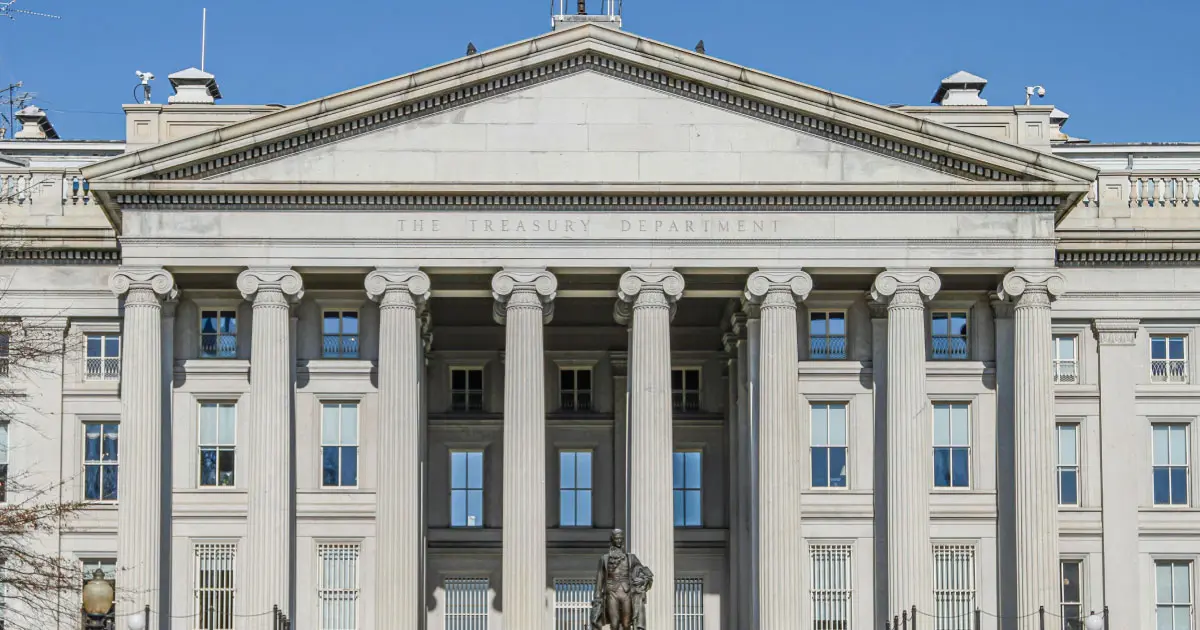
Just days after the unsealing of the DOJ indictment, Treasury Secretary Scott Bessent announced Operation Economic Outcast. On August 24, 2026, OFAC unleashed a torrent of designations targeting nearly 60 entities, individuals, and vessels.
The centerpiece of this package was the historic sectoral determination under Executive Order 13902. Rather than relying on piecemeal designations of individual crypto addresses—a tactic OFAC has historically used—the Treasury swept an entire economic vertical into its regulatory crosshairs. Foreign crypto exchanges, liquidity providers, and payment processors now face immediate secondary sanctions exposure if they knowingly or unknowingly handle transactions linked to Iran’s digital asset framework.

Alongside the broad sectoral rule, OFAC dropped specific sanctions on key digital wallets and actors. MOIS operatives—including Behzad Mesri, Keyvan Fayyaz Ghareh Blagh, and Arman Kahzadian—had their Bitcoin (BTC), Ethereum (ETH), and TRON (TRX) wallets officially flagged and blacklisted. These individuals had successfully blurred the lines between state-sponsored espionage and personal financial enrichment, utilizing blockchain infrastructure to fence stolen data, collect ransomware payouts, and buy and sell illicit network access on underground forums.
Supporting Context & Metrics: The Scale of Iran’s Crypto Economy
The urgency behind Operation Economic Outcast is rooted in hard data. Intelligence from blockchain analytics firms, including Chainalysis, underscores just how heavily the Iranian regime—and specifically the IRGC—has come to rely on digital assets to circumvent traditional financial isolation.
The IRGC’s Digital Dominance
Historically, economic sanctions forced Iran to rely on cash couriers, shell companies, and complex petroleum-swapping schemes. However, the rise of cryptocurrencies provided the regime with a faster, more resilient medium of exchange. Chainalysis research reveals that Iran’s crypto economy has grown exponentially amid shifting geopolitical tensions.
By the final quarter of 2025 (Q4 2025), crypto addresses directly associated with the IRGC accounted for a staggering 50% of the total value flowing into Iran’s entire digital asset ecosystem. Overall annual crypto volumes tied to Iranian state interests surpassed $3 billion in 2025 alone, highlighting a mature, institutionalized digital laundering apparatus.
Ivan Obukhov and the $100 Million Oil Pipeline
While state hackers exploit crypto for cybercrime, the regime’s military arms utilize it to keep the national economy afloat through oil exports. A prime example highlighted in the Treasury’s August 24 actions is UAE-based Ukrainian national Ivan Obukhov.
According to U.S. investigators, Obukhov has operated for years as a vital financial conduit for the Iranian "shadow fleet"—a covert armada of aging tankers moving sanctioned petroleum. Since 2023, Obukhov has personally processed more than $100 million in cryptocurrency payments to facilitate illicit oil sales on behalf of the IRGC-Qods Force (IRGC-QF).
To execute these operations, Obukhov collaborated closely with fellow designee Mohammad Ahmed Suhil Fattouh—a UAE-based Syrian national known in shipping circles as "Captain Hamzah." Fattouh specialized in procuring aging maritime vessels that were subsequently funneled into Iran’s shadow fleet to bypass international oil embargoes. By utilizing stablecoins and other cryptographic rails to settle these multi-million-dollar maritime transactions, Obukhov and Fattouh provided the IRGC with a critical channel to monetize state resources outside the reach of the SWIFT banking system.
The Cyber-Criminal Nexus: MOIS Wallets and Bulletproof Hosting
The intersection of state espionage and private cybercrime was starkly illuminated by the wallet tracing of MOIS operative Keyvan Fayyaz Ghareh Blagh. Blockchain forensics revealed that Blagh’s sanctioned wallets received micro-payments—such as a $2,000 Bitcoin transfer—from Russian-speaking Initial Access Brokers. This pointed investigators to a lucrative side-hustle: MOIS hackers were using state-directed cyber intrusions to compromise foreign corporate networks, then reselling unauthorized access to underground criminal gangs for personal profit.
Furthermore, analysis of Blagh’s transaction history showed direct fund transfers to at least two distinct "Bulletproof Hosting Providers"—rogue web-hosting services that ignore abuse complaints and protect malicious actors. Blagh used these bulletproof infrastructure providers to host ransomware infrastructure, ultimately receiving extortion payouts directly into his flagged cryptocurrency addresses.

Official Statements and Policy Framework
The rhetoric accompanying Operation Economic Outcast reflects a zero-tolerance stance from the highest levels of the U.S. government.
Describing the package as an “economic D-Day,” Treasury Secretary Scott Bessent emphasized that the United States is deploying every tool at its disposal to degrade the regime’s capacity to finance proxy conflicts in the Middle East and fund aggressive cyber warfare against American infrastructure.
"We are systematically closing every loophole—traditional and digital—that the Iranian regime uses to sustain its malign behavior," administration officials noted in related press briefings. "By designating digital assets as a constrained economic sector, we are putting global market participants on notice: facilitating the regime’s crypto liquidity is a direct threat to international security."
Legal experts point out that the implementation of Executive Order 13902’s sectoral determination marks a watershed moment in economic sanctions enforcement. By decoupling the necessity of proving a direct link to a specific terrorist plot or proliferation event, OFAC has lowered its legal burden to penalize anyone interfacing with Iran’s crypto infrastructure. This empowers regulators to aggressively pursue international entities that might have previously slipped through regulatory grey areas.
Future Outlook & Compliance Implications
The immediate fallout of Operation Economic Outcast will reverberate far beyond Washington and Tehran, fundamentally altering compliance obligations for virtual asset service providers (VASPs) worldwide.
What This Means for Compliance Teams
Global cryptocurrency exchanges, over-the-counter (OTC) trading desks, liquidity providers, and payment gateways must urgently reassess their risk exposure. Key directives for compliance departments moving forward include:
- Counterparty Audits: Compliance teams must scrutinize exposure to counterparties operating in high-risk jurisdictions frequently leveraged for Iranian oil trade, particularly in the Middle East, parts of Eastern Europe, and select Asian transit hubs.
- Enhanced Blockchain Monitoring: Leading analytics firms, including Chainalysis, have already updated their intelligence databases to tag and flag the specific cryptocurrency addresses associated with the August 24 designations. Compliance software must be configured to automatically screen for these newly minted blacklisted wallets.
- Navigating Secondary Sanctions Risk: Because the new sectoral determination allows OFAC to penalize foreign entities supporting Iran’s digital asset ecosystem, non-U.S. crypto businesses can no longer assume they are immune from American enforcement if they operate entirely outside U.S. soil. Any offshore exchange facilitating transactions that benefit Iranian digital initiatives now risks losing its correspondent access to the global financial system.
The Road Ahead
As Operation Economic Outcast gathers momentum, the intersection of national security, cybercrime, and digital finance will remain a primary battleground. The Iranian regime will undoubtedly attempt to adapt, likely pivoting to increasingly sophisticated privacy-enhancing technologies (PETs), decentralized exchanges (DEXs), and alternative stablecoins to obscure its financial footprints.
However, the Treasury’s willingness to weaponize sweeping sectoral determinations demonstrates that U.S. regulators are evolving in lockstep with illicit financial networks. For the global cryptocurrency industry, the message is unequivocal: compliance is no longer just about checking lists of known terrorists—it requires comprehensive visibility into entire economic sectors to avoid being caught in the crossfire of a historic financial war.