
Executive Overview
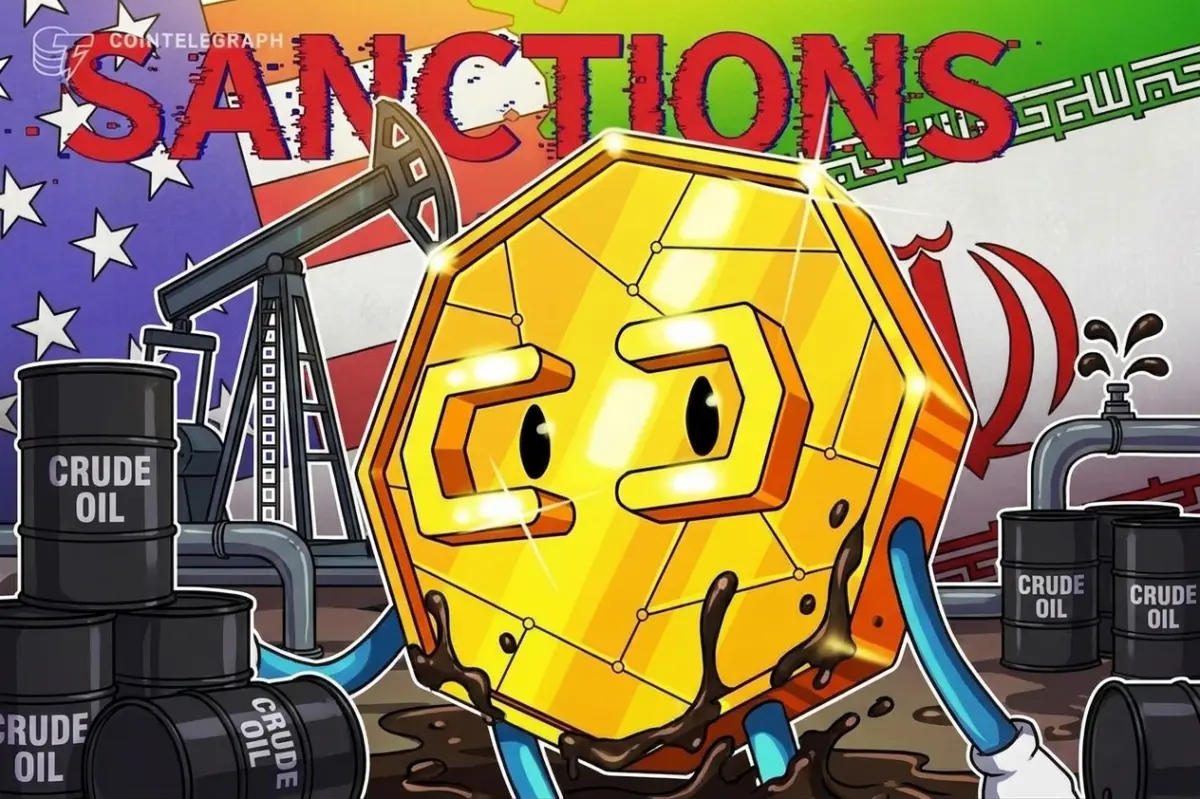
The newly issued sectoral sanctions determinations do not merely target isolated cryptocurrency wallets or individual exchanges; rather, they establish a comprehensive dragnet covering digital assets, advanced technology, gold, aviation, and shipping sectors within the Iranian economy. Alongside these sector-wide parameters, OFAC dropped the hammer on nearly 60 distinct entities, individuals, and maritime vessels. These newly designated targets are deeply entrenched in Iran’s sprawling nuclear, ballistic missile, cyberwarfare, and petroleum infrastructure.
At the core of this policy pivot is the recognition that decentralized financial technology has become what the Treasury terms a “tool of choice for sanctions evasion.” By exploiting the borderless, swift, and occasionally opaque nature of digital tokens—particularly stablecoins—Iranian state actors, the Islamic Revolutionary Guard Corps (IRGC), and government insiders have managed to monetize billions of dollars in petroleum resources.
The most recent enforcement action highlights the case of Ivan Obukhov, a Ukraine-born broker operating out of the United Arab Emirates (UAE). According to federal investigators, Obukhov processed upwards of $100 million in digital asset transactions since 2023 to mask and accelerate oil sales executed on behalf of the IRGC’s elite Quds Force. Both Obukhov and his UAE-based corporate vehicle, Foscom FZE, have been formally designated, cutting them off entirely from the United States financial ecosystem.
This comprehensive update explores the mechanics of Iran’s crypto-fueled sanctions evasion, maps out the chronological escalation of Washington’s digital asset enforcement strategy, reviews the hard data and metrics surrounding illicit blockchain flows, evaluates the severe global compliance implications for foreign financial institutions, and projects the long-term future of sovereign enforcement against decentralized technologies.
Detailed Chronology: The Escalation of US Crypto Enforcement Against Iran
To fully grasp the gravity of Monday’s broad sectoral determination, it is necessary to examine the rapid, aggressive trajectory of US regulatory and enforcement actions targeting Iran’s digital asset ecosystem over the past year. What began as targeted, surgical strikes against specific offshore crypto platforms has now blossomed into a wide-net policy doctrine capable of penalizing any global entity interacting with Iran’s blockchain infrastructure.
Early 2024: The First Salvo Against UK-Registered Platforms
The foundation for Monday’s sweeping action was laid earlier in the year when OFAC shifted its gaze away from domestic Iranian networks and toward international conduits servicing the regime. In January, the Treasury executed its maiden Iran-related sanctions designations targeting digital asset exchanges by going after UK-registered platforms Zedcex and Zedxion. Investigators revealed that these ostensibly European-facing entities were being leveraged to launder funds and execute foreign exchange transactions for Iranian proxies, proving that Tehran was successfully utilizing shell companies and offshore registrations to launder digital wealth.
The Summer Surge: Nobitex, Shelbit, and Aban Tether
As regional conflicts intensified and geopolitical tensions reached a boiling point through the spring and summer, the pace of US enforcement accelerated dramatically. On June 3, the Treasury unleashed a devastating package targeting four major Iranian-linked cryptocurrency exchanges, most notably Nobitex—Iran’s largest and most dominant digital asset trading platform.
This monumental crackdown came hot on the heels of statements made by senior Treasury officials. Treasury Secretary Scott Bessent revealed that the United States government had successfully seized nearly $1 billion in cryptocurrency assets directly tied to Iranian exchanges and illicitly managed digital wallets. The seizures represented one of the largest combined cryptocurrency confiscations in the history of financial law enforcement, severely liquidity-starving state-backed threat actors.
The pressure did not let up as the summer progressed. On August 7, OFAC returned to the offensive, issuing formal sanctions designations against crypto exchanges Shelbit and Aban Tether. According to the Treasury’s investigative briefs, these two platforms were instrumental in facilitating a combined $5 million in cross-border digital asset transactions directly connected to Iranian front operations.
The Paradigm Shift: From Targeted Platforms to Sector-Wide Determinations
Despite these high-profile victories against specific platforms, US regulators faced a structural limitation: every time a single exchange was sanctioned, Iranian operators simply migrated their liquidity to alternative, unlisted platforms or decentralized finance (DeFi) protocols.
Recognizing this Whack-A-Mole dynamic, the Treasury’s Monday announcement introduced a structural paradigm shift. Instead of playing catch-up by designating individual exchanges one by one, the new sectoral determination under Executive Order 13902 establishes a broad legal basis for sanctions based purely on participation in or support of Iran’s entire digital asset sector.
This means that foreign individuals, brokers, liquidity providers, and over-the-counter (OTC) desks anywhere in the world who interact with Iran’s digital asset ecosystem now face the immediate threat of secondary sanctions, effectively banning them from accessing the US financial system.
Supporting Context & Metrics: The Anatomy of Iran’s Blockchain Evasion
To understand why the US Treasury views Iran’s digital asset sector as a critical national security threat, one must analyze the raw data and structural mechanics underpinning modern state-sponsored financial evasion. Blockchain analytics firms and intelligence agencies have spent years mapping the digital pipelines that allow sanctioned petroleum to find eager buyers across Asia and the Middle East.
The $100 Million Pipeline: The Case of Ivan Obukhov
The marquee enforcement action accompanying Monday’s announcement centers on Ivan Obukhov, a Ukrainian national operating out of Dubai. Operating through his corporate entity, Foscom FZE, Obukhov acted as a sophisticated financial middleman bridging the gap between sanctioned Iranian oil barons and international buyers who were unwilling or unable to touch traditional fiat currency wires due to compliance screening.
Between 2023 and the present, Obukhov allegedly processed more than $100 million in cryptocurrency payments. The funds—predominantly denominated in stablecoins like Tether (USDT), which offer the price stability of the US dollar combined with the censorship-resistance of public blockchains—were funneled directly to the IRGC’s Quds Force. The Quds Force, tasked with extraterrestrial military and clandestine operations, utilized these digital funds to finance regional proxy groups, purchase dual-use military components, and sustain covert intelligence networks.
The Scale of Illicit Flows: Billions Moving Through CoinEx and Beyond
While individual brokers like Obukhov handle tens of millions at a time, the macro-level figures associated with Iranian crypto integration are staggering. Industry reports, such as those compiled by blockchain intelligence firm TRM Labs, have repeatedly highlighted the sheer volume of capital moving through crypto exchanges with historical ties to Iranian entities.
For instance, previous investigative disclosures revealed that Iran-linked entities had routed an astonishing $3.8 billion through platforms like CoinEx. While CoinEx is not exclusively Iranian, the platform historically maintained lax Know-Your-Customer (KYC) and Anti-Money Laundering (AML) controls that made it a magnet for Iranian capital flight.
Furthermore, the nearly $1 billion in cumulative cryptocurrency seizures announced by Treasury Secretary Bessent demonstrates that digital assets have transitioned from speculative retail investments in Iran to systemic instruments of state-level monetary policy. Facing severe depreciation of the Iranian rial, rampant domestic inflation, and total exclusion from the Society for Worldwide Interbank Financial Telecommunication (SWIFT) network, the Iranian government has institutionalized cryptocurrency mining, cross-border settlement, and algorithmic obfuscation.
Why USDT and Stablecoins are the Preferred Vehicle
Cryptocurrency transactions involving Iran are overwhelmingly dominated by stablecoins rather than volatile assets like Bitcoin or Ethereum. Stablecoins pegged to the US dollar provide Iranian state actors with a frictionless medium of exchange. They allow the Central Bank of Iran and affiliated front companies to settle oil shipments within seconds, bypassing the watchful eyes of correspondent banks in New York, London, and Frankfurt.
Once petroleum is delivered to foreign ports—frequently via ship-to-ship transfers in international waters with transponders turned off—buyers settle their invoices by transferring stablecoins to wallets controlled by Iranian intelligence brokers. These digital tokens are then cycled through a web of OTC brokers, peer-to-peer (P2P) networks, and compliant-looking exchanges to be converted into local fiat currencies or used to acquire foreign goods.
Official Statements and Regulatory Mechanisms
The legal weight of the Treasury’s latest action is anchored in Executive Order 13902, a sweeping presidential directive designed to deny the Iranian government access to financial resources that support malicious activities across the Middle East.
Breaking Down the Legal Framework
In its official press release issued on Monday, the Treasury emphasized that the newly minted digital asset determination significantly expands OFAC’s jurisdictional reach. Under the terms of the determination:
- Broad Scope of Liability: Any foreign individual, entity, or corporate body that is determined to operate in, or provide material, financial, or technological support to, Iran’s digital asset sector can be designated for sanctions.
- Asset Freezing Mandate: All property and interests in property belonging to designated parties that are located within the United States, or that come within the possession or control of US persons, are comprehensively blocked and must be reported to OFAC.
- Secondary Sanctions and Correspondent Banking Restrictions: Foreign financial institutions that knowingly facilitate significant transactions for, or provide significant financial services to, newly designated Iranian-linked crypto entities risk losing access to correspondent accounts in the United States. This creates an existential threat for global banks and fintech firms, forcing them to implement aggressive, zero-tolerance blockchain analytics filtering.
The Treasury’s Stance on Digital Assets
Speaking on the necessity of these measures, Treasury officials underscored that while the United States supports responsible financial innovation and the legitimate growth of blockchain technology, it will not permit rogue nation-states to weaponize decentralization to undermine global security.
“Iran is increasingly turning to digital assets as a tool of choice for sanctions evasion, attempting to shield its illicit oil trade and fund regional instability through the opaque corridors of cryptocurrency networks,” a senior Treasury official noted. “By expanding our sectoral determinations to cover the entirety of Iran’s digital asset infrastructure, we are putting global market participants on notice: facilitating financial flows for the Iranian regime carries severe, permanent consequences.”
Future Outlook: The Global Ripple Effects on Crypto Compliance and Sovereignty
The expansion of US sanctions to encompass Iran’s entire digital asset sector carries profound implications not only for the Islamic Republic, but for the global cryptocurrency industry, international compliance standards, and the future of decentralized finance.
Stricter Compliance for Global Exchanges and OTC Desks
For centralized cryptocurrency exchanges operating outside the United States, Monday’s announcement serves as a massive wake-up call. Compliance officers across Asia, Europe, and Latin America must immediately review their transaction monitoring systems to screen for wallet addresses, deposit patterns, and transaction signatures associated with Iranian petroleum networks.
Blockchain analytics firms—such as Chainalysis, Elliptic, and TRM Labs—will see an unprecedented surge in demand as exchanges scramble to implement real-time forensic screening. Any platform that fails to identify and block Iranian-linked funds risks finding itself in the crosshairs of OFAC enforcement, potentially resulting in catastrophic loss of market access and criminal indictments for corporate leadership.
The Decentralization Paradox
A central irony of this enforcement action lies in the fundamental nature of blockchain technology. Cryptocurrencies were originally conceived to be censorship-resistant, borderless, and independent of sovereign political control. However, as public blockchains like Bitcoin and Ethereum maintain permanent, immutable public ledgers, they paradoxically offer law enforcement agencies the most powerful forensic tool in human history.
Unlike physical cash or opaque hawala networks, every on-chain transaction leaves a permanent digital footprint. While privacy-enhancing techniques, mixers, and stablecoin bridging can obfuscate trails temporarily, advanced heuristic analysis allows intelligence agencies to deanonymize illicit flows over time. The $1 billion in seized funds and the successful unmasking of brokers like Ivan Obukhov prove that public ledgers ultimately act as glass boxes for sophisticated state investigators.
Geopolitical Fallout and the Rise of Alternative Rails
In response to tightening US surveillance, Tehran and its geopolitical allies—including Russia, China, and various sanctioned entities—are actively accelerating the development of alternative financial rails. These include Central Bank Digital Currencies (CBDCs), bilateral non-dollar trade agreements, and private, zero-knowledge-proof privacy coins designed to evade blockchain surveillance entirely.
As the US Treasury deploys broad sectoral determinations to suffocate Iran’s crypto economy, a broader technological arms race is taking shape. The battle lines are no longer drawn solely around traditional banking corridors in Geneva or New York, but across smart contracts, decentralized liquidity pools, and cross-border blockchain bridges.
Ultimately, Monday’s Treasury action signals the dawn of a new regulatory era. The era of the “Wild West” in cryptocurrency is definitively closing, replaced by an environment where major global superpowers will ruthlessly police digital asset sectors wherever they intersect with national security threats. For Iran, the tightening crypto noose means that its primary financial escape hatch is rapidly narrowing, forcing the regime to navigate an increasingly hostile global digital economy.