
Executive Overview
The consequences of this architectural stagnation are now coming to a head. For the better part of two decades, the fintech playbook has been defined by a relentless marketing arms race. Neobanks, embedded finance providers, and digital lenders have fought tooth and nail for customer acquisition, driving up performance marketing costs while compressing profit margins. Because these firms relied on a concentrated oligopoly of sponsor banks and Banking-as-a-Service (BaaS) intermediaries, the vast majority of economic value—and systemic risk—remained concentrated at the traditional banking layer.
Today, that model is breaking down under the weight of regulatory scrutiny, soaring compliance costs, and chronic commoditization. Yet, a structural antidote is emerging from an unexpected quarter. The rise of stablecoins and permissionless financial infrastructure marks the dawn of Fintech 4.0. Rather than building software wrappers around legacy bank accounts, builders are replacing the underlying plumbing entirely. By transacting on open, programmable networks, the fixed costs of launching financial products are collapsing from millions of dollars to mere thousands. In this new paradigm, the competitive advantage is shifting decisively away from brute-force marketing spend and toward specialized, community-centric design.
Detailed Chronology: The Four Eras of Financial Technology
To understand the structural paradigm shift currently underway, it is necessary to examine how fintech has evolved across four distinct generational epochs, each defined by its relationship to core financial infrastructure.
[Fintech 1.0: Digital Distribution] ---> [Fintech 2.0: The Neobank Era] ---> [Fintech 3.0: Embedded Finance] ---> [Fintech 4.0: Stablecoins & Permissionless Rails]
(2000–2010): Wrapped legacy rails      (2010–2020): Smartphone UX, sponsor banks (2020–2024): API abstraction layers     (Present): Protocol-native, global settlement
Fintech 1.0: Digital Distribution (2000–2010)
The inaugural wave of financial technology focused squarely on accessibility rather than efficiency. Pioneers such as PayPal, ETRADE, and Mint successfully migrated traditional financial products onto the nascent internet. However, they did not alter how money moved; instead, they wrapped legacy systems—such as automated clearing house (ACH) transfers, international wire protocols via SWIFT, and traditional card networks—in browser-based interfaces. Settlement cycles remained glacial, compliance procedures were heavily manual, and payment windows were dictated by rigid institutional schedules. This era succeeded in bringing finance online, but it fundamentally changed who could access products rather than how* those products functioned.
Fintech 2.0: The Neobank Era (2010–2020)
Propelled by the proliferation of smartphones and social distribution channels, the second wave delivered a profound leap in user experience. Companies like Chime targeted hourly workers with early paycheck access; SoFi focused on student-loan refinancing for upwardly mobile graduates; and Revolut and Nubank captured underbanked global consumers with hyper-intuitive mobile apps.

Despite their distinct brand narratives, these neobanks were selling essentially the same underlying product: checking accounts and debit cards tethered to legacy rails. They remained entirely dependent on sponsor banks, card networks, and ACH operators. They won customers not by inventing new financial infrastructure, but by mastering customer acquisition, brand-building, and digital onboarding. In short, they operated as sophisticated distribution arms layered on top of legacy banks.
Fintech 3.0: Embedded Finance (2020–2024)
By the dawn of the 2020s, embedded finance democratized financial services via Application Programming Interfaces (APIs). Infrastructure providers like Marqeta enabled software companies to issue payment cards programmatically, while BaaS providers such as Synapse, Unit, and Treasury Prime allowed virtually any application to offer lending, deposits, and payment processing.
Yet, beneath this layer of software abstraction, the fundamental mechanics remained unaltered. BaaS providers remained inextricably bound to the same sponsor banks, compliance frameworks, and payment rails as their predecessors. While the abstraction layer moved upward from traditional banks to developer APIs, the underlying economics and systemic control continued to flow directly back to legacy institutions.
Fintech 4.0: Stablecoins and Permissionless Finance (Present)
We have now entered the fourth era. Unlike previous iterations that merely stacked software on top of traditional banking institutions, stablecoin-native systems replace key banking functions at the protocol level. Builders no longer rent access to closed networks via bank APIs; instead, they write directly to open, programmable, global networks. Settlement occurs instantaneously on-chain, custody is managed via cryptographic smart contracts, and compliance mechanisms are shifting from manual back-office reviews to wallet-level logic.
Supporting Context & Metrics: The Commoditization of Fintech and Regulatory Realities
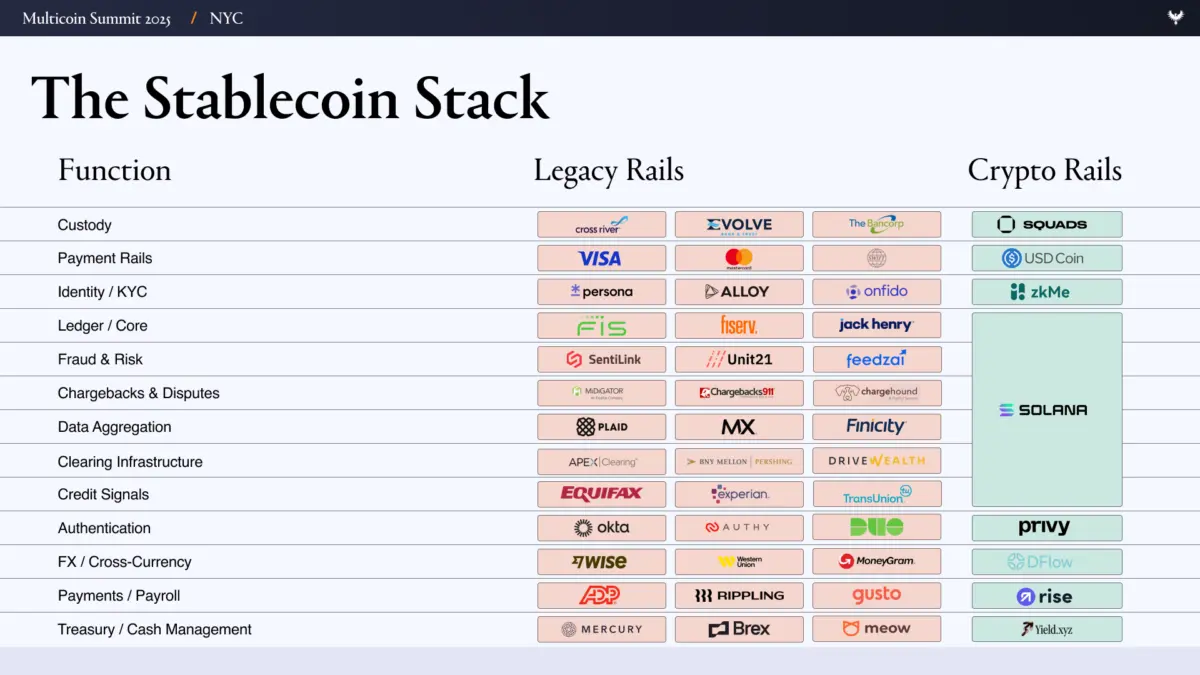
The structural flaws of Fintech 2.0 and 3.0 became glaringly apparent by the early 2020s. An overwhelming majority of major neobanks and embedded finance platforms came to rely on a remarkably small, highly concentrated pool of sponsor banks and BaaS providers. This bottleneck triggered a hyper-competitive race to the bottom.
As every player offered identical underlying banking services, customer acquisition costs (CAC) soared due to aggressive performance marketing wars. Margin compression set in, fraud and compliance expenditures ballooned, and fintech product offerings became virtually indistinguishable from one another. Differentiation devolved into a superficial gimmick-driven race characterized by metallic card designs, negligible signup bonuses, and fleeting cashback rewards.
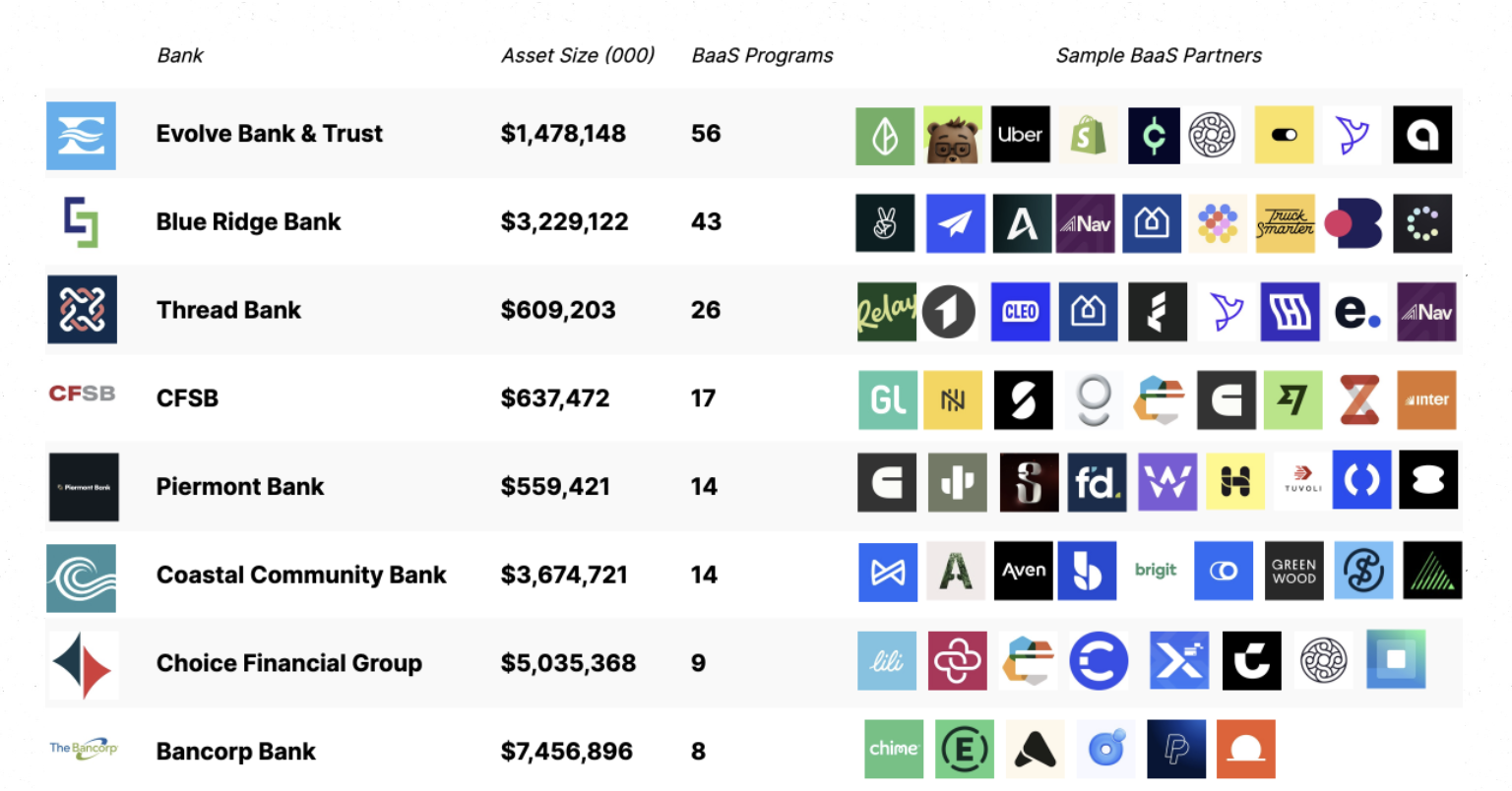
Concurrently, risk capture and economic value remained heavily concentrated within the regulated banking sector. Institutions such as JPMorgan Chase and Bank of America retained exclusive, federally protected privileges: the authority to accept insured deposits, originate loans, and access foundational payment rails like Fedwire and ACH. Fintech startups like Chime, Revolut, and Affirm possessed none of these statutory privileges. They were forced to share the economic pie, with licensed banks capturing interest margins and platform fees while fintechs scrambled for meager interchange revenues.
The Regulatory Crackdown
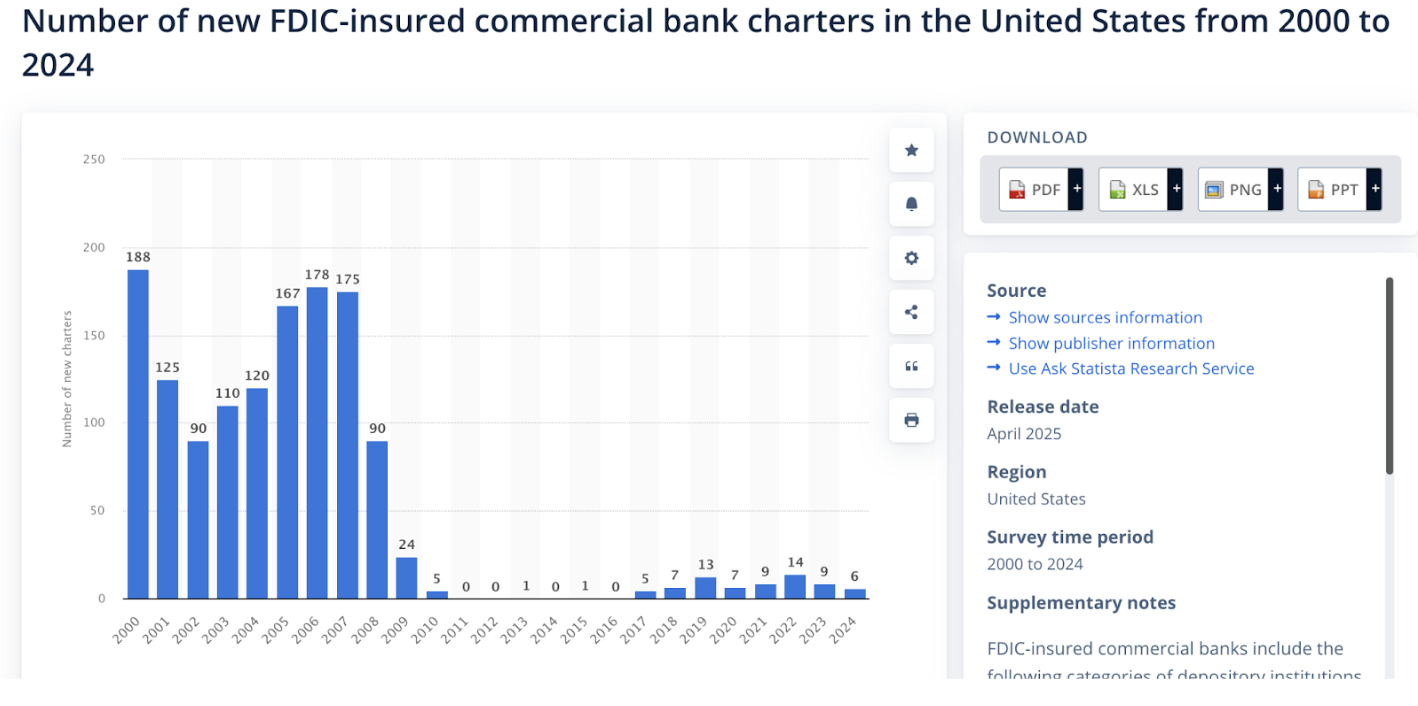
As third-party fintech programs proliferated, federal regulators turned their sights toward the sponsor banks underwriting these operations. Heightened supervisory expectations and stringent enforcement actions forced banks to drastically overhaul their compliance and risk management frameworks.
Notable regulatory interventions sent shockwaves through the industry:
- Cross River Bank entered into a formal consent order with the Federal Deposit Insurance Corporation (FDIC).
- Green Dot Bank faced severe enforcement actions from the Federal Reserve.
- Evolve Bank & Trust was hit with a landmark cease-and-desist order by the Federal Reserve.
Commercial banks responded to this regulatory chill by rapidly tightening onboarding standards, capping the total number of third-party programs they would support, and dramatically slowing product iteration cycles. What had once been a fertile ground for agile experimentation suddenly required massive corporate scale simply to justify the escalating cost of compliance. Fintech innovation slowed down, grew significantly more expensive, and skewed heavily toward generalized, risk-averse products.
The Rise of Stablecoin Volume
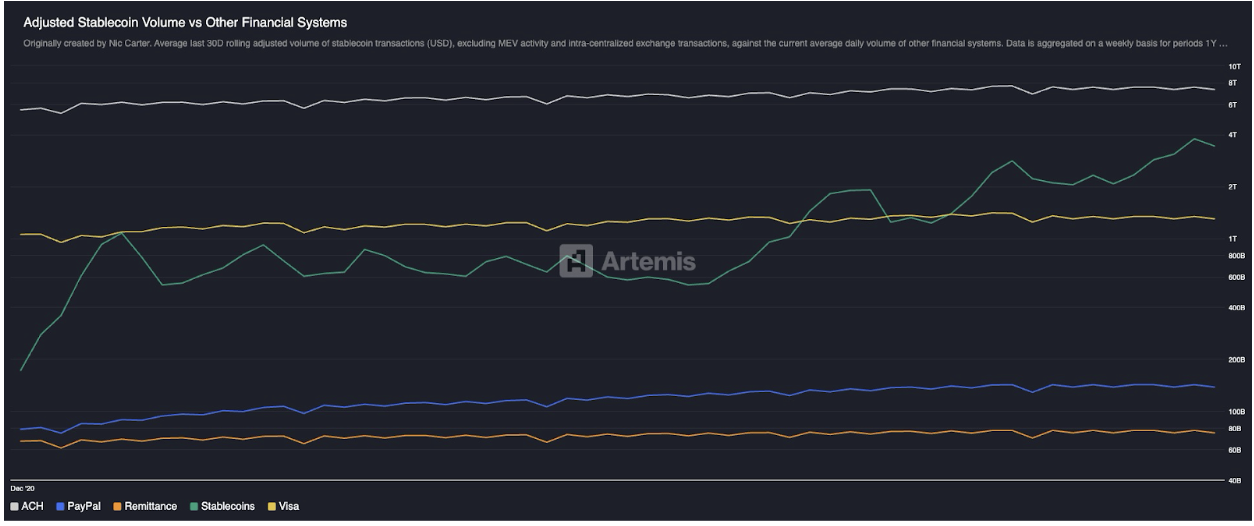
In stark contrast to traditional banking rails, stablecoin infrastructure has scaled at an unprecedented velocity. Over the span of a decade, the total stablecoin market capitalization surged from virtually zero to approximately $300 billion. More importantly, adjusted stablecoin transaction volumes now frequently eclipse the daily settlement volumes of legacy payment goliaths like PayPal and Visa (even when excluding internal exchange transfers and maximal extractable value transactions). For the first time in financial history, non-bank, non-card rails are operating securely and efficiently at true global scale.
Official Statements and Industry Perspectives
To contextualize this tectonic shift in financial architecture, industry leaders and regulatory analysts have increasingly voiced concerns over the unsustainability of legacy reliance while championing the promise of open protocols.
"For two decades, the fintech sector operated under the assumption that you could out-market bad infrastructure. Companies spent billions acquiring customers while renting their foundational plumbing from legacy institutions. That era is definitively over. The future belongs to builders who own their rails from the bottom up."
— Leading Financial Infrastructure Analyst
Regulatory bodies have likewise underscored the systemic vulnerabilities inherent in over-concentrated BaaS partnerships. In recent guidance, Federal Reserve officials emphasized that banking organizations engaging in fintech partnerships must maintain absolute operational and risk-management control:
"Banking organizations must ensure that third-party fintech arrangements do not compromise safety and soundness, consumer protection, or compliance with anti-money laundering statutes. The oversight burden cannot be outsourced alongside the technology."
— Federal Reserve Regulatory Advisory Statement
Market participants building at the intersection of blockchain and traditional finance echo these sentiments, noting that the economic efficiencies of on-chain primitives are simply too vast for legacy systems to ignore indefinitely. By eliminating intermediary rent-seekers, the cost floor of deploying financial software has plummeted, setting the stage for an unprecedented explosion of market specialization.
Future Outlook: The Rise of Specialized Stablecoin Fintechs
As we look toward the horizon of Fintech 4.0, the most transformative implication of stablecoin adoption is the radical decentralization and democratization of product creation. When custody, cross-border settlement, credit issuance, and compliance become nearly free and instantaneous utilities, launching a financial technology company begins to resemble launching a software-as-a-service (SaaS) application.
Collapsing Infrastructure Costs
In a stablecoin-native environment, the traditional hurdles vanish. There are no sponsor-bank contract negotiations, no rigid card-issuer intermediaries, no multi-day clearing windows, and no redundant, manual KYC checks slowing down deployment. Consequently, the fixed cost required to launch a production-ready fintech product collapses from millions of dollars down to mere thousands.
The Return of Radical Specialization
This dramatic reduction in overhead enables the birth of specialized stablecoin fintechs. In the previous era, early neobanks attempted to target specific niches—such as SoFi with student loans or Chime with paycheck advances—only to find that their high structural overhead and sponsor-bank dependencies forced them to expand horizontally. To survive the margin squeeze, they were compelled to morph into general-purpose consumer banks.
Crypto rails and permissionless APIs alter this dynamic permanently. Because operating costs are microscopic, new neobanks can profitably target exceptionally narrow, underserved demographic and professional cohorts without ever needing to scale into mass-market generalists.
Consider three illustrative verticals where legacy banking infrastructure routinely fails:
- Adult Creators and Performers: Generating billions in aggregate annual income, performers are frequently deplatformed by traditional banks and risk-averse payment processors. Payouts face multi-day delays, arbitrary compliance holds, and punitive fee structures ranging from 10% to 20% levied by high-risk gateways. Stablecoin-native systems offer instant, irreversible settlement, programmable compliance, and self-custodial earnings management that completely bypasses exploitative intermediaries.
- Solo Professional Athletes: Athletes in individual sports (such as golf or tennis) manage highly compressed earning windows, complex multi-jurisdictional tax liabilities, and erratic cash-flow dynamics. Specialized stablecoin fintechs can empower these professionals to tokenize future earnings streams, execute staff compensation securely via multi-signature wallets, and automate cross-border tax withholding.
- High-End Luxury Goods Dealers: Dealers moving six-figure inventory across international borders are routinely hamstrung by traditional wire delays and exorbitant processor fees. Stablecoin-native architecture provides instant high-value settlement, credit lines collateralized directly by tokenized inventory, and embedded smart-contract escrow.
Conclusion
The evolution of financial technology over the past twenty years has been a masterclass in surface-level innovation constrained by legacy architecture. While consumer-facing applications grew increasingly sophisticated, the underlying flow of capital remained shackled to closed, permissioned, and expensive intermediaries. This imbalance commoditized traditional fintech, inflated customer acquisition costs, and concentrated systemic risk within an overburdened banking sector.
Fintech 4.0 shatters these historical constraints. By leveraging stablecoins and permissionless financial primitives, builders are finally replacing the antiquated plumbing of global finance rather than merely painting over it. As infrastructure costs plummet and operational efficiency surges, the industry is poised to move beyond the era of brute-force marketing and generalized banking apps. The future of financial technology will not be won by those who strive to serve everyone poorly, but by visionary builders who utilize open, programmable rails to serve specific communities exceptionally well.