

Executive Overview
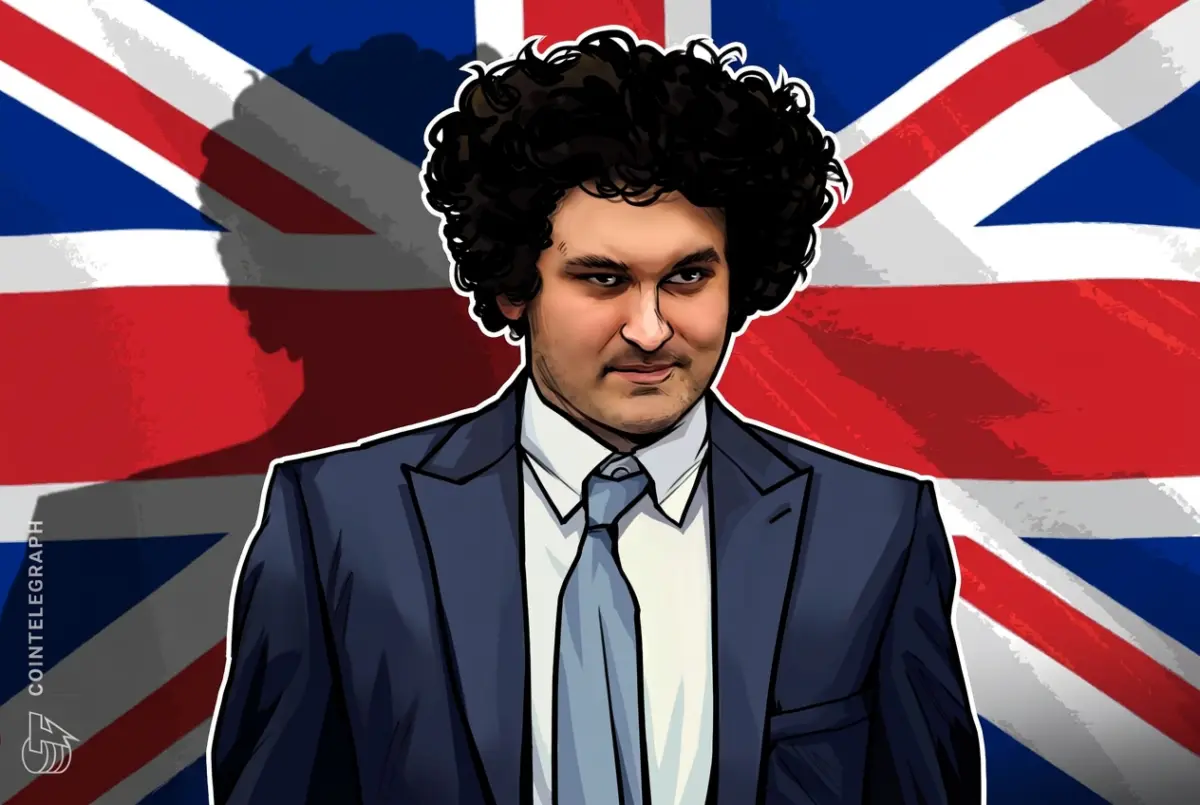
The funds in question originated from Labour for the Long Term, a left-leaning political think tank. However, investigative reports from The Telegraph trace the financial lineage back to a massive $675,000 gift bestowed upon the think tank’s founder by Sam Bankman-Fried, the disgraced and incarcerated former CEO of the collapsed cryptocurrency exchange FTX.
This controversy erupts at a uniquely sensitive time for British politics. It compounds an existing public relations crisis for Reform UK itself, whose own leader, Nigel Farage, is bracing for a high-stakes parliamentary by-election next week. Farage’s political future hangs in the balance following his abrupt resignation as a Member of Parliament amid a separate crypto-funding scandal involving millions in donations from crypto billionaires and convicted fraudsters.
Beyond individual political fortunes, this unfolding saga has reignited a fierce national debate regarding the transparency of political financing in the United Kingdom. Critics and watchdog organizations argue that archaic electoral laws—specifically regarding unincorporated associations—create dangerous legal loopholes. These loopholes allegedly allow foreign actors, dark money syndicates, and corporate entities to inject millions of dollars into British political campaigns without public disclosure of the ultimate source of capital.
Meanwhile, across the Atlantic, the legal walls are closing permanently around the man at the center of the global crypto storm. The United States Court of Appeals for the Second Circuit has officially issued a mandate upholding Bankman-Fried’s multi-count felony conviction and his 25-year federal prison sentence, leaving the fallen "crypto king" with virtually no remaining avenues for early legal relief.
Detailed Chronology: The Trace of the SBF Money Trail
To fully understand the gravity of the allegations facing Defense Secretary Wes Streeting, it is necessary to examine the paper trail uncovered by investigative journalists. The chronology of these financial transactions highlights the complex networks used to channel funds through third-party intermediaries.
The Origin of the Capital: The FTX Connection
In the heyday of FTX—before its catastrophic collapse in late 2022—Sam Bankman-Fried was not only a titan in the digital asset industry but also one of the world’s most prolific political donors. While the vast majority of his public giving targeted the United States political ecosystem under the banner of "effective altruism," his sphere of influence extended internationally, leaving lingering financial footprints across global jurisdictions.
According to The Telegraph, David Lawrence, the founder of the UK-based think tank Labour for the Long Term, reportedly accepted a substantial gift amounting to $675,000 directly linked to Bankman-Fried. At the time of this transaction, the true scale of FTX’s fraudulent balance sheet and the catastrophic commingling of customer funds had not yet come to light.
The Funneling to Wes Streeting
Between 2022 and 2023, Labour for the Long Term distributed a series of financial contributions totaling $50,000 to Wes Streeting, a prominent senior figure within the Labour Party who currently serves as the UK’s Defense Secretary.
Crucially, standard political due diligence was allegedly exercised by Streeting’s office prior to accepting the funds. Reports indicate that Streeting’s team explicitly asked the think tank for a comprehensive list of its underlying donors to ensure compliance and ethical integrity. However, when the list was provided, the name of Sam Bankman-Fried was conspicuously absent.
As the scandal broke, Streeting categorically distanced himself from the disgraced FTX founder. Through spokespersons and official statements, the Defense Secretary maintained that he had never met, communicated with, or had any direct contact with Bankman-Fried, nor was he aware that the funding ultimately traced back to the architect of one of the largest financial frauds in modern history.
The Think Tank’s Defense
In response to the mounting political pressure, David Lawrence defended the legitimacy of the transactions. Lawrence asserted that the $50,000 contribution directed to Streeting was funded by distinct donors within the organization rather than the direct proceeds of Bankman-Fried’s gift.
A spokesperson for Labour for the Long Term reiterated that the think tank "did not receive any direct donations from the FTX Foundation or Mr. Bankman-Fried himself," attempting to establish a legal and ethical firewall between the ultimate source of the funds and the political beneficiaries. However, political opponents argue that fungible capital makes such distinctions irrelevant, as money entering an organization’s central accounts inevitably subsidizes its broader operational and philanthropic expenditures.
Supporting Context & Metrics: The UK’s "Dark Money" Loopholes
The controversy surrounding Wes Streeting and the FTX-linked donations is not an isolated incident; rather, it highlights systemic vulnerabilities embedded within the United Kingdom’s electoral law. Campaign finance transparency advocates have long warned that the UK’s regulatory framework is ill-equipped to handle the modern influx of digital asset wealth and transnational political lobbying.
Unincorporated Associations and the £500 Limit
Under current UK electoral law, donations to political parties and individual politicians from domestic sources must be carefully vetted and reported to the Electoral Commission if they exceed specific thresholds. However, a significant loophole exists regarding unincorporated associations.
According to analyses by the International Bar Association (IBA) and transparency watchdogs, unincorporated associations are permitted to pass cumulative donations of more than £500 (approximately $675) directly to politicians without triggering the rigorous transparency requirements demanded of corporate entities or registered trade unions.
This regulatory exemption creates an opaque layer of insulation. Critics argue that think tanks, policy networks, and unincorporated advocacy groups frequently serve as conduits—or "dirty money laundromats"—allowing foreign wealth, corporate interests, and anonymous dark money syndicates to purchase political influence within Westminster while maintaining plausible deniability.
The Broader Crypto Lobbying Wave
The intersection of cryptocurrency wealth and political donations is a global phenomenon that reached unprecedented heights during the 2024 and 2026 election cycles. In the United States, crypto political action committees (PACs) such as Fairshake and its affiliates injected staggering sums—surpassing $189 million during the 2026 US election cycle alone—into congressional and presidential races to secure regulatory favor.
While the UK market operates under different statutory constraints, digital asset founders, venture capitalists, and blockchain executives have increasingly sought to cultivate political capital in London. The goal: to shape upcoming regulatory frameworks governing decentralized finance (DeFi), tokenization, and Central Bank Digital Currencies (CBDCs). The SBF-linked contributions to Labour for the Long Term are viewed by critics as a stark illustration of how easy it is for tainted crypto capital to infiltrate British policy circles before regulators can react.
Official Statements and Political Fallout
The political fallout from the Telegraph report has been swift, vicious, and deeply partisan, drawing in figures from across the ideological spectrum.
Reform UK on the Offensive
Lee Anderson, the outspoken chairman of Reform UK, weaponized the report to demand immediate institutional accountability. In his formal complaint and public statements, Anderson insisted that the Parliamentary Commissioner for Standards must launch a full-scale, transparent investigation into Wes Streeting.
"British voters deserve to know why senior government ministers are accepting tens of thousands of pounds from organizations tied to convicted international fraudsters," Anderson stated. "If our laws are so weak that foreign or crypto-derived dark money can effortlessly find its way into the pockets of cabinet ministers, the entire system is broken and demands root-and-branch reform."
The Shadow of Nigel Farage’s Crypto Scandals
The aggressive posture adopted by Reform UK has not gone without criticism from political opponents, who point out the profound hypocrisy of the party’s moral outrage. Reform UK leader Nigel Farage is currently fighting for his political survival ahead of a crucial by-election next week.
Farage’s parliamentary resignation and subsequent by-election were triggered by his own catastrophic crypto scandal. Investigative reports revealed that the populist leader accepted a staggering $6.7 million in donations from crypto billionaire Christopher Harborne, alongside financial assistance from George Cottrell—a convicted felon with a notorious past linked to an online dark-web crypto casino.
When pressed by voters and the media regarding these astronomical sums, Farage dismissed the contributions simply as "gifts," asserting that no laws were broken. Critics argue that Reform UK’s sudden crusade against Wes Streeting is a transparent attempt to deflect public attention away from Farage’s far larger and more direct entanglements with controversial cryptocurrency fortunes.
Future Outlook: Legal Finality for SBF and Westminster’s Reckoning
While politicians in London spar over ethical gray areas and campaign finance loopholes, the primary architect of the financial ecosystem that enabled these donations has reached the end of his legal tether in the United States.
The Second Circuit Mandate: SBF’s Prison Term Locked In
Earlier this week, the US Court of Appeals for the Second Circuit officially issued a formal mandate upholding the felony conviction and 25-year prison sentence of Samuel Bankman-Fried.
This procedural milestone follows the appeals court’s initial ruling in June, which systematically dismantled the defense team’s arguments regarding judicial bias, trial procedures, and evidentiary restrictions. With the formal mandate now issued, Bankman-Fried’s legal options have dwindled to near zero.
Legal experts note that the former billionaire’s only remaining pathways to freedom are a long-shot petition for certiorari to the US Supreme Court—which accepts a vanishingly small percentage of criminal appeals—or a future presidential commutation or pardon. Given the bipartisan condemnation of financial white-collar fraud, the prospect of executive clemency remains exceedingly dim. Bankman-Fried must resign himself to serving the vast majority of his quarter-century sentence behind bars at Metropolitan Detention Center and its successor facilities.
What Lies Ahead for UK Political Financing?
Back in the United Kingdom, the SBF-linked donation scandal involving Wes Streeting—coupled with the ongoing scrutiny surrounding Nigel Farage—is likely to catalyze renewed demands for legislative reform.
Calls from transparency groups for the abolition of the unincorporated association loophole are growing louder. Civil society organizations are urging the Labour government to introduce stringent "know-your-donor" mandates that would pierce the corporate veils of think tanks and policy foundations, ensuring that the ultimate provenance of every penny entering British politics is publicly exposed.
Whether the Parliamentary Commissioner for Standards will formally proceed with an investigation into Defense Secretary Wes Streeting remains to be seen. However, one reality is indisputable: the era of lax oversight regarding cryptocurrency wealth in British politics has officially come to an end. As voters head to the polls next week for high-stakes by-elections, the shadow of the fallen crypto king looms larger than ever over the halls of Westminster.