
Executive Overview
This comprehensive report examines the structural and psychological underpinnings of the current EUR/USD bearish trajectory. By analyzing recent technical developments, macroeconomic divergence between the United States and the Eurozone, central bank policy trajectories, and institutional positioning, we unpack the rationale behind taking a short stance on the world’s most heavily traded currency pair. Furthermore, this analysis serves as a strategic roadmap for market participants seeking to navigate volatility with precision, adhering to the foundational maxim that the market remains the ultimate authority.
Detailed Chronology of the EUR/USD Downtrend
To understand where the EUR/USD is heading, one must first chronicle how the pair arrived at its current technical juncture. The journey toward increased bearish dominance has been characterized by a gradual erosion of buyer confidence, marked by failed bullish rallies and decisive structural breaks on multiple timeframes.
Phase One: The Loss of Parity Support and Consolidation
The seeds of the current bearish structure were sown during prolonged periods of economic uncertainty in the Eurozone, juxtaposed with aggressive monetary tightening by the United States Federal Reserve. While the EUR/USD experienced fleeting moments of recovery throughout previous quarters, these rallies consistently lacked the fundamental backing required to establish a sustained macro trend reversal. Instead, each upward correction served as an institutional liquidity-gathering phase for major market participants looking to reload short positions at more favorable exchange rates.
Phase Two: The Breakdown of Key Technical Thresholds
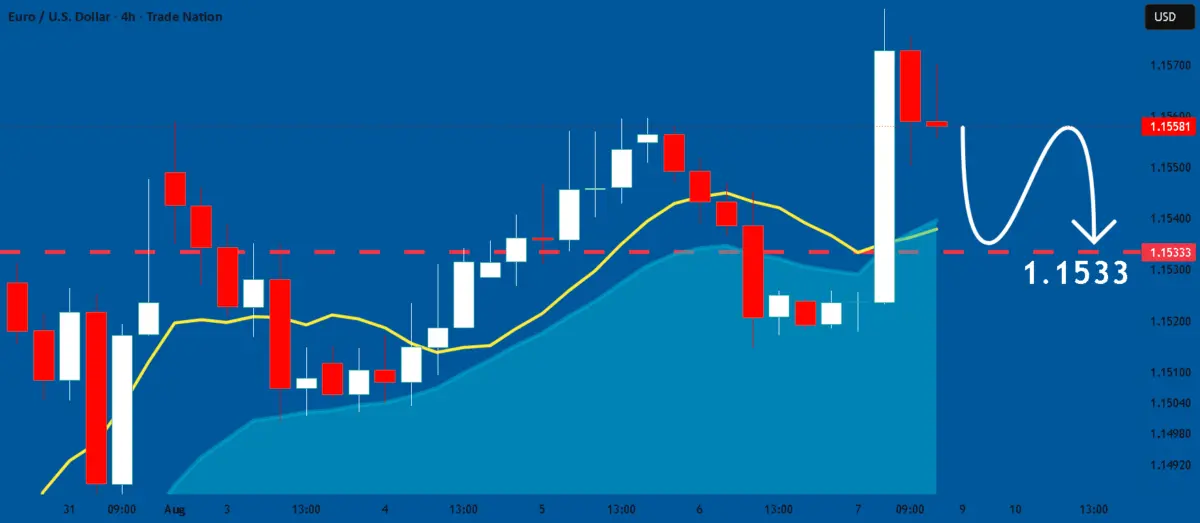
In recent weeks, price action on the daily and 4-hour charts has demonstrated a textbook transition from consolidation to active distribution. Bulls repeatedly attempted to defend critical psychological and technical support levels, but their efforts were systematically overwhelmed by heavy selling volume.
- The Formation of Lower Highs: A hallmark of the developing downtrend has been the creation of a persistent sequence of lower highs, indicating that buyers are losing their appetite for risk at higher valuations.
- Momentum Shifts: Moving average convergence divergence (MACD) indicators and Relative Strength Index (RSI) metrics have repeatedly favored the downside, reflecting sustained downward momentum without yet reaching extreme oversold conditions that might trigger violent short-covering rallies.
Phase Three: The Bearish Confirmation and Execution
The tipping point arrived when price action sliced through key moving averages, invalidating short-term bullish continuation patterns and triggering stop-losses for late-arriving buyers. This cascade of liquidations accelerated the downward push, paving the way for bears to target lower liquidity pools. In environments such as this, fighting the tape is an exercise in futility. As the market dictates a downward trajectory, disciplined traders have pivoted to align with the bears, systematically shorting the asset class to extract value from the unfolding decline.
Supporting Context & Metrics: Macroeconomic Divergence
The technical weakness observed in the EUR/USD pair does not occur in a vacuum; it is the direct reflection of widening macroeconomic divergences between the economies governed by the European Central Bank (ECB) and the Federal Reserve.
1. Central Bank Policy Divergences: Fed vs. ECB
At the core of the EUR/USD exchange rate lies the shifting differential in interest rates and monetary policy outlooks.
- The Federal Reserve’s Stance: Despite growing speculation regarding the timing of future rate adjustments, the U.S. economy has proven remarkably resilient. Persistent inflationary pressures, robust labor market data, and strong consumer spending have emboldened the Federal Reserve to maintain a cautious, "higher-for-longer" stance. This relative hawkishness keeps U.S. Treasury yields attractive to global institutional capital, thereby underpinning the strength of the greenback.
- The European Central Bank’s Dilemma: Conversely, the Eurozone economy has struggled with stagnant growth, industrial deceleration, and uneven post-pandemic recoveries across its constituent member states. With inflationary pressures in the bloc cooling more rapidly than anticipated in certain sectors, market participants have increasingly priced in a more aggressive policy easing cycle by the ECB. This widening monetary policy gap heavily favors the US Dollar over the Euro.
2. Quantitative Metrics and Order Flow Analysis
- Yield Differentials: The spread between 10-year US Treasury yields and German Bunds has remained a reliable barometer for EUR/USD movements. As this spread widens in favor of U.S. debt instruments, capital flows organically out of European assets and into dollar-denominated securities.
- Commiters of Traders (COT) Data: Recent reports from the Commodity Futures Trading Commission (CFTC) highlight an accumulation of net-short positions by institutional speculators on the Euro. This institutional positioning underscores a broader lack of confidence in the single currency’s immediate upside potential.
- Volatility Indices: Implied volatility metrics across major currency pairs have remained subdued yet reactive to tier-one macroeconomic data releases, creating an environment where gradual, sustained trends can develop without immediate threat from erratic whipsaw price action.
Official Statements and Institutional Perspectives
To gain a holistic view of the forces shaping the EUR/USD, it is essential to examine the rhetoric emanating from financial institutions, central banking authorities, and market analysts.

Central Bank Communications
In recent public appearances, officials from both the Federal Reserve and the European Central Bank have emphasized a data-dependent approach. However, the tone of their communications reveals stark underlying realities.
- Fed officials have repeatedly stressed that while inflation has retreated from its multi-decade highs, the final mile toward the central bank’s 2% target remains challenging. Consequently, premature policy relaxation is viewed as a greater risk than maintaining restrictive rates.
- On the other side of the Atlantic, ECB policymakers have increasingly acknowledged the fragility of the Eurozone economic recovery. Statements from governing council members have subtly paved the way for looser monetary conditions, directly undermining the fundamental attractiveness of holding Euro-denominated assets.
Market Commentary and Influencer Insights
Market analysts and trading educators continuously emphasize the danger of emotional attachment to an asset. As noted by participating industry voices within major financial analytical networks, the market operates on its own terms:
"Remember that we can not, and should not impose our will on the market, but rather listen to its whims and make profit by following it. And thus shall be done today on the EURUSD pair which is likely to be pushed down by the bears so we will sell!"
This philosophy forms the bedrock of professional risk management. Institutions do not trade based on hope or how an asset should perform based on historical averages; they trade based on the immediate reality of order flow, momentum, and structural validation. When the bears take control, the rational response is not to catch a falling knife in anticipation of an arbitrary reversal, but to ride the wave of momentum until clear signs of structural exhaustion appear.
Future Outlook: Navigating the Road Ahead for EUR/USD
As we look toward the horizon, the path of least resistance for the EUR/USD pair continues to point downward. However, successful trading requires foresight, contingency planning, and an acute awareness of upcoming catalysts that could disrupt current market equilibrium.
Key Technical Levels to Watch
- Immediate Resistance: Rallies are expected to face intense selling pressure near recent consolidation zones and major moving average crossovers. Bulls will need to reclaim these zones with high volume to alter the macro bearish outlook.
- Downside Targets: As bears press their advantage, primary attention shifts toward lower psychological support barriers and historical liquidity pockets where institutional stop-loss clusters are likely positioned.
Upcoming Macroeconomic Catalysts
Traders maintaining short exposure on the EUR/USD must remain vigilant regarding scheduled data releases that have the potential to trigger sudden volatility:
- U.S. Employment Reports (Non-Farm Payrolls): Continued strength in the U.S. labor market will likely reinforce the greenback, adding further downward weight to the currency pair.
- Eurozone Inflation and GDP Flash Estimates: Any unexpected downward revisions in European economic output will solidify expectations of imminent ECB rate cuts, accelerating the Euro’s depreciation.
- Federal Reserve and ECB Monetary Policy Meetings: Forward guidance statements, press conferences, and dot-plot revisions will continue to serve as the ultimate volatility drivers for foreign exchange markets.
Strategic Conclusion
The golden rule of financial markets remains immutable: adaptability is survival. By stripping away personal biases and tuning in to the clear bearish signals exhibited by the EUR/USD charts, traders position themselves on the right side of probability. While the market remains a dynamic, ever-changing ecosystem, the current confluence of macroeconomic divergence, institutional positioning, and technical breakdown makes shorting the EUR/USD a logically sound and structurally justified strategy for the foreseeable future.
Disclaimer: The information, analysis, and publications provided herein are for educational and informational purposes only and do not constitute financial, investment, trading, or other types of advice or recommendations.