
Executive Overview
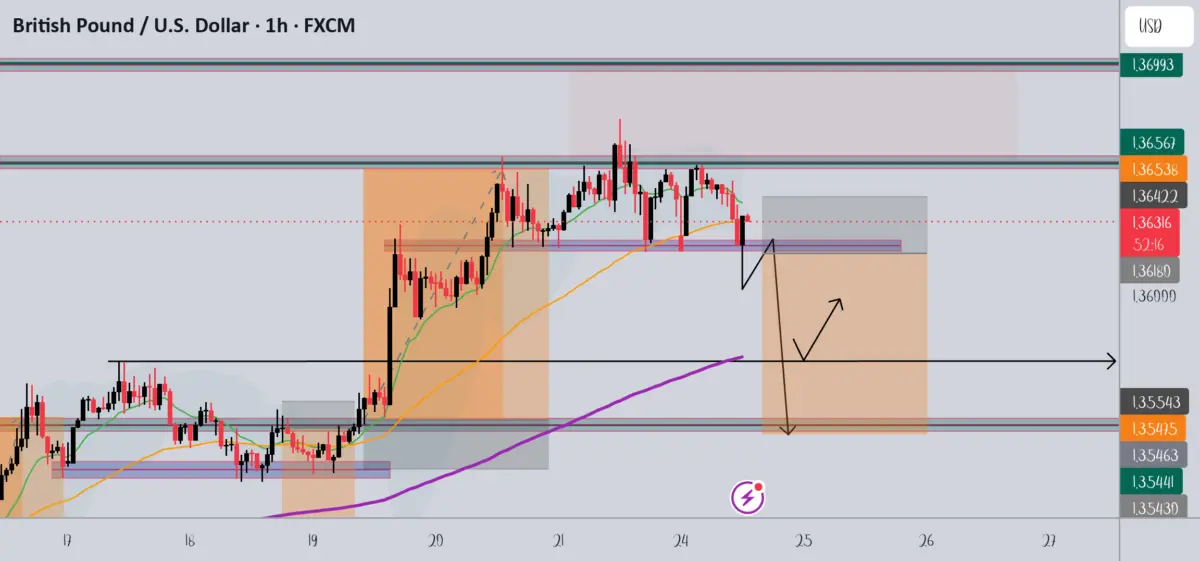
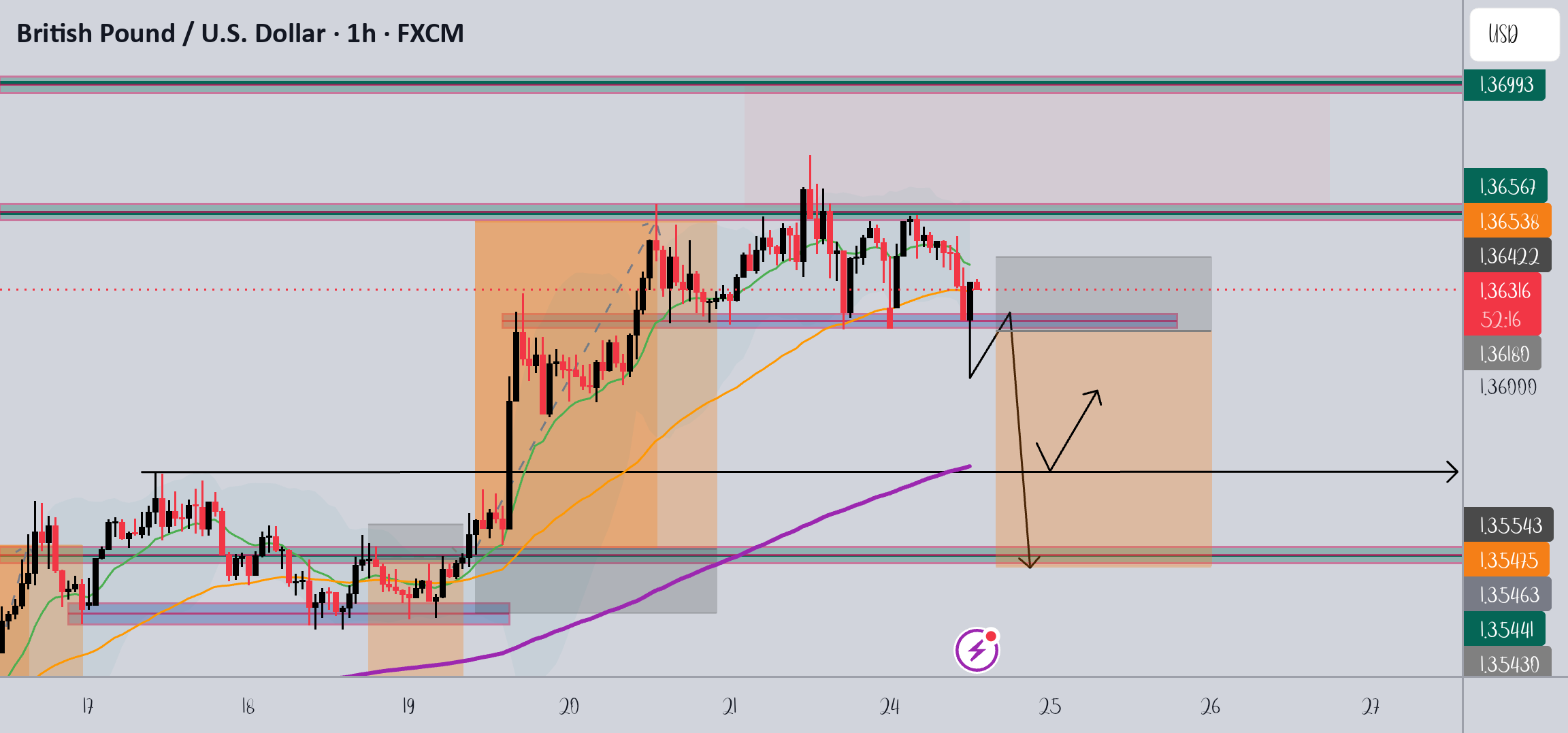
At the center of this bearish thesis is a confluence of resistance levels on the GBP/USD chart, coupled with an emerging loss of upward momentum and clear rejection wicks at recent highs. Furthermore, intermarket correlation is amplifying the bearish sentiment; the US Dollar Index (DXY) is exhibiting a strong buy bias, compounding downward pressure on major non-dollar currencies.
For institutional and retail traders alike, the current market dynamics demand close attention. As price hovers just beneath a formidable supply ceiling, a breakdown of immediate intraday support could open the floodgates for a swift descent toward lower demand zones. This report provides an exhaustive, multi-faceted breakdown of the technical landscape, intermarket influences, and prospective trading scenarios unfolding in the foreign exchange market.
Detailed Technical Chronology & Price Action Analysis
To understand the current posture of the GBP/USD pair, one must analyze the sequence of events that has led the exchange rate to its present inflection point. Over recent trading sessions, the pair attempted to mount recoveries, consistently challenging higher boundary layers. However, each test of these elevated regions has been met with aggressive selling pressure.
1. Rejection at Key Resistance
The hallmark of the current market structure is the inability of buyers to sustain prices above established technical ceilings. As the pair approached a crucial historical resistance zone, the appearance of long upper shadows (wicks) on candlestick charts signaled persistent supply. Institutional limit orders sitting at these higher levels have effectively absorbed buying interest, thwarting any continuation of the preceding bullish leg.
2. Deterioration of Bullish Momentum
Momentum indicators on lower and intermediate timeframes are flashing warning signs for long positions. The aggressive, impulsive buying waves that previously characterized the Sterling’s advances have given way to overlapping, corrective price structures. This slowing cadence indicates that bullish conviction is waning. When momentum fades directly underneath a major resistance zone, it frequently serves as a precursor to a sharp corrective reversal.
3. The Catalyst: Imminent Support Breakdown
While resistance has held firm, the immediate focus for technical traders shifts to nearby support levels. Price is currently coiling in a tight range just above this critical floor. A confirmed break and daily/hourly close beneath this structural support will invalidate the remaining bullish defenses. Such a breakdown is expected to trigger stop-loss orders from resting long positions, accelerating the pace of the decline and clearing a clean pathway toward deeper structural demand zones on the chart.
Supporting Context & Macroeconomic Metrics
Technical analysis does not exist in a vacuum; understanding the macro backdrop is vital for validating any directional bias in the currency markets. The downward pressure on the British Pound is heavily reinforced by external currency dynamics, most notably the performance of the US Dollar Index (DXY).
The DXY Factor: A Resurgent Greenback
The US Dollar Index measures the value of the greenback against a basket of six major foreign currencies. Recently, the DXY has established a robust BUY bias, driven by shifting macroeconomic expectations, resilient domestic economic data in the United States, and evolving monetary policy outlooks from the Federal Reserve.
Because currency pairs are quoted as a relative value—the price of one currency expressed in terms of another—strength in the denominator (the USD) directly undermines the numerator (the GBP). The ongoing accumulation in the DXY creates a stiff macroeconomic headwind for the Cable. As long as the US Dollar maintains its bullish trajectory, rallies in GBP/USD are likely to be sold into by institutional participants seeking safe-haven yields or dollar-denominated assets.
Macroeconomic Pressures on the British Pound
Simultaneously, the UK economy faces its own unique set of domestic challenges. Persistent inflation figures, coupled with sluggish productivity growth and a delicate housing market, have forced the Bank of England (BoE) into a complex balancing act. Market participants are increasingly pricing in the trajectory of future interest rate adjustments. Any perception that the BoE may pivot toward monetary easing faster than the Federal Reserve inherently erodes the yield differential advantage that the Pound previously enjoyed, making it an increasingly vulnerable target for short-sellers.
Market Perspectives & Technical Methodologies
The confluence of factors pointing toward a GBP/USD downturn aligns with classic analytical frameworks. Professional market participants generally rely on a triad of methodologies to validate such setups:
- Chart Patterns: Symmetrical triangles, rising wedges, and double-top formations near structural boundaries frequently act as distribution zones where smart money offloads inventory to eager retail buyers before marking prices lower.
- Technical Indicators: Oscillators such as the Relative Strength Index (RSI) or Moving Average Convergence Divergence (MACD) often display bearish divergences at these junctures, printing lower highs while price consolidates horizontally or edges slightly upward.
- Trend Analysis: Macro-to-micro trend alignment remains the holy grail of technical forecasting. When a lower-timeframe bearish reversal aligns with the prevailing intermediate or higher-timeframe trend, the probability of success for short positions increases exponentially.
Future Outlook & Risk Management Scenarios
As the market navigates this critical juncture, traders must prepare for multiple potential contingencies. Financial markets are inherently unpredictable, and disciplined risk management remains the ultimate arbiter of long-term trading success.
Bearish Continuation Scenario (Primary Outlook)
If the upcoming trading sessions yield a decisive breakdown below the immediate support zone, expect an acceleration of selling momentum. Under this primary scenario, the exchange rate is projected to retrace through intermediate pockets of thin liquidity, targeting deeper historical demand zones further down the chart. Short-sellers will likely look to use minor intraday bounces (pullbacks) to scale into positions, utilizing stops placed safely above the recent resistance rejection levels.
Bullish Invalidation Scenario (Alternative Outlook)
Markets can occasionally spring false breakouts or trap aggressive bears. For the bearish thesis to be invalidated, buyers must muster enough volume to push the GBP/USD pair cleanly through the upper resistance ceiling on high volume, followed by a successful retest of that former resistance as new support. Should such an impulsive bullish expansion occur, traders should step aside and reassess the macro structure, as it would signal a structural shift favoring the Pound.
Disclaimer
Disclaimer: The information, analysis, and publications provided herein are for educational and informational purposes only and are not meant to be, nor do they constitute, financial, investment, trading, or any other type of advice or recommendations. Financial markets carry a high level of risk, and past performance is not indicative of future results. Readers should conduct their own thorough research and consult with a licensed financial advisor before making any financial or trading decisions. Refer to platform terms of use for further details regarding investment disclaimers.