rifanmuazin is a reporter for DeBitcoin covering NFTs & Digital Assets. She/He is based in Indonesia.
24 August 2026 • 7 min read
The broader financial landscape in June 2026 presented a grim tableau for digital asset investors. Bitcoin (BTC) plummeted by over 20%, touching a brutal 21-month low that stoked widespread panic across retail and institutional desks alike. Concurrently, spot Bitcoin exchange-traded funds (ETFs) bled out a staggering $4.5 billion in historical monthly outflows, signaling a severe contraction in market liquidity and risk appetite.
Executive Overview
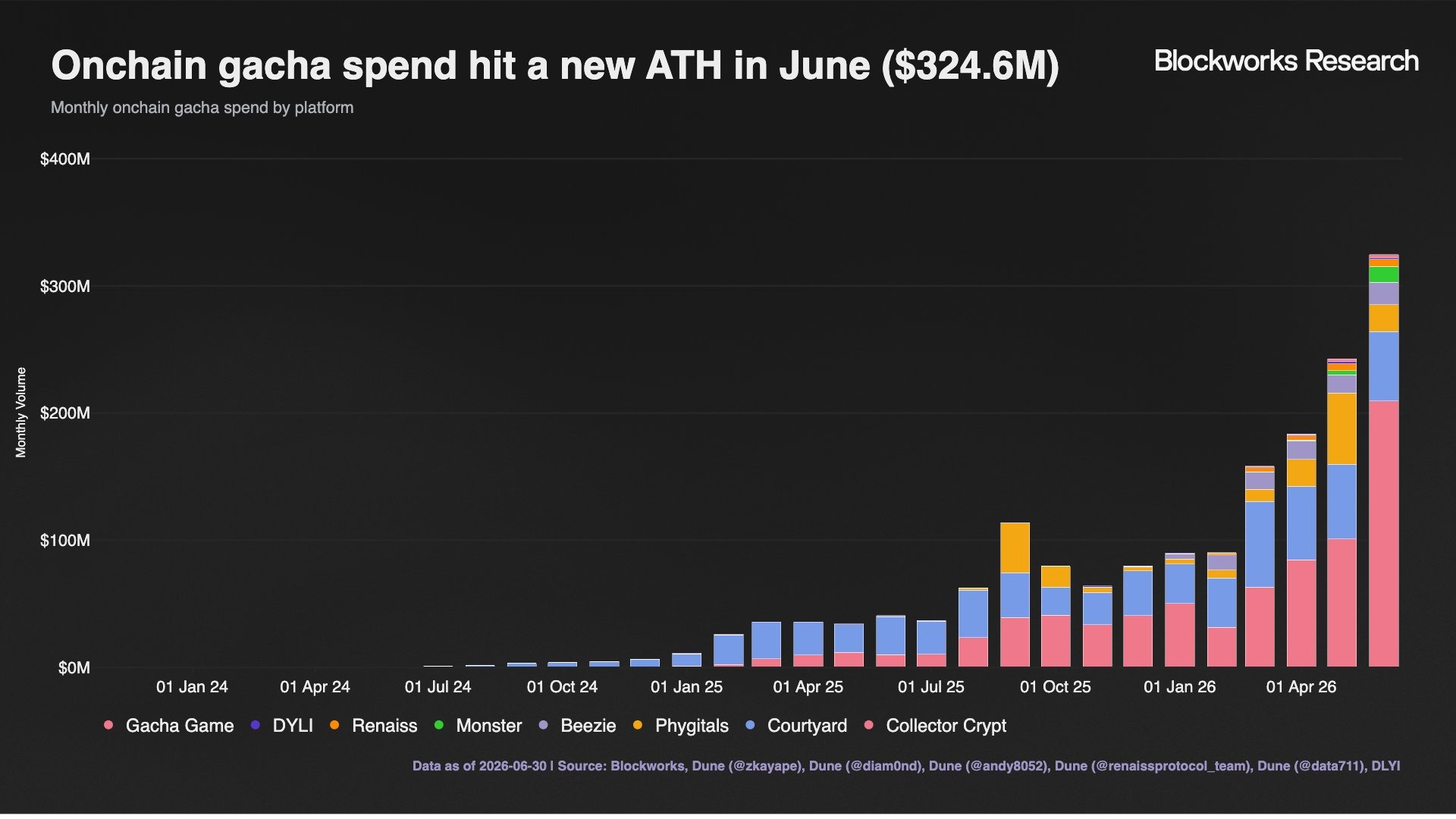
Yet, beneath the crashing waves of macro-crypto liquidations, an unlikely sector achieved unprecedented, historic heights. According to data compiled by Blockworks Research, users poured a record-breaking $324 million into onchain gacha during June 2026—a monumental leap from the modest $50 million recorded just a year prior.
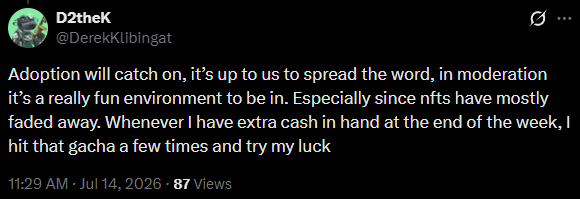
While core token prices plummeted, digital collectors, speculators, and high-net-worth enthusiasts furiously opened thousands of randomized packs of tokenized Pokémon cards. Driven by the adrenaline of the pull, the promise of algorithmic transparency, and the urge to hunt down institutional-grade collectibles, this burgeoning Real World Asset (RWA) subsector has officially emerged from the shadows. By bridging multi-billion-dollar physical trading card game (TCG) ecosystems with instant-liquidity blockchain rails, onchain gacha has proven that speculative demand can thrive even when the wider crypto economy stalls.
Detailed Chronology: The Anatomy of a Record-Breaking Month
The convergence of macroeconomic stress in crypto and hyper-growth in alternative collectibles did not happen overnight. It was the culmination of structural shifts within both the toy industry and Web3 infrastructure throughout 2025 and mid-2026.
Early 2025: The Foundation of the Phygital Boom
By the close of 2025, market research firm Circana reported that Pokémon had officially crowned itself the top-selling toy brand in the United States, pulling in an astonishing $2.5 billion in sales—an 87% year-over-year surge. This massive resurgence was fueled not merely by nostalgic millennials (Generations Y and Z), but by affluent alternative-asset allocators seeking tangible, high-value assets outside traditional equity and crypto markets.
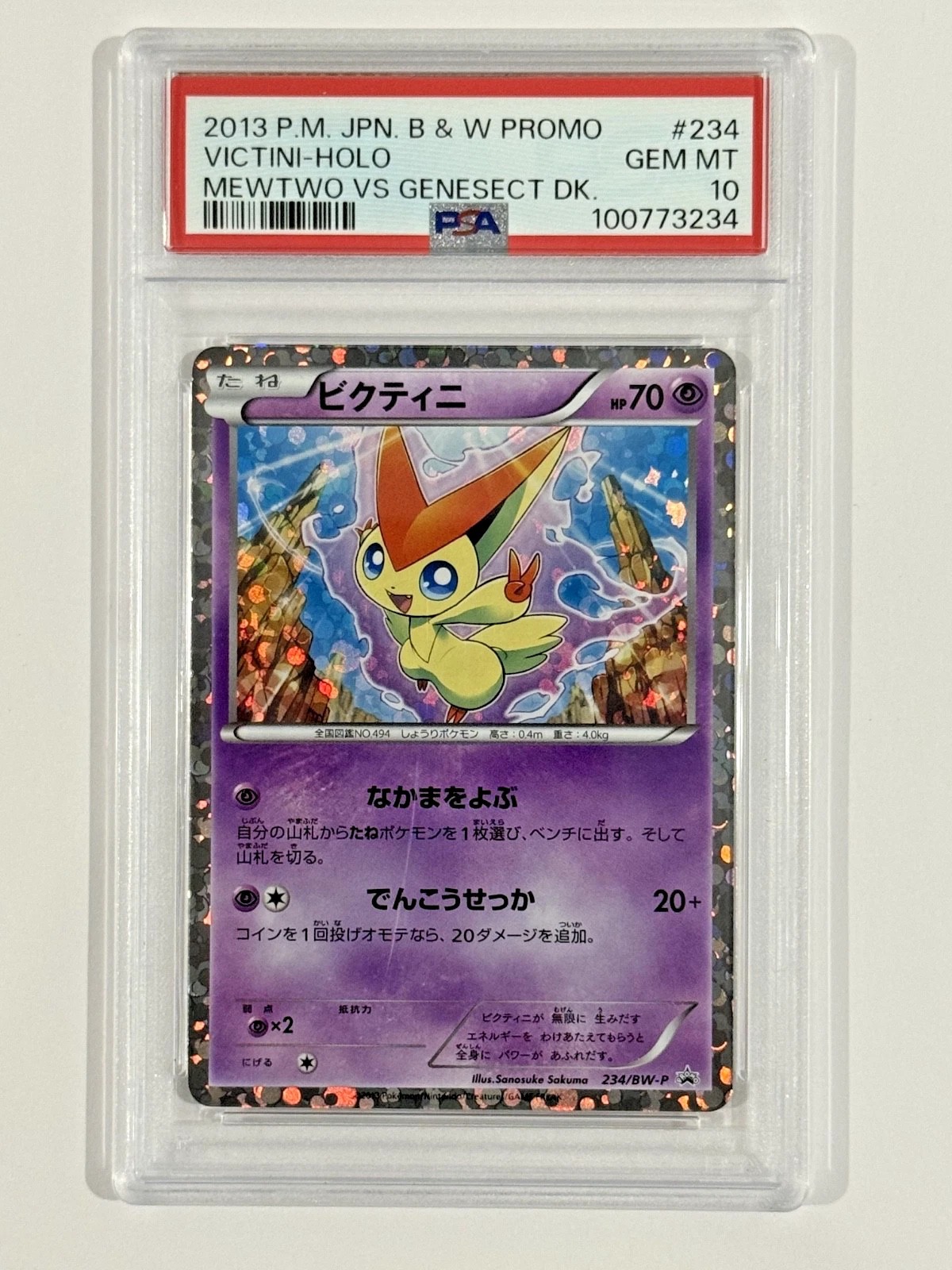
Grading behemoths like Professional Sports Authenticator (PSA) were rapidly overwhelmed. By mid-2026, PSA faced a paralyzing backlog of nearly 10 million cards, forcing the company to temporarily suspend submissions across four fundamental service levels.
May–June 2026: The Perfect Storm of Divergence
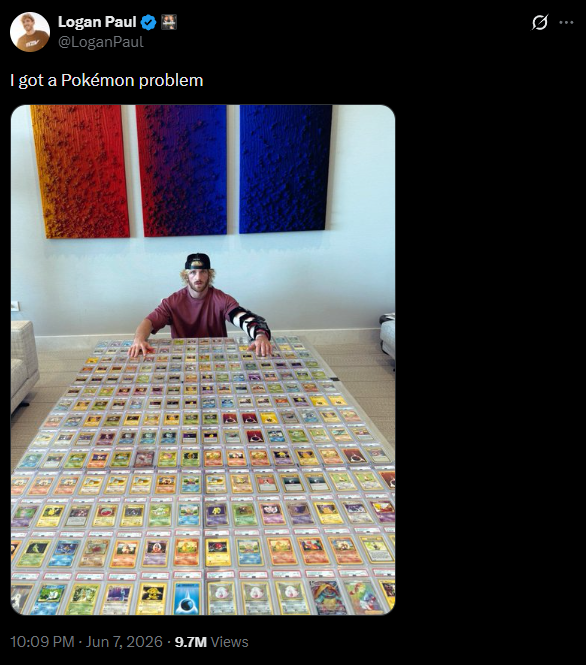
As Bitcoin began its steep downward trajectory toward 21-month lows in early summer 2026, traditional liquidity providers rotated capital into physical alternatives. High-profile sales—such as media personality Logan Paul offloading a rare Pokémon card for a staggering $16.5 million—cemented the asset class’s status as elite cultural capital.
Simultaneously, Web3-native RWA platforms like Collector Crypt and Courtyard streamlined the entry point. Instead of waiting weeks for offchain authentication, shipping, and escrow verification, users leveraged blockchain infrastructure to trade, open, and instantly liquidate tokenized booster packs. By June 2026, this velocity of capital culminated in the historic $324 million volume milestone, proving that decentralized gacha loops could successfully decouple from traditional crypto beta cycles.
Supporting Context & Metrics: Booster Packs, Grades, and Digital Slabs
To understand the mechanics driving millions of dollars into onchain gacha, one must first examine the multi-billion-dollar physical market it digitizes. According to industry analyses by Global Market Insights and Mordor Intelligence, the global trading card game market is valued between $9.2 billion and $15.11 billion.
The Gacha Mechanism and Grading Integrity
"Gacha" originates from Japanese vending machines where consumers pay a fixed price for a randomized collectible. In the TCG space, this translates to sealed booster packs. The contents of these packs vary wildly in value based on:
Print run and scarcity
Year of release
Condition and professional grading
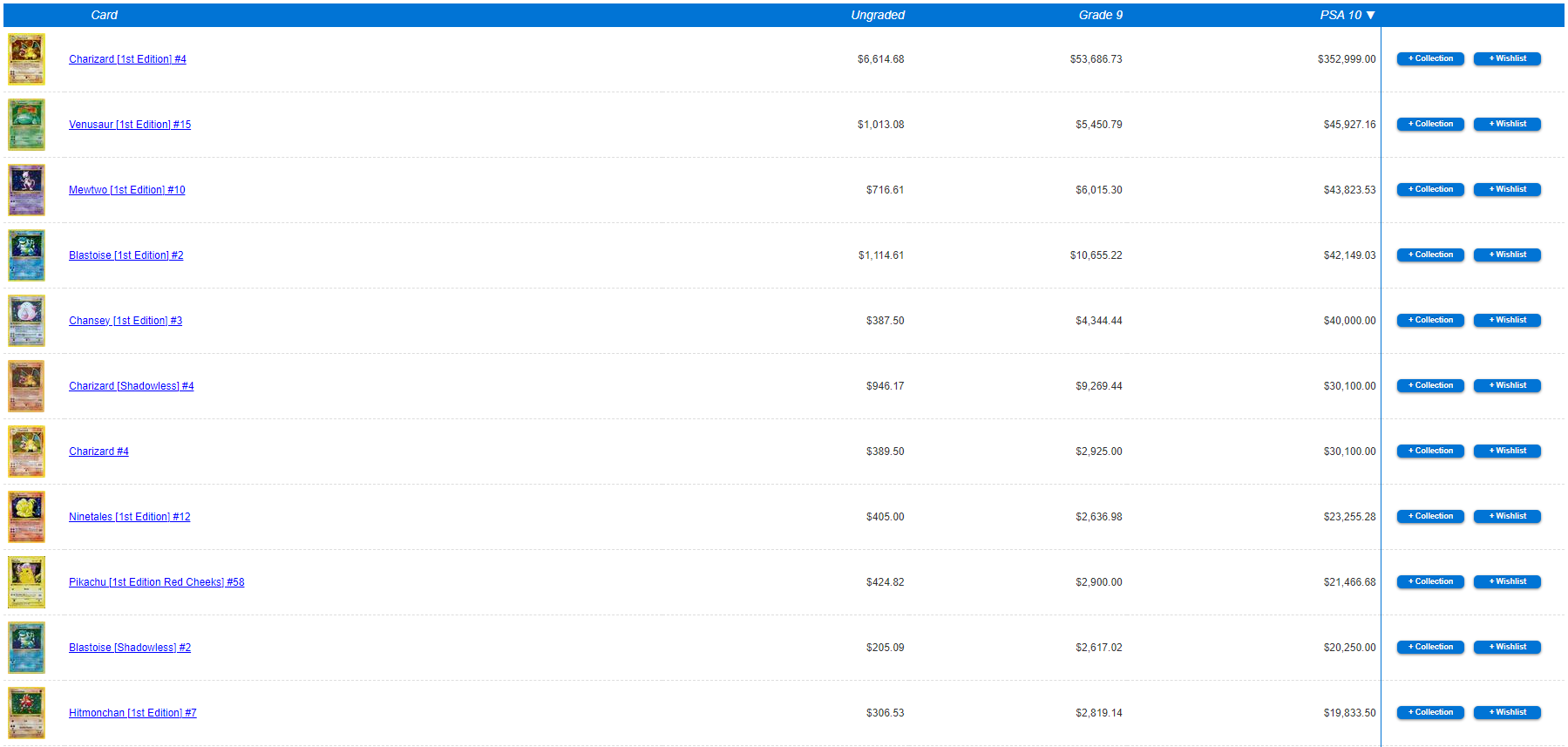
Because rare cards can command prices rivaling luxury automobiles, authenticity is paramount. Independent grading agencies—such as PSA, Beckett (BGS), and Certified Guaranty Company (CGC)—inspect cards for image centering, corner sharpness, edge wear, and surface integrity. Once graded, the card is encapsulated in a tamper-evident plastic housing known as a "slab."
Moving Physical Assets Onchain
Platforms like Collector Crypt and Courtyard bridge this physical ecosystem to the blockchain through institutional vaulting:
Intake and Vaulting: Owners ship physical, typically graded cards to secure, insured vaults.
Tokenization: The platform issues a unique non-fungible token (NFT) backed directly by the vaulted asset.
The Gacha Loop: Users buy randomized digital packs. Unboxing yields an NFT representing a real card sitting safely in a climate-controlled vault.
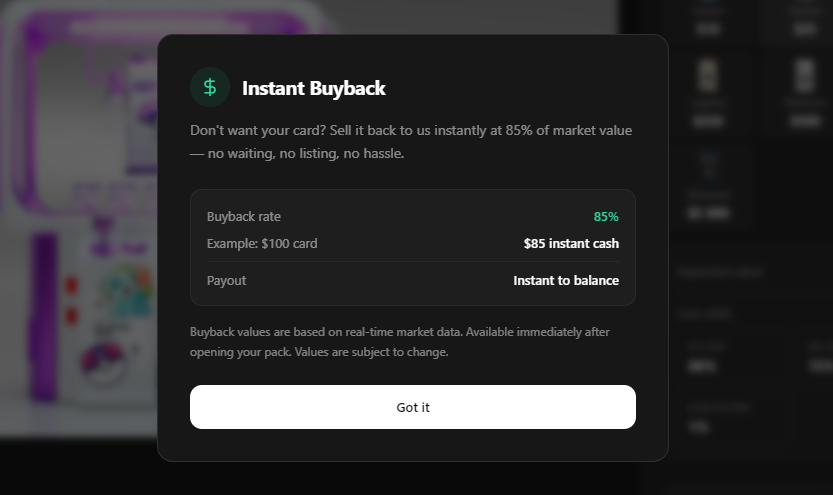
Redemption or Liquidity: The holder can instantly sell the NFT back to the platform via automated buyback features, trade it on secondary marketplaces, or burn the token to have the physical card shipped to their doorstep.
Official Statements and Industry Insights
The rapid scaling of tokenized collectibles has attracted attention from institutional observers and platform operators alike. Market participants emphasize that while speculation plays a role, the core demand stems from structural inefficiencies in traditional secondary markets.
"Traditional marketplaces are slow and expensive," noted Dakota Campbell, Head of Marketing at Collector Crypt, in an interview with Cointelegraph. "With tokenized trading cards, collectors can buy, sell, trade, and verify ownership instantly while the physical asset remains securely vaulted until they want it shipped."
Campbell highlighted the sheer scale of operational velocity required to sustain these ecosystems, noting that Collector Crypt has tokenized approximately $40 million worth of cards and comic books. Of that inventory, roughly $23 million is held directly by the platform to supply continuous market liquidity, with the company aggressively acquiring around $2 million worth of inventory every single week to keep pace with demand.
The Psychology of the "Gacha Loop"
Critics frequently draw parallels between gacha mechanics and unregulated digital gambling, noting similarities to video game "loot boxes" that have faced legislative scrutiny across various global jurisdictions. The instant buyback feature—where platforms typically offer an 85% immediate liquidity rate for unwanted pulls—creates a frictionless loop: buy, open, liquidate, and repeat.
However, industry defenders argue that this speed merely optimizes an already speculative traditional hobby.
"There is always speculation in an emerging market, especially in the crypto sector," Campbell acknowledged, while maintaining that the primary engine of growth remains committed collectors hunting for rare "grail" cards.
Data from analytics platforms like Dune and internal platform metrics validate this perspective. Approximately 5% to 8% of NFTs issued on Courtyard are burned weekly for physical delivery, while Collector Crypt reports an impressive 30% physical redemption rate among its user base. In a recent 30-day window alone, Collector Crypt successfully shipped 5,400 physical assets with an insured value of $3.29 million to 634 unique collectors.
Future Outlook: Sustainability and the Horizon of Tokenized RWAs
As the dust settles on the record-shattering metrics of June 2026, the long-term viability of onchain gacha faces critical tests.
Custodial Risk and Counterfeiting
The entire valuation model of tokenized TCGs rests on a fundamental trust assumption: that the partner vault physically holds the exact card in the stated grade. With major grading companies reporting an alarming rise in sophisticated counterfeit slabs circulating globally, custodial and verification risks cannot be dismissed lightly. Platforms that fail to maintain rigorous, transparent auditing standards expose their users to catastrophic counterparty risk.
Regulatory Scrutiny
As trading card tokenization volumes scale into the hundreds of millions, regulatory bodies will inevitably cast a wider net over randomized digital pack openings. Whether policymakers classify these mechanisms under existing financial securities frameworks, digital asset laws, or traditional gambling statutes will heavily dictate the sector’s expansion into mainstream consumer markets.
Conclusion: A Paradigm Shift in Frictionless Collecting
Ultimately, the June 2026 milestone demonstrates the core value proposition of blockchain technology: taking a proven, highly passionate analog industry and stripping away its physical friction. By transforming sluggish, paper-heavy secondary markets into instant, programmable digital experiences, onchain gacha has carved out a resilient niche.
Whether these record inflows will sustain themselves as broader crypto market cycles shift remains an open question. Yet, by proving that collectors will queue up for digital Pokémon packs even as Bitcoin plunges, the tokenized RWA sector has secured its place as one of the most innovative and unexpected narratives of the decade.