
Executive Overview
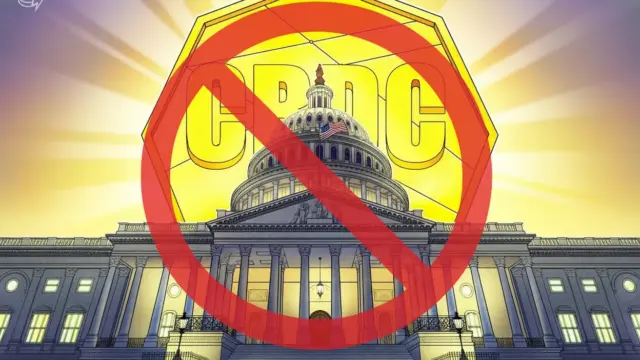
At the center of the legislative showdown is a contentious provision that bars the Federal Reserve from issuing or creating a Central Bank Digital Currency (CBDC)—or any digital asset deemed "substantially similar"—through the end of 2030.
Despite securing significant, rare cross-aisle cooperation in Congress, the housing package has been abruptly sidelined. President Trump publicly dismissed the legislation as a "yawn," sarcastically calling the situation a "big deal," and abruptly canceled a scheduled signing ceremony. Instead, the administration has insisted that Republican lawmakers prioritize the SAVE America Act, a controversial voting bill requiring in-person proof of U.S. citizenship for voter registration.
This standoff highlights the precarious intersection of monetary policy, digital asset regulation, and traditional partisan politics. With the constitutional 10-day window ticking down—excluding Sundays—lawmakers, financial institutions, and cryptocurrency advocates are left anxiously watching the Oval Office.
Should President Trump ultimately choose to veto the legislation, it would not only kill a major bipartisan housing initiative and a hard-won restriction on central bank digital currencies, but it would also set up a potential legislative showdown. Congress retains the constitutional authority to override a presidential veto with a two-thirds majority vote in both the House and the Senate, though doing so against a sitting president of the same party remains a rare and politically fraught maneuver.
Detailed Chronology: From Capitol Hill Passage to White House Stalling
The Path Through Congress
The 21st Century ROAD to Housing Act was the product of months of intense negotiations, committee markups, and bipartisan compromises. Designed to address the deepening nationwide housing affordability crisis, the bill attracted broad support from both Democratic and Republican lawmakers, who hailed it as a rare legislative triumph in an otherwise deeply polarized political environment.
In a strategic legislative move, the bill’s sponsors—led prominently by Democratic Senator Elizabeth Warren—included an explicit, multi-year ban on a U.S. Central Bank Digital Currency. This inclusion was widely viewed as an olive branch intended to secure critical backing from fiscal conservatives and the White House, both of whom have expressed deep skepticism regarding the potential privacy risks, government overreach, and systemic financial threats associated with a retail CBDC.
Last week, the House of Representatives successfully passed the package, clearing the final legislative hurdle before sending the measure to the executive branch. On Monday, House Speaker Mike Johnson formally delivered the enrolled bill to the White House, triggering the constitutional 10-day window (excluding Sundays) during which the president must act.
The White House Pushback
Momentum came to a screeching halt midweek when President Trump signaled his deep dissatisfaction with the legislative sequencing. Dismissing the housing package as an underwhelming distraction, Trump canceled the high-profile signing ceremony scheduled for Wednesday.
The president made it clear that his administration expects Capitol Hill to refocus its energy entirely on the SAVE America Act. This parallel piece of legislation mandates that individuals provide in-person proof of U.S. citizenship to register to vote—a measure that supporters argue prevents electoral fraud, but which critics contend would intentionally disenfranchise millions of eligible American voters.
President Trump’s refusal to immediately sign the housing legislation has left Congressional leaders scrambling. The unexpected friction has placed the CBDC ban in political limbo, transforming a celebratory bipartisan milestone into a test of executive-legislative discipline.
Supporting Context & Metrics: The CBDC Battleground and Legislative Dynamics
Understanding the CBDC Ban
The inclusion of a Central Bank Digital Currency prohibition within the 21st Century ROAD to Housing Act reflects a broader, highly charged national debate over the future of money in the United States.
Proponents of a digital dollar—including various economists, international central bankers, and some technology advocates—argue that a Fed-backed digital currency is necessary to maintain the global dominance of the U.S. dollar, streamline payment systems, and provide financial services to the unbanked population.
Conversely, fierce critics—comprising a coalition of libertarian groups, privacy advocates, cryptocurrency enthusiasts, and congressional Republicans—warn that a CBDC represents an existential threat to financial privacy. Opponents argue that a programmable digital dollar would grant the federal government unprecedented surveillance capabilities over individual spending habits, create systemic vulnerabilities in the banking sector, and potentially allow the state to restrict transactions or freeze assets for political reasons.
By inserting a ban stretching through the end of 2030, lawmakers sought to put a definitive pause on any unilateral steps by the Federal Reserve. The central bank has repeatedly stated it would not launch a CBDC without explicit authorization from the executive branch and Congress, but skeptics have demanded statutory guarantees.
The Political Calculus of the SAVE America Act
President Trump’s insistence on prioritizing the SAVE America Act underscores the administration’s focus on electoral integrity as its primary legislative mandate. The voting bill has served as a rallying cry for the Republican base, tying federal voting requirements directly to proof of citizenship.
However, by conditioning his support for other legislation—including the housing and crypto-adjacent provisions—on the immediate passage of the voting bill, Trump has created a legislative bottleneck. This strategy tests the loyalty of congressional Republicans who have invested significant political capital into addressing the housing crisis and securing regulatory clarity for the digital asset ecosystem.
Official Statements and Reactions
The sudden stall of the 21st Century ROAD to Housing Act has provoked sharp reactions from lawmakers on both sides of the aisle, highlighting deep frustrations over the subordination of domestic policy to electoral maneuvering.
Senator Elizabeth Warren, who sponsored the legislation and worked closely across party lines to build a sustainable coalition, expressed outrage over the president’s hesitation. Taking to social media platform Bluesky on Monday, Warren delivered a blunt assessment of the situation:
"We should be celebrating a bipartisan housing law. Instead, we have a call to action. Mr. President: sign the damn bill."
Warren’s frustration is shared by numerous colleagues who view the housing package as an urgent necessity for American families struggling with skyrocketing rents and mortgage rates. The inclusion of the CBDC ban was intended to insulate the bill from ideological poison pills, making its current stagnation all the more bitter for its authors.
Cryptocurrency industry leaders and policy groups have also voiced growing concern. While many digital asset advocates strongly support the CBDC ban, they find themselves caught between competing priorities, particularly given the concurrent legislative push for comprehensive market structure regulation.
Future Outlook: The Senate Calendar and the CLARITY Act
As the clock ticks down on President Trump’s constitutional window to act on the housing bill, Capitol Hill’s attention is rapidly shifting toward the broader legislative horizon.
The Senate Work Period and Upcoming Deadlines
Following votes late last week, the U.S. Senate entered a state work period, with lawmakers dispersed back to their home states. Senators are not officially scheduled to return to Washington until July 13, narrowing the operational window for legislative business during the peak of the summer session.
Upon their return, the upper chamber faces an intense calendar leading up to the scheduled August state work period. Central to this agenda is the much-anticipated Digital Asset Market Clarity (CLARITY) Act, a landmark bill designed to establish a comprehensive regulatory framework for digital assets in the United States.
Navigating Crypto Policy Amid Political Friction
The fate of the CLARITY Act remains inextricably linked to the broader political dynamics currently playing out between the White House and Congress. In March, President Trump made waves by declaring that he would "not sign other bills" until the SAVE America Act was successfully cleared and enacted.
However, in a sign of the complex, multi-faceted nature of the administration’s digital asset policy, Trump simultaneously shared a social media post signaling his general support for the principles underlying the CLARITY Act.
This duality leaves cryptocurrency markets and market participants in a state of suspended animation. If President Trump chooses to veto the 21st Century ROAD to Housing Act over the coming days, it would officially kill the 2030 CBDC ban, forcing digital asset advocates to look toward alternative legislative vehicles—such as the CLARITY Act—to enshrine statutory protections against a federal digital currency.
Conversely, if Congress decides to challenge a potential presidential veto, lawmakers would need to muster a two-thirds majority in both the House and the Senate. While the housing bill originally enjoyed broad bipartisan support, mustering a veto-proof majority under intense party pressure remains an uphill battle.
As the 10-day constitutional deadline draws to a close, all eyes remain fixed on the Oval Office. Whether President Trump chooses to break his self-imposed legislative freeze to sign the bipartisan housing package—or allows the veto clock to run out—will set a critical precedent for how the executive branch navigates monetary policy, digital assets, and domestic legislation for the remainder of the congressional term.