

Executive Overview
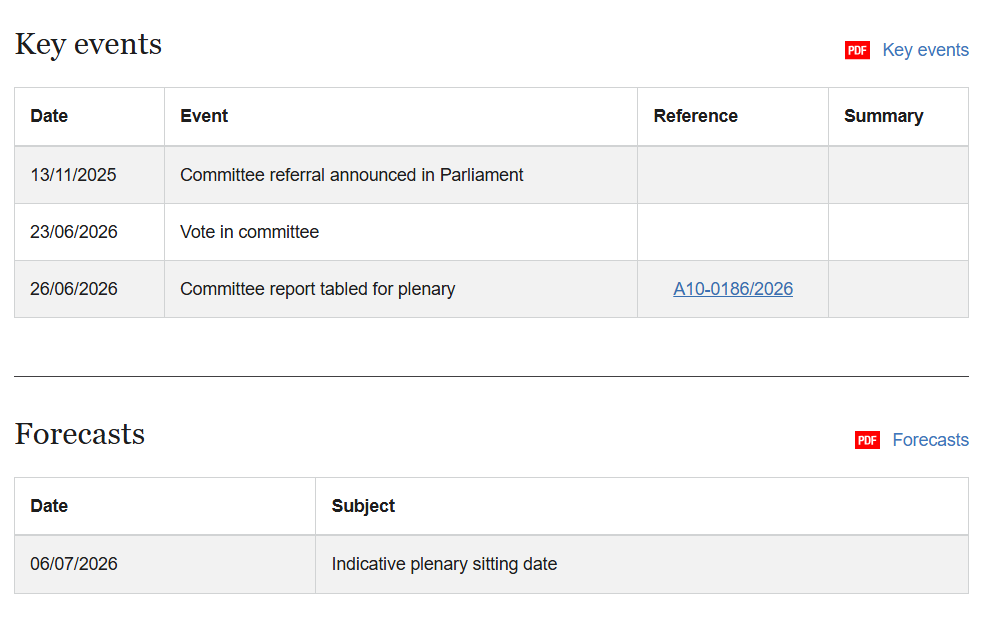
This sweeping recommendation forms the core of an own-initiative report spearheaded by Belgian Member of the European Parliament (MEP) Johan Van Overtveldt. Approved by the committee, the text has been advanced for a crucial plenary vote scheduled for July 6. While adoption of the resolution will not immediately amend existing laws or create instantaneous legal obligations, it will establish the European Parliament’s official, authoritative stance on the trajectory of digital asset policy.
Crucially, the report signals a more mature, pragmatic stance from European policymakers regarding the coexistence of public and private digital money. It actively encourages the development and proliferation of euro-denominated stablecoins, framing them as vital instruments to enhance the bloc’s payment systems, fortify financial market competitiveness, and bolster the international standing of the euro.
At the same time, the committee’s guidance arrives at a pivotal juncture for the European crypto landscape. With the transitional grace period for the landmark Markets in Crypto-Assets Regulation (MiCA) culminating on July 1, the European Union is bracing for a new era of strict enforcement. By flagging potential gaps in MiCA’s current scope—such as decentralized protocols and yield-bearing assets—ECON is laying the groundwork for the next generation of European financial regulation.
Detailed Chronology: From Drafting to Plenary Horizon
The pathway to the ECON committee’s latest resolution reflects a months-long diplomatic and technical harmonization process within the European Parliament.
- February: MEP Johan Van Overtveldt tables the initial draft of the digital asset report. At this preliminary stage, the focus remains primarily on anchoring and clarifying MiCA’s existing framework, refining stablecoin classifications, and establishing legal certainty for multi-issued tokens.
- Spring Interim: Following the initial release, months of rigorous negotiations, stakeholder consultations, and parliamentary amendments reshape the text. ECON members pivot from merely managing MiCA implementation to identifying forward-looking regulatory horizons.
- May: Demonstrating a synchronized regulatory approach, the European Commission launches a wide-ranging public consultation. It explicitly seeks stakeholder feedback on expanding regulatory parameters to encompass DeFi, staking, lending, NFTs, tokenized financial assets, and the persistent debate surrounding interest-bearing stablecoins.
- Late June (Friday): The ECON committee officially adopts Van Overtveldt’s finalized report, bringing it forward for an imminent plenary vote and setting off waves across the European fintech and crypto compliance sectors.
- June (Tuesday): Continuing its legislative blitz on digital money, the ECON committee votes to back primary legislation for a digital euro, cementing the Parliament’s ideological stance that central bank digital currencies (CBDCs) and private digital currency variants should operate harmoniously rather than in zero-sum competition.
- July 1: The critical compliance deadline marking the end of MiCA’s transitional period. Crypto-asset service providers (CASPs) across the EU must secure full regulatory authorization to continue serving European clients.
- July 6 (Expected): The European Parliament is scheduled to hold a plenary vote on Van Overtveldt’s resolution. If passed, the document will solidify Parliament’s official institutional positioning on digital assets, pressuring the European Commission to act on its recommendations.
Supporting Context & Metrics: The Evolution of European Crypto Policy
To understand the weight of the ECON committee’s recommendations, one must examine the turbulent evolution of European sentiment toward digital assets over recent years.
The Long Shadow of the 2023 Banking Crisis
The tone of European policymaking has shifted perceptibly since the spring of 2023. During the regional banking turmoil that saw the sudden collapses of Silicon Valley Bank (SVB), Signature Bank, and Silvergate Bank, MEP Johan Van Overtveldt took a markedly hostile stance toward the digital asset ecosystem. Amid the panic, Van Overtveldt publicly likened cryptocurrencies to illicit drugs, drawing sharp criticism from industry participants.
The 2023 crisis was deeply intertwined with the digital asset sector, particularly via stablecoins. Circle, the issuer of the USD Coin (USDC) stablecoin, held approximately $3.3 billion of its cash reserves at Silicon Valley Bank. When the institution collapsed, market panic caused USDC to temporarily break its vital one-to-one peg with the United States dollar, laying bare the systemic interconnectedness between traditional banking infrastructure and crypto liquidity providers.
Shifting Regulatory Geographies and National Divergences
While the European Union has moved toward a unified, harmonized regulatory framework via MiCA—intended to prevent regulatory arbitrage and ensure a level playing field across all 27 member states—friction remains at the national level.
For instance, national disputes continue to plague implementation. In Poland, the presidency has repeatedly locked horns with crypto legislation, returning vetoes that have left domestic firms scrambling to secure regulatory licenses in more accommodating foreign jurisdictions. Recognizing these fractures, the ECON report explicitly warns member states against introducing fragmented, localized requirements that supersede or complicate MiCA, arguing that regulatory divergence risks crippling the European digital asset industry’s global competitiveness.
The Macroeconomic Role of Euro-Denominated Stablecoins
In a stark departure from the hostile rhetoric of 2023, the European economic establishment is warming to the utility of stablecoins—provided they operate within strict compliance parameters. This pivot mirrors softening stances globally, echoed by figures such as former Bank for International Settlements (BIS) general manager Agustín Carstens, who recently acknowledged the practical necessity of stablecoins coexisting alongside traditional fiat systems.
The ECON report explicitly champions euro-denominated stablecoins, arguing that they can:
- Act as synergistic complements to tokenized commercial bank deposits and wholesale central bank digital currencies (wCBDCs).
- Drastically slash the costs and settlement times associated with cross-border payments.
- Enhance the overall market competitiveness of European financial institutions.
- Project the geopolitical and economic influence of the euro into the expanding digital economy.
Official Statements and Institutional Perspectives
The institutional dialogue surrounding the ECON report highlights a delicate balancing act: fostering technological innovation while safeguarding consumer protection and systemic financial stability.
MEP Johan Van Overtveldt and the ECON Vision
As the architect of the report, Johan Van Overtveldt has consistently emphasized the necessity of regulatory clarity paired with institutional rigor. While his early statements reflected deep skepticism rooted in systemic contagion risks, the finalized report adopts a strategic, forward-looking posture. By pushing the European Commission to examine DeFi, NFTs, and staking, Van Overtveldt’s committee is signaling that regulatory evasion through decentralized structuring will no longer be tolerated in the European single market.
"The goal is not to strangle innovation, but to ensure that the rules of the road apply equally whether financial services are delivered through traditional ledger systems or distributed ledgers," sources close to the ECON drafting process have noted.
The European Commission’s Mandate
Following the committee’s vote, the ball lands squarely in the court of the European Commission. The Commission is already reviewing the structural bounds of MiCA through its ongoing public consultations. Officials are tasked with weighing the complex technical realities of decentralized networks against the stringent consumer protection mandates written into EU law. Regulating a centralized crypto exchange is fundamentally distinct from overseeing an immutable, self-executing decentralized finance protocol or a decentralized staking pool—a nuance that the European Commission must navigate carefully to avoid driving web3 developers entirely out of the bloc.
Future Outlook: What Lies Beyond the MiCA Era?
As Europe crosses the threshold of the July 1 MiCA transition deadline, the digital asset ecosystem is entering uncharted territory. The era of regulatory leniency and jurisdictional arbitrage is drawing to a close for centralized entities operating within EU borders.
However, the frontiers of crypto technology continue to evolve faster than traditional legislative bodies can draft statutory text. The ECON committee’s push to evaluate DeFi, staking, lending, and NFTs represents an acknowledgment of this persistent lag.
Key Milestones to Watch:
- July 6 Plenary Vote: The formal adoption of Van Overtveldt’s resolution will cement the European Parliament’s united front, sending a binding political signal to the European Commission that legislative expansion into decentralized markets is desired.
- Regulatory Amendments: Expect the European Commission to issue formal feedback and potential legislative proposals regarding the extension of MiCA or the creation of bespoke secondary frameworks for decentralized technologies late into 2026.
- DeFi and Staking Compliance: Web3 developers, liquid staking providers, and decentralized autonomous organizations (DAOs) targeting European users will increasingly face difficult structural decisions regarding decentralization degrees, user identification, and operational domicile.
Ultimately, the European Union is attempting a high-stakes balancing act: attempting to capture the economic upside of tokenization and stablecoin adoption while building an impenetrable fortress against systemic financial contagion. Whether Europe can successfully regulate the decentralized frontier without suffocating native innovation remains the defining question for the bloc’s digital economy in the years ahead.