
Executive Overview
Yet, amid this macro-level carnage and a severe contraction in digital asset valuations, a peculiar, highly specialized niche of the Web3 economy not only survived—it thrived.
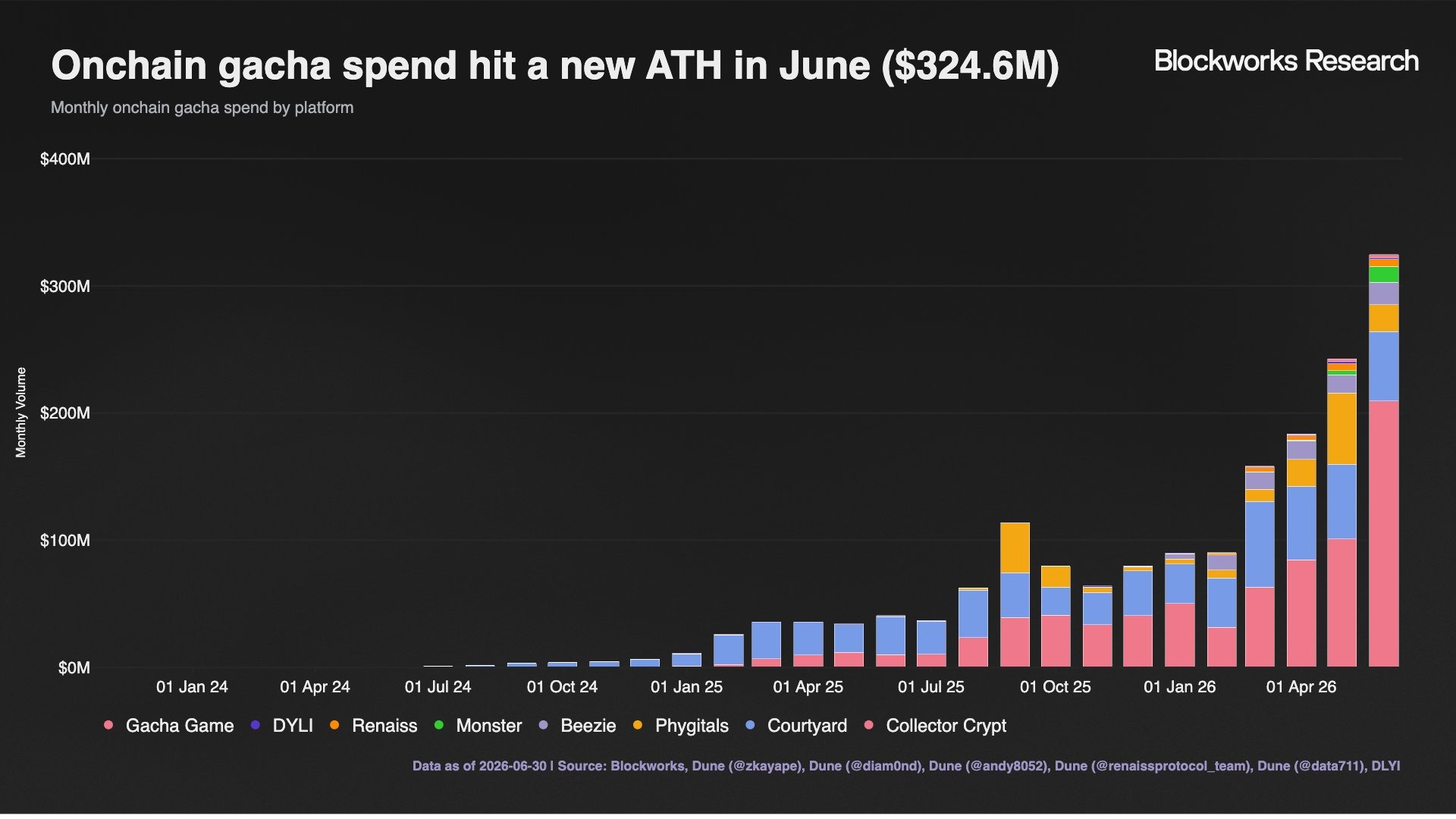
According to data compiled by Blockworks Research, users poured a historic $324 million into onchain gacha during June 2026. To put this milestone into perspective, monthly spending figures for the same sector hovered around a modest $50 million just one year prior.
While macroeconomic pressures crippled traditional crypto portfolios, crypto-native and tech-forward collectors were opening digital booster packs of tokenized Pokémon cards in record volumes. Driven by the adrenaline of the randomized drop, the pursuit of financial yield, and the timeless urge to expand a prized collection, users catalyzed an explosion in a randomized Real World Asset (RWA) sector that had largely flown under the radar—until now.
Detailed Chronology: The Anatomy of a Record-Breaking Month
The convergence of forces that led to June 2026’s record-shattering $324 million spend was not an overnight anomaly; it was the culmination of structural shifts within both the multi-billion-dollar trading card game (TCG) industry and the evolving utility of blockchain infrastructure.
The Mechanics of the Modern Gacha Loop
To understand the phenomenon, one must examine the mechanics of "gacha"—a term borrowed from Japanese vending machines where a fixed payment yields a randomized prize. In the context of TCGs, this translates to sealed booster packs. Buyers pay an upfront price without knowing which specific cards reside inside.
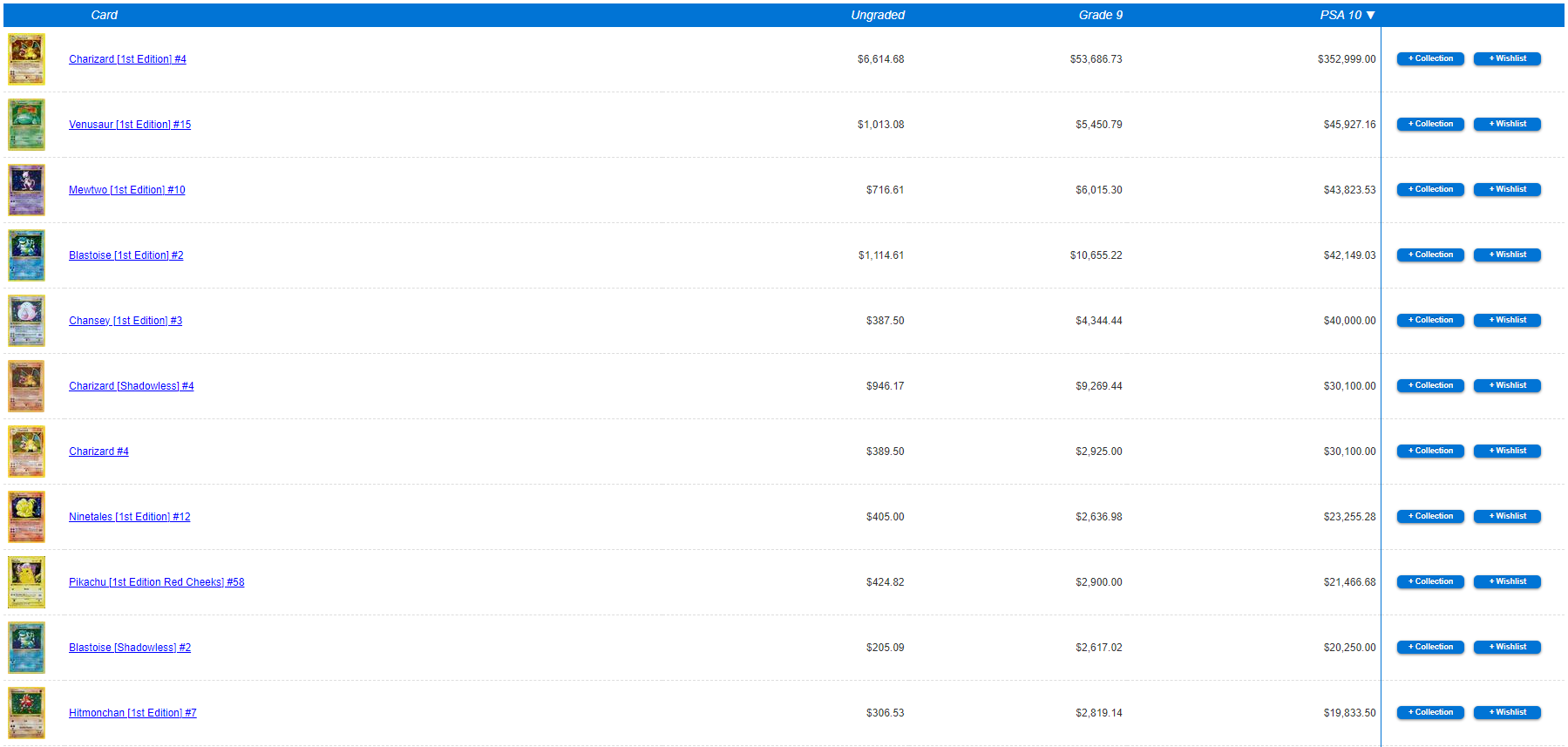
Within these packs, asset creation is deeply unequal. Factors such as print run, rarity, physical condition, and release year dictate values that vary by orders of magnitude. A common card might be worth pennies, while a pristine, rare vintage card can command hundreds of thousands of dollars.
Operating in a multi-billion-dollar market—valued between $9.2 billion (Global Market Insights) and $15.11 billion (Mordor Intelligence)—these physical collectibles require rigorous verification. Because high-end cards can cost as much as luxury automobiles, their authenticity and condition must be definitively established through professional "grading."
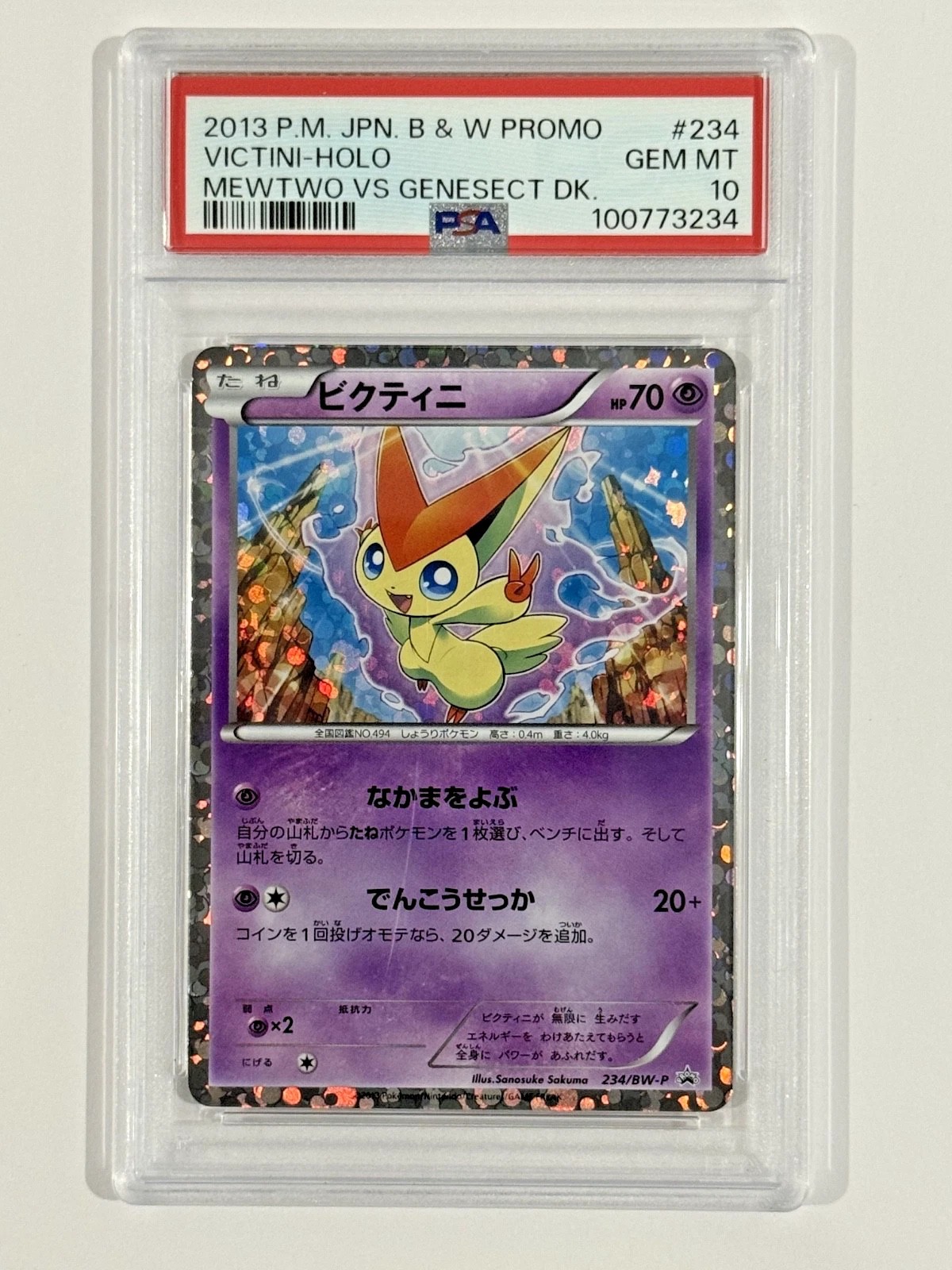
Independent grading giants like PSA, Beckett, and CGC inspect submissions for centering, corner integrity, edge wear, surface scratches, and stains. Once authenticated, the card is assigned a numeric grade and permanently sealed in a protective plastic case known as a "slab."
Bridging Physical Collectibles to the Blockchain
Projects such as Collector Crypt and Courtyard bridged the gap between physical reality and digital liquidity. These platforms accept verified, graded physical cards, store them in high-security vaults, and mint NFTs directly linked to each specific serialized asset.
When a user opens an onchain gacha pack, they receive an NFT backed by a verifiable physical asset sitting securely in a vault. This token can be:
- Retained in a digital wallet for long-term collection.
- Listed instantly on secondary marketplaces.
- Sold back immediately to the platform via automated liquidity loops.
- Redeemed to have the physical card shipped directly to the owner’s doorstep.
Despite the seamless user experience, this model introduces custodial risk. The intrinsic value of the NFT relies entirely on the assumption that the partner vault actually houses the exact graded card promised. With grading authentication firms reporting rising concerns over sophisticated counterfeiting rings, counterparty and custodial risks remain central talking points for market observers.
Supporting Context & Metrics: Why Pokémon and Tokenization Exploded
The unprecedented growth of onchain TCG platforms in mid-2026 relies on a unique alignment of pop-culture dominance, institutional collector behavior, and technological utility.
The Pokémon Renaissance
At the epicenter of this boom is the Pokémon franchise, which has experienced an unprecedented cultural and financial renaissance. According to market research firm Circana, Pokémon captured the crown as the top-selling toy brand in the United States in 2025, pulling in $2.5 billion in retail sales—an astounding 87% year-over-year increase.
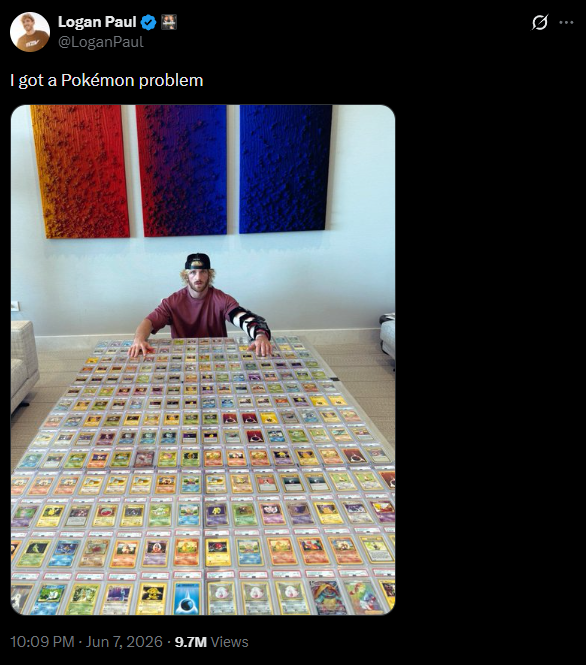
This demand is not driven by children. Wealthier demographics, particularly affluent members of Generations Y and Z, increasingly view rare trading cards as superior alternative assets to traditional fine art. Demand for professional grading has surged to such an extent that PSA temporarily suspended card submissions across four core service levels in June 2026, struggling to process a staggering backlog of nearly 10 million cards. High-profile collectors and media personalities—most notably Logan Paul, who previously made headlines for multi-million-dollar card sales—have continuously thrust rare card collecting into the mainstream financial spotlight.
Curing Illiquidity in Traditional Collectibles
The traditional TCG market has long suffered from a friction-heavy bottleneck familiar to all alternative asset classes: a severe lack of instant liquidity. To liquidate a high-value physical card offchain, a collector must independently locate a buyer, verify authenticity, negotiate pricing, and execute secure, insured shipping.
"Traditional marketplaces are slow and expensive," noted Dakota Campbell, Head of Marketing at Collector Crypt, in an interview with Cointelegraph. "With tokenized trading cards, collectors can buy, sell, trade, and verify ownership instantly while the physical asset remains securely vaulted until they want it shipped."
Collector Crypt has successfully tokenized approximately $40 million worth of cards and comic books, according to Campbell. Roughly $23 million of that inventory is held directly on the platform’s balance sheet, while the remainder rests in user wallets or has been redeemed by physical claimants. To satisfy ongoing market demand, the firm actively acquires roughly $2 million worth of inventory every week.
The Dopamine Engine: Gambling, Speculation, and the Gacha Loop
It is impossible to discuss the onchain gacha boom without acknowledging the role of price speculation and the psychological rush of randomized digital rewards.
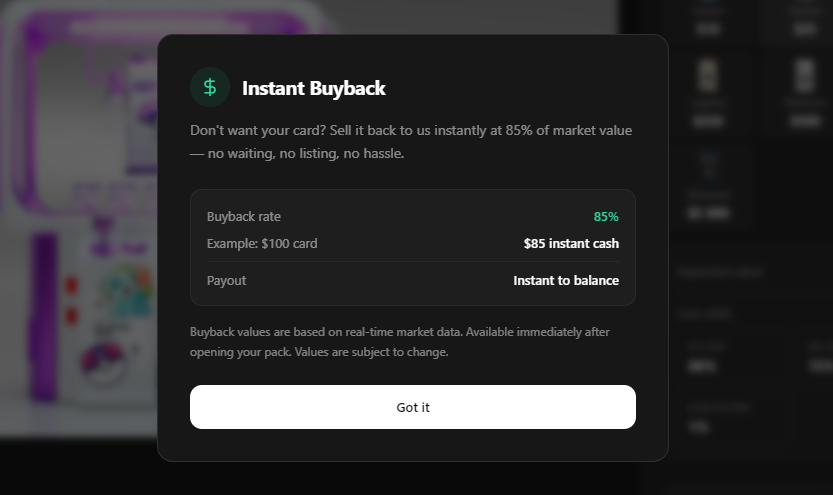
Most Web3 TCG platforms feature an instant buyback mechanism, creating a hyper-efficient "gacha loop." A user purchases a pack; if the resulting card holds low market value, the user can instantly sell it back to the platform for roughly 85% of its value and immediately roll the proceeds into another pack. If they hit a rare card, they can list it on an open marketplace or hold it. This eliminates the weeks of waiting, shipping friction, and matchmaking associated with traditional secondary markets.
While this mechanism mirrors video game loot boxes—which have faced aggressive regulatory scrutiny regarding gambling laws in several global jurisdictions—supporters argue it merely replicates traditional TCG behavior at digital speeds.
Official Statements and Industry Insights
Industry participants maintain that while speculation is an undeniable driver of early-stage crypto-native markets, the core engine of growth is sustained by dedicated collectors pursuing rare assets.
Data from analytics platforms like Dune illustrates that users consistently burn between 5% and 8% of the NFTs issued on platforms like Courtyard each week, with every burned token representing a physical redemption request.
Collector Crypt reports that roughly 30% of its user base ultimately chooses to redeem their physical cards, while a significant majority retain their assets in onchain inventories well past the initial 72-hour buyback window.
"In just the last 30 days, 5,400 assets shipped to 634 unique users at a $3.29 million insured value," Campbell highlighted, emphasizing that tangible physical utility underpins the digital infrastructure.
Future Outlook: Sustainable Evolution or Fleeting Trend?
The record-breaking milestones achieved in June 2026 demonstrate that Web3 infrastructure can successfully modernize legacy asset classes by removing operational friction and introducing instantaneous liquidity.
Critics continue to raise valid concerns regarding the speculative fervor and gambling-adjacent mechanics embedded within gacha loops. However, industry proponents argue that criticisms of randomness and chasing rare variants should be directed at the multi-billion-dollar TCG industry at large, rather than being unfairly isolated to its blockchain-enabled subset.
Ultimately, June’s historic figures represent the convergence of a booming physical collectibles market, mature tokenization architecture, and high-speed digital rails. Whether this trajectory remains sustainable over the long term hinges on macroeconomic stability and consumer sentiment. As the gacha loop continues to run rapidly in both directions, capital inflows can reverse just as quickly as they arrive—leaving the industry to prove that tokenized real-world assets can weather bull and bear markets alike.