rifanmuazin is a reporter for DeBitcoin covering Decentralized Finance (DeFi). She/He is based in Indonesia.
6 August 2026 • 9 min read
“Investments change fast; human nature and human aspirations stay constant.”
That is how Meir Statman, a pioneer in behavioral finance, professor of finance at Santa Clara University, and author of A Wealth of Well-Being, explains one of modern investing’s most persistent puzzles. It also serves as the ultimate diagnostic tool for why every cryptocurrency cycle to date has been driven by the pursuit of the next hot narrative rather than cold, hard financial fundamentals. Whether the flavor of the month is decentralized finance (DeFi), meme coins, or decentralized compute, the underlying engine driving capital remains remarkably uniform.
In an industry that has spent years maturing into a sophisticated ecosystem of institutional investors, revenue-generating protocols, and tangible real-world use cases, retail attention stubbornly gravitates toward the next shiny object promising outsized, astronomical returns.
“Crypto is still a young asset class, and price discovery in young markets tends to be driven by attention before it’s driven by analysis,” Samar Sen, head of international markets at Talos, tells Magazine.
“A new narrative gives investors a simple story to underwrite quickly, while assessing the fundamentals of an established protocol takes real work, from understanding usage and revenue to token design and competitive position.”
This behavioral quirk is not entirely unique to digital assets; rather, it is simply amplified in an ecosystem that historically prizes viral memes over sustainable corporate balance sheets.
Executive Overview
The tension between financial fundamentals and narrative-driven speculation has defined market cycles across centuries, from the historic railroad booms of the 19th century to the dot-com bubble and modern-day cryptocurrency manias. Traditional finance posits that investors operate as rational actors seeking to optimize risk-adjusted returns. However, behavioral finance offers a starkly different paradigm: individuals frequently invest not merely to compound wealth incrementally, but to purchase a "lottery ticket" aimed at achieving transformative, life-changing outcomes.
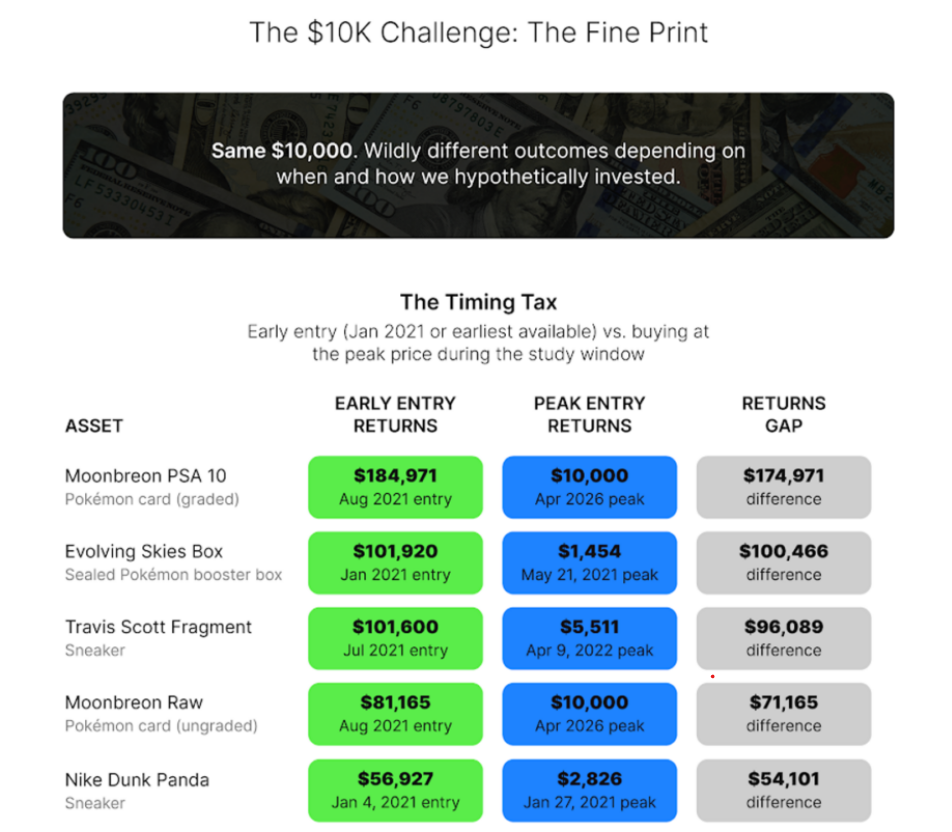
Recent empirical studies highlight this phenomenon in striking detail. A comprehensive multi-year comparative analysis tracking alternative investments from January 2021 through April 2026 revealed that unconventional assets—such as sealed Pokémon card boxes and limited-edition sneakers—frequently outpaced or matched the returns of major cryptocurrencies and popular tech stocks.
This article explores the deep-seated psychological motivations steering modern capital allocation. By examining behavioral portfolio theory, the stark contrast between institutional discipline and retail FOMO, and the structural disconnect governing token valuations versus protocol revenues, we unpack why narratives consistently conquer fundamentals in the digital asset landscape.
Detailed Chronology: From Market Peaks to Behavioral Realities
To understand how modern investors navigate digital assets, equities, and collectibles, it is instructive to examine the timeline of risk appetites and market valuations from the pandemic-era bull run through the mid-2020s.
January 2021: The Pandemic Liquidity Peak
At the start of 2021, global liquidity was flush, and retail participation surged across digital and traditional exchanges. Bitcoin was in the midst of a historic breakout, trading around $30,000 before scaling new heights. At this stage, capital was abundant, and risk tolerance was exceptionally high. Investors entering the market in January 2021 stood to gain robust, multi-fold returns over the subsequent five years. For instance, a hypothetical $10,000 allocation into Bitcoin at the beginning of this window would have yielded gains exceeding 141% by April 2026, swelling to over $24,000.
October 2025: The Cycle Euphoria and Peak FOMO
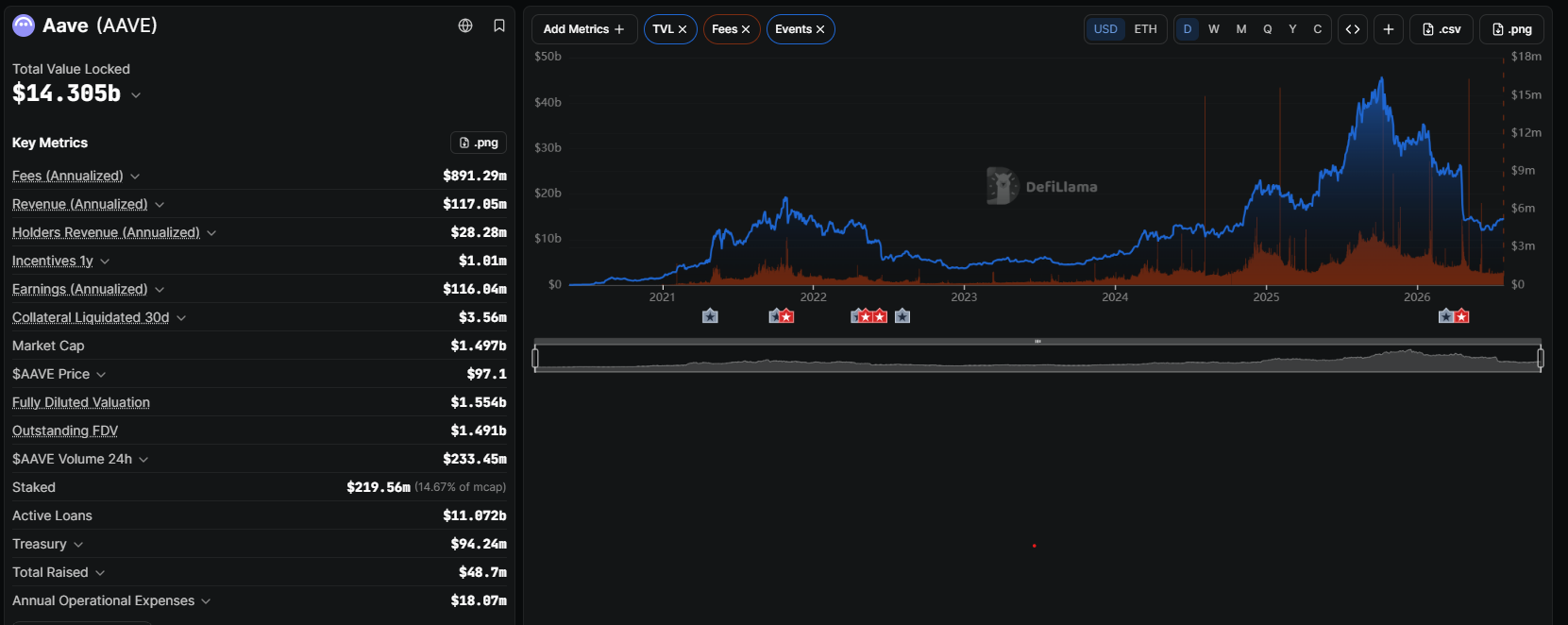
As the market cycled through various narratives—transitioning from DeFi summers and NFT manias to high-speed layer-1 wars and artificial intelligence tokens—market valuations reached a crescendo in October 2025. This period was characterized by extreme euphoria. Total Value Locked (TVL) in major DeFi protocols like Aave hit historic milestones, with Aave’s TVL surging past $37 billion. However, this peak also marked a dangerous psychological trap for late-cycle entrants.
Investors who succumbed to fear-of-missing-out (FOMO) and deployed capital at the absolute peak in October 2025 experienced severe drawdowns. A $10,000 investment in Bitcoin made at the October peak shrank to just over $6,000 by April 2026—representing a painful 38% loss. Meanwhile, retail traders who chased speculative altcoins or late-stage token listings faced even more catastrophic declines, with many major tokens shedding 85% or more of their dollar-denominated value.
April 2026: The Reckoning and Valuation Realities
By April 2026, the market had settled into a more sober phase of reflection. Empirical studies published during this period—such as the MarketWise research comparing $10,000 allocations across diverse asset classes—laid bare the uncomfortable truth about modern speculation. Sealed Pokémon card boxes had outperformed foundational digital assets over the five-year stretch, while hype-driven artificial intelligence funds on Wall Street lagged the broader equities market despite dominating every financial headline. The chronology underscores a timeless lesson: timing the narrative cycle dictates success far more reliably than simply holding an asset for its technological merits.
Supporting Context & Metrics: The Behavioral Portfolio Theory
Why do investors consistently abandon diversification and fundamental analysis in favor of concentrated, high-risk bets? According to Meir Statman’s paper on concentrated wealth in behavioral portfolios, the answer lies in how human beings mentally structure their net worth.
The Two Layers of Wealth
Statman argues that human psychology naturally divides personal wealth into two distinct mental layers:
The "Not-Poor" Layer: This foundational bucket is engineered to preserve a baseline standard of living, covering essential expenses, debt obligations, and retirement security. It reflects a traditional aversion to poverty.
The "Be-Rich" Layer: This speculative bucket is explicitly designated for transformative goals—such as acquiring a home, achieving early financial independence, or fundamentally altering one’s socioeconomic standing.
Within this behavioral framework, holding a concentrated position in a volatile digital asset or a speculative meme coin is not necessarily an irrational act. For an individual with limited capital, a diversified portfolio of index funds or low-yielding bonds—while statistically sensible—will never generate the exponential velocity required to bridge the gap between the "not-poor" and "be-rich" layers. Consequently, investors knowingly accept extreme volatility and diminished statistical odds of success for the remote possibility of a life-changing payout.
The Metrics of Disconnect: Aave vs. Token Valuations
This psychological framing explains one of the greatest anomalies in modern crypto markets: the valuation disconnect between protocol utility and token pricing.
Consider the decentralized lending protocol Aave. From a fundamental standpoint, Aave is an economic powerhouse. Even during market corrections, its TVL routinely hovers above $14 billion, having peaked at over $37 billion in late 2025. The protocol generates substantial, recurring revenue through interest spreads and flash loan fees, operating with institutional-grade reliability.
Yet, Aave’s native token has frequently traded at massive discounts relative to its 2021 all-time highs (languishing around $98 during periods when TVL and usage remained near record highs). Why? Because a mature, cash-flow-generating DeFi protocol offers steady, predictable growth—an attribute poorly suited for an investor’s "be-rich" bucket. A token projected to double incrementally over several years cannot compete with the psychological allure of a nascent asset offering the statistical fantasy of a 100x return.
Official Statements and Industry Perspectives
Market participants, analysts, and researchers point to a clear dichotomy between how retail speculators and institutional players approach risk and reward.
Samar Sen on Narrative-Driven Price Discovery:
“Crypto is still a young asset class, and price discovery in young markets tends to be driven by attention before it’s driven by analysis… A new narrative gives investors a simple story to underwrite quickly, while assessing the fundamentals of an established protocol takes real work, from understanding usage and revenue to token design and competitive position.”
James Royal on the Constant Nature of Speculation:
“The asset class may change, but the behavior barely does… Investors aren’t exactly loyal to crypto, stocks or collectibles. Their loyalty is to whatever promises lucrative returns next.”
Reflecting on the psychological trap of modern market trends, Royal adds:
“Investors aren’t necessarily on the hunt for risk, but they’ve got a case of FOMO on the next life-changing return, and that can lead them down a path of underestimated downside risk.”
Furthermore, Royal notes a recurring cognitive error among market participants:
“Investors like to confuse a great technological breakthrough with a great investment opportunity… The real skill isn’t identifying exciting investments, it’s recognizing when optimism has already been priced in.”
Thomas Probst on Long-Term Market Fundamentals:
Thomas Probst, a research analyst at market data provider Kaiko, emphasizes that while hype cycles dominate short-term price action, structural integrity ultimately reasserts itself:
“Market fundamentals continue to play an important role, particularly resilience, liquidity, and volatility… [an asset’s] ability to establish itself over time also depends on the robustness of its market structure.”
Institutional Mandates vs. Retail Speculation:
Institutional investors, by contrast, operate under strict regulatory and fiduciary constraints that completely preclude speculative behavior. Samar Sen highlights the institutional playbook:
“Institutional mandates simply don’t allow for chasing outsized, speculative returns. Institutions are underwriting risk-adjusted performance, liquidity, custody arrangements and operational resilience long before they look at upside potential.”
While institutional capital occasionally flows into emerging narratives—such as decentralized compute, AI infrastructure, or real-world asset (RWA) tokenization—it typically arrives only after a technical unlock has been proven. Institutions evaluate whether underlying network infrastructure can support secure, large-scale capital allocation, positioning them comfortably behind initial retail hype and ahead of inevitable market corrections.
Future Outlook: Navigating the Intersection of Psychology and Markets
As the digital asset ecosystem continues to mature through successive market cycles, the fundamental tension between human aspiration and cold economic reality will persist. The search for the next generational wealth-generating asset is hardwired into human nature, ensuring that speculative manias will continually reinvent themselves across new digital frontiers.
Key Takeaways for Market Participants:
Acknowledge Behavioral Biases: Investors must recognize whether their capital allocations are driven by objective fundamental analysis or by psychological desires to escape financial limitations via high-risk moonshots.
Separate Technology from Tokenomics: A groundbreaking technological innovation (such as artificial intelligence or decentralized storage) does not automatically translate into a lucrative token investment, especially if market optimism has already been fully priced in.
Understand the Market Cycle: Timing and narrative momentum dictate short-term pricing power, but long-term asset survival invariably relies on robust market structures, sustained liquidity, and protocol revenue.
Ultimately, the 100x token will always have a willing buyer. As long as human aspirations remain fixed on transforming economic standing overnight, narratives will continue to reign supreme over fundamentals—reminding every generation of investors that while the asset classes change, human nature never does.